
Reviewed · MEDINA TOURS
Guided tour in the UNESCO world heritage Medina of Tunis
The Medina rewards a good guide. This walking tour makes sense of Tunis’s maze through the eyes of Saber Arraki, a national certified guide who grew up there. I like the mix of major monuments and ordinary Medina life, and I like that the route reaches quieter lanes, old residences, workshops, and rooftop views that are easy to miss alone. The main consideration is that you will walk for up to three and a half hours, often on uneven streets, and private transportation is not included.
Saber’s strength is his personal connection to the old city. He explains history, architecture, religion, and daily customs in clear English, and he can also conduct the tour in French. The group limit of 15 keeps the experience manageable, though a smaller group will make it easier to hear him and ask questions in crowded souks.
In This Review
- Five things worth knowing before you book
- Why a guide matters in Tunis’s Medina
- Starting at La Kasba and the Zitouna Mosque
- Dar Lasram and the shape of a traditional Tunisian home
- Slimaniya Madrasa and the world of religious schools
- Souk El Attarine and the perfume quarter
- A 30-minute pause at Café du Souk
- Hammouda Pasha Mosque and Rue de la Kasbah
- Goldsmiths, bathhouses, and the Chechia market
- Dar El Jeld and the quieter side of the Medina
- Bir Lahjar, student life, and the final stretch
- What the $46.53 price gets you
- Who will enjoy this Medina walk
- My verdict on Saber Arraki’s Tunis Medina tour
- FAQ
- How long does the guided Medina tour last?
- Where does the tour begin?
- Where does the tour finish?
- Is transportation included?
- What is the maximum group size?
- Can I cancel for a full refund?
Five things worth knowing before you book
- Saber grew up in the Medina: His first-hand connection adds local detail to the monuments and streets.
- The route goes beyond shopping lanes: You visit mosques, madrasas, palaces, a hammam, artisan markets, and old residential streets.
- The tour lasts about 2½ to 3½ hours: Plan for steady walking, photo stops, and time inside selected buildings.
- The Slimaniya and Bir Lahjar visit may be an either-or choice: The tour description gives the option of visiting one of these two madrasas.
- The price is $46.53 per person: Group discounts are available, and the maximum group size is 15.
- The tour begins at La Kasba at 9:00 a.m.: It ends in the Medina, with no private transport provided.
Why a guide matters in Tunis’s Medina
The Medina of Tunis is not simply a shopping district. It is an old urban community with religious schools, family homes, cafés, bathhouses, workshops, monuments, and markets arranged along a maze of lanes. Without help, you can easily spend your time looking at goods while missing the buildings around you.
Saber’s role is especially useful here. Several parts of the route are tucked away from the main flow of shoppers, and the tour includes places you might not think to enter on your own. He explains what you are seeing, but he also answers questions about Tunisian culture and his own experience growing up in Tunisia.
That personal approach is one of the strongest reasons to book. The tour is not limited to dates and architectural labels. You get a sense of how the Medina functions as a living part of Tunis. If you are interested in Moorish design, Islamic architecture, crafts, or local customs, tell Saber early. He has shown a willingness to adjust the conversation and give extra attention to a visitor’s interests.
The group can include up to 15 people. That is still a reasonable size for a walking tour, but it is not the same as having a private guide. If your group is small, you will have more chances to ask questions and stop for photographs without slowing others down.
More Medina Tours in Tunis
- Private tour: Medina,Carthage ,Sidi Bou Said, Bardo Museum+lunch
★ 5.0 · 230 reviews - Carthage, Bardo Museum, Sidi Bou Said and Medina Private Day Tour
★ 4.5 · 153 reviews - Tunis: Carthage, Bardo Museum, Sidi Bou Said & Medina Group Tour
★ 4.5 · 33 reviews
Starting at La Kasba and the Zitouna Mosque
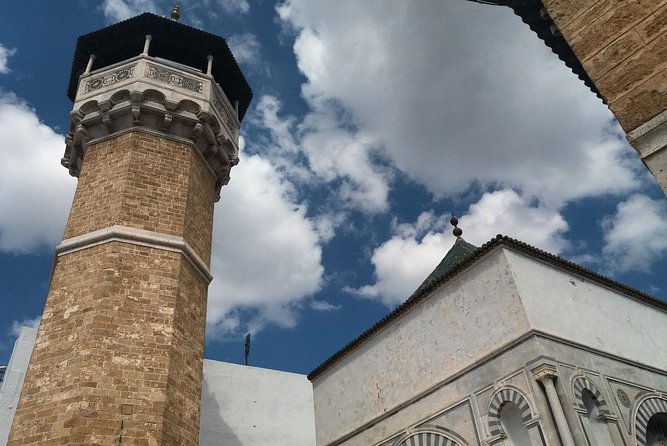
The tour begins at La Kasba at 9:00 a.m., then moves into the heart of the Medina. The first major landmark is the Zitouna Mosque, also called the Mosque of the Olive Tree. It is the capital’s oldest and largest sanctuary and the main mosque of the Medina.
The scale is impressive. The mosque covers about 5,000 square meters, has nine entrances, and includes 184 old columns, many brought from the site of ancient Carthage. Those details help connect Tunis’s Islamic past with the much older civilizations that came before it.
The mosque follows the Maliki tradition, an important point for understanding religious life in Tunisia. Your guide can give the building context rather than leaving you with only a quick photograph outside or a list of dates.
The supplied details do not specify how much of the mosque is open during the visit, so you should treat this as a guided discovery of the site rather than assume full access to every interior area. Dress respectfully for a religious setting and follow any instructions given at the entrance.
Dar Lasram and the shape of a traditional Tunisian home
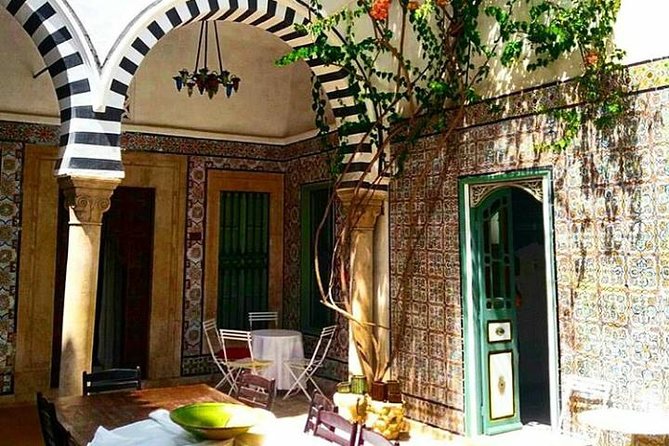
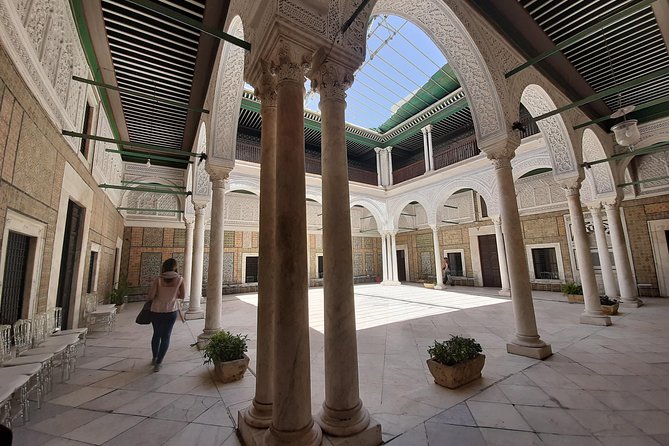
Dar Lasram is one of the route’s most useful stops because it shows how a traditional Tunisian house was organized. The palace covers about 2,250 square meters and is divided into distinct functions.
The ground floor held the shop and service areas. The main family house occupied the level above, while the top level served as a guest house. This arrangement gives you a practical look at family life, privacy, work, and hospitality in a historic Tunisian residence.
You have about 30 minutes here, which is enough time to pay attention to the layout instead of rushing through a courtyard for a quick picture. Admission is not included, so check the current entrance arrangement when booking or arriving. The palace is shared by the Medina Safeguarding Association and the Tahar-Haddad Cultural Club, giving the building a cultural role beyond its architecture.
I especially like this stop for visitors who want more than grand religious monuments. A house such as Dar Lasram helps you see how people lived behind the decorated doors and narrow streets.
Slimaniya Madrasa and the world of religious schools
The Slimaniya Madrasa sits near the Zitouna Mosque, at the meeting point of Souk El Koutbiya and Souk El Kachachine. Ali I Pasha built it in 1754 in memory of his son Suleiman.
A madrasa was not simply a pretty building. It served as a place of study and accommodation for religious students, and its location near the main mosque shows how education and worship were closely linked in the Medina.
The visit lasts about 15 minutes, and admission is included. That makes it a short but useful architectural pause between larger sections of the walk. Look for the way the building fits into the surrounding streets, rather than judging it as an isolated monument.
The tour information also gives you a choice between visiting Slimaniya and Bir Lahjar. Since both are listed as possible madrasa stops, confirm with Saber which one will be visited on your date. That choice may depend on access, timing, or the group’s interests.
A completely different kind of day:
- Private Tour to Kairouan, El Jem & Monastir from Tunis_hammamet
★ 5.0 · 301 reviews - Private Excursion to Testour, Dougga and Bulla Regia from Tunis.
★ 5.0 · 100 reviews - Guided Bike Tour of Carthage Archeological Site in Tunisia
★ 5.0 · 88 reviews - Group Guided Bike Tour of Carthage Archeological Site in Tunisia
★ 5.0 · 57 reviews
Souk El Attarine and the perfume quarter
Souk El Attarine is the souk of perfumers. Its shops focus on perfumes and beauty products, making it different from markets that center on clothing, metalwork, or souvenirs.
You have about 15 minutes here. That is enough for a first look and a short explanation of the trade, but not a long shopping session. If you want to buy something, keep the tour moving and return later if time allows.
This stop also helps you understand the logic of the Medina. The souks are organized by trade, so a market is not just a random line of shops. Each specialized quarter has its own character and history, and Saber can help you notice those differences.
A 30-minute pause at Café du Souk
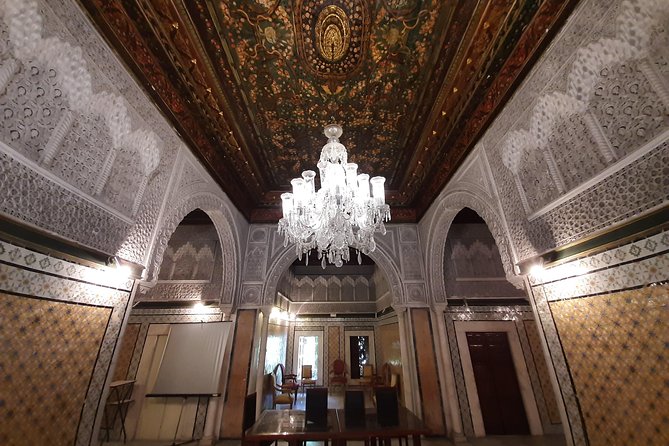
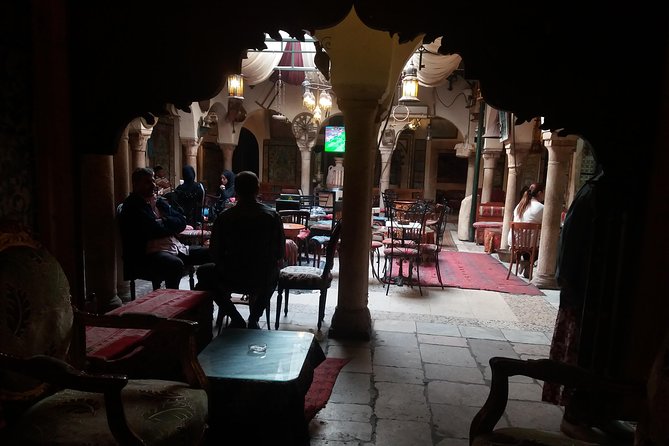
Café du Souk is described as an emblematic Medina café, with about 30 minutes set aside for the stop. This is one of the more relaxed parts of the morning and gives you a chance to absorb the surroundings after walking through the market lanes.
The café break is also useful for conversation. Saber’s patient style comes through in the way he handles questions, including questions about Tunisian culture and his personal experience. If you prefer a tour with constant movement and no pause, this section may feel long. If you like having time to talk, it adds balance to the route.
The information provided does not specify whether a drink is included, so plan to pay for any café order yourself.
Hammouda Pasha Mosque and Rue de la Kasbah
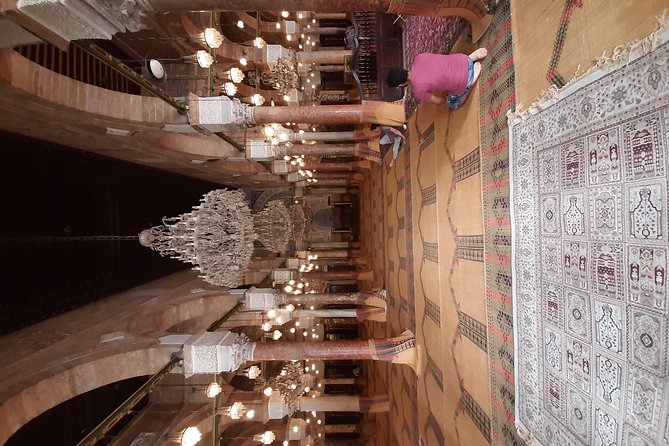
The route continues along Rue de la Kasbah, with a brief discovery of the Hammouda Pasha Mosque. The stop is listed at about five minutes, so expect an exterior introduction or a quick look rather than a long visit.
Later, Rue du Pacha receives about 30 minutes. This street contains several monuments, including Dar Hammouda Pasha, the mausoleum of Sidi Ben Arous, and the Hammouda Pasha Mosque. Seeing the same architectural and religious world from a street perspective helps connect individual monuments to the wider Medina.
The short stop at Rue de la Kasbah may feel rushed if you want detailed architectural study. The longer time on Rue du Pacha provides a better chance to ask questions and take photographs.
Goldsmiths, bathhouses, and the Chechia market
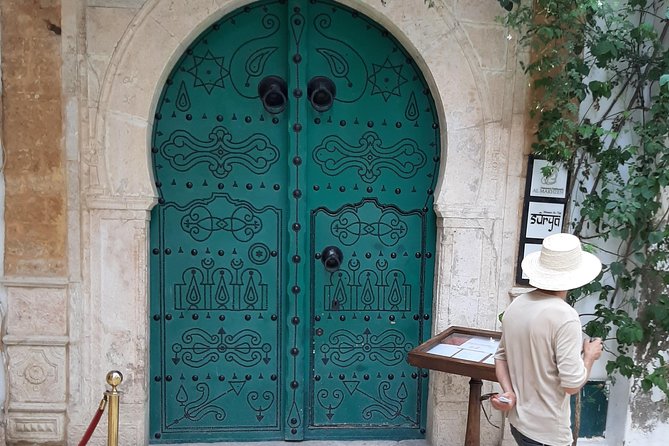
Souk El Birka is the goldsmiths’ market. The scheduled stop is only about five minutes, so this is an introduction rather than a full shopping visit. Keep your eyes open for the small details of the trade quarter, and do not expect time for extended browsing.
Hammam El Kachachine also receives about five minutes. The stop introduces the traditional bathhouse, an important part of community life. The brief timing means Saber will likely focus on what the hammam was and how it fitted into the neighborhood rather than offer a full visit.
The Grand Souk des Chechias receives 15 minutes. This is the market associated with traditional Tunisian chechias, the familiar red woolen caps. It is one of the route’s more distinctive craft stops, especially if you want to see a trade tied to local dress rather than generic souvenirs.
Together, these three stops make the tour feel broader than a monument walk. You move through places connected with jewelry, bathing, and textile crafts. The drawback is simple: five minutes is not enough for close study or serious shopping.
Dar El Jeld and the quieter side of the Medina
Near Dar El Jeld, you have a five-minute photo break beside an old residence that has been converted into a gourmet restaurant. This is a quick stop, but it gives you a chance to appreciate the way historic buildings continue to be used.
One of the tour’s welcome features is that it is not all crowded market streets. The route includes quieter residential areas and old houses, which gives you a more balanced view of the Medina. You see a working community, not just a retail zone built for sightseeing.
That difference matters. If you explored alone, you might spend most of your time in the most obvious souks. Saber’s local familiarity helps shift your attention toward courtyards, doors, religious schools, and streets that do not announce themselves as attractions.
Bir Lahjar, student life, and the final stretch
The Arts Center Bir Lahjar occupies another former madrasa. It hosted Maliki students from different regions of Tunisia for decades, making it a useful place to discuss education, travel, and religious scholarship.
The scheduled visit lasts about 15 minutes, but remember that the description says you may visit Bir Lahjar or Slimaniya. If the tour includes Bir Lahjar instead of Slimaniya, you will still receive a glimpse into the Medina’s tradition of religious study, but the building and setting will be different.
This is a good place to ask Saber about the difference between the two madrasas. The tour’s strongest moments come when you connect buildings with people, not when you simply collect names.
The route ends in the Medina. Since it does not include private transportation, you should arrange your own onward plans. The ending location is useful if you want to continue exploring, eat nearby, or return to your accommodation by public transport.
What the $46.53 price gets you
At $46.53 per person, this tour is priced above a casual orientation walk but below the cost of a private half-day guide for many groups. The value comes from the number of subjects covered and Saber’s professional certification.
You are paying for roughly 2½ to 3½ hours of guided walking, entrance fees and taxes listed as included, and access to a guide who knows the Medina personally. The route includes the main mosque, a historic palace, madrasas, specialized souks, a café, a hammam, old streets, and a former residence.
The price makes the most sense if you want context. If you only want to wander, photograph doors, and browse shops, you can explore parts of the Medina without booking a tour. But if you want to understand why the streets are arranged as they are, what the buildings were used for, and how Tunisian culture fits into the old city, the guide adds real value.
Group discounts may reduce the cost for larger parties. With a maximum of 15 people, ask about the expected group size if personal attention is important to you.
Who will enjoy this Medina walk
I would choose this tour for a first visit to Tunis, especially if you want a clear introduction before exploring on your own. It suits people interested in history, architecture, religion, crafts, and local life.
Families can also manage it. Saber has been patient with children, including young ones who do not stay perfectly in line. Still, the length and walking pace may be demanding for very young children, so consider your family’s stamina.
The tour also works well for visitors who like to ask questions. Saber is described as friendly, professional, patient, and an excellent storyteller. His English is reported to be very good, and the tour can be delivered in English and French.
You should think twice if you dislike walking, want a private vehicle, or expect long shopping stops at every market. The route is active, and some stops are very short. Good walking shoes, respectful clothing for religious sites, water, and a camera are sensible choices.
Booking confirmation arrives at the time of booking. Service animals are allowed, and the tour is near public transportation. Most people can participate, but the weather matters. If poor weather cancels the experience, you are offered another date or a full refund. Free cancellation is available until 24 hours before the start time, while changes or cancellations inside that window are not accepted.
My verdict on Saber Arraki’s Tunis Medina tour
This is a strong choice if you want the Medina explained by someone with both formal training and local roots. I particularly like the balance between famous sites such as Zitouna Mosque and less obvious places such as Dar Lasram, Bir Lahjar, the hammam, and the artisan quarters.
The tour’s five-star record and 100 percent recommendation rate fit its main strengths: clear explanations, good English, patience with questions, thoughtful pacing, and access to corners you might otherwise miss. The only real cautions are the long walking time, the lack of private transport, the short timing at some stops, and the uncertainty over which madrasa will be selected.
Book it if you want history tied to everyday life. Skip it only if you prefer to wander without a schedule or plan to spend the morning shopping. For most first-time visitors to Tunis, Saber’s tour is a useful and fairly priced way to get your bearings before exploring the Medina independently.
FAQ
How long does the guided Medina tour last?
The tour lasts approximately 2 hours and 30 minutes to 3 hours and 30 minutes.
Where does the tour begin?
The meeting point is La Kasba in Tunis, and the start time is 9:00 a.m.
Where does the tour finish?
The tour ends in the Medina of Tunis.
Is transportation included?
No. Private transportation is not included.
What is the maximum group size?
The tour can include a maximum of 15 travelers.
Can I cancel for a full refund?
Yes. You can cancel at least 24 hours before the experience start time for a full refund. Cancellations or changes made less than 24 hours before the start time are not accepted for a refund.
More History Tours in Tunis
- Historical Tour of Ancient Carthage
★ 5.0 · 51 reviews - 2 Hour Hergla Visit and Sousse Medina Heritage Tour
★ 4.5 · 3 reviews - Berber Village Kesra & Mactaris Historic site Daytrip from Tunis
★ 5.0 · 2 reviews
Just added in Tunis
- Private Arrival Transfer: Tunis Airport to Tunis Hotel★ 4.5 · 5 reviews
- Cap Bon Guided Day Tour from Tunis★ 5.0 · 2 reviews
- Unveiling the Beauty of Sidi Bou Said and Carthage Private Tour★ 5.0 · 2 reviews
- Dougga Guided Day Tour from Tunis★ 5.0 · 5 reviews
- Tunis Carthage Private Arrival Airport Transfer to Tunis★ 5.0 · 4 reviews
- Tunis Group Tour: Carthage, Sidi Bou Said, Bardo museum & Medina★ 5.0 · 5 reviews
- Bardo Museum , Oudhna and the roman aqueduct★ 5.0 · 4 reviews
- Bardo Museum- The ruins of Carthage- Village of Sidi Bou Said★ 5.0 · 4 reviews
Medina Tours, compared.
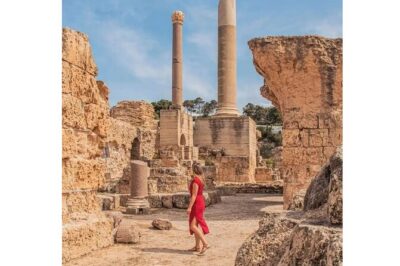
VIP Tour: Tunis Medina/Bardo, Sidi Bou Said, Carthage |PICKUP ALL
Read our review →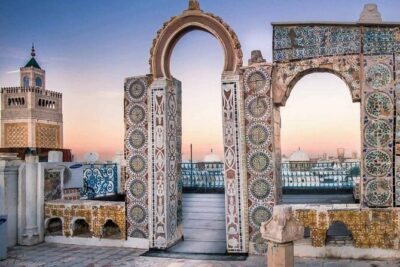
Private tour: Medina,Carthage ,Sidi Bou Said, Bardo Museum+lunch
Read our review →Private tour: Medina,Carthage ,Sidi Bou Said, Bardo Museum+lunch
Read our review →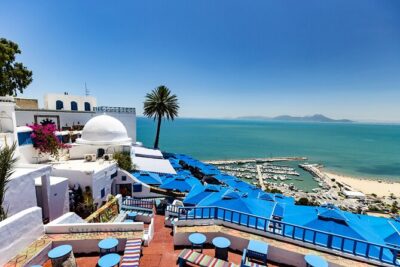
Carthage, Bardo Museum, Sidi Bou Said and Medina Private Day Tour
Read our review →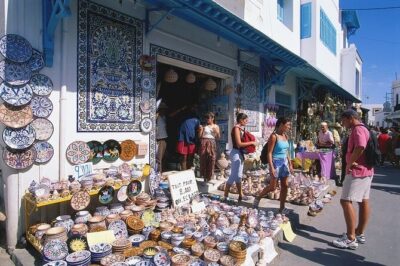
Tour to the Medina of Hammamet and the Spice Market of Nabeul
Read our review →
Carthage, Bardo Museum, Sidi Bou Said & Medina Group Tour
Read our review →
From Hammamet or Tunis: Carthage, Bardo, Sidi Bou said and Medina
Read our review →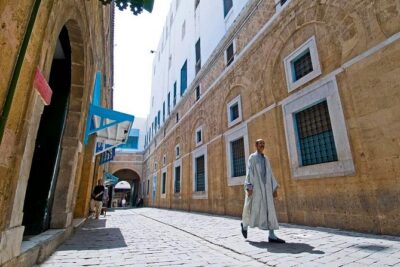
Private Day Tour Tunis Medina Carthage Sidi Bou Said Bardo Museum
Read our review →Browse the lists this tour appears in