
Reviewed · KSAR GHILANE AND BERBER VILLAGES
Berber Village Kesra & Mactaris Historic site Daytrip from Tunis
Ancient stones, quiet hills, and one long road. This private trip pairs the Mactaris archaeological site with Kesra, Tunisia’s highest village, giving you two very different views of central Tunisia. I like the front-door pickup and the chance to see places well away from the usual coastal circuit.
I also like the comfort of a private, air-conditioned vehicle with Wi-Fi and bottled water. The main drawback is the road time: expect roughly four to five hours of driving in total, according to the available tour information, so this is a full day with only about two and a half hours devoted to the main stops.
In This Review
- Key points to know before booking
- Why Mactaris and Kesra make a useful pairing
- Mactaris: ancient stones on a high plateau
- The megalithic tombs
- The site museum and carved stelae
- What the guide adds at Mactaris
- Kesra: Tunisia’s highest village at 1,100 meters
- The Berber character of Kesra
- Views and walking conditions
- The drive from Tunis, Sousse, or Hammamet
- What the $187.93 price really buys you
- Who will enjoy this day trip most
- Small details that can improve your day
- Should you book Mactaris and Kesra?
- FAQ
- Where does the tour depart from?
- How long does the experience last?
- Is this a private tour?
- What is included in the price?
- Is lunch included?
- How long do you spend at Mactaris?
- How long do you spend in Kesra?
- Is the tour suitable for most people?
- Can you cancel for a refund?
Key points to know before booking
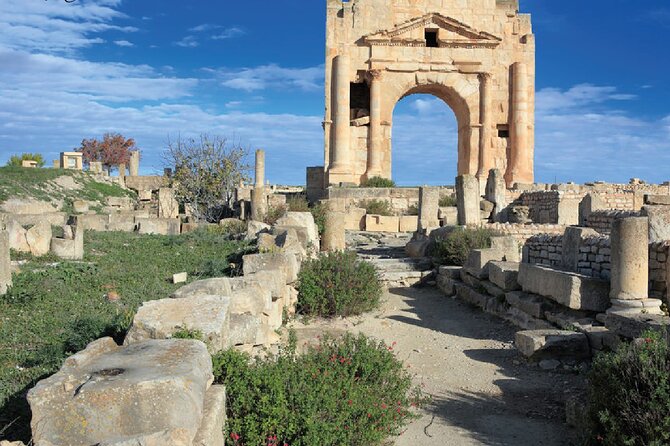
- Mactaris is a quiet archaeological stop: Expect megalithic tombs, ancient stelae, Roman-era remains, and a small site museum.
- Kesra sits at about 1,100 meters: The mountain setting and traditional Berber character are the main reasons to visit.
- The long drive shapes the day: From Tunis, Sousse, or Hammamet, much of your time is spent crossing central Tunisia.
- Private transport adds real value: You get pickup and drop-off at your accommodation, without sharing the vehicle with other groups.
- Lunch is not included: Plan for the midday meal with your guide, and confirm where and when you will stop.
- The price is $187.93 per person: This makes more sense for a small private group than for a solo visitor on a tight budget.
Why Mactaris and Kesra make a useful pairing
Many Tunisia day trips focus on the coast, Carthage, or the Roman amphitheater at El Jem. This outing takes you farther inland, where the pace is slower and the sites feel less packaged for mass tourism. You trade easy access for a closer look at Tunisia’s central plateau.
Mactaris gives you the archaeology. Kesra gives you living culture, mountain views, old customs, and a stronger sense of place. The contrast helps explain why this is more than a ruins tour, even though archaeology is the main reason to book it.
The day is especially appealing if you have already seen Tunis and the coastal resorts. You will spend a lot of time on the road, but that road connects two destinations that are not easy to reach by ordinary public transport in a single day.
More ksour and Berber village trips:
- One night under the tent: Tataouine – Chenini – Ksar Ghilane – Matmata
★ 5.0 · 53 reviews - Private Day Trip Ksar Ghilane Oasis
★ 5.0 · 53 reviews - Out of time Berber villages Tekrouna and Zriba Alia
★ 5.0 · 42 reviews
Mactaris: ancient stones on a high plateau
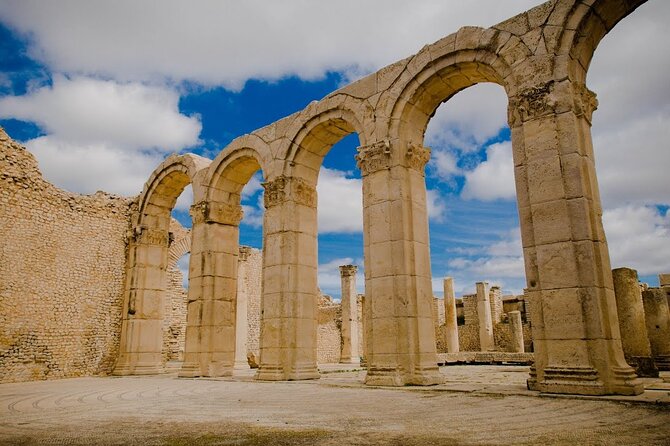
The first major stop is Mactaris, also written as Maktar or Mactaris. The ancient city sits on a plateau at the northern edge of Tunisia’s central ridge, in the transition between the northwest and central-west regions.
Its position mattered. Mactaris lay near the geometric center of Tunisia and close to a watershed between two sides of the country. That location helped it serve as a commercial center rather than a settlement of purely local importance. Your guide can help connect the stones in front of you with that wider role.
The site has Numidian roots and later links to Carthaginian, Roman, Byzantine, and Islamic periods. It is a useful place to see how one settlement changed over many centuries instead of being tied to a single empire or era.
Allow about one hour and 30 minutes here. That is enough for a guided walk through the main remains and time in the museum, but it is not a leisurely archaeological study session. If you like inscriptions, tombs, and architectural fragments, you will want to listen closely and use your time well.
The megalithic tombs
One of Mactaris’s most distinctive features is the number of megalithic tombs. These large stone burial monuments point to a very old occupation, long before the later Roman buildings that often dominate visitors’ attention in Tunisia.
The tombs also give the site a different feel from the more familiar Roman ruins. You are not looking only at columns, paved streets, and public buildings. The burial remains remind you that people used this high ground across a very long span of time.
The ground may be uneven, and the site covers open areas rather than a compact museum courtyard. Wear firm shoes and bring sun protection. Even on a day with mild temperatures, the exposed plateau can feel tiring.
The site museum and carved stelae
The museum preserves stelae and other objects found at Mactaris. These carved stones are important because they provide clues about religious practice, names, symbols, and changing cultural influence.
I would give the museum your full attention rather than treating it as a quick indoor break. The objects can make the scattered ruins easier to understand, especially if you are not used to reading archaeological sites without much reconstruction.
The tour includes admission fees, which keeps the day simple. Still, do not expect a large national museum with extensive displays. The value is in seeing objects connected to the site itself, then stepping outside to view the remains in their original setting.
More History Tours in Hammamet:
- Guided tour in the UNESCO world heritage Medina of Tunis
★ 5.0 · 68 reviews - Historical Tour of Ancient Carthage
★ 5.0 · 51 reviews - 2 Hour Hergla Visit and Sousse Medina Heritage Tour
★ 4.5 · 3 reviews
What the guide adds at Mactaris
Mactaris is not the sort of place where every monument explains itself. A private guide matters here because you can ask about the Numidian beginnings, the Carthaginian period, the Roman changes, and the role of the city in regional trade.
The supplied information does not name the guide, so you should not expect a particular person by name. You can, however, make the most of the private format by asking for a clear explanation of the site’s timeline before the walk begins.
A useful question is how the earlier Numidian and Carthaginian layers relate to the Roman remains. Another is which monuments are original to Mactaris and which were altered or reused later. Those questions turn a collection of stones into a story.
Kesra: Tunisia’s highest village at 1,100 meters
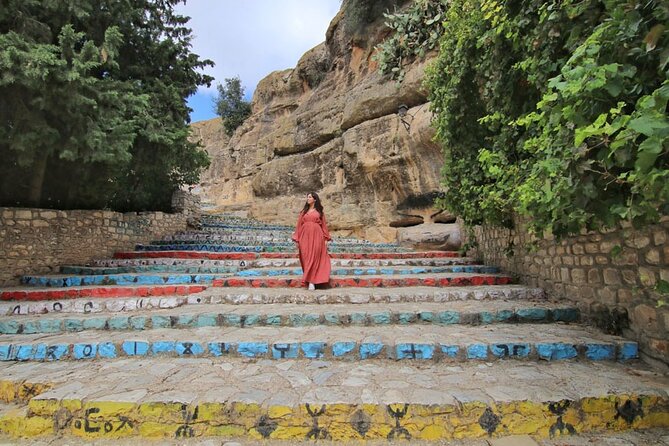
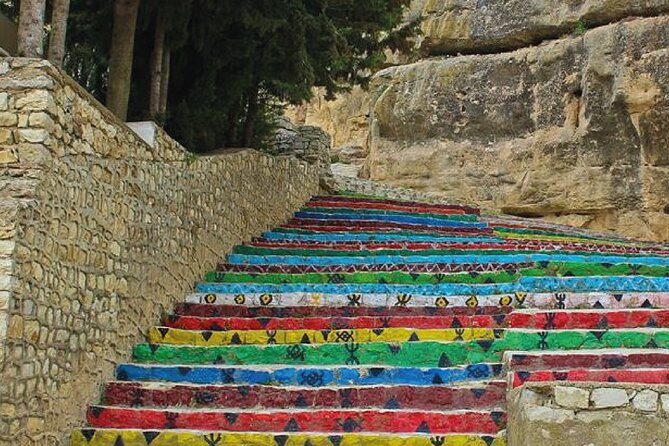
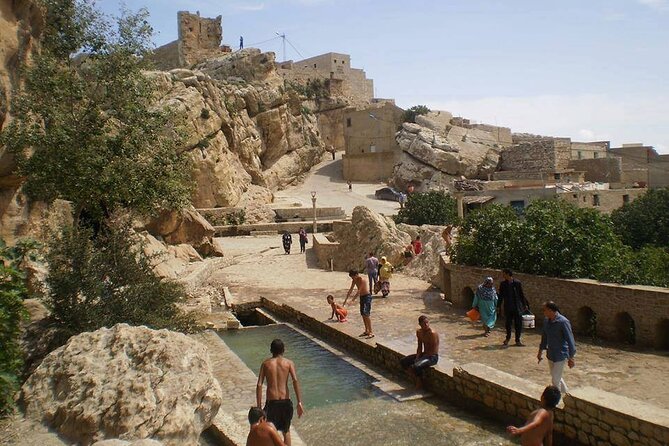
From Mactaris, the tour continues to Kesra, also called Kasra in some spellings. At around 1,100 meters above sea level, it is described as Tunisia’s highest village and one of the country’s early Berber settlements.
Kesra is built around a rocky hill and has a natural defensive position above the surrounding plains. Water sources helped support life here, while the height offered protection and a broad view across the central Tunisian countryside.
The stop lasts about one hour, and admission is free. That short visit gives you time to walk through the village, take in the setting, and hear about its Berber, Punic, Roman, Byzantine, and Islamic connections.
This is not a polished open-air museum. The appeal is that Kesra remains a living village where older traditions and present-day life exist together. That also means you should approach it with respect. You are visiting a community, not simply moving between historical displays.
The Berber character of Kesra
Kesra is presented as a cradle of Berber culture, with long-standing traditions and social practices. The village’s mythical heritage is part of the experience, but the strongest impression comes from the combination of old stone, high elevation, and daily life.
I like this stop because it prevents the day from becoming a sequence of archaeological labels. You get a chance to see how the past still shapes the identity of a place, even when you are no longer standing among ruins.
The information provided does not specify a particular folklore performance, craft demonstration, or household visit. Keep your expectations grounded. You are coming for the village atmosphere, the views, and the guide’s explanation, not a guaranteed staged cultural program.
Views and walking conditions
Kesra’s high position is one of its main rewards. You may find broad views over the plains and a striking sense of the village as a rocky stronghold. The exact experience will depend on weather and visibility.
The paths can require some walking, and a hill village is rarely as easy underfoot as a flat museum. Comfortable shoes are a sensible choice. Anyone with mobility concerns should ask the operator about the walking route before booking, even though the tour information says most travelers can participate.
The tour requires good weather. That matters more here than at an indoor attraction, since the setting and outdoor walk are central to the stop.
The drive from Tunis, Sousse, or Hammamet
Pickup is offered from Tunis, Hammamet, or Sousse, with private round-trip transport included. The vehicle is air-conditioned and equipped with Wi-Fi, and bottled water is provided.
Those features matter because the distance is the tour’s biggest practical challenge. One available review puts the total driving time at about four to five hours. The official duration is approximately eight hours, so your day has a firm road-trip rhythm.
From Hammamet or Tunis, plan for an early start and a long return. Sousse may be a convenient base for some visitors, but you should still confirm the exact pickup time and estimated drive before paying. The description does not provide a detailed timetable.
The private vehicle makes the hours more manageable. You can travel with your own group, avoid coordinating with strangers, and speak directly with the guide about stops and pacing. Wi-Fi is a useful extra, though you should treat it as a convenience rather than the main reason to choose the tour.
Front-door pickup and drop-off also remove the need to find a taxi or public transport connection before sunrise. For a family, couple, or small group, that convenience can be worth a large part of the cost.
What the $187.93 price really buys you
At $187.93 per person, this is not a budget excursion. The value depends heavily on group size and how much you care about private transport.
For one person, the price is hard to justify unless convenience and a private guide are your top priorities. For two people, the cost may feel reasonable if you want a custom day without arranging a rental car. For a small group, the per-person value improves because the private vehicle and guide costs are shared.
The price includes all fees and taxes, admission to Mactaris, air-conditioned transport, Wi-Fi, and bottled water. Lunch is not included, so keep money aside for food. The available information does not give a fixed restaurant, menu, or lunch price, so ask the guide about the plan at the start of the day.
The strongest value is access. Mactaris and Kesra are not the easiest pair to reach independently in eight hours, especially if you do not want to drive unfamiliar roads. You are paying to link them safely and efficiently, with historical context along the way.
The weakest value is the sightseeing time compared with the road time. If you dislike long drives, you may prefer a closer day trip. If you enjoy quiet sites and unusual routes, the distance becomes part of the adventure rather than wasted time.
Who will enjoy this day trip most
I would recommend this experience to archaeology fans, repeat visitors to Tunisia, photographers, and anyone curious about inland communities beyond the resort towns. Mactaris rewards patience, while Kesra gives the day a human and geographic dimension.
It also suits travelers who prefer a private outing to a large coach tour. You can ask questions, keep the conversation focused on history or local traditions, and spend your limited time at each stop according to your interests.
Families may appreciate the private vehicle and front-door service, but the long drive and uneven outdoor ground could test younger children. The tour information says most travelers can participate, and service animals are allowed, but it does not provide child-specific activities or detailed accessibility information.
This is less suitable for someone seeking a relaxed food tour, a beach day, or a schedule packed with many attractions. You visit only two principal destinations, and the road between them takes up a large share of the day.
Small details that can improve your day
Wear walking shoes, bring sun protection, and carry any personal snacks you may want between stops. Bottled water is included, but lunch is not.
Use the private format actively. Ask your guide to explain the difference between Numidian, Punic, Roman, Byzantine, and Islamic layers at Mactaris. At Kesra, ask how the village’s Berber identity fits with the later cultures that shaped the area.
You should also confirm pickup details, expected driving time, and the lunch plan before departure. The experience accepts mobile tickets, offers group discounts, and provides confirmation at booking.
Free cancellation is available if you cancel at least 24 hours before the start time. Changes made inside that period are not accepted, and poor weather may lead to a new date or a full refund.
Should you book Mactaris and Kesra?
Book this tour if you want a private, history-focused day away from Tunisia’s better-known coastal sights, and you are comfortable spending four to five hours in the vehicle. The near-empty feel of Mactaris, combined with Kesra’s high Berber village setting, gives you a quieter and more unusual day than the standard Tunisia circuit.
Skip it if your priority is maximum sightseeing time, low cost, or a short transfer. At $187.93 per person, the tour earns its price through private access, transport, and guidance rather than through the number of attractions.
For the right person, this is a worthwhile trade: fewer stops, more road, and a close look at two places that many visitors miss.
FAQ
Where does the tour depart from?
Pickup and drop-off are offered from Tunis, Hammamet, or Sousse. The service provides front-door transfers, but the exact pickup time should be confirmed when booking.
How long does the experience last?
The tour lasts approximately eight hours. The total driving time may be about four to five hours, leaving time for visits to Mactaris and Kesra.
Is this a private tour?
Yes. Only your group participates, and the tour includes a private guide and private round-trip transportation.
What is included in the price?
The price includes all fees and taxes, an air-conditioned vehicle, Wi-Fi, bottled water, and admission to the Mactaris archaeological site.
Is lunch included?
No. Lunch is not included in the tour price.
How long do you spend at Mactaris?
The planned visit to Mactaris lasts about one hour and 30 minutes. Admission is included.
How long do you spend in Kesra?
The planned visit to Kesra lasts about one hour. Admission is free.
Is the tour suitable for most people?
The tour information states that most travelers can participate. Service animals are allowed, and the tour is near public transportation, although private pickup and drop-off are provided.
Can you cancel for a refund?
Yes. You can cancel at least 24 hours before the local start time for a full refund. If poor weather causes cancellation, you will be offered another date or a full refund.
Just added in Hammamet
- Transfer from Airport Tunis Carthage To Hammamet★ 5.0 · 2 reviews
- From Hammamet: Sahara Desert Overnight Camping★ 4.5 · 2 reviews
- Private Guided Tour of Zaghouan, Thuburbo Majus and Dougga from Hammamet★ 5.0 · 1 review
- Private Transfer from Tunis Carthage Airport to Hammamet★ 5.0 · 2 reviews
- Executive: Transfer Tunis Airport to Hammamet by Mercedes E Class★ 5.0 · 4 reviews
- Private Excursion of Friguia Park and Medina of Hammamet★ 4.5 · 4 reviews
- Day Trip to Cap Bon★ 5.0 · 2 reviews
- Zaghouan, Thuburbo Majus and Dougga Private Self-Guided Excursion from Hammamet★ 5.0 · 2 reviews
Ksar Ghilane and Berber Villages, compared.
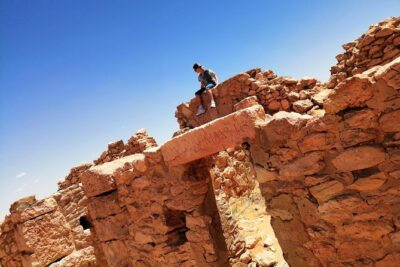
One night under the tent: Tataouine – Chenini – Ksar Ghilane – Matmata
Read our review →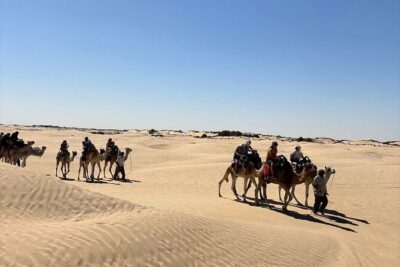
Door of the tunisian desert Ksar Ghilane and Matmata: Full one Day
Read our review →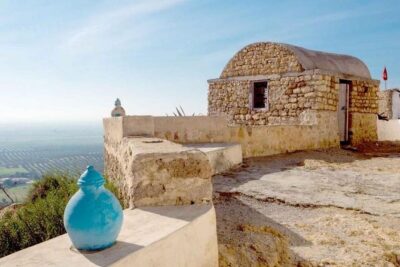
Out of time Berber villages Tekrouna and Zriba Alia
Read our review →
Ksar Ghilane 1 day: The hot spring and the homestay
Read our review →
2 Days Private Tour to Ksar Ghilane: Night in Tent
Read our review →Browse the lists this tour appears in