
Reviewed · CARTHAGE AND SIDI BOU SAID
Tunis: Carthage, Bardo Museum, Sidi Bou Said & Medina Group Tour
Four great Tunis sights, one packed day. This $45 group tour brings together ancient Carthage and the Bardo Museum with the blue-and-white lanes of Sidi Bou Said and the old Medina. I like the included hotel pickup and entry fees, and I like having a guide explain what can otherwise look like scattered stones and pretty streets. The tradeoff is simple: this is a long day, with plenty of walking and some stops that may feel rushed.
The tour usually runs from about 8 a.m. for seven to eight hours. Guides such as Boutheina Derouiche, Bouhdid, Mohamed, Younis, and Boubou have earned praise for clear explanations, energy, patience, and personal attention. Still, weather can make the open-air parts demanding, and the lunch arrangement may not feel as organized as the rest of the day.
In This Review
- Key points to know before booking
- Why this day works for a first visit to Tunis
- Carthage: where the ancient story begins
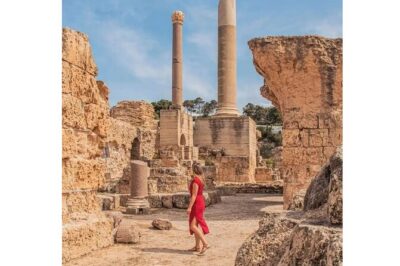
- The Baths of Antoninus and Roman Carthage
- The Carthage Aqueduct and ancient water engineering
- Sidi Bou Said: blue doors and sea views
- Café des Délices and the lunch question
- The Bardo Museum and Tunisia’s long timeline
- Entering the Medina through Bab Bhar
- Zitouna Mosque and the old souks
- Guides, drivers, and group comfort
- Price, timing, and who gets the most value
- Is this Tunis day tour right for you?
- FAQ
- How long does the Tunis tour last?
- What places are included?
- Is lunch included?
- Are entrance fees included?
- Can I book the tour in another language?
- How many people can join the tour?
Key points to know before booking
- Carthage gets the historical spotlight: See the Baths of Antoninus, Byrsa Hill area, Punic ports, and Roman engineering remains with context from a guide.
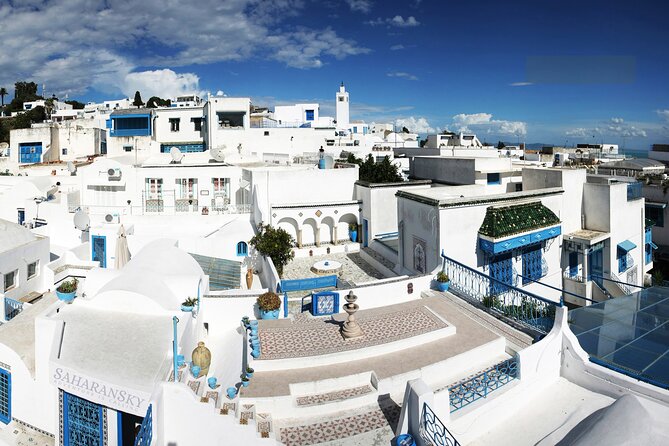
- Sidi Bou Said is the prettiest pause: Expect blue-and-white buildings, narrow lanes, Mediterranean views, and uphill walking.
- The Bardo Museum adds real depth: Its collection helps connect Tunisia’s ancient civilizations with the ruins you see outdoors.
- Tunis Medina brings local life into the day: Browse souks, see the Zitouna Mosque from outside, and pass through Bab Bhar.
- The $45 price covers useful extras: Hotel pickup and drop-off, lunch, transportation, guiding, and admission fees are included.
- This is a full physical day: Plan for sun, wind, uneven ground, stairs, and as much as five miles of walking for some people.
Why this day works for a first visit to Tunis
Tunis is easy to underestimate. The capital has Roman ruins, Phoenician foundations, Islamic architecture, Ottoman touches, French-era streets, and a seaside village famous for its painted houses. Seeing those pieces on your own in one day can mean spending time on transport and missing the connections between them.
This tour solves that problem with a vehicle and a guide. You move between Carthage, Sidi Bou Said, the museum, and the Medina without having to work out every taxi ride or entrance ticket. For a first look at the capital, that convenience is valuable.
The group can reach a maximum of 19 people, though the actual size may be smaller. One person described a group of 12 fitting comfortably in the van. A small group gives you a better chance to hear the guide and ask questions, but a full vehicle can make commentary difficult. One useful improvement would be a microphone in the van, especially when the road noise rises.
The day is also best for people who want variety. You are not spending seven hours on one archaeological site. Instead, you shift from ruins to seaside streets, from museum galleries to market lanes. That change of pace keeps the day interesting, though it also leaves little room for lingering.
More Medina Tours in Tunis
- Private tour: Medina,Carthage ,Sidi Bou Said, Bardo Museum+lunch
★ 5.0 · 230 reviews - Carthage, Bardo Museum, Sidi Bou Said and Medina Private Day Tour
★ 4.5 · 153 reviews - Guided tour in the UNESCO world heritage Medina of Tunis
★ 5.0 · 68 reviews
Carthage: where the ancient story begins
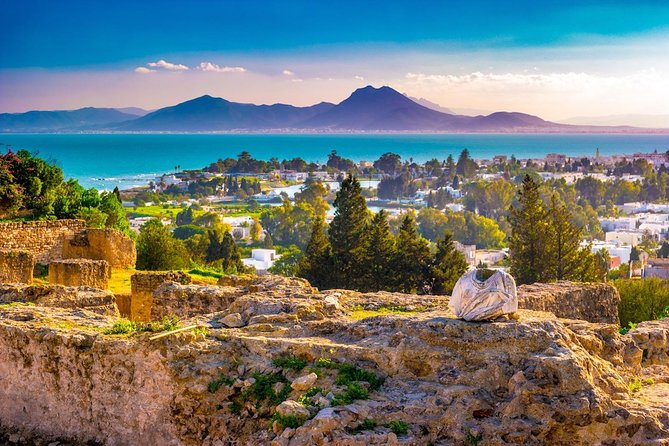
The first major stop is the Archaeological Site of Carthage, where you spend about two hours. Carthage began as a Phoenician city and later became a major power in the western Mediterranean. Rome destroyed it in 146 BC, and Roman Carthage was later built over parts of the earlier settlement.
That layered past is what makes the site rewarding, and also what makes it confusing without help. You may see foundations from different periods close together, but they do not always explain themselves. A good guide points out the changes in city planning, building methods, and political control.
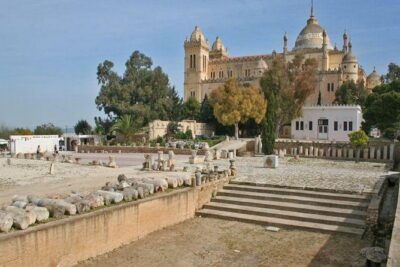
Byrsa Hill is one of the key areas. It gives you a sense of Carthage’s position and helps explain how the ancient city was organized. The Punic ports offer another important piece of the story. These harbors were linked to Carthage’s naval strength and show that the city was not simply a collection of temples and houses.
The open-air ruins require walking over uneven surfaces. Some sections may be exposed to strong sun or wind, so comfortable shoes and a hat are practical choices. The tour provides a broad introduction rather than an exhaustive archaeological study. If Carthage is your main reason for coming to Tunisia, you may wish for more time at individual sites.
The Baths of Antoninus and Roman Carthage
The Baths of Antoninus receive a separate stop of about 20 minutes, even though they are part of the wider Carthage archaeological area. They were built in the second century AD and were among the largest Roman bath complexes in North Africa.
The surviving arches and foundations help you picture a huge public complex with courtyards, communal rooms, heating systems, and decorated surfaces. The bathhouses were not only places to wash. They were social spaces where people met, exercised, and spent time.
Twenty minutes is enough to get the main idea and hear the essential explanation. It is not enough for a slow study of every architectural feature. I would pay close attention to the guide here, because the remains are easier to understand when someone explains how the heating system and room arrangement worked.
The site can be especially appealing if you enjoy ancient engineering. The scale of the construction tells you more than a few isolated walls could. It also gives the Carthage portion a strong Roman focus, balancing the earlier Phoenician story.
The Carthage Aqueduct and ancient water engineering
The aqueduct stop lasts about 20 minutes. Built by the Romans, the system carried water toward Carthage over a distance of more than 130 kilometers. That figure alone helps show the size of the undertaking.
You will see remaining structures and sections of the route, though this is not presented as a long walk along the full aqueduct. The stop is mainly about understanding how the city supported a large population and its public buildings.
This is a quick stop, so your guide’s explanation matters. Look for the relationship between the aqueduct and the baths. Water management made large Roman public complexes possible, and the two stops make more sense when considered together.
One point to keep in mind is that the Carthage portion covers several sites rather than every major ruin. A day tour has to balance ancient remains with the other three destinations. If you want to inspect all of Carthage in detail, this schedule will feel more like an overview.
More Carthage and Sidi Bou Said trips:
- Guided Bike Tour of Carthage Archeological Site in Tunisia
★ 5.0 · 88 reviews - Group Guided Bike Tour of Carthage Archeological Site in Tunisia
★ 5.0 · 57 reviews - Archaelogical Site Of Carthage + Picturesque Village Of Sidi Bou Said
★ 5.0 · 56 reviews - Historical Tour of Ancient Carthage
★ 5.0 · 51 reviews
Sidi Bou Said: blue doors and sea views
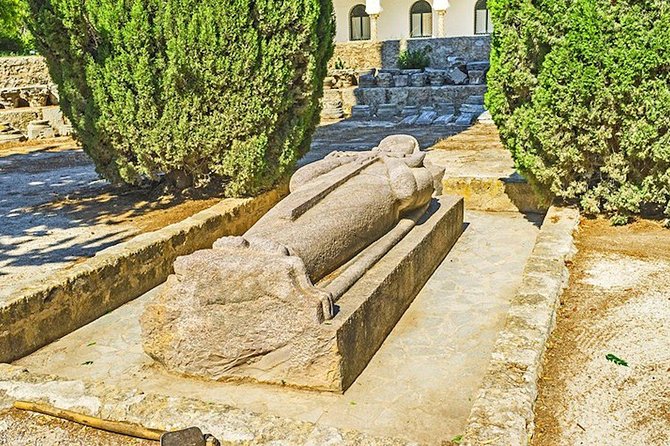
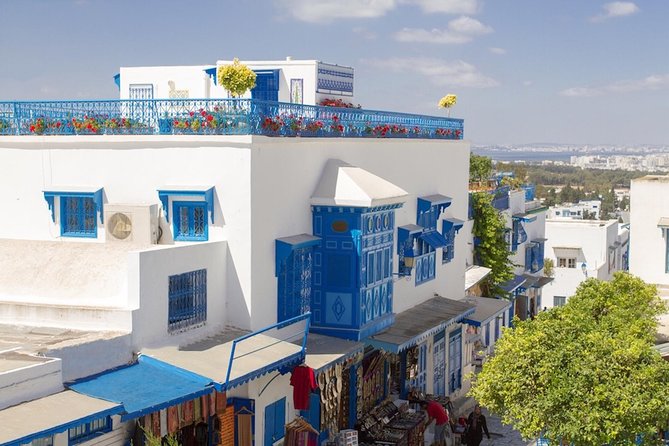
After Carthage, the tour moves to Sidi Bou Said for about an hour. This hilltop village is known for white walls, blue doors, decorative window grilles, and views toward the Mediterranean. It is visually different from the archaeological sites, which makes it a welcome change.
The best way to enjoy Sidi Bou Said is on foot. Walk slowly through the narrow streets, look at the painted details, and allow time for photographs. The village has an artistic feel, and its simple color scheme gives nearly every lane a recognizable look.
There is a physical catch. The village includes uphill walking, and the paving can be uneven. One person on the tour covered about five miles over the full day, including walking connected with a cruise-port pickup. If your knees or balance are an issue, tell the guide early and ask how much walking is planned at each stop.
The schedule allows about an hour, which is enough for a pleasant introduction but not a relaxed half-day visit. You may also spend some of this portion at an art gallery or museum rather than seeing every viewpoint mentioned in the tour description. If open sea views are your priority, make that clear to the guide.
Café des Délices and the lunch question
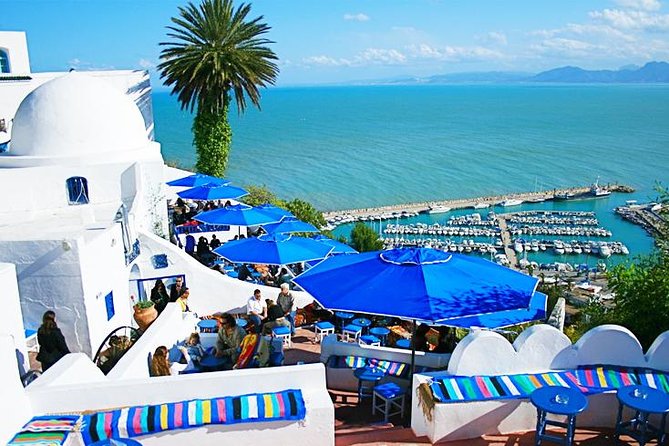
The tour passes Café des Délices, with about 25 minutes for a drink or a short stop. The café is associated with Sidi Bou Said’s coastal views, making it a natural place for tea, a cool drink, and photographs.
This is not necessarily a full café experience for every group. The timing may depend on the day’s traffic, group pace, and the guide’s plan. Consider it a scenic pause rather than the main event.
Lunch is included, which helps keep the $45 price in perspective. The meal has been described positively by some people, including a fish lunch, while others found the restaurant basic or the service slow and disorganized. One practical complaint was the lack of reserved seating, which led to waiting.
That mixed picture is worth taking seriously. At this price, you should expect a local meal, not a polished fine-dining experience. A vegetarian option is available, but you need to request it when booking. If you value a quick and structured lunch, ask the guide about the plan at the start of the day.
The Bardo Museum and Tunisia’s long timeline
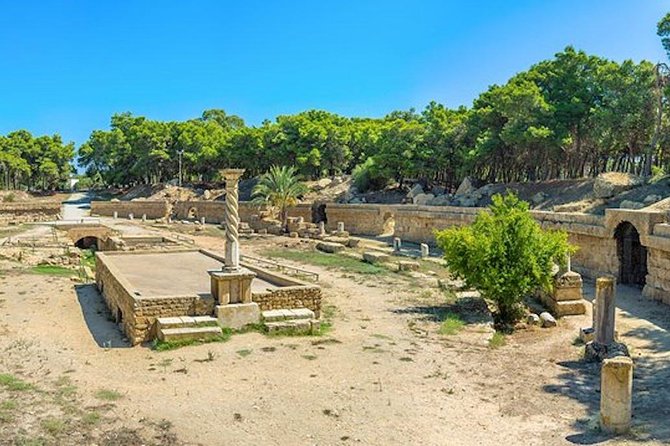
The Bardo Museum is scheduled for about two hours and is one of the day’s strongest stops. Its collections help put the outdoor sites into a wider setting, with art and objects connected to Tunisia’s Punic, Roman, Byzantine, and Islamic periods.
The museum is particularly useful after Carthage. You have already seen the stones, walls, and bath foundations. Inside, objects and mosaics can show the artistic skill and daily life behind those remains. Two hours gives you time to see major sections without trying to read every label.
Museum hours and closures matter. One group arrived to find the Bardo closed but still had a full day because the other stops continued. You should confirm opening arrangements close to your date, especially if visiting on a holiday or unusual day. The schedule as presented gives the museum a large time block, so its closure can change the balance of the day.
The museum portion also provides a break from the weather. Several outdoor stops expose you to wind, rain, dust, or strong sun. On a rough-weather day, the Bardo can be the most comfortable part of the program, assuming it is open.
Entering the Medina through Bab Bhar
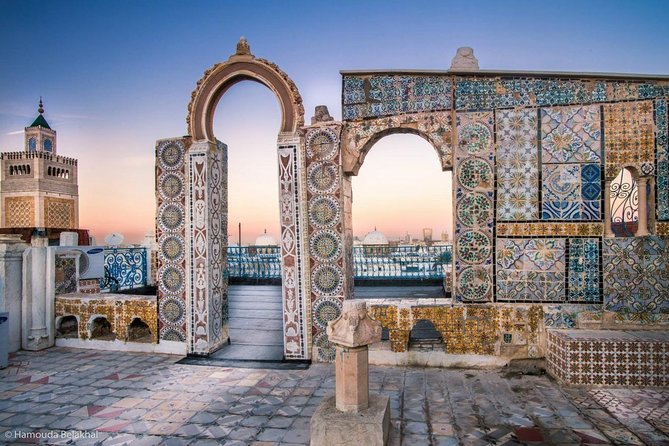
The tour then reaches central Tunis and the old Medina. You pass Bab Bhar, a historic gate marking the change between the modern city and the old quarter. Its Ottoman-influenced design makes it a useful visual introduction to what comes next.
The gate is more than a photo stop. It helps you see how Tunis developed in layers. Beyond it, the streets become narrower and the city feels more enclosed, with shops, religious buildings, workshops, and old houses close together.
The Medina is not a museum set. It is a working part of the city. That means the experience can feel crowded, noisy, or wonderfully alive, depending on the hour and the exact streets you enter. Keep your belongings secure and stay aware of the group as lanes twist and shop signs compete for attention.
Zitouna Mosque and the old souks
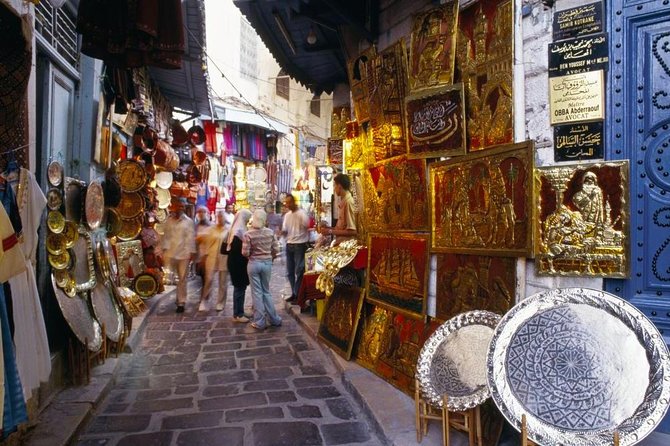
The tour allows about an hour in the Medina itself, although the broader Medina visit is also described as a two-hour portion of the day. Your guide can take you through traditional market streets, point out handicrafts, and explain key buildings.
The Zitouna Mosque is viewed from outside for non-Muslims. You can still appreciate the façade and its place at the center of the old quarter. Muslim participants may enter to see the interior. Dress respectfully around the mosque, and follow the guide’s instructions.
Shopping is part of the Medina experience, but time may limit how much browsing you can do. Sunday can be a poor day for this section because some shops may be closed. If you want to buy leather goods, textiles, pottery, or other local items, ask how much free time you will have before you begin negotiating.
The guide is most useful here. A market can blur into a maze of stalls when you do not know what you are seeing. With an explanation of the souks and landmarks, the Medina becomes more than a shopping stop.
Guides, drivers, and group comfort
The people leading the day make a major difference. Boutheina Derouiche is repeatedly praised for enthusiasm, clear explanations, and attention to individual needs. Other guides named by participants include Bouhdid, Mohamed, Younis, Luce, and Boubou.
The strongest pattern is the guide’s role in turning history into a story rather than a list of dates. Mohamed, for example, was praised for bringing Carthage to life through storytelling. Luce was valued for answering questions and explaining local history clearly.
Drivers also matter because the tour crosses several parts of the Tunis area. Adnane was praised for careful, friendly driving, and one driver helped a person using a walker. Another guide arranged a hotel return when someone needed to leave before the Medina. Those details suggest a team that can be helpful when plans change, though you should still explain mobility needs before departure.
Guides in other languages are available for bookings of two or more adults. The group size can reach 19, so the experience will not feel private unless your group happens to be small. The advantage is cost. You get a broad introduction to Tunis without paying private-tour rates.
Price, timing, and who gets the most value
At $45 per person, this tour offers strong value if you want transport, a guide, entry fees, lunch, and hotel pickup and drop-off in one package. Buying each piece separately could take more planning, and the guide is especially useful at Carthage and in the Medina.
The low price also explains some limits. Lunch may be basic, the van may be full, and the schedule may leave you wanting more time at your favorite stop. This is a sightseeing sampler, not a slow cultural visit.
Pickup is offered from Tunis hotels. If you are arriving by cruise ship, check the exact meeting point carefully. One person had to walk from the cruise port to the Lido Hotel in La Goulette for pickup, though the return drop-off was closer to the port. That extra walk added substantially to the day.
A single-adult booking requires confirmation 12 hours before the tour date. Bookings for two or more adults are automatically confirmed and guarantee departure, according to the tour conditions. The activity requires a minimum number of participants, and if that minimum is not met, you are offered another date or experience, or a full refund.
The cancellation rule is strict: the booking is non-refundable and cannot be changed for any reason. This matters if your schedule may shift.
Is this Tunis day tour right for you?
You should book this tour if you want to see the main sights around Tunis in one organized day and prefer explanations to independent wandering. It suits first-time visitors, cruise passengers who can confirm a practical pickup point, history fans who want Carthage and the Bardo together, and anyone who values having transport arranged.
You should think twice if you dislike long days, group schedules, uphill streets, uneven ruins, or basic lunch stops. You may also prefer a private guide if Carthage deserves several hours of close study or if you want to control how long you spend in Sidi Bou Said.
For most people, I see this as a good-value introduction to Tunis. Go prepared for a brisk pace, wear sturdy shoes, request a vegetarian meal in advance if needed, and confirm the Bardo Museum is open. If you accept those limits, the tour gives you a useful first portrait of Tunisia: Phoenician and Roman ruins, a hilltop village, museum art, and the working streets of the old capital.
FAQ
How long does the Tunis tour last?
The tour lasts approximately seven to eight hours and starts at 8:00 a.m.
What places are included?
The day includes Carthage, the Baths of Antoninus, the Carthage Aqueduct, Sidi Bou Said, Café des Délices, the Bardo Museum, Bab Bhar, the Zitouna Mosque from outside for non-Muslims, and the Medina of Tunis.
Is lunch included?
Yes. Lunch is included, and a vegetarian option is available if you request it when booking.
Are entrance fees included?
Yes. Admission fees for the included ticketed sites are covered.
Can I book the tour in another language?
Yes. Guides in other languages are available for bookings of two or more adults.
How many people can join the tour?
The maximum group size is 19 people.
More Bardo Museum Tours
- Private Day Tour Tunis Medina Carthage Sidi Bou Said Bardo Museum
★ 5.0 · 30 reviews - Daytrip Carthage Sidi Bousaid Bardo and Tunis Medina
★ 5.0 · 20 reviews - Private Tour Sidi bou Said Medina Carthage & bardo Museum
★ 4.5 · 13 reviews - Tunis Group Tour: Carthage, Sidi Bou Said, Bardo museum & Medina
★ 5.0 · 5 reviews
Just added in Tunis
- Private Arrival Transfer: Tunis Airport to Tunis Hotel★ 4.5 · 5 reviews
- Cap Bon Guided Day Tour from Tunis★ 5.0 · 2 reviews
- Unveiling the Beauty of Sidi Bou Said and Carthage Private Tour★ 5.0 · 2 reviews
- Dougga Guided Day Tour from Tunis★ 5.0 · 5 reviews
- Tunis Carthage Private Arrival Airport Transfer to Tunis★ 5.0 · 4 reviews
- Tunis Group Tour: Carthage, Sidi Bou Said, Bardo museum & Medina★ 5.0 · 5 reviews
- Kairouan-El Jem★ 4.5 · 2 reviews
- Bardo Museum , Oudhna and the roman aqueduct★ 5.0 · 4 reviews
Carthage and Sidi Bou Said, compared.
VIP Tour: Tunis Medina/Bardo, Sidi Bou Said, Carthage |PICKUP ALL
Read our review →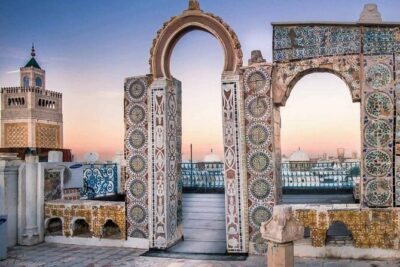
Private tour: Medina,Carthage ,Sidi Bou Said, Bardo Museum+lunch
Read our review →Private tour: Medina,Carthage ,Sidi Bou Said, Bardo Museum+lunch
Read our review →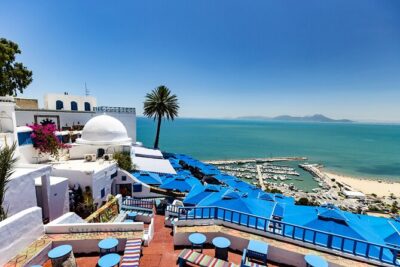
Carthage, Bardo Museum, Sidi Bou Said and Medina Private Day Tour
Read our review →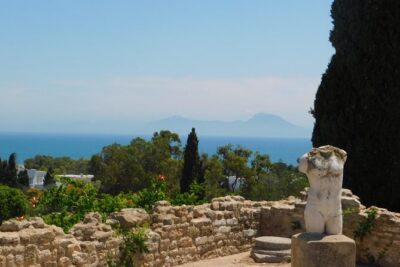
Guided Bike Tour of Carthage Archeological Site in Tunisia
Read our review →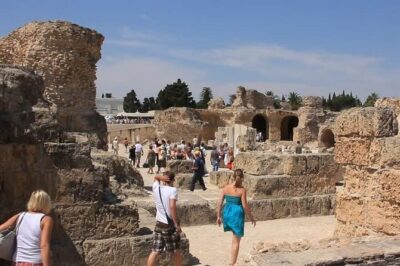
Archaelogical Site Of Carthage + Picturesque Village Of Sidi Bou Said
Read our review →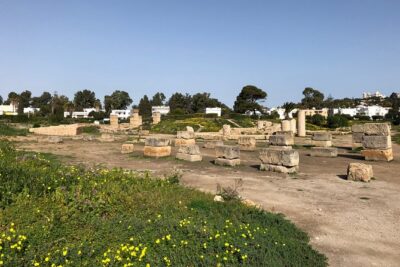
Tunis, Sidi Bousaid and Carthage day trip from Hammamet
Read our review →Browse the lists this tour appears in