
Reviewed · CARTHAGE AND SIDI BOU SAID
Group Guided Bike Tour of Carthage Archeological Site in Tunisia
Carthage makes more sense on two wheels. This three-hour ride links scattered Punic and Roman sites with less time spent waiting for taxis or walking beside traffic. I especially like the easy pace and the chance to see the ruins in sequence, from the Tophet to the Baths of Antoninus. A guide such as Jiji or Yasi can add the stories that bare stones often lack.
The $56.99 price is fair because it covers the bicycle, helmet, guide, taxes, and admission to the main archaeological stops. I also like the e-bike option, since most of the route is manageable but one hill can be steep. The main drawback is time: three hours may not be enough to see every site fully, especially if your group wants to linger or include Byrsa Hill.
In This Review
- What makes this Carthage bike tour worth considering
- Why a bicycle suits Carthage
- Starting at the Tophet, where Punic beliefs come into view
- The Punic Ports and Carthage’s Mediterranean reach
- The Baths of Antoninus and the scale of Roman Carthage
- The Roman Theatre, a shorter but useful stop
- Byrsa Hill and Saint Louis Cathedral, if conditions allow
- Guides who make bare ruins easier to understand
- Is $56.99 a fair price?
- Fitness, weather, and what to bring
- Who should book this ride?
- Should you book the Carthage bike tour?
- FAQ
- How long does the Carthage bike tour last?
- What is the price per person?
- What is included in the tour?
- Is hotel pickup and drop-off included?
- Do I need to bring a passport?
- Is the ride difficult?
- What happens if the weather is poor or the tour does not meet its minimum group size?
What makes this Carthage bike tour worth considering
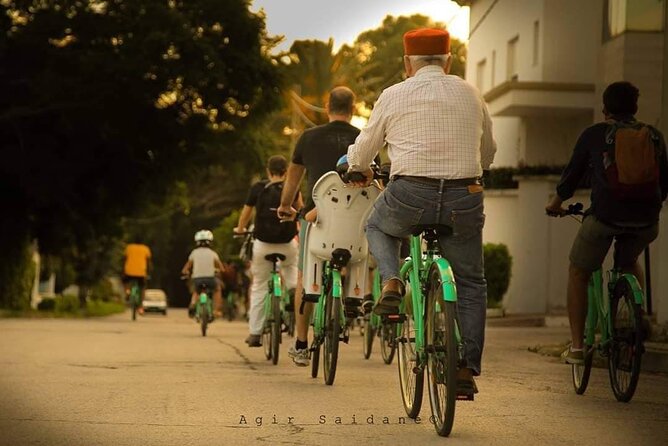
- A practical route between widely spread ruins: Cycling helps you connect several Carthage sites without arranging separate transport.
- Punic and Roman history in one outing: You move from the Tophet and ancient ports to imperial baths and a Roman theatre.
- Mostly easy riding with one serious hill: A standard bike should suit regular cyclists, but an e-bike is a sensible choice if hills are not your strength.
- Strong guide-led experience: Jiji and Yasi are praised for warm presentations, clear explanations, and memorable historical stories.
- Views near the sea: The route combines archaeology with the open coastal setting around Carthage.
- A small-group feel: The maximum group size is 20, though the actual number may be smaller.
Why a bicycle suits Carthage
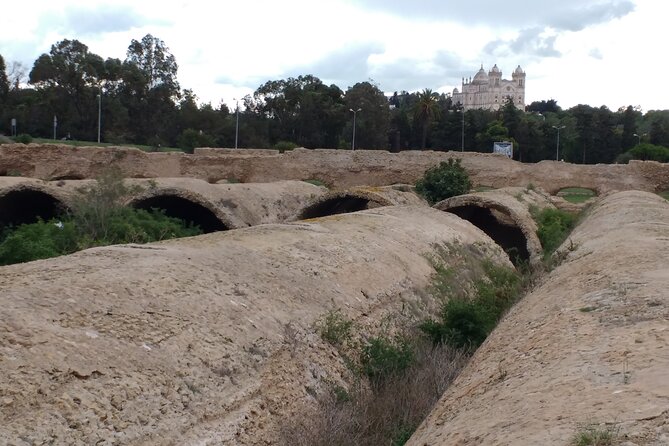
Carthage is not one compact ruin with a single entrance. Its remains are spread across a broad area of modern Carthage, with major sites separated by roads, neighborhoods, and stretches near the coast. That makes a bicycle useful in a very practical way.
On foot, you could spend much of your visit simply getting from one archaeological area to the next. By bike, you can cover more ground while keeping the route connected. You also get a better sense of how the Punic city and later Roman settlement occupied the coast and the slopes above it.
The route is planned to avoid traffic as much as possible. That does not mean every part feels like a closed cycling path, so you still need ordinary road awareness. The ride is described as easy paced, with most of the cycling fairly flat. The main warning is a steep section near Byrsa Hill.
I would choose a regular bike if you cycle often and are comfortable with a short climb. If you are not used to hills, prefer not to sweat in Tunisia’s heat, or simply want to save your energy for the ruins, choose the e-bike. That small upgrade may make the difference between enjoying the history and thinking about your legs.
More Carthage and Sidi Bou Said trips:
- Private tour: Medina,Carthage ,Sidi Bou Said, Bardo Museum+lunch
★ 5.0 · 230 reviews - Carthage, Bardo Museum, Sidi Bou Said and Medina Private Day Tour
★ 4.5 · 153 reviews - Guided Bike Tour of Carthage Archeological Site in Tunisia
★ 5.0 · 88 reviews
Starting at the Tophet, where Punic beliefs come into view
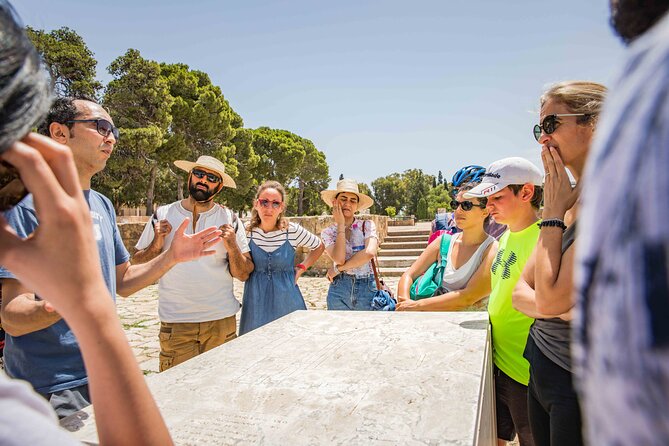
The tour begins at 9 Rue Hannibal, beside the archaeological site of Carthage. Your first stop is the Tophet, a Punic sanctuary visited for about 30 minutes, with admission included.
This is a useful first stop because it introduces Carthage before the tour shifts to its Roman remains. The guide explains Punic culture and the role of the sanctuary, giving you a framework for understanding the city that existed before Rome destroyed and rebuilt it.
The Tophet is not the sort of place that explains itself at a glance. Much of the meaning comes from interpretation, and this is where a strong guide matters. The stones and markers may seem spare if you arrive without context. A guide who can explain the beliefs and customs connected to the sanctuary turns the visit into something more than a quick look at old remains.
Thirty minutes is enough for an introduction, though it is not a long study visit. If Punic religion is your main interest, you may wish for more time. Still, as the opening stop, it works well. It places the earlier Carthaginian civilization at the front of the story instead of treating it as a footnote to Roman Carthage.
The Punic Ports and Carthage’s Mediterranean reach
Next comes the Punic Ports, along with the port museum. This stop lasts about 30 minutes and focuses on one of the most important parts of Carthage’s power: its connection to the Mediterranean.
The ports help you picture Carthage as a seafaring city rather than just a collection of ruins. They point to trade, naval strength, and the city’s role in Mediterranean history. The coastal setting also gives this part of the ride a welcome change of mood after the more enclosed feel of the Tophet.
The museum is included in the admission covered by the tour. Since the stop is brief, your guide will likely shape what you focus on. I would pay close attention to the explanation of how the ports functioned, since the physical remains can be hard to read without a clear verbal guide.
This is also one of the places where cycling adds atmosphere. You are moving through the area by the sea rather than arriving in a vehicle, looking out the window, and leaving again. The ride connects the site to its setting, which is important here. Carthage’s story was built around the water.
The Baths of Antoninus and the scale of Roman Carthage
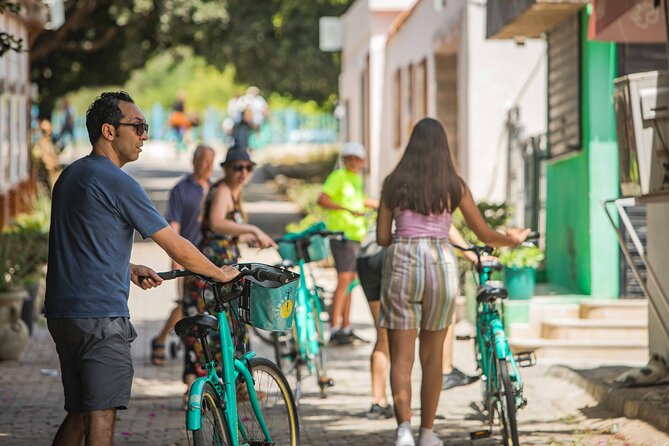
The longest stop is the Baths of Antoninus, with about 40 minutes set aside. These Roman baths faced the sea and were among the largest in the Roman Empire.
This is likely the visual high point of the route. The remains spread across a large area, and the position beside the water helps you understand the scale and ambition of Roman Carthage. You can expect to see more than the bath buildings alone, including other ruins within the archaeological site.
Forty minutes gives you time to walk around, listen, take photographs, and get a sense of the layout. It is still a guided overview, not a slow archaeological study. If you like inscriptions, architectural details, or long periods of quiet exploration, you may want to return independently after the bike tour.
The baths also show why the tour benefits from a guide. Ruins this large can be impressive but confusing. The guide helps separate what belonged to the baths from the wider Roman complex and explains how the site relates to Carthage’s later history.
The sea-facing location is a bonus, but do not mistake the ride for a beach outing. The attraction is the meeting of coastline and Roman remains. You get sunlight, open views, and ancient stone in the same stop.
More bike tours in Tunis:
- Self guided bike tour of Carthage archeological site
★ 4.5 · 10 reviews
The Roman Theatre, a shorter but useful stop
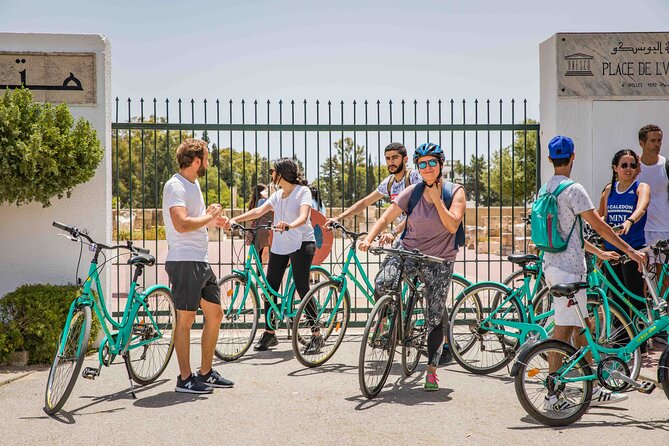
The Roman Theatre of Carthage receives about 20 minutes. This is the shortest major archaeological visit on the route, so expect an introduction rather than an extended examination.
A theatre adds another side to Roman urban life. The baths show public leisure and engineering on a grand scale, while the theatre points to performance and civic entertainment. Together, the sites help you see Roman Carthage as a functioning city, not merely a place of military ruins.
Twenty minutes can feel tight if you want to sit with the site or take detailed photographs. The benefit is that the stop keeps the overall ride moving. This tour is designed to give you a broad picture of Carthage in three hours, not to provide a full day at each monument.
Pay attention to the guide’s stories here. Several guides, including Jiji and Yasi, are praised for making the history lively and easy to follow. That kind of storytelling is especially helpful at a theatre, where the surviving structure may not immediately reveal how it was used.
Byrsa Hill and Saint Louis Cathedral, if conditions allow
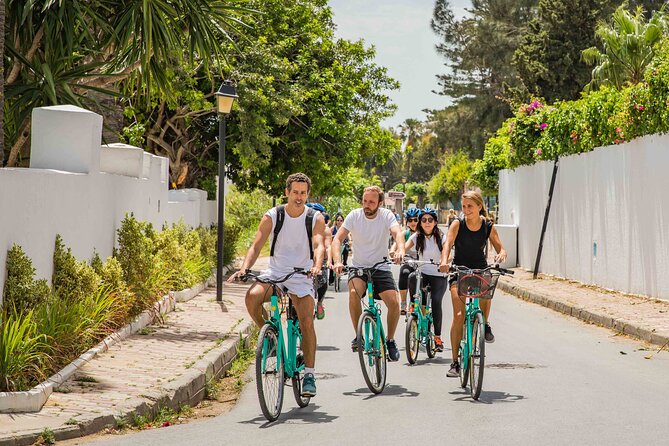
The final stop is optional in practice. If everyone in the group agrees and the time and weather are suitable, the ride may continue to Byrsa Hill, where you can see Punic architecture and learn how the Romans later used the hill.
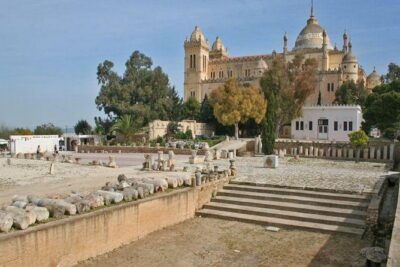
You will also see Saint Louis Cathedral from outside. Entry to the cathedral is not included because you do not enter, and the Carthage museum on the hill is closed. In very high temperatures, this portion can be canceled.
This is the section most likely to test your legs. The hill is the route’s clearest challenge, and the reason an e-bike makes sense for some riders. Even cyclists who manage the climb may prefer assistance in hot weather, especially after several stops in the sun.
Byrsa Hill matters because it brings the story back to the center of Carthage. It is also the point where the modern setting, Punic remains, and Roman history meet most clearly. But you should not book this tour assuming you will get a long visit there. The stop lasts about 15 minutes and depends on group agreement, time, and weather.
One practical point is worth keeping in mind: the museum is closed, so this visit is about the hill, the Punic architecture, and the cathedral exterior. If the hill is skipped, the tour may still cover the main planned archaeological stops, but you may want to ask whether admission tickets can be used for a later independent visit. One rider was able to request the tickets after the tour to see sites that the group had not reached.
Guides who make bare ruins easier to understand
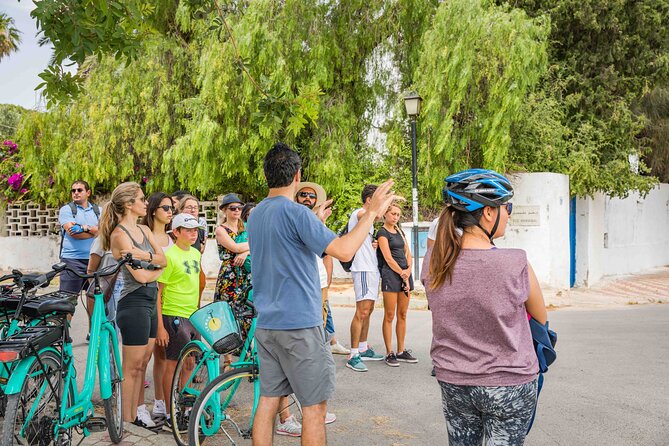
The best reason to take this ride with a guide is not simply navigation. Carthage has many sites where the remains offer little written explanation on the spot. A good guide supplies the missing connection between a wall, a port, a sanctuary, and the larger story.
Jiji is praised for a friendly and warm approach, along with strong command of the subject. Yasi is described as full of historical information and engaging stories. Those qualities matter because a three-hour tour covers a lot of ground quickly.
You should expect interpretation of both Punic culture and Roman Carthage. The tour does not focus only on the famous conflict between Carthage and Rome. It also looks at religious customs, maritime power, public buildings, and the way Roman rule changed the city.
The maximum group size is 20. That is not a tiny private ride, but it is limited enough to keep the experience more manageable than a large coach tour. Group agreement also affects the optional Byrsa Hill stop, so be prepared for the final portion to depend partly on the pace and interests of the people riding with you.
In one case, the ride became a private tour because too few people had booked, with the change communicated in advance. That possibility can be a pleasant surprise, but you should not count on it. The normal format is a group tour.
Is $56.99 a fair price?
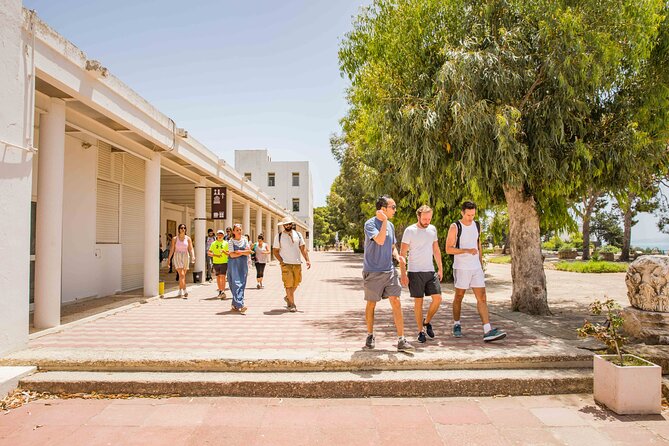
At $56.99 per person, the price is reasonable if you want a guided overview of several Carthage sites in one morning. It includes the bicycle, helmet, professional guide, taxes, fees, and admission tickets for the listed archaeological stops.
The value comes from combining transport and interpretation. You are not paying only to rent a bike, and you are not paying only for a short lecture at one ruin. The bicycle gets you between sites, while the guide gives meaning to places that can be difficult to understand alone.
The price is less compelling if you want a slow, detailed archaeological visit. Three hours moves at a useful pace, but it cannot give every stop the attention of a full-day program. The ride is best viewed as an efficient first look, especially if your time in Tunis is limited.
Hotel pickup and drop-off are not included. You need to make your own way to 9 Rue Hannibal in Carthage, and the tour ends at the same meeting point. The starting location is near public transportation, which helps, but you should allow enough time to arrive before the ride begins.
Fitness, weather, and what to bring
You need a moderate level of physical fitness. Most of the cycling is easy, but you are still riding between five stops, walking around ruins, and dealing with sun and heat. The hill at Byrsa is the key physical issue.
I would choose an e-bike if you are an occasional cyclist, have any concern about climbing, or are visiting during a very hot part of the day. If you ride regularly, a standard bike should be manageable based on the mostly flat route.
The tour requires good weather. Poor conditions can lead to a different date or a full refund, and very high temperatures can cause the Byrsa Hill portion to be canceled. Bring water, sun protection, and clothing suited to riding and walking outdoors. A helmet is provided.
The bikes are functional, though one rider found that a bike could have used a wash and more air in the tires. That is a small maintenance concern, but it is worth checking your bike before setting off. Test the brakes, tires, and seat, and speak up if something feels wrong.
A current valid passport is required on the day of the tour. Keep that requirement in mind when planning your morning.
Who should book this ride?
I would recommend it to you if you want a broad introduction to Carthage, prefer active sightseeing, and like having a guide explain the ruins as you move. It suits people who would rather cycle between sites than wait for separate transport or walk long stretches in the heat.
It is also a good fit if Punic and Roman history are both on your list. The route gives each period attention, moving from the Tophet and Punic Ports to the Roman baths and theatre.
You may want another plan if you require step-free sightseeing, dislike bicycles, or want long periods at individual sites. The tour involves cycling, walking, a possible steep hill, and outdoor exposure. It is not designed as a museum-centered visit, especially since the Carthage museum on Byrsa Hill is closed.
The 98 percent recommendation rate and 4.9 rating from 57 reviews suggest a consistently strong experience, with the guides receiving the warmest praise. The main reservations are practical: the limited three-hour schedule, the optional final hill, and occasional bike condition issues.
Should you book the Carthage bike tour?
Book it if you want to cover the main Carthage sites in one active, well-organized morning and you value stories as much as stones. The ride is especially appealing for first-time visitors who need a clear introduction to Punic and Roman Carthage.
Choose the e-bike if hills or heat concern you. Also, accept that three hours means an overview, not a complete archaeological study. If you can make peace with that tradeoff, cycling is one of the most sensible ways to connect Carthage’s scattered ruins, coastal views, and long layers of history.
FAQ
How long does the Carthage bike tour last?
The tour lasts approximately three hours.
What is the price per person?
The listed price is $56.99 per person.
What is included in the tour?
The price includes use of a bicycle, a helmet, a professional guide, all taxes, fees, handling charges, and admission tickets for the included archaeological stops.
Is hotel pickup and drop-off included?
No. You must make your own way to the meeting point at 9 Rue Hannibal, Site archéologique de Carthage 2025, Tunisia. The tour ends back at the meeting point.
Do I need to bring a passport?
Yes. A current valid passport is required on the day of the tour.
Is the ride difficult?
You should have a moderate level of physical fitness. Most of the route is fairly flat and easy, but there is a steep section near Byrsa Hill. An e-bike is recommended if you are not comfortable cycling uphill.
What happens if the weather is poor or the tour does not meet its minimum group size?
If bad weather causes cancellation, you will be offered another date or a full refund. If the minimum number of participants is not reached, you will be offered a different date or experience, or a full refund. You can cancel for a full refund up to 24 hours before the start time.
Just added in Tunis
- Private Arrival Transfer: Tunis Airport to Tunis Hotel★ 4.5 · 5 reviews
- Cap Bon Guided Day Tour from Tunis★ 5.0 · 2 reviews
- Unveiling the Beauty of Sidi Bou Said and Carthage Private Tour★ 5.0 · 2 reviews
- Dougga Guided Day Tour from Tunis★ 5.0 · 5 reviews
- Tunis Carthage Private Arrival Airport Transfer to Tunis★ 5.0 · 4 reviews
- Tunis Group Tour: Carthage, Sidi Bou Said, Bardo museum & Medina★ 5.0 · 5 reviews
- Kairouan-El Jem★ 4.5 · 2 reviews
- Bardo Museum , Oudhna and the roman aqueduct★ 5.0 · 4 reviews
Carthage and Sidi Bou Said, compared.
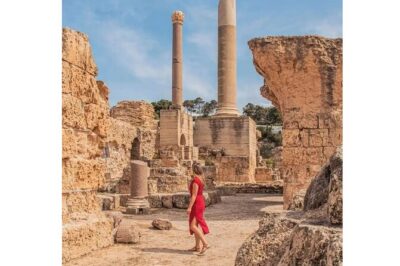
VIP Tour: Tunis Medina/Bardo, Sidi Bou Said, Carthage |PICKUP ALL
Read our review →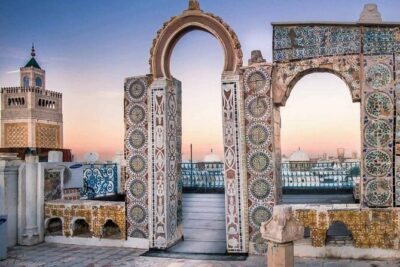
Private tour: Medina,Carthage ,Sidi Bou Said, Bardo Museum+lunch
Read our review →Private tour: Medina,Carthage ,Sidi Bou Said, Bardo Museum+lunch
Read our review →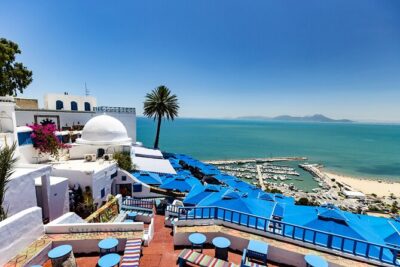
Carthage, Bardo Museum, Sidi Bou Said and Medina Private Day Tour
Read our review →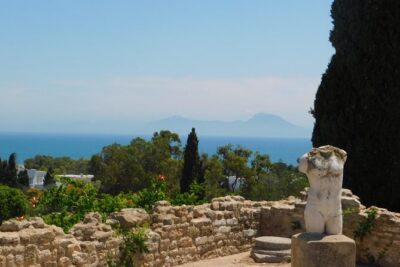
Guided Bike Tour of Carthage Archeological Site in Tunisia
Read our review →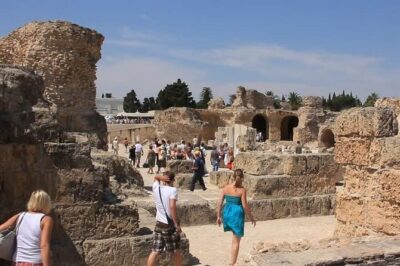
Archaelogical Site Of Carthage + Picturesque Village Of Sidi Bou Said
Read our review →
Tunis, Sidi Bousaid and Carthage day trip from Hammamet
Read our review →Browse the lists this tour appears in