
Reviewed · CARTHAGE AND SIDI BOU SAID
Guided Bike Tour of Carthage Archeological Site in Tunisia
Ancient ruins, viewed at cycling speed. This three-hour Carthage tour links Tunisia’s major archaeological sites with a private guide, giving you more time to stop, ask questions, and see how the Punic city gave way to Roman rule. I especially like the private format and the choice of a regular or electric bike. The main drawback is that the Carthage museum on Byrsa Hill is closed, and Saint Louis Cathedral is viewed from outside only.
The ride covers a lot of ground, from the Tophet sanctuary and Punic ports to the huge Baths of Antoninus and Roman Theatre. It costs $91.89 per person, so it is not the cheapest way to see Carthage, but the bicycle, helmet, admissions, and personal guide make the price easier to justify for a small group. Plan for some sun, road riding, and moderate physical effort.
In This Review
- Key things to know before you book
- Why a bike is a smart way to see Carthage
- Tophet: beginning with Carthage’s Punic beliefs
- Punic Ports and Museum: seeing Carthage as a sea power
- Baths of Antoninus: the tour’s main Roman monument
- Roman Theatre: a short look at Roman entertainment
- Byrsa Hill and Saint Louis Cathedral
- What the private guide adds
- Price, timing, and what you receive
- Who should choose the regular bike or electric bike
- Practical advice for a smoother morning
- Should you book this Carthage bike tour?
- FAQ
- How long does the Carthage bike tour last?
- Where does the tour start?
- Where does the tour end?
- Is this a private tour?
- Is an electric bike available?
- Are bicycles and helmets included?
- Is hotel pickup included?
- Do I need to bring a passport?
- What happens if bad weather cancels the tour?
Key things to know before you book
- Electric bikes help with hills and heat: The upgrade can make the route far more comfortable, especially around Byrsa Hill and during warm Tunisian weather.
- This is a private tour: Only your own group participates, so you can ask questions and spend more time at a site that interests you.
- The Baths of Antoninus get the longest stop: You have about an hour to explore one of the most impressive Roman sites in Carthage.
- The route connects several separate ruins: Cycling lets you cover more of Carthage than a walking tour without spending the whole morning in a vehicle.
- The Punic past gets real attention: The Tophet and ancient ports help explain Carthage before the Roman period.
- Bring your passport: A current valid passport is required on the day of the tour.
Why a bike is a smart way to see Carthage
Carthage is not one compact ruin. Its archaeological remains are spread across a modern Tunis suburb, with sites separated by roads and residential areas. On foot, you can spend valuable time walking between them. By bike, the ancient city becomes easier to understand as a connected place.
I like that this tour does not treat Carthage as a quick photo stop. The guide takes you between sites while explaining how the Punic city, Roman colony, and later Christian center occupied the same area. You get movement, history, and a little contact with everyday road life in Tunis.
The ride is listed at about three hours. The scheduled site visits add up to roughly two hours and 35 minutes, leaving the balance for cycling between stops, fitting helmets, and pausing along the way. That makes the timing feel realistic rather than rushed.
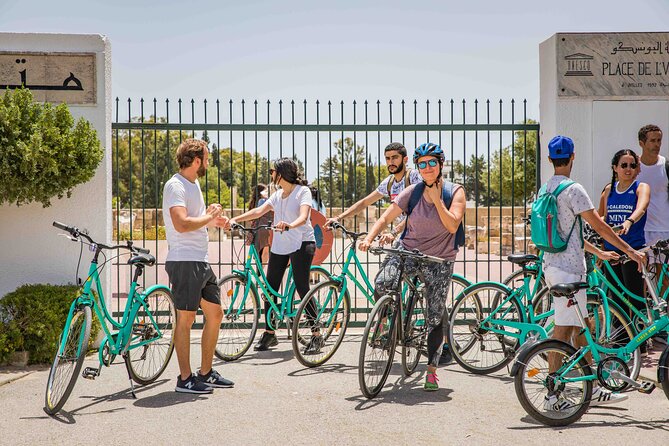
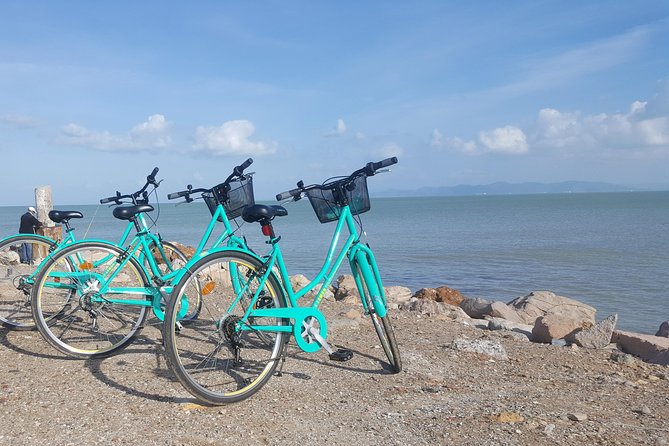
A standard bicycle is included, along with a helmet and other necessary safety equipment. The electric-bike option deserves serious thought. The route includes hills and road sections, and the heat can make even a modest ride feel harder than expected. One electric bike user said it made it possible to see more without becoming worn out, which is useful advice for anyone unsure about cycling in warm weather.
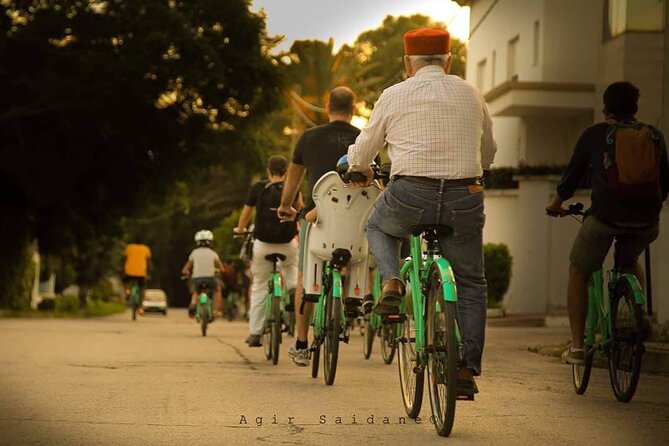
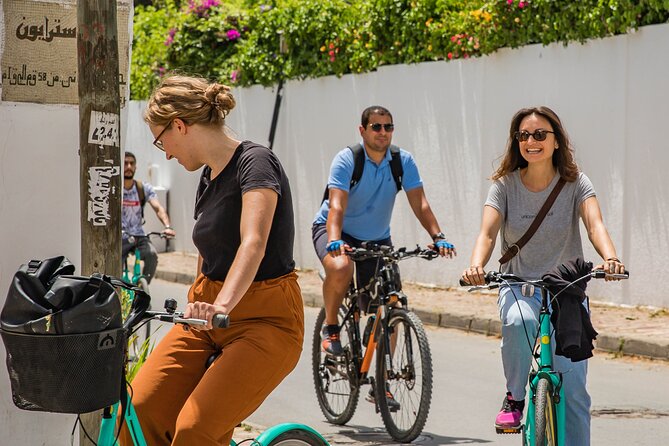
You should still have a moderate level of fitness. An electric bike reduces effort, but it does not remove the need to ride, balance, and pay attention around cars and pedestrians. The guide also helps you understand how local bikes, vehicles, and people share the roads, an unexpected part of the experience that can make the ride feel more local.
More Carthage and Sidi Bou Said trips:
- Private tour: Medina,Carthage ,Sidi Bou Said, Bardo Museum+lunch
★ 5.0 · 230 reviews - Carthage, Bardo Museum, Sidi Bou Said and Medina Private Day Tour
★ 4.5 · 153 reviews - Group Guided Bike Tour of Carthage Archeological Site in Tunisia
★ 5.0 · 57 reviews
Tophet: beginning with Carthage’s Punic beliefs
The first stop is the Tophet de Carthage, with about 30 minutes and admission included. This sanctuary introduces the Punic culture that existed before Roman Carthage took over the site.
The Tophet can be a challenging place to understand from ruins alone. Its meaning has been debated, and a good guide matters here. You will want clear explanations of what archaeologists know, what remains uncertain, and how the sanctuary fits into the wider religious life of Carthage.
This is one of the places where a private guide adds real value. You can ask for a simpler explanation or spend extra time on a point that catches your attention. Guides named Kareem, Jibrane, and Chedi have received particularly warm praise for clear, engaging explanations, so the human side of the tour appears to be one of its strongest features.
Thirty minutes is enough for an introduction, but not an exhaustive study. If the Tophet is your main reason for visiting Carthage, you may want a longer specialist visit. For a broad tour, it gives you an important first chapter before the route moves to the harbor.
Punic Ports and Museum: seeing Carthage as a sea power
The next 30-minute stop covers the Punic Ports and Museum. These ports were central to Carthage’s power in the Mediterranean, and the site helps you picture the city as a major maritime center rather than simply a collection of scattered stones.
The port area also makes a useful contrast with the Tophet. You move from religion to trade, ships, and the practical systems that supported a powerful city. The museum visit is included in the stop, so you can connect the remains outside with objects and displays inside.
The short time here means you should listen closely. This is not a long museum session with room for every display. It is a focused stop that works best when the guide points out the main features and explains how the harbor functioned.
The bicycle is useful between the ports and the next sites. You get to feel the distance between parts of Carthage instead of treating each ruin as an isolated attraction. I find that this helps you grasp the scale of the ancient city, even when the modern surroundings interrupt the view.
Baths of Antoninus: the tour’s main Roman monument
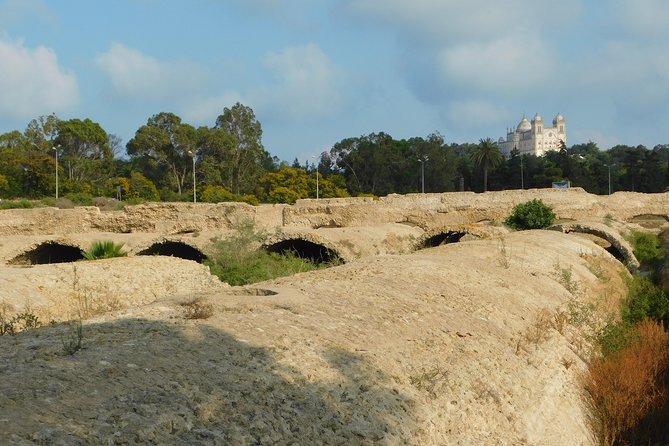
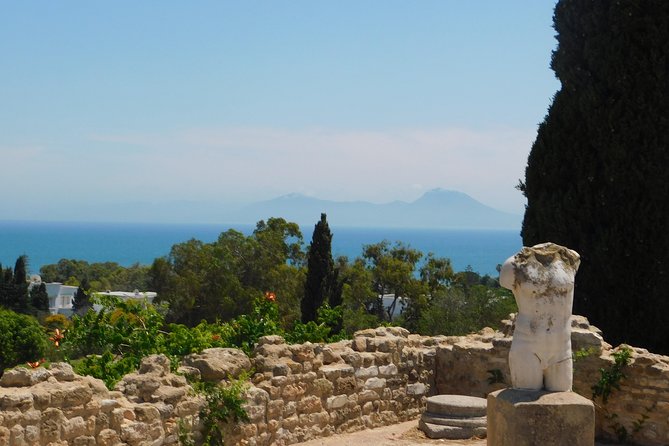
The Baths of Antoninus receive about one hour, making them the centerpiece of the route. These Roman baths once formed one of the largest bath complexes in the Roman Empire, and their remains face the sea.
Give yourself time here. The site includes more than bathing rooms. Its surviving ruins let you consider the size and organization of a Roman public complex, from grand spaces to the systems needed to heat and supply it.
The setting adds to the appeal. The baths sit beside the sea, so the visit combines architecture with an open coastal view. You can better appreciate why this was a prized part of Roman Carthage, even though only sections of the original complex remain.
An hour is generous compared with the other stops, but it can pass quickly. The site is large enough that a guide’s explanation helps you know what you are looking at. If you prefer to take photographs or examine stones and columns at your own pace, the private format should make it easier to do so without holding up a large group.
The main practical concern is exposure to sun. There is no promise of shade or indoor comfort in the tour details, so bring sensible protection and water. The experience requires a mix of cycling and walking, not just sitting in the saddle.
More bike tours in Tunis:
- Self guided bike tour of Carthage archeological site
★ 4.5 · 10 reviews
Roman Theatre: a short look at Roman entertainment
The Roman Theatre of Carthage gets about 20 minutes. It is described as a beautiful place, and the stop gives the tour another angle on Roman public life after the earlier focus on baths and ports.
Twenty minutes is enough for orientation and photographs, but not a full theater study. I would treat this as a compact stop rather than expect a long visit. The guide can explain the role of the theater and connect it to the wider Roman city, while you get a brief chance to look around.
This shorter visit helps the tour keep moving. Carthage rewards variety, and the theater prevents the route from becoming a long sequence of similar ruins. It also gives you a change of pace before the final climb toward Byrsa Hill.
Byrsa Hill and Saint Louis Cathedral
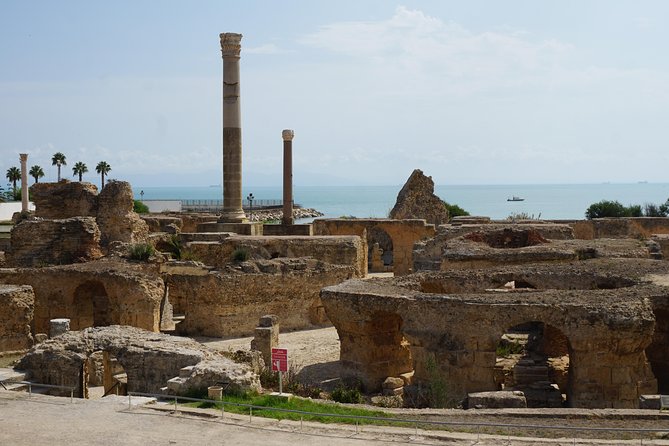
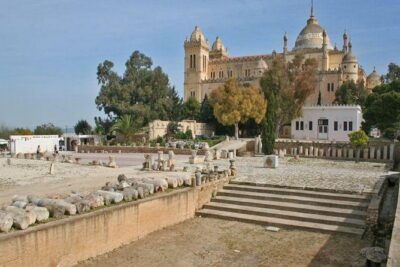
The final stop takes you to Byrsa Hill, the acropolis of Carthage, for about 15 minutes. Here, the guide explains the Punic architecture and how Roman rule changed the hill.
The location matters because Byrsa was a central high point of the ancient city. From here, the tour shifts from individual remains to the way Carthage was organized and rebuilt over time. It is a fitting place to connect the Punic, Roman, and later Christian chapters.
You will also see Saint Louis Cathedral, but you do not enter. The Carthage museum on the hill is currently closed, so do not book this tour expecting an indoor museum visit there. That closure is the clearest limitation in the final part of the route.
Fifteen minutes is brief. If the cathedral or Byrsa Hill is your top priority, the time may feel too short. The advantage is that this stop rounds out the story without turning a three-hour ride into a full-day program.
What the private guide adds
A private tour is more than a smaller group. It lets you ask direct questions about Punic religion, Roman building methods, or the modern setting without waiting for a guide to address a large crowd.
The strongest praise for this experience centers on the guides. Kareem has been credited with giving plenty of information and allowing time at each site rather than rushing from one ruin to the next. Jibrane is praised for making the history feel engaging and immersive, while Chedi is described as giving complete explanations in French.
Those details matter because Carthage is not self-explanatory. A broken wall or low foundation can mean little without context. The guide turns separate remains into a sequence: a Punic sanctuary, a port city, Roman baths, a theater, and a hill reshaped by later powers.
The quality of the experience will still depend on the guide assigned to your group. The available feedback points to strong guiding, but a private tour does not guarantee that every guide will explain every subject in the same way. You should ask questions when a site interests you, since the format is designed for that kind of exchange.
Price, timing, and what you receive
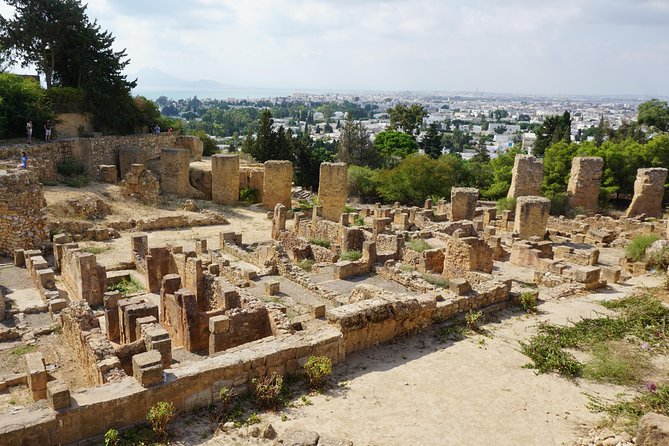
At $91.89 per person, this tour sits in the midrange for a three-hour private activity. You receive the bicycle, helmet, professional guide, admissions, and all taxes, fees, and handling charges. Hotel pickup and drop-off are not included.
The value improves with a small group, especially if you care about personal attention. Group discounts are available, though the exact savings are not provided. If you are alone or traveling as a couple, the cost may feel high compared with a standard shared sightseeing option. If several people are booking together, the private format becomes easier to defend.
The meeting point is 9 Rue Hannibal at the Carthage archaeological site. The tour ends back there, so you need to arrange your own way to and from the starting point. The location is near public transportation, which helps, but no hotel transfer is supplied.
The experience is usually booked about 29 days ahead. That suggests you should reserve before your Tunisia trip if the timing matters, particularly if you want a certain morning. Confirmation arrives at booking, and a mobile ticket is available.
Who should choose the regular bike or electric bike
Choose the regular bicycle if you are comfortable with moderate activity and want a more active ride. You will still receive the same guide, route, site visits, helmet, and admissions.
The electric-bike upgrade makes more sense if you are concerned about hills, heat, or fatigue. The route includes Byrsa Hill and riding through active roads, so the extra assistance may let you pay more attention to the ruins instead of your legs.
I would not choose this tour if you want a slow, vehicle-based sightseeing trip. You need to ride between sites, manage a bicycle in traffic, and maintain enough energy for walking around the archaeological remains. The tour is best for people who enjoy movement and want a more connected view of Carthage.
It also suits history-minded visitors who prefer conversation to a fixed audio guide. Families or groups can benefit from the private setup, provided everyone meets the moderate fitness requirement. Anyone focused on the closed museum should choose another plan or confirm its status before booking.
Practical advice for a smoother morning
Bring a current valid passport, since it is required on the day. Wear clothing suited to cycling and outdoor ruins, and prepare for sun and heat. The tour provides bicycles and helmets, but personal comfort items are your responsibility.
Keep the three-hour estimate in mind rather than expecting a full morning with long museum visits. The route is broad and efficient, but each location has a set amount of time. The Baths of Antoninus receive the most attention, while the Roman Theatre and Byrsa Hill are shorter stops.
Good weather is required. If poor weather forces cancellation, you are offered another date or a full refund. You can cancel for a full refund up to 24 hours before the start time, but changes or cancellations inside that window are not accepted.
Should you book this Carthage bike tour?
I would book it if you want to see several Carthage sites in one morning and value a guide who can explain the gaps between the ruins. The private format, electric-bike option, and strong praise for guides such as Kareem, Jibrane, and Chedi give it a clear advantage over simply walking from one monument to another.
I would hesitate if you dislike cycling near traffic, have limited fitness, or mainly want to visit the museum on Byrsa Hill. The closed museum and outdoor-only cathedral visit also matter. For most active visitors, though, $91.89 buys a well-planned route through Punic and Roman Carthage, with enough personal attention to make the scattered ruins easier to understand.
FAQ
How long does the Carthage bike tour last?
The tour lasts approximately three hours.
Where does the tour start?
It starts at 9 Rue Hannibal, Site archéologique de Carthage 2025, Tunisia.
Where does the tour end?
The activity ends back at the meeting point.
Is this a private tour?
Yes. Only your group participates in the activity.
Is an electric bike available?
Yes. You can upgrade to an electric bike for easier riding.
Are bicycles and helmets included?
Yes. Bicycle use and a helmet are included, along with the necessary safety equipment.
Is hotel pickup included?
No. Hotel pickup and drop-off are not included.
Do I need to bring a passport?
Yes. A current valid passport is required on the day of the tour.
What happens if bad weather cancels the tour?
You will be offered a different date or a full refund. Free cancellation is also available up to 24 hours before the experience begins.
Just added in Tunis
- Private Arrival Transfer: Tunis Airport to Tunis Hotel★ 4.5 · 5 reviews
- Cap Bon Guided Day Tour from Tunis★ 5.0 · 2 reviews
- Unveiling the Beauty of Sidi Bou Said and Carthage Private Tour★ 5.0 · 2 reviews
- Dougga Guided Day Tour from Tunis★ 5.0 · 5 reviews
- Tunis Group Tour: Carthage, Sidi Bou Said, Bardo museum & Medina★ 5.0 · 5 reviews
- Tunis Carthage Private Arrival Airport Transfer to Tunis★ 5.0 · 4 reviews
- Bardo Museum , Oudhna and the roman aqueduct★ 5.0 · 4 reviews
- Bardo Museum- The ruins of Carthage- Village of Sidi Bou Said★ 5.0 · 4 reviews
Carthage and Sidi Bou Said, compared.
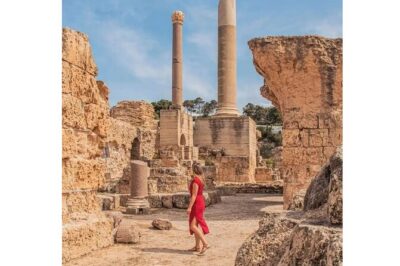
VIP Tour: Tunis Medina/Bardo, Sidi Bou Said, Carthage |PICKUP ALL
Read our review →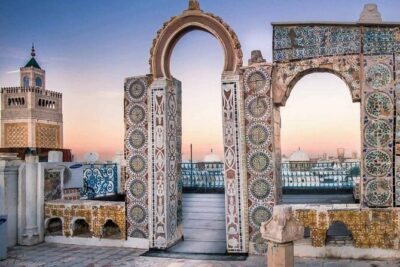
Private tour: Medina,Carthage ,Sidi Bou Said, Bardo Museum+lunch
Read our review →Private tour: Medina,Carthage ,Sidi Bou Said, Bardo Museum+lunch
Read our review →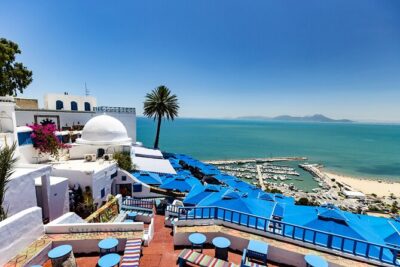
Carthage, Bardo Museum, Sidi Bou Said and Medina Private Day Tour
Read our review →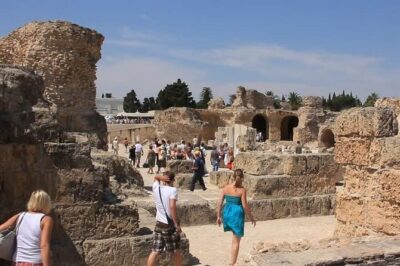
Archaelogical Site Of Carthage + Picturesque Village Of Sidi Bou Said
Read our review →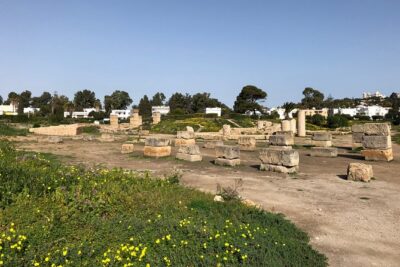
Tunis, Sidi Bousaid and Carthage day trip from Hammamet
Read our review →
Browse the lists this tour appears in