
Reviewed · CARTHAGE AND SIDI BOU SAID
Historical Tour of Ancient Carthage
Carthage rewards a guided visit. This 3.5-hour private tour connects the Roman arena, ancient Punic harbor, Tophet, and Saint Cyprian’s Basilica, giving you a clear path through several layers of Tunisian history. I especially like the private transport and the chance to shape the experience around your group.
I also like the guide-led storytelling. Tarek is praised for answering questions, handling special requests, and making the ruins easier to understand. The main drawback is the brisk schedule: four sites in about three and a half hours leaves little time for lingering, lunch, or quiet exploration.
In This Review
- Key points at a glance
- Why a guide helps at Carthage
- The Roman arena at Site Archeologique de Carthage
- The Punic Ports and Museum in 30 minutes
- Tophet and the difficult questions of Carthaginian religion
- Saint Cyprian’s Basilica above the Mediterranean
- The value of a private tour at $104
- Tarek, Mohammed, and the human side of the outing
- Who will get the most from this Carthage experience?
- Timing, weather, and planning advice
- The best questions to ask during the tour
- Should you book the Historical Tour of Ancient Carthage?
- FAQ
- How much does the Historical Tour of Ancient Carthage cost?
- How long does the tour last?
- Is this a private tour?
- Is pickup available?
- Which sites are included?
- Are admission fees included?
- Is lunch included?
- Who leads the tour?
- Can most people participate?
- What happens if the weather is poor?
- What is the cancellation policy?
Key points at a glance
- Four major Carthage sites in one outing: You visit the Roman arena, Punic Ports and Museum, Tophet, and Saint Cyprian’s Basilica.
- A private experience for your group: You do not share the activity with other participants.
- Tarek receives strong praise: His friendly explanations and willingness to answer questions are central to the experience.
- Private transportation is included: This makes it easier to connect sites spread around the Carthage area.
- Mediterranean views at Saint Cyprian’s Basilica: The final stop adds scenery as well as early Christian history.
- Lunch is not included: The guide can recommend good places to eat, and one past guest appreciated help finding shawarma.
Why a guide helps at Carthage
Carthage is not one single monument with a neat entrance and a grand central building. Its remains are spread across a broad area, and the ruins can be hard to read without context. A broken wall, open foundation, or patch of stone may look modest until someone explains what happened there.
That is where this tour earns its price. You move between sites by private vehicle, while Tarek gives each stop a place in the larger story of Carthaginian, Roman, and early Christian Tunisia. You are not simply checking off ruins. You are learning how the area changed over time.
The tour is also useful if you have limited time in Tunis. In 3 hours and 30 minutes, you see several important places without having to work out the transport between them yourself. That makes it a practical choice for a first visit.
Tarek’s approach appears to be one of the biggest strengths. He is described as kind, friendly, and willing to answer many questions. He also accommodated a special request for one person who wanted to see the best historical sights of Tunis in a short window.
That personal touch matters on a private tour. You can ask about a detail that catches your eye, pause over a topic that interests you, or request a small adjustment when time allows. The tour still follows a compact schedule, but it is not as rigid as a large group outing.
More Carthage and Sidi Bou Said trips:
- Private tour: Medina,Carthage ,Sidi Bou Said, Bardo Museum+lunch
★ 5.0 · 230 reviews - Carthage, Bardo Museum, Sidi Bou Said and Medina Private Day Tour
★ 4.5 · 153 reviews - Guided Bike Tour of Carthage Archeological Site in Tunisia
★ 5.0 · 88 reviews
The Roman arena at Site Archeologique de Carthage
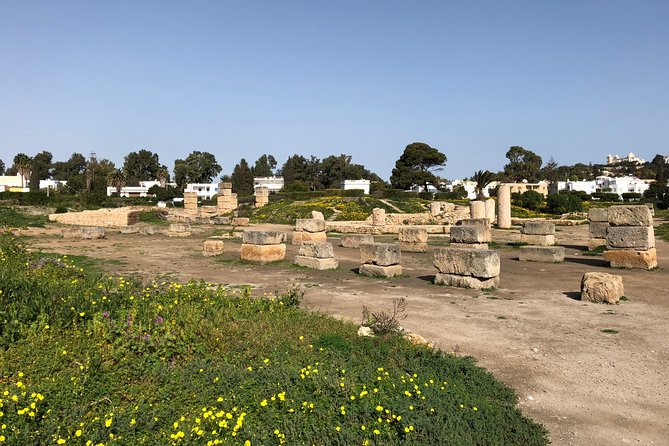
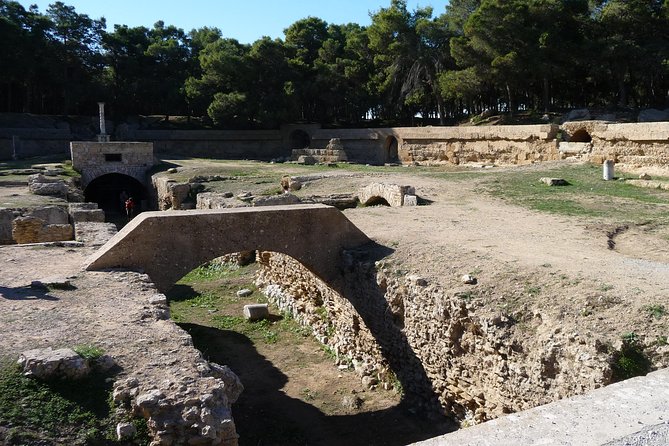
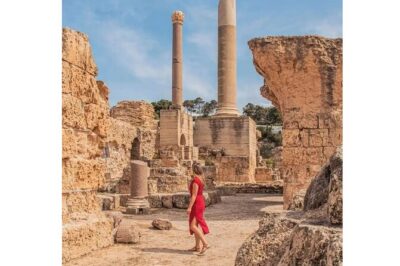
The tour begins at the Site Archeologique de Carthage, with about 45 minutes to explore the ancient Roman arena. The remains are described as well preserved, and your guide explains the arena’s role and the stories connected to the site.
This is a strong opening because it gives you a clear physical setting. The scale of an arena helps you picture Roman public life in a way that scattered foundations may not. You can walk through the remains while Tarek points out what you are seeing.
I would use this first stop to ask questions. The tour description does not provide a full list of surviving features, so the value here depends heavily on the guide’s explanation. Tarek’s ability to bring the site to life is especially useful at a place where the stones alone may not tell the whole story.
The 45-minute stop is longer than the time allowed at the other locations, but it is still not a full archaeological study. If you like photographing every detail or reading every sign, you may feel pressed. For a compact introduction to Roman Carthage, the timing is sensible.
Admission is included, along with all fees and taxes. That keeps the day simple and prevents small entrance costs from complicating the schedule.
The Punic Ports and Museum in 30 minutes
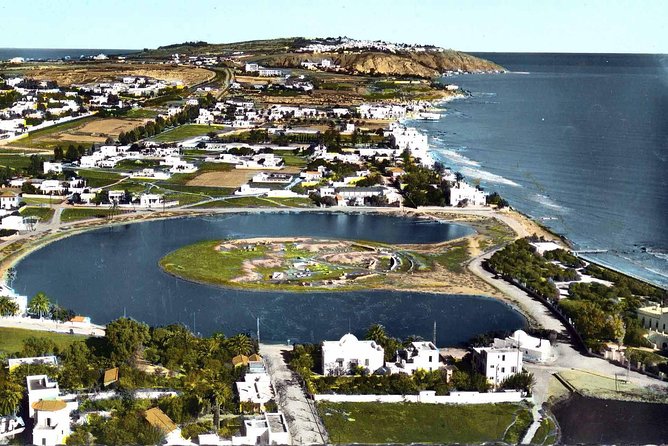
Next comes the Punic Ports and Museum, with roughly half an hour to walk through the remains and learn about Carthage’s ancient harbor. This stop shifts the focus from Roman public life to the city’s earlier maritime role.
The port is one of the most useful places on the tour for understanding why Carthage mattered. You are looking at the remains of an ancient harbor, not just another collection of old stones. The site helps connect the city to trade, ships, and movement across the Mediterranean, although the supplied details do not specify how much of the museum you will see during the allotted time.
Thirty minutes will give you an introduction rather than a slow museum visit. If the port and museum both interest you, ask Tarek how he plans to divide the time. Since the experience is private, you have a better chance of making that choice together.
I like the contrast between this stop and the arena. The first site shows Roman entertainment and public life. The port points you toward Carthage as a major seafaring center. That change of subject helps the tour feel varied rather than repetitive.
Tophet and the difficult questions of Carthaginian religion
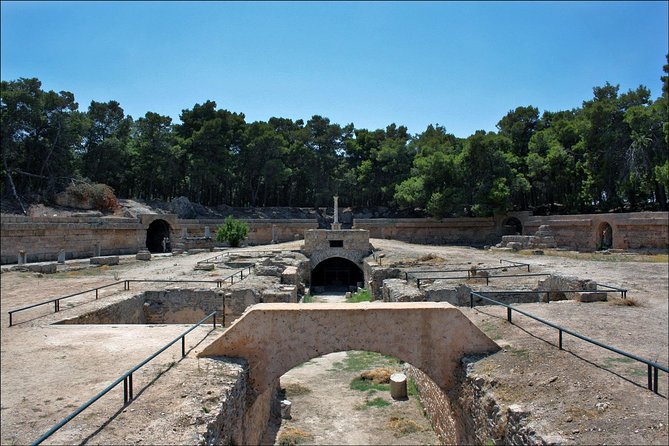
The visit to Tophet de Carthage lasts about 30 minutes. Here you see the ancient religious compound and altar area, while Tarek explains Carthaginian religious practices.
This is likely to be one of the more thought-provoking stops. It deals with belief and ritual, subjects that can be difficult to understand from remains alone. A guide is especially valuable here because the meaning of the site requires explanation, not just sightseeing.
The information provided does not spell out every interpretation or archaeological debate connected with Tophet. That is a good reason to listen carefully and ask direct questions. You should expect an introduction to the site and its religious context, not an extended academic lecture.
Some visitors may find this stop more serious than the arena or the sea views later in the tour. I see that as a strength if you want more than attractive ruins. It adds an important human side to the visit, showing that Carthage was shaped by customs and beliefs as well as buildings and trade.
The half-hour timing keeps the tour moving, but it also means you should not expect to linger over every feature. Keep your attention on the guide’s explanation, then use any spare time for a quick look around.
More History Tours in Tunis:
- Guided tour in the UNESCO world heritage Medina of Tunis
★ 5.0 · 68 reviews - 2 Hour Hergla Visit and Sousse Medina Heritage Tour
★ 4.5 · 3 reviews - Berber Village Kesra & Mactaris Historic site Daytrip from Tunis
★ 5.0 · 2 reviews
Saint Cyprian’s Basilica above the Mediterranean
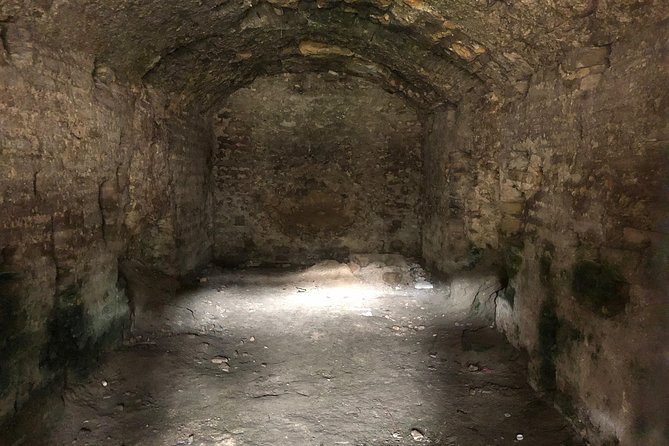
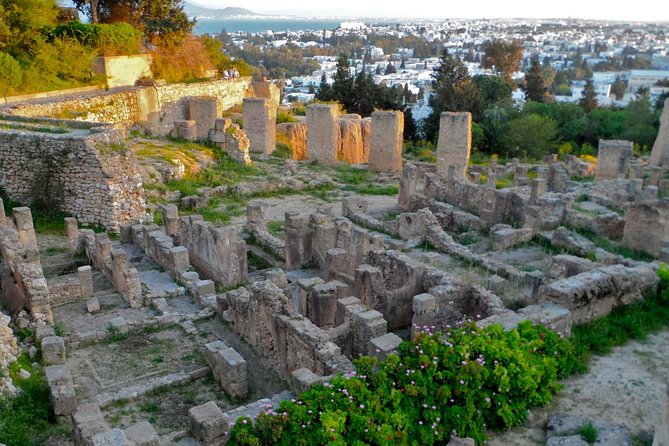
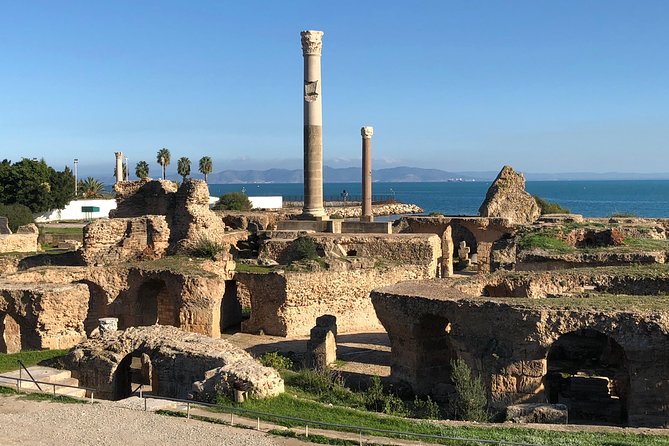
The final planned stop is La Basilique De Saint Cyprien, where you spend about 30 minutes among the ruins of one of North Africa’s oldest churches. The basilica overlooks the Mediterranean, giving this stop a different mood from the inland archaeological remains.
The sea views are a real bonus. After the arena, port, and Tophet, the open setting offers a moment to step back and take in the wider area. You get both early Christian history and a scenic ending, which gives the tour a natural finish.
The ruins themselves are the main focus, so do not expect a complete standing church. You will be seeing the remains of the basilica and learning about its place in Carthage’s Christian past. Tarek’s explanations help connect the stones to the people and religious communities that used the site.
This is also the stop where timing may feel most limited. The views invite you to stay longer, especially if the weather is good. Since the tour requires suitable weather and may be canceled in poor conditions, keep that in mind when planning your day.
The value of a private tour at $104
At $104 per person, this is not the cheapest way to see Carthage. The price becomes easier to justify if you value private transportation, an individual guide, included admission, and a route that covers four separate locations in one morning or afternoon.
A self-guided visit could cost less, but it would require you to arrange transport between the sites and make sense of the remains on your own. The strongest praise for this experience centers on exactly what a self-guided visit cannot provide easily: Tarek’s explanations, answers to questions, and help connecting the sites.
The value improves for a group. Because the experience is private and group discounts are offered, the per-person cost may work better when several people book together. You should check the current group price before deciding, since the supplied information does not state the discount amount.
Private transportation also adds practical value. Carthage’s historical sites are not presented as one compact attraction in this experience. Having a driver means less time dealing with connections and more time at the archaeological stops.
The price does not include lunch. That is not a serious flaw for a 3.5-hour tour, but you should plan around it. Tarek can recommend good lunch spots, and one person appreciated his effort to help locate the shawarma they wanted. That suggests useful local help beyond the formal sightseeing, though lunch itself remains your responsibility.
Tarek, Mohammed, and the human side of the outing
The guide is Tarek, and the driver named in the feedback is Mohammed. Both receive warm praise, with Mohammed described as wonderful and Tarek praised for being kind, friendly, and attentive.
The best part of a private tour is often the people rather than the transport. Tarek’s willingness to answer questions appears repeatedly, and that matters because Carthage covers a long span of time. Carthaginian, Roman, and early Christian remains can blur together unless someone helps you separate the periods.
You should also feel comfortable making a reasonable request. Tarek accommodated a special request during one short visit to Tunis, and he made an effort to help with a preferred lunch choice. I would still mention any must-see interest when booking or at pickup, since the schedule is compact.
The tour is described as suitable for most participants and near public transportation. Pickup is offered, which is useful if you are staying in Tunis or nearby, though the supplied details do not state the exact pickup area or time.
Who will get the most from this Carthage experience?
I would recommend this tour most strongly to first-time visitors who want the main historical sights explained in one organized outing. It also suits anyone staying in Tunis who does not want to arrange separate transport to several archaeological locations.
History fans should enjoy the range. You move from a Roman arena to a Punic harbor, then to a religious site and an early Christian basilica. The tour gives you a broad introduction rather than a narrow study of one period.
Families and mixed-interest groups may also find the format useful. The private setting lets you ask questions at your own level, and the changing subjects help prevent the day from feeling like one long walk among similar ruins.
I would be more cautious if you want a slow, specialist archaeological visit. Four stops in 3.5 hours means the experience is designed for coverage and explanation. You will see a lot, but you will not have unlimited time at any one site.
The tour may also be less suitable if lunch is a central part of your day. Food is not included, and the tour’s short duration leaves lunch as an add-on before or after the visit.
Timing, weather, and planning advice
The tour lasts approximately 3 hours and 30 minutes. Since each site has a planned visit of 30 to 45 minutes, you should think of it as a focused historical circuit rather than a full-day excursion.
It is booked, on average, about 70 days ahead. That does not guarantee that every date sells out, but it is a useful sign that advance planning is sensible, particularly if your Tunis schedule is fixed.
You receive confirmation at the time of booking, and a mobile ticket is available. Pickup is offered, private transportation is included, and the experience is near public transportation. These details make it fairly easy to fit into a wider Tunis visit.
The weather condition deserves attention. If poor weather causes cancellation, you are offered another date or a full refund. Free cancellation is available if you cancel at least 24 hours before the start time. Changes or cancellations inside that 24-hour window are not accepted for a refund.
Wear something practical for walking around archaeological remains, though the supplied information does not specify a dress code or exact surface conditions. Give yourself enough time before pickup so the tour can begin without rushing.
The best questions to ask during the tour
A private guide gives you room to shape the conversation. At the arena, ask how the Roman period changed the earlier Carthaginian city. At the Punic Ports, ask how the harbor functioned and what you are looking at in the surviving remains.
At Tophet, ask Tarek to explain the religious practices in clear terms and to distinguish established information from interpretation. At Saint Cyprian’s Basilica, ask how the early Christian site fits into the longer story of Carthage.
These questions do not require specialist knowledge. They simply help you move beyond taking photographs. The strongest benefit of this experience is the chance to turn four archaeological stops into one connected story.
Should you book the Historical Tour of Ancient Carthage?
Book it if you want a private, efficient introduction to Carthage and prefer having a guide explain what you are seeing. The combination of included transport, four significant sites, Tarek’s highly praised personal approach, and the Mediterranean setting at Saint Cyprian’s Basilica gives the $104 price solid value for many visitors.
Think twice if you prefer exploring at your own pace or want a long museum visit. The schedule is tight, lunch costs extra, and each stop is brief.
For most first-time visitors to Tunis, I would choose this tour over trying to connect the sites alone. You see more in less time, and the guide helps turn scattered ruins into a story you can remember.
FAQ
How much does the Historical Tour of Ancient Carthage cost?
The tour costs $104 per person. Group discounts are offered, although the discount amount is not specified.
How long does the tour last?
The experience lasts approximately 3 hours and 30 minutes.
Is this a private tour?
Yes. Only your group participates in the activity.
Is pickup available?
Yes. Pickup is offered, and private transportation is included.
Which sites are included?
The tour visits Site Archeologique de Carthage, the Punic Ports and Museum, Tophet de Carthage, and La Basilique De Saint Cyprien.
Are admission fees included?
Yes. All fees and taxes are included, along with admission tickets for the planned sites.
Is lunch included?
No. Lunch is not included. Optional recommendations for good lunch spots are available.
Who leads the tour?
The tour is led by a local guide named Tarek. The driver named for the experience is Mohammed.
Can most people participate?
Yes. The experience states that most participants can take part, and it is near public transportation.
What happens if the weather is poor?
The experience requires good weather. If it is canceled because of poor weather, you are offered a different date or a full refund.
What is the cancellation policy?
You can cancel at least 24 hours before the start time for a full refund. Cancellations or changes made less than 24 hours before the start time are not accepted for a refund.
Just added in Tunis
- Private Arrival Transfer: Tunis Airport to Tunis Hotel★ 4.5 · 5 reviews
- Cap Bon Guided Day Tour from Tunis★ 5.0 · 2 reviews
- Unveiling the Beauty of Sidi Bou Said and Carthage Private Tour★ 5.0 · 2 reviews
- Dougga Guided Day Tour from Tunis★ 5.0 · 5 reviews
- Tunis Group Tour: Carthage, Sidi Bou Said, Bardo museum & Medina★ 5.0 · 5 reviews
- Tunis Carthage Private Arrival Airport Transfer to Tunis★ 5.0 · 4 reviews
- Bardo Museum , Oudhna and the roman aqueduct★ 5.0 · 4 reviews
- Bardo Museum- The ruins of Carthage- Village of Sidi Bou Said★ 5.0 · 4 reviews
Carthage and Sidi Bou Said, compared.
VIP Tour: Tunis Medina/Bardo, Sidi Bou Said, Carthage |PICKUP ALL
Read our review →
Private tour: Medina,Carthage ,Sidi Bou Said, Bardo Museum+lunch
Read our review →Private tour: Medina,Carthage ,Sidi Bou Said, Bardo Museum+lunch
Read our review →
Carthage, Bardo Museum, Sidi Bou Said and Medina Private Day Tour
Read our review →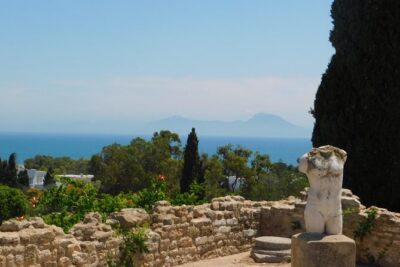
Guided Bike Tour of Carthage Archeological Site in Tunisia
Read our review →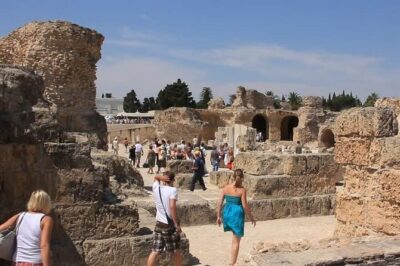
Archaelogical Site Of Carthage + Picturesque Village Of Sidi Bou Said
Read our review →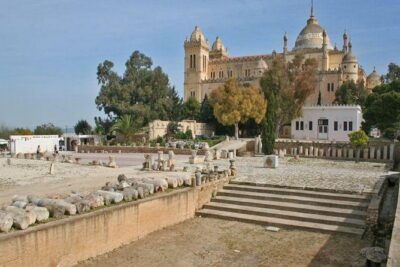
Tunis, Sidi Bousaid and Carthage day trip from Hammamet
Read our review →
Browse the lists this tour appears in