
Reviewed · CARTHAGE AND SIDI BOU SAID
From Hammamet or Tunis: Carthage, Bardo, Sidi Bou said and Medina
Four very different sides of Tunisia fit into one long day. This tour links ancient Carthage, the blue-and-white village of Sidi Bou Said, the Bardo Museum, and the old Medina of Tunis, giving you a useful first look at the country’s past and present. The route is busy, but it covers ground that would be difficult to arrange on your own.
I especially like the private format, since only your group takes part, and the guides can respond to your pace and interests. I also like the mix of ruins, museum displays, sea views, markets, and old city lanes. The main drawback is time: eight hours is enough for an introduction, but not enough to explore every Carthage site or browse the Medina at leisure.
In This Review
- Key points to know before booking
- Why this route works for a first day in Tunis
- Carthage: starting with Tunisia’s ancient capital
- The Antonine Baths and the Roman waterfront
- Tophet and the difficult side of Carthage
- The Carthage aqueduct stop
- Sidi Bou Said: blue-and-white streets and sea views
- The Bardo Museum and its Roman mosaics
- Entering the Medina through Bab Bhar
- The Medina of Tunis and Zitouna Mosque
- Guides, drivers, and the private-tour advantage
- Is $35 a good value?
- Who should book this day?
- My booking advice
- FAQ
- How long does the tour last?
- Where does pickup take place?
- Is this a private tour?
- What is included in the price?
- Is the Bardo Museum open every day?
- Does the tour visit Zitouna Mosque?
- Is a vegetarian option available?
- Can I cancel for a full refund?
Key points to know before booking
- Four major Tunisian sights in one day: Carthage, Sidi Bou Said, the Bardo Museum, and the Medina of Tunis form a broad introduction to the capital region.
- Private transport and guiding: Only your group participates, with pickup offered from Hammamet or Tunis and a driver-guide team assigned to you.
- Carthage gets the longest attention: The archaeological area, Antonine Baths, Tophet, and aqueduct are covered across several stops.
- Sidi Bou Said brings a welcome change of pace: Expect blue-and-white streets, Mediterranean views, and about an hour to walk around.
- The Bardo Museum is strongest for Roman mosaics: Its collection helps connect the scattered ruins to the wider story of Tunisia.
- Allow for a full, active day: The tour lasts about eight hours, and the Medina includes narrow streets, markets, and a visit near Zitouna Mosque.
Why this route works for a first day in Tunis
This is a sightseeing day with a clear purpose. You move from ancient Carthage to a coastal village, then into a major museum and finally through the old center of Tunis. That sequence gives you variety instead of asking you to spend the entire day among ruins or inside galleries.
I would recommend it most if you are staying in Hammamet and want to see Tunis without planning several separate trips. It also suits a first visit to Tunisia, since the day introduces Punic, Roman, Islamic, and modern urban settings in one sweep.
The private arrangement matters. You are not tied to the interests of a large coach group, and the guide can be attentive to practical needs. One family traveling with a seven-month-old had particularly good support from their driver, Haythem, who helped keep the day comfortable and smooth. Another guide, Bouhdid, received praise for adjusting the pace and explaining the sites in clear English.
You should still expect a packed schedule. Carthage alone has several important places, and the Bardo Museum can easily absorb more than its allotted hour if you stop to study the mosaics. One useful personal preference to consider is how you divide your time: if you care most about outdoor ruins and coastal views, you may wish to ask for a little less museum time and more time in Carthage or Sidi Bou Said.
More Carthage and Sidi Bou Said trips:
- Private tour: Medina,Carthage ,Sidi Bou Said, Bardo Museum+lunch
★ 5.0 · 194 reviews - Tunis, Sidi Bousaid and Carthage day trip from Hammamet
★ 4.5 · 44 reviews - Tunis Carthage airport transfer to Hammamet
★ 5.0 · 34 reviews
Carthage: starting with Tunisia’s ancient capital
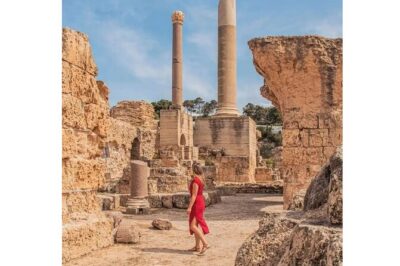
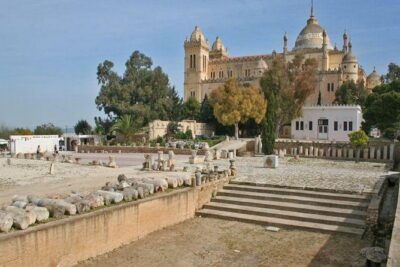
The first major stop is the archaeological site of Carthage, where the scale of the ancient city is easier to grasp when a guide explains what lies beneath the scattered stones. Carthage was destroyed by Rome in 146 BC, yet excavation has revealed an advanced urban center with five-story homes, sewage systems, defensive walls, and organized ports.
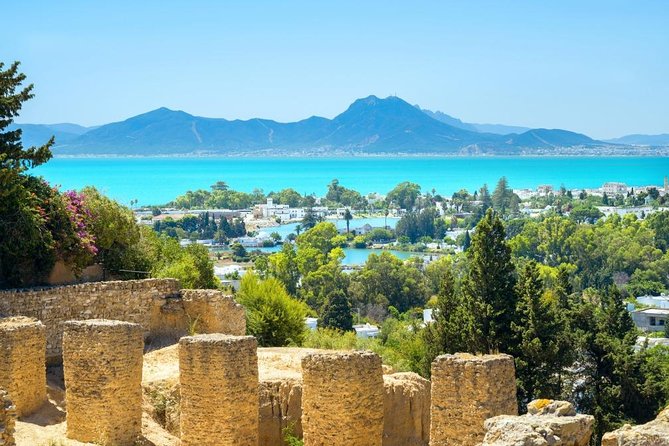
The remains of the city walls once stretched about 21 miles, or 34 kilometers, around Byrsa Hill. You will not walk that entire line, of course, but this detail helps explain why the site feels larger than any single ruin suggests.
Your two-hour Carthage visit is the backbone of the day. It gives you time to see more than one isolated monument and to connect the Punic and Roman periods. The broad views toward the coast also make this one of the more scenic parts of the tour.
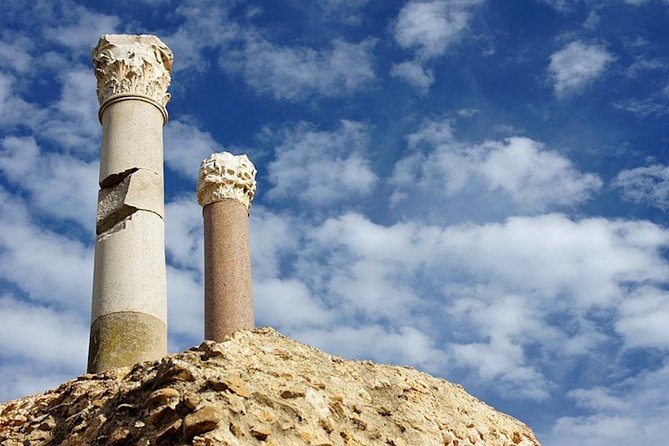
Do not expect Carthage to look like a fully rebuilt ancient city. Much of what you see is fragmentary. Columns, foundations, walls, and paved areas require explanation, which is why the guide matters here. A good explanation can turn a low line of masonry into a house, bath complex, or street plan.
The tour then breaks Carthage into focused stops. That is helpful for orientation, though it can also make the day feel like a series of short visits rather than one long walk through a single archaeological park.
The Antonine Baths and the Roman waterfront
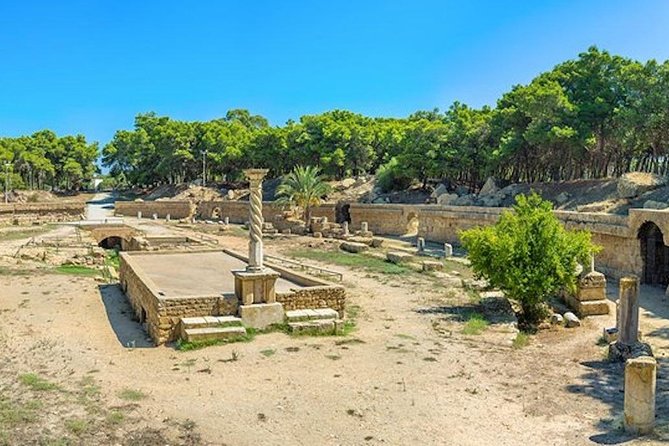
The Baths of Antoninus receive about 30 minutes. These ruins once formed a large Roman bath complex near the sea, and the coastal setting adds drama to the stone remains. The stop works best if you enjoy seeing how Roman public buildings were organized, even when much of the upper structure has disappeared.
Thirty minutes is enough for a guided introduction and photographs, but it is not a long independent exploration. Keep your expectations realistic. You are getting a clear sample of the site rather than a detailed architectural study.
The view is part of the appeal. Carthage is not only about ancient masonry. Its position along the coast gives the archaeological remains a strong sense of place, and the Baths of Antoninus are among the stops where that setting is most noticeable.
Tophet and the difficult side of Carthage
The one-hour stop at Tophet adds a different layer to the Carthage story. This sacred area is associated with Punic religious practice and is one of the more serious places on the route. It is not simply another photo stop, and your guide’s explanation will help you understand why the site matters.
The remains can be difficult to interpret without context. You may see stones and small monuments rather than a complete structure, so listen closely to the explanation and take time to consider the site rather than rushing through it.
This is also an area where a guide can provide useful historical balance. Carthage is often reduced to its conflict with Rome, but Tophet points to the city’s own beliefs and customs. The stop gives the ancient capital more depth than a quick visit to the best-preserved Roman remains would provide.
More Bardo Museum tours:
- VIP Tour: Tunis Medina/Bardo, Sidi Bou Said, Carthage |PICKUP ALL
★ 5.0 · 512 reviews - Private tour: Medina,Carthage ,Sidi Bou Said, Bardo Museum+lunch
★ 5.0 · 230 reviews - Carthage, Bardo Museum, Sidi Bou Said and Medina Private Day Tour
★ 4.5 · 153 reviews - Tunis: Carthage, Bardo Museum, Sidi Bou Said & Medina Group Tour
★ 4.5 · 33 reviews
The Carthage aqueduct stop
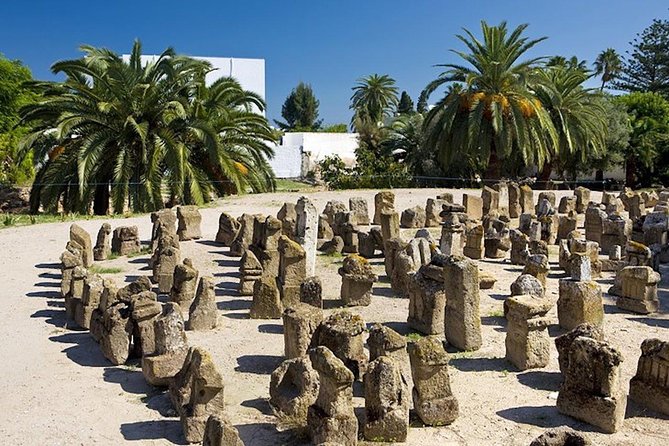
The aqueduct stop lasts about 30 minutes. Like several parts of Carthage, it is more rewarding when you understand the engineering behind it. Water supply was essential to a large urban center, and the remains offer another way to think about the city beyond temples, houses, and military power.
This is a short stop, so it is best treated as a concise look at Roman infrastructure. If you want extensive time at each archaeological feature, this itinerary may feel rushed. If you want a broad survey, the aqueduct is a worthwhile addition because it shows how the city functioned day to day.
Taken together, the Carthage stops make up a strong portion of the tour. I would give special priority to the main archaeological area and the Baths of Antoninus, then use the guide’s comments at Tophet and the aqueduct to fill in the wider picture.
Sidi Bou Said: blue-and-white streets and sea views
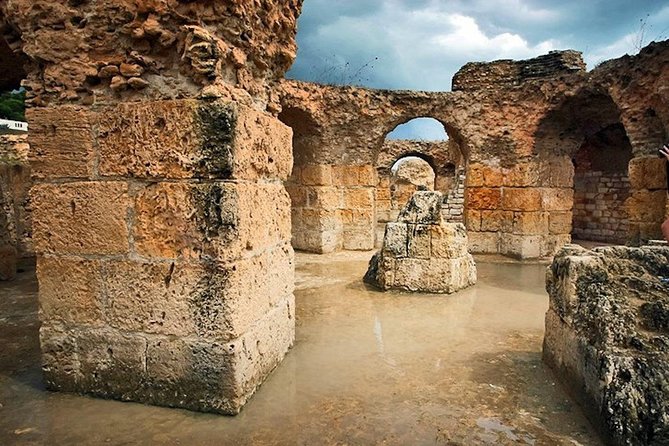
After the ruins, Sidi Bou Said changes the mood completely. The village is known for its blue-and-white buildings, narrow streets, and outlook over the Mediterranean. You have about an hour here, which is enough to stroll, take photographs, and enjoy the setting without turning the visit into a long shopping session.
I like this pause in the itinerary because it gives your eyes a rest after the archaeology. The village is attractive in a simple, immediate way: white walls, blue details, open views, and a relaxed coastal feel.
An hour passes quickly. You may want to focus on walking the picturesque streets and taking in the sea rather than trying to visit every shop or stop for a long meal. The tour information does not promise a specific café visit or meal, so plan on this being a walking stop.
Sidi Bou Said also gives you a chance to ask the guide about local life and the area’s place near Tunis. Several guides have been praised for a friendly, personal manner, with Haudi described as making the day feel like an outing with a friend. That sort of warmth can make a short village visit more enjoyable.
The Bardo Museum and its Roman mosaics
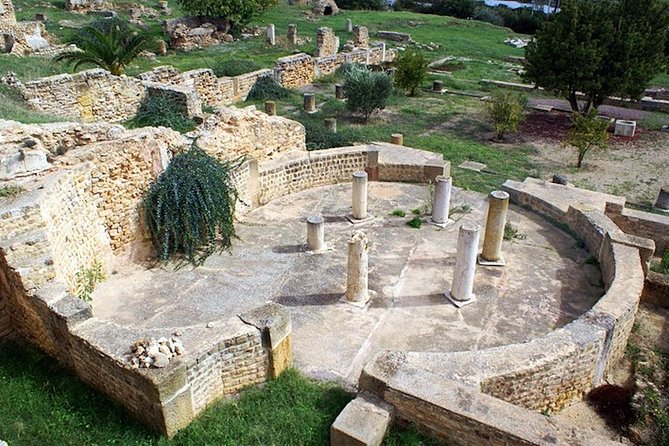
The one-hour visit to the National Museum of Bardo is the most concentrated indoor part of the day. It is especially important for its large collection of Roman mosaics and artifacts, which help you see the artistic skill and daily life behind the remains encountered at Carthage.
I would pay close attention to how the museum changes your understanding of the ruins. At Carthage, you see foundations and broken structures. At Bardo, mosaics, objects, and displays provide finer details and a stronger sense of the people who lived in these cities.
One hour is useful but limited. If museums are your main interest, you may wish the schedule allowed longer. A previous family enjoyed the day but preferred more time outdoors at Carthage and Sidi Bou Said instead of extending the museum visit. That is a fair criticism, not a flaw in the museum itself.
The Bardo Museum is closed on Mondays, so check the day before booking. The itinerary may need adjustment if the museum cannot be visited. Since admission is included, you do not need to budget a separate entrance fee for this stop.
Entering the Medina through Bab Bhar
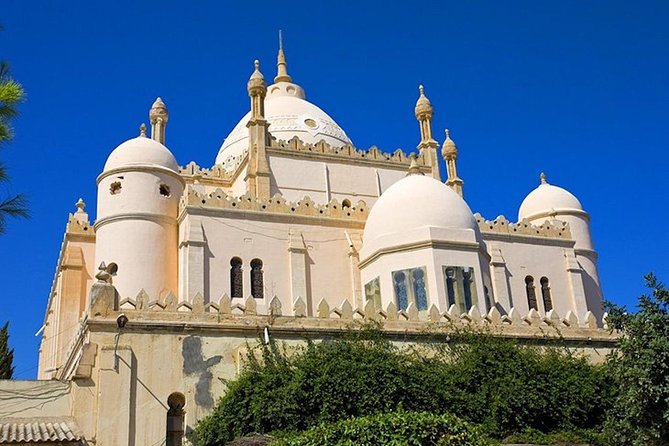
The final section takes you into central Tunis. Bab Bhar, also called the Gate of the Sea, is a brief 15-minute stop introducing the famous gates of the Medina. It is a quick orientation point before you head into the old city.
This short visit is useful because it marks a clear transition. You leave the open coastal sites and enter the dense historic center, where the experience depends less on views and more on sounds, movement, shops, doorways, and tight lanes.
Do not expect Bab Bhar to be a major standalone attraction requiring a long visit. Its value is as an entrance and a visual marker. Your guide can help you understand how the gate relates to the Medina and the newer parts of Tunis.
The Medina of Tunis and Zitouna Mosque
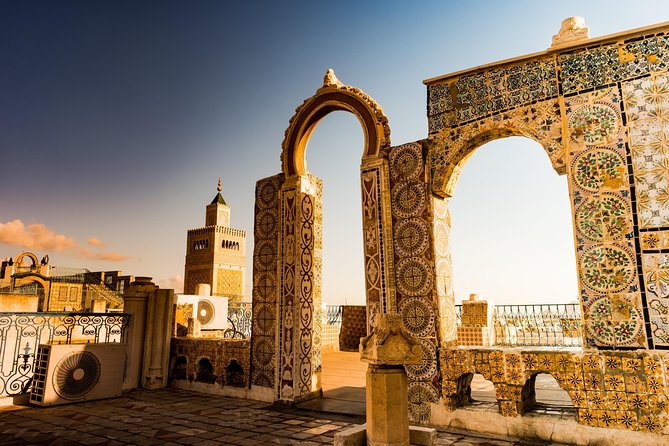
You have about an hour in the UNESCO-listed Medina of Tunis. The route includes narrow streets, the area around Zitouna Mosque, a traditional cap-makers market, and a colorful perfume market.
This is the most sensory part of the day. Instead of looking at ruins from a distance, you move through an active old city where trade and daily routines shape what you see. The markets offer a stronger connection to present-day Tunis than a museum display can provide.
The Medina can also be confusing without a guide. A short visit would not give you much time to wander confidently on your own, so having someone lead the way is a real benefit. The guide can point out the mosque, markets, and historical alleyways while helping your group stay oriented.
The visit to Zitouna Mosque is included in the route, though the supplied details do not specify interior access or visiting rules. Dress and behave respectfully around the mosque, and follow your guide’s instructions.
One hour is enough for a first look, not a full shopping expedition. If you enjoy markets, you may wish for more time. Still, ending in the Medina gives the tour energy and keeps the day from becoming only an ancient-history excursion.
Guides, drivers, and the private-tour advantage
The strongest theme in the feedback is the quality of the human service. Guides named in the comments include Haythem, Boutheina, Bouhdid, Bhudit, Haudi, and Saïf. Their individual styles differ, but the repeated strengths are clear English or other language support, patience, humor, and attention to personal needs.
Boutheina was praised for making museum visits interactive and enjoyable. Bouhdid was repeatedly valued for clear explanations, excellent English, and adapting the route to the group. A German-speaking guide also helped make the day comfortable for a German-speaking couple, showing that language support may be available depending on the guide assigned.
Drivers matter on a full day that links Hammamet, Carthage, Sidi Bou Said, Bardo, and Tunis. Halim and Momo were specifically thanked for safe, calm driving, while Yasin was praised alongside Boutheina for professional service. These details are important because road time can shape your whole impression of an excursion.
Since the tour is private, only your group participates. That makes it a good choice for families, couples, or friends who want flexibility. It also explains why the price represents more than entrance tickets: you are paying for transport, a driver, a guide, and planning across several locations.
Is $35 a good value?
At $35 per person, this is a strong value if the advertised price applies to your booking and group size. Admission is included for Carthage, the Antonine Baths, Tophet, the aqueduct site, and the Bardo Museum. You also receive pickup, private transport, and guiding, which would be difficult to match by arranging each stop separately.
The value improves if you are based in Hammamet. Reaching Tunis and Carthage independently would require more planning, and a mistake with timing could cost you one of the major stops. Here, the route is arranged as one long day.
The tradeoff is depth. A lower-cost overview tour cannot give every site the time it deserves. If you have several days in Tunis, you might prefer separate visits to Carthage, Bardo, and the Medina. If this is your only day in the capital area, the broad coverage makes the price especially appealing.
Group discounts are offered, though the exact discount is not specified. Ask about the total price for your party before booking, since the per-person figure may work differently for different group sizes.
Who should book this day?
I would choose this tour if you want a first taste of Tunisian culture and history without handling the transport yourself. It is also a good fit for families, since the private setup allows the guide and driver to respond to breaks, children, or mobility limits.
Most people can participate, and the tour is near public transportation, though the schedule includes archaeological ground, narrow Medina streets, and a full eight hours of sightseeing. Anyone who finds long days difficult should ask about pacing before confirming.
Vegetarian food can be arranged if you request it at booking. No specific meal plan is provided, so clarify what is included if lunch is important to you.
Book with the weather in mind. If poor weather forces cancellation, you will be offered another date or a full refund. The operator also requires a minimum number of participants and may offer a different date, another experience, or a refund if that minimum is not reached.
My booking advice
Book this tour if you want maximum coverage in one day, especially from Hammamet, and you value private transport and a guide who can explain what you are seeing. The 93 percent recommendation rate and 4.6 rating reflect a generally strong experience, with the most praise going to the guides, drivers, safe transport, and well-planned route.
Think twice if your ideal day means lingering at one archaeological site, spending hours in the Bardo Museum, or shopping slowly in the Medina. For everyone else, this is a practical and fairly priced introduction to Carthage, Tunis, and the coast, with enough variety to make the long day worthwhile.
FAQ
How long does the tour last?
The tour lasts approximately eight hours.
Where does pickup take place?
Pickup is offered from Hammamet or Tunis.
Is this a private tour?
Yes. Only your group participates in the activity.
What is included in the price?
Admission tickets are included for the Carthage archaeological sites and the National Museum of Bardo. Pickup and guiding are also offered as part of the experience.
Is the Bardo Museum open every day?
No. The Bardo Museum is closed on Mondays.
Does the tour visit Zitouna Mosque?
Yes. The route includes a visit to Zitouna Mosque in the Medina of Tunis, though the provided details do not specify interior access.
Is a vegetarian option available?
Yes. Request a vegetarian option when you book.
Can I cancel for a full refund?
Yes. You can cancel at least 24 hours before the start time for a full refund. Cancellations or changes made less than 24 hours before the start time are not accepted for a refund.
More Medina Tours in Hammamet
- Tour to the Medina of Hammamet and the Spice Market of Nabeul
★ 4.0 · 45 reviews - Private Excursion of Friguia Park and Medina of Hammamet
★ 4.5 · 4 reviews - Guided tour in the UNESCO world heritage Medina of Tunis
★ 5.0 · 68 reviews - Private Day Tour Tunis Medina Carthage Sidi Bou Said Bardo Museum
★ 5.0 · 30 reviews
Just added in Hammamet
- Transfer from Airport Tunis Carthage To Hammamet★ 5.0 · 2 reviews
- From Hammamet: Sahara Desert Overnight Camping★ 4.5 · 2 reviews
- Private Transfer from Tunis Carthage Airport to Hammamet★ 5.0 · 2 reviews
- Private Guided Tour of Zaghouan, Thuburbo Majus and Dougga from Hammamet★ 5.0 · 1 review
- Executive: Transfer Tunis Airport to Hammamet by Mercedes E Class★ 5.0 · 4 reviews
- Private Excursion of Friguia Park and Medina of Hammamet★ 4.5 · 4 reviews
- Day Trip to Cap Bon★ 5.0 · 2 reviews
- Zaghouan, Thuburbo Majus and Dougga Private Self-Guided Excursion from Hammamet★ 5.0 · 2 reviews
Carthage and Sidi Bou Said, compared.
VIP Tour: Tunis Medina/Bardo, Sidi Bou Said, Carthage |PICKUP ALL
Read our review →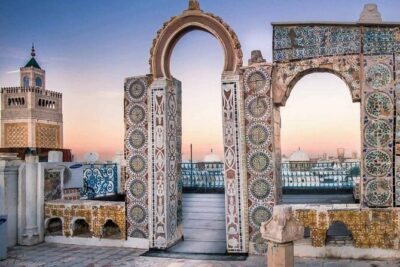
Private tour: Medina,Carthage ,Sidi Bou Said, Bardo Museum+lunch
Read our review →Private tour: Medina,Carthage ,Sidi Bou Said, Bardo Museum+lunch
Read our review →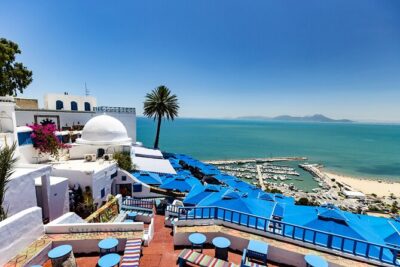
Carthage, Bardo Museum, Sidi Bou Said and Medina Private Day Tour
Read our review →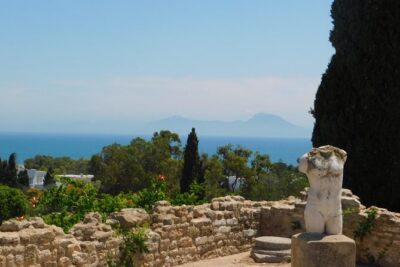
Guided Bike Tour of Carthage Archeological Site in Tunisia
Read our review →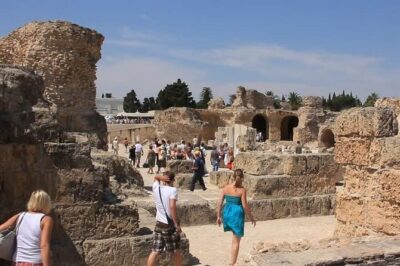
Archaelogical Site Of Carthage + Picturesque Village Of Sidi Bou Said
Read our review →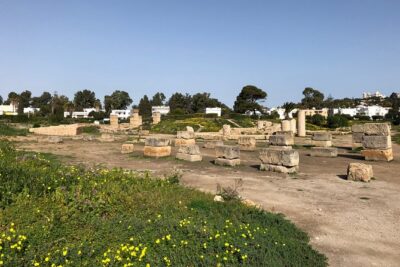
Tunis, Sidi Bousaid and Carthage day trip from Hammamet
Read our review →Browse the lists this tour appears in