
Reviewed · DOUGGA AND BULLA REGIA
Private Excursion to Testour, Dougga and Bulla Regia from Tunis.
Ancient cities, one long day. This private excursion links Andalusian Testour, UNESCO-listed Dougga, and Bulla Regia, giving you three very different views of Tunisia’s past. I especially like the rare chance to see Dougga without the crowds associated with better-known Roman sites, and the underground Roman houses at Bulla Regia are a memorable surprise. The main concern is the pace: eight hours is tight for two large archaeological sites and a brief town stop.
The strongest guides, including Chaouki, Yahya, Iskander, Rabia, and Yosra, have been praised for clear explanations, patience, and friendly service. You should also expect some walking over steep, uneven steps, and the standard Testour visit may feel too short if you want more than a quick look at the mosque.
In This Review
- What makes this private day trip worth considering
- Three historic stops with three different personalities
- Testour and the counterclockwise clock
- Dougga: the main event after three hours
- Bulla Regia and its underground Roman villas
- The drive from Tunis and the shape of the day
- Guide quality matters more than the vehicle
- Who should book this excursion
- Should you book it?
- FAQ
- What time does the tour start?
- How long does the excursion last?
- Is pickup offered?
- Is this a private tour?
- Are entrance fees included?
- How much walking is involved?
- What will I see in Testour?
- How much time is planned for Dougga and Bulla Regia?
- What is the cancellation policy?
What makes this private day trip worth considering
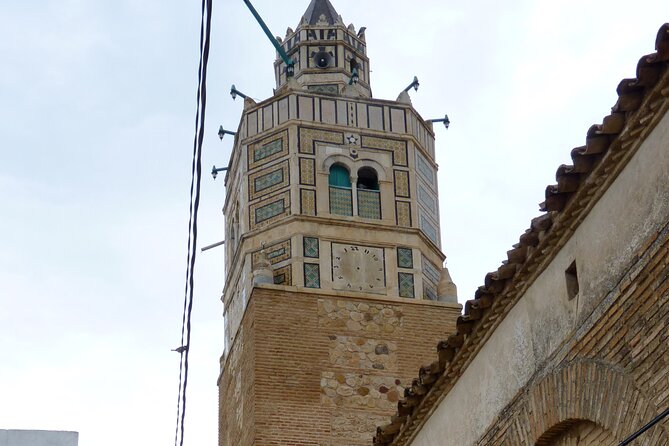
- Testour’s unusual clock tower: See the 23-meter octagonal minaret whose mechanical clock hands turn counterclockwise.
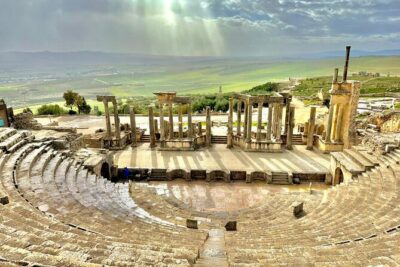
- Dougga in a three-hour visit: Walk through one of North Africa’s best-preserved small Roman cities, including its Capitol, theater, forum, baths, and Libyco-Punic Mausoleum.
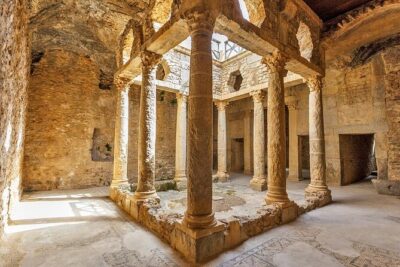
- Bulla Regia’s underground homes: View Roman villas built partly below ground, with important mosaics and religious buildings.
- A private vehicle and guide: Your group travels alone, with pickup offered and admission tickets included.
- A countryside route from Tunis: The drive connects archaeological sites with small towns and local life beyond the capital.
- Flexible cancellation: Cancel at least 24 hours before departure for a full refund, subject to the weather policy.
Three historic stops with three different personalities
This is not a tour of three similar Roman ruin fields. Testour offers a quick cultural stop in a town shaped by Andalusian refugees. Dougga presents a large and remarkably complete Roman city on open ground. Bulla Regia is more intimate, with its famous below-ground houses and mosaics.
That variety is the chief reason I find the route appealing. You get architecture, city planning, religion, domestic life, and a slice of modern northwestern Tunisia in one day. The tradeoff is time. You leave Tunis at 8:00 am, spend much of the day on the road, and need to keep moving to fit both major sites into roughly eight hours.
A private tour helps. The guide can adjust explanations to your interests, and your group does not need to wait for strangers at every stop. Several guides have been praised by name for making complicated history easy to follow, with Chaouki receiving especially strong comments for his depth of explanation and his habit of taking photographs during the day.
More Roman sites at Dougga and Bulla Regia:
- Full Day Dougga & Bulla Regia Via Testour Private tour with Lunch
★ 5.0 · 29 reviews - Private Guided Tour of Dougga and Testour Mosque
★ 4.5 · 15 reviews - Dougga and Bulla Regia Guided Tour From Tunis
★ 4.5 · 11 reviews
Testour and the counterclockwise clock
Testour is the shortest and most unusual stop. The town was founded by Moorish people at the start of the 17th century, and its identity comes from Andalusian architecture brought to Tunisia by families from southern Spain.
The focal point is the Grand Mosque. Its 23-meter minaret is octagonal, rather than square, and its small paired windows carry glazed inscriptions. At the top is a mechanical clock with hands that move counterclockwise. The tower’s form recalls the bell towers of Aragon in southern Spain, making it unlike the Islamic monuments you may see in Tunis or Kairouan.
The planned experience is a panoramic tour, not a long architectural study. You may see the mosque, walk around the town, take photographs, and possibly stop for tea or shopping. A short local-market or town visit can add useful context, but do not count on a full guided exploration of Testour.
This is the part of the day most likely to disappoint history fans who want detail. Some itineraries allow only about 10 minutes at the mosque, while other visits have included a little more time for tea and shopping. If Testour matters to you, tell the operator before departure that you want time here. The private format may make that possible, but the two major sites still control the schedule.
Dougga: the main event after three hours
Dougga, ancient Thugga, deserves the longest stop. The site was added to the UNESCO World Heritage List in 1997 and is often described as the best-preserved small Roman city in North Africa. After seeing it, you understand why.
The ruins preserve more than isolated monuments. You can follow the shape of a functioning city, with a monumental center, entertainment buildings, public baths, homes, and religious structures. The remains also show how an indigenous settlement developed during Roman rule, which gives the site more depth than a simple collection of Roman columns.
A three-hour visit gives you a useful amount of time, but you will still need to walk with purpose. The key sights include:
- The Capitol: One of Dougga’s most impressive monuments, with a commanding position above the forum.
- The Forum: The civic heart of the ancient city and an excellent place to understand how public life was organized.
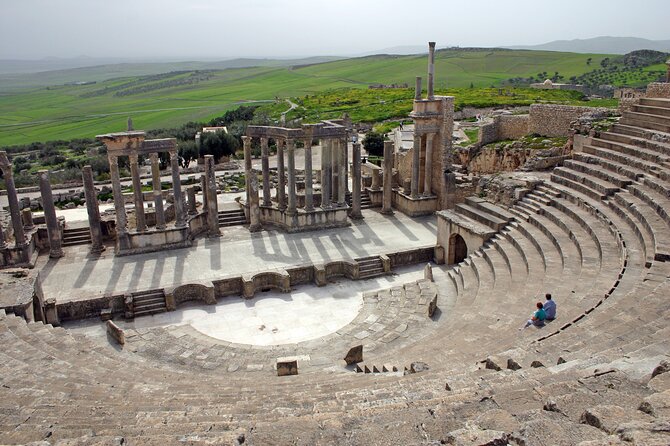
- The Theater: A surviving entertainment building that helps you picture the scale of Roman urban life.
- The thermal baths: These show the practical side of Roman society, where bathing was both routine and social.
- The houses: Domestic remains bring the city down to human scale.
- The Place of the Wind Rose: A notable part of the city’s monumental center.
- The triumphal arch: One of the site’s grand public statements.
- The Libyco-Punic Mausoleum: A reminder that Dougga’s story began before the Roman period.
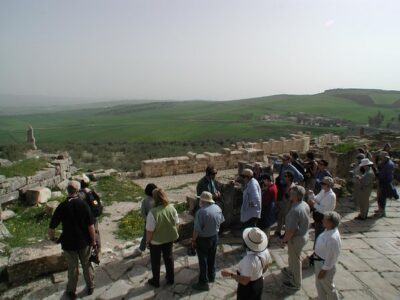
The setting adds much to the visit. The Capitol and Forum offer broad views over the surrounding countryside, and the combination of open skies, scattered ruins, and very light foot traffic can make Dougga feel startlingly personal. You may have room for photographs without a crowd pressing behind you.
Do not treat the site as an easy stroll. Expect uneven ground and steep stairs in places. The walking is manageable for most people, but comfortable shoes matter, and anyone with trouble on steps should discuss the route with the guide at the start. A good guide can help you focus on the most important buildings if your energy drops.
The guide makes a large difference here. Names attached to especially strong days include Chaouki, Yahya, Iskander, Rabia, and Yosra. Their value is not simply reciting dates. Dougga has several periods and cultures layered together, and a well-prepared guide can explain why a Roman city includes Libyco-Punic features, how public buildings fit together, and what the surviving remains reveal about daily life.
Bulla Regia and its underground Roman villas
Bulla Regia is a different kind of archaeological experience. The site lies a few kilometers north of Jendouba in northwestern Tunisia. Its story reaches back more than 17 centuries, beginning with a settlement founded by the Numidians no later than the end of the sixth century BC. It later became a royal residence, an autonomous community in the early Roman period, a municipality under the Flavians, and a Roman colony under Emperor Hadrian.
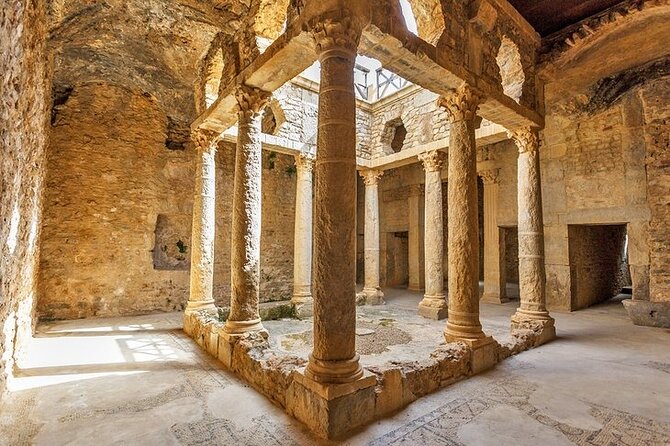
The most famous feature is the underground domestic architecture. Roman houses were built partly below ground, creating cooler interior spaces. You can see the remains of villas and some striking mosaics, including mosaics in two villas that have impressed even seasoned Roman-site visitors.
Bulla Regia is also important for its religious buildings. The Capitol, Temple of Apollo, two Christian basilicas, and Church of Alexander help show how the city’s religious life changed over time. By the end of the fifth century, Augustine regarded the inhabitants as bad Christians, a small detail that hints at the religious arguments and social change of late antiquity.
The site receives two hours on this excursion. That is enough to see the main areas, but it is less generous than the Dougga stop. The underground homes are a major draw, yet not every section is fully exposed. You may leave wishing more of the buried rooms were open or visible.
That limitation does not make Bulla Regia a lesser stop. Dougga impresses through scale and surviving public buildings. Bulla Regia rewards close looking: mosaics, house plans, lowered rooms, and traces of changing religious practice. If you enjoy seeing how people lived rather than only how rulers built, give this site your full attention.
More things to do in Tunis:
- Private Tour to Kairouan, El Jem & Monastir from Tunis_hammamet
★ 5.0 · 301 reviews - Private tour: Medina,Carthage ,Sidi Bou Said, Bardo Museum+lunch
★ 5.0 · 230 reviews - Carthage, Bardo Museum, Sidi Bou Said and Medina Private Day Tour
★ 4.5 · 153 reviews - Guided Bike Tour of Carthage Archeological Site in Tunisia
★ 5.0 · 88 reviews
The drive from Tunis and the shape of the day
The tour begins at 8:00 am with pickup offered in Tunis. It is a private activity, so only your party participates. That matters on a full day like this, since you can ask questions freely and avoid the stop-and-start routine of a large coach.
The route passes through the Tunisian countryside and smaller towns. One day included a traditional lunch in a small town and a stop where local mandarins were sampled, while another included a tea break in Testour. These extras are not clearly guaranteed parts of the published experience, so I would regard them as possible additions rather than promises.
The schedule usually feels full but not absurdly rushed. Testour is brief, Dougga receives about three hours, and Bulla Regia about two hours. The remaining time covers pickup, driving, meals or short breaks, and the return to Tunis.
You should ask at the start how much time is planned for each place. If you care most about Dougga, the schedule already gives it priority. If you want Testour to be more than a photo stop, say so early. Private does not mean unlimited time, especially when two distant archaeological sites must fit into one day.
Guide quality matters more than the vehicle
The best part of this experience is likely to be the guide. Chaouki is repeatedly praised for historical detail, warmth, and the ability to answer questions. Yahya has been singled out for patience and kindness during a long day. Iskander is described as pleasant and clear, and Rabia and Yosra have also received strong marks for their site knowledge and English.
The tour may also use local guides at the archaeological sites. That can be helpful because Dougga and Bulla Regia contain enough monuments to overwhelm a first-time visitor. A strong explanation turns a pile of stone into a readable city.
There is one serious point to check: driving standards have not been consistent for every departure. One report described high speeds, frequent distraction, and moments when the driver’s hands were not on the wheel. Other accounts describe pleasant, capable drivers, including Usama. Because road safety matters more than reaching the next ruin ten minutes sooner, speak up immediately if you feel uncomfortable and ask the operator to address the issue.
The price is listed at $127.95 per person. For a private day with pickup, a dedicated guide and driver, and entrance fees included, that can be fair, particularly for two or more people sharing the experience. It is not a bargain in the local-cost sense, and a solo visitor may feel the price more sharply.
Your value comes from convenience and access. Reaching both Dougga and Bulla Regia independently would require arranging transport, understanding the roads, buying entry tickets, and finding a way to interpret large sites with limited on-site context. If you value structure and explanation, the private format earns much of its cost. If you mainly want transportation and can arrange a cheaper driver, the price may feel high.
Who should book this excursion
I would choose this day if you have at least three days in Tunisia and archaeology is a major reason for your visit. Dougga alone is worth serious attention, while Bulla Regia adds a rare look at Roman domestic design. Together they make a strong counterpoint to the monuments of Tunis and Carthage.
This excursion suits you best if you:
- Want ancient sites beyond the standard capital itinerary.
- Prefer a private group rather than a large coach.
- Enjoy detailed historical explanation.
- Can manage uneven paths and steep steps.
- Are willing to spend much of a day in the vehicle.
- Want to see both public Roman monuments and private homes.
It is less suited to you if you want a relaxed village day, dislike long drives, or need guaranteed extra time in Testour. It may also be a poor fit if walking on rough archaeological ground is difficult.
The tour is generally suitable for most participants, and service animals are allowed. Confirmation is provided at booking, and the experience is near public transportation. For cancellations, you can receive a full refund if you cancel at least 24 hours before the 8:00 am start. Poor weather may lead to a new date or full refund.
Should you book it?
Book this excursion if Dougga and Bulla Regia are high on your Tunisia list and you want one private day to reach both. Dougga is the star, with its theater, Capitol, forum, baths, and wide views, while Bulla Regia supplies the close-up details through mosaics and underground villas.
Before paying, confirm the pickup area, expected Testour time, guide language, and lunch arrangements. I would also make clear that safe driving is non-negotiable. With those points settled, the tour offers a strong way to reach two exceptional sites that are difficult to combine without private transport.
FAQ
What time does the tour start?
The tour starts at 8:00 am.
How long does the excursion last?
The excursion lasts approximately eight hours.
Is pickup offered?
Yes, pickup is offered.
Is this a private tour?
Yes. Only your group participates in the activity.
Are entrance fees included?
Admission tickets are included for Dougga and Bulla Regia.
How much walking is involved?
The tour includes walking through archaeological sites, with some steep and uneven stairs, particularly around the ruins.
What will I see in Testour?
You will see the Andalusian village of Testour, including the Grand Mosque and its 23-meter octagonal minaret with a counterclockwise mechanical clock.
How much time is planned for Dougga and Bulla Regia?
The planned visit is three hours at Dougga and two hours at Bulla Regia.
What is the cancellation policy?
You can cancel at least 24 hours before the start time for a full refund. Cancellations or changes made less than 24 hours before departure are not refunded or accepted. If poor weather causes cancellation, you will be offered another date or a full refund.
Just added in Tunis
- Private Arrival Transfer: Tunis Airport to Tunis Hotel★ 4.5 · 5 reviews
- Cap Bon Guided Day Tour from Tunis★ 5.0 · 2 reviews
- Dougga Guided Day Tour from Tunis★ 5.0 · 5 reviews
- Unveiling the Beauty of Sidi Bou Said and Carthage Private Tour★ 5.0 · 2 reviews
- Tunis Carthage Private Arrival Airport Transfer to Tunis★ 5.0 · 4 reviews
- Tunis Group Tour: Carthage, Sidi Bou Said, Bardo museum & Medina★ 5.0 · 5 reviews
- Bardo Museum , Oudhna and the roman aqueduct★ 5.0 · 4 reviews
- Bardo Museum- The ruins of Carthage- Village of Sidi Bou Said★ 5.0 · 4 reviews
Dougga and Bulla Regia, compared.
Full Day Dougga & Bulla Regia Via Testour Private tour with Lunch
Read our review →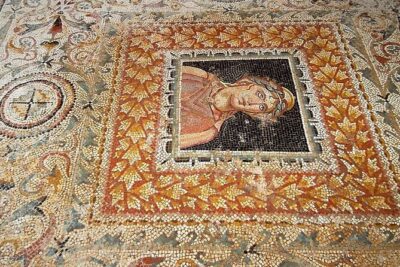
Private Day Trip to Testour, Dougga and Bulla Regia from Hammamet
Read our review →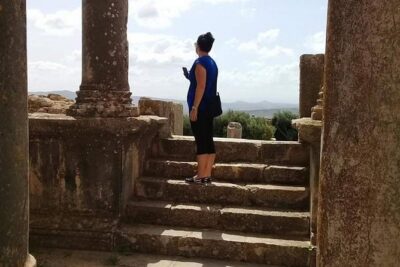
Private Guided Tour of Dougga and Testour Mosque
Read our review →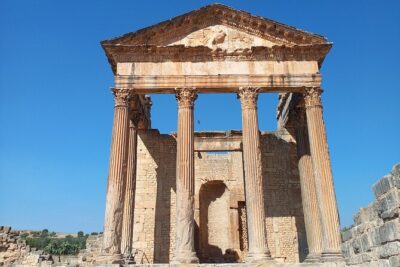
Bulla Regia and Beni Mtir Cascade Daytrip from Tunis
Read our review →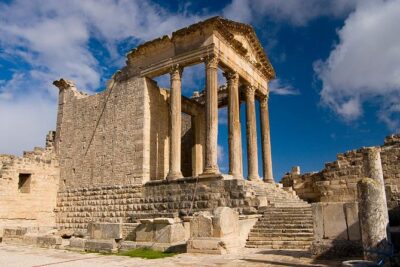
DAY TRIP TO Dougga & Bulla Regia , DEPARTURE FROM Tunis
Read our review →Browse the lists this tour appears in