
Reviewed · DOUGGA AND BULLA REGIA
Dougga Guided Day Tour from Tunis
Ancient stones, excellent day trip. This outing pairs the Roman ruins of Dougga with the Andalusian village of Testour, giving you two very different slices of northern Tunisia in one day. I like the small-group format, with no more than eight people, and I like that transport, a guide, lunch, and hotel pickup are handled together.
The main consideration is that Dougga admission is not included, and the listed details do not give the entrance fee. The roughly eight-hour schedule also leaves about 90 minutes at the archaeological site, so you should expect a focused visit rather than a slow, all-day exploration of every ruin.
In This Review
- Key points to know before booking
- Why Dougga makes a strong day trip from Tunis
- Testour and its unusual Andalusian character
- Walking through Dougga’s Roman center
- What 90 minutes at the ruins really means
- The guide and driver are part of the value
- Is the $139.06 price good value?
- Lunch, timing, and the practical details
- Who should book this Dougga tour?
- Should you book it?
- FAQ
- How long does the Dougga tour last?
- Where does the tour start?
- Is lunch included?
- Is admission to Dougga included?
- How many people can join the tour?
- Can I cancel for a full refund?
Key points to know before booking
- Testour adds a local stop: See the Great Mosque and sample the village’s regional cheese before continuing to Dougga.
- Dougga is the star attraction: The route includes the theater, marketplace, Capitoline Temple, Forum, baths, and House of Trifolium.
- Small groups keep the day manageable: The private, air-conditioned minivan is capped at eight people.
- Lunch is included: That makes the $139.06 price easier to assess, though extra food and drinks are not covered unless specified.
- A Blue Badge guide leads the visit: You get historical context about Roman gods, public life, and the purpose of the ruins.
- The tour earns strong marks for the core experience: The guide, driver, temple, amphitheater, and houses are the parts most likely to make the day worthwhile.
Why Dougga makes a strong day trip from Tunis
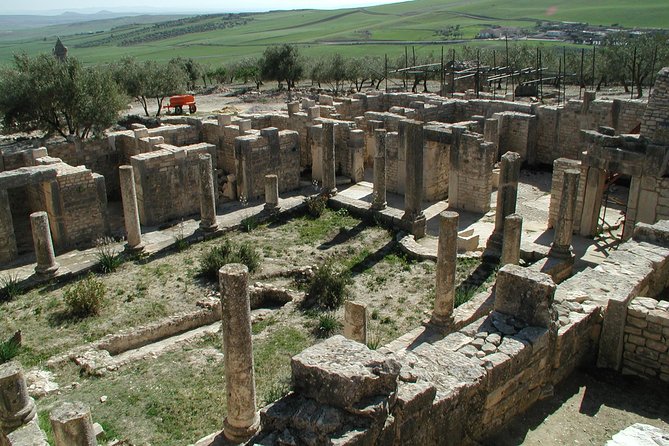
Dougga is one of Tunisia’s major Roman archaeological sites, and it is especially appealing because the ruins are not limited to one grand monument. You can move from a theater to a public square, then to temples, baths, houses, and market spaces. That variety helps you picture Dougga as a functioning town rather than a single isolated ruin.
I like this tour because it gives the site structure. Without a guide, it can be hard to understand why one broken wall matters more than another. Here, you hear about Roman deities and daily life as you move through the remains, which gives the stones a useful human context.
The experience begins at 8:00 am from 12 Av. de Paris in Tunis and ends back at the meeting point. Hotel pickup and drop-off are included, so confirm the pickup arrangement when you book, especially if you are staying away from the listed starting address.
The drive between stops takes place in a private, air-conditioned minivan. With a maximum of eight people, this should feel more personal than a large coach outing. It also matters on a full day when you want less time waiting for people to board and more time at the sites.
More Roman sites at Dougga and Bulla Regia:
- Private Excursion to Testour, Dougga and Bulla Regia from Tunis.
★ 5.0 · 100 reviews - Full Day Dougga & Bulla Regia Via Testour Private tour with Lunch
★ 5.0 · 29 reviews - Private Guided Tour of Dougga and Testour Mosque
★ 4.5 · 15 reviews
Testour and its unusual Andalusian character
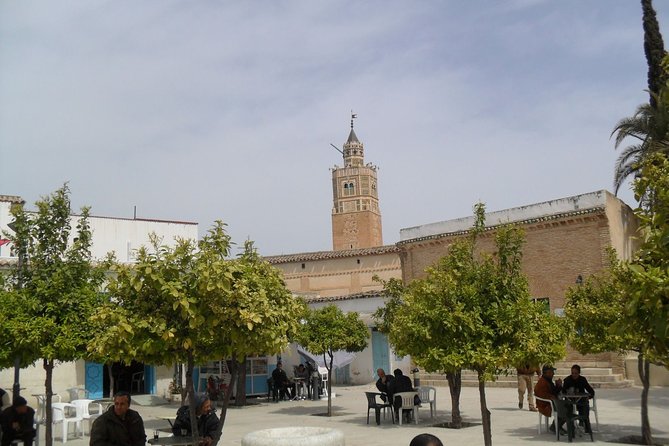
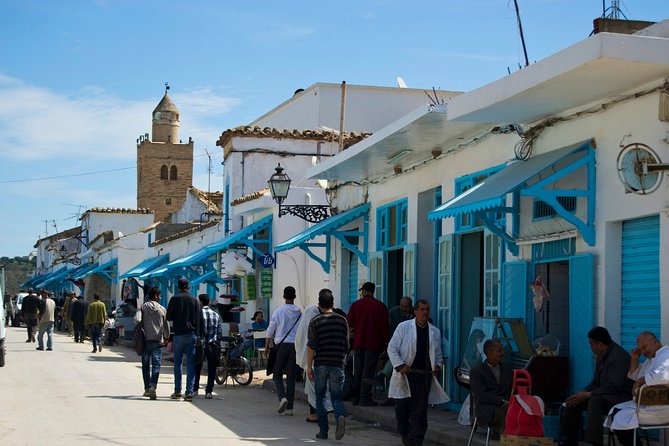
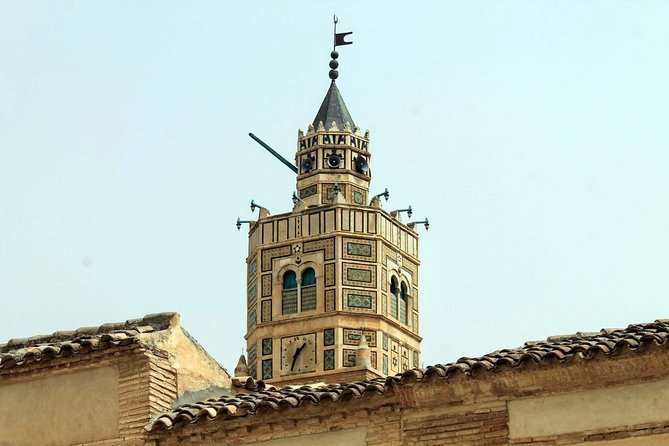
The first listed stop is Testour, an Andalusian village known for its Great Mosque. The mosque’s minaret is the most distinctive feature. It rises 23 meters and has an octagonal shape, with small double windows and glazed inscriptions on its facade.
At the top is a mechanical clock. The tower’s form recalls the bell towers of Aragon in southern Spain, a striking detail in a Tunisian village. The architecture reflects the Andalusian influence that shaped Testour, and it gives the morning a different tone from the Roman remains that follow.
You have about one hour here, with no admission charge listed for the stop. That is enough time for a look at the mosque and the village setting, but it is not a long architectural study. The tour description does not promise interior access to the Great Mosque, so think of this as a guided outdoor visit unless your guide advises otherwise.
The most personal part of the stop is the cheese tasting. Testour is known for its local cheese, and sampling it gives you a direct connection to the area rather than another quick photo stop. I like this inclusion because it is specific to the village and adds a taste of local food before the main archaeological visit.
Do not expect a large food tour. It is a tasting of the regional specialty, not a full meal, and lunch comes later as a separate included feature. If you have dietary restrictions, the tour offers a vegetarian option when requested at booking.
Walking through Dougga’s Roman center
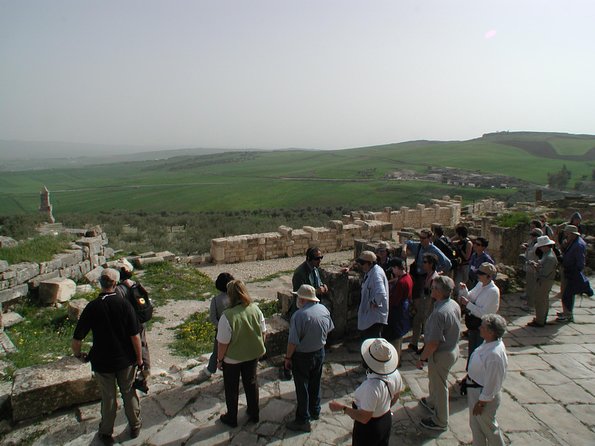
After Testour, the tour continues to Dougga, a UNESCO World Heritage archaeological site with some of the largest Roman ruins in North Africa. The planned visit lasts about one hour and 30 minutes. That is enough to see the main landmarks with a guide, though you will need to keep moving.
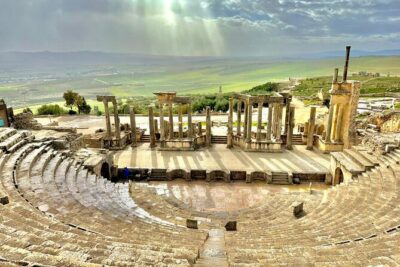
The visit starts at the theater. Ancient theaters are often the easiest place to understand the size and design of a Roman town, and Dougga’s theater provides a strong opening point. From there, the route continues to the Place de la Rose des Vents, the marketplace, and the Capitoline Temple.
The Place de la Rose des Vents helps show how public space shaped Roman town life. The marketplace gives you another piece of the picture: this was not simply a collection of temples, but a place where people gathered, traded, worshiped, and handled public business.
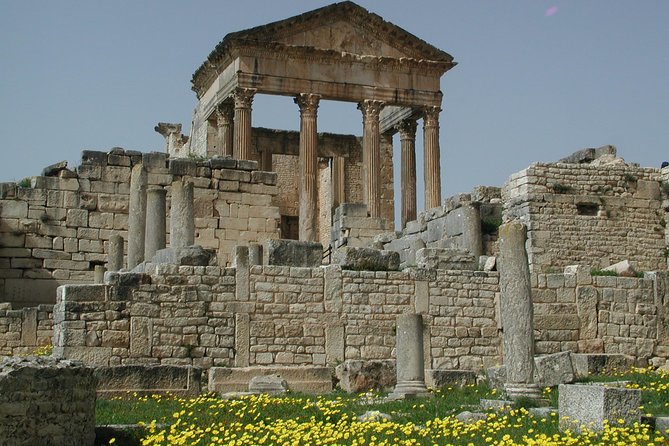
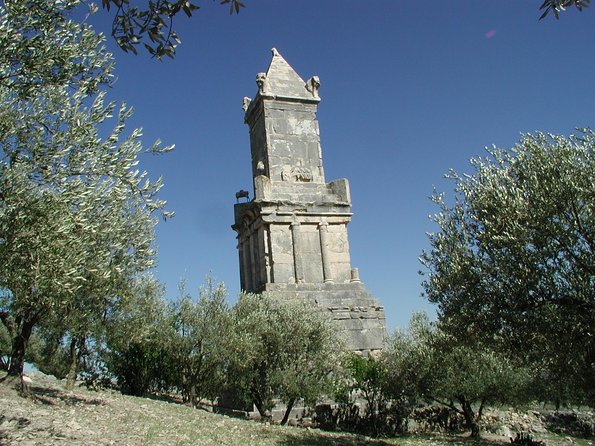
The Capitoline Temple is likely to be one of the visual high points. The tour describes it as well preserved, and the temple gives you a clear sense of Roman religious architecture. Your guide explains Roman deities along the way, which is useful because the names and roles of the gods can otherwise blur together.
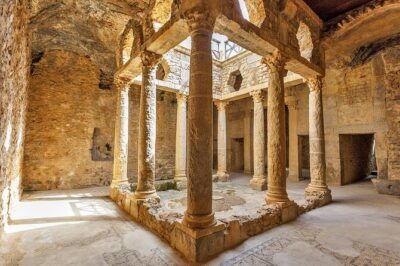
The route also includes the Forum, Public Baths, and House of Trifolium. These stops shift attention from monuments to everyday routines. The Forum points to political and civic life, while the baths show how public buildings supported social activity. The House of Trifolium brings the visit closer to domestic space.
I appreciate this mix. A tour that showed only the Capitoline Temple would give you a grand photograph but a thin understanding of the town. The theater, market, Forum, baths, and house make Dougga easier to read as a lived-in Roman community.
What 90 minutes at the ruins really means
The 90-minute Dougga visit is the main limitation of the schedule. The site includes several major areas, and you will not have unlimited time to wander, pause, and photograph every detail. If you enjoy archaeology and like to study inscriptions or architectural fragments at length, the pace may feel tight.
For most people, though, the focused route makes sense. You see the principal monuments, hear the historical explanation, and avoid spending the whole day on one large site. The included guide is especially valuable here because the visit is organized around the places that best explain Roman life.
Wear shoes suited to a moderate amount of walking. The tour requires a moderate level of physical fitness, and the site visit involves moving between ruins rather than simply stepping off the minivan at one viewpoint. The supplied information does not specify the condition of every path, so practical footwear is the sensible choice.
Bring patience for the pace and keep your expectations clear. This is a guided introduction to Dougga, not a specialist archaeological survey. If the ruins are your only reason for visiting northern Tunisia, you may wish for more time. If you want an efficient day trip from Tunis with context and a second cultural stop, the timing is more appealing.
More things to do in Tunis:
- Private Tour to Kairouan, El Jem & Monastir from Tunis_hammamet
★ 5.0 · 301 reviews - Private tour: Medina,Carthage ,Sidi Bou Said, Bardo Museum+lunch
★ 5.0 · 230 reviews - Carthage, Bardo Museum, Sidi Bou Said and Medina Private Day Tour
★ 4.5 · 153 reviews - Guided Bike Tour of Carthage Archeological Site in Tunisia
★ 5.0 · 88 reviews
The guide and driver are part of the value
A Blue Badge guide is included, along with a driver and private air-conditioned minivan. That combination removes two common problems on an out-of-town visit: figuring out transport and trying to decode a large ruin without help.
The guide’s role is not just to point out old buildings. The planned commentary covers Roman deities and life in ancient times, so you can connect the temples and civic structures to the society that used them. This is the sort of explanation that can turn a pleasant walk among stones into a clearer picture of Roman town life.
The driver matters, too. You are not responsible for the route between Tunis, Testour, and Dougga, and hotel pickup and drop-off are included. A small vehicle also makes the day less cumbersome than a full-size bus excursion.
The published feedback is limited to five ratings, but it is uniformly positive. The strongest praise centers on Dougga being worth the visit and on the guide and driver doing a good job. One detailed assessment specifically highlights the temple, amphitheater, and houses, while also noting that Dougga is close enough to Tunis for an easy day trip.
That praise fits the design of the experience. The tour is not trying to offer luxury extras or a long list of stops. Its strength is a well-organized route to an important site, supported by transport and explanation.
Is the $139.06 price good value?
At $139.06 per person, this is not the cheapest way to spend a day outside Tunis. The value depends on how much you place on convenience, a private vehicle, and guided interpretation.
The price includes lunch, hotel pickup and drop-off, air-conditioned transport, and a Blue Badge guide. The group limit of eight is another benefit. If you would otherwise need to arrange a private car, driver, guide, and food separately, the package becomes easier to justify.
There are two costs to clarify before you go. The Dougga admission ticket is not included, and the general notes say food and drinks are not included unless specified. Since lunch is specifically included, that wording likely refers to additional food and drinks, but you should confirm what lunch covers and budget for beverages or snacks.
The Testour cheese tasting is included as part of the stop, and the mosque visit has no admission fee listed. Those small inclusions add character without requiring you to pay for a string of optional extras.
I would see the price as fair for someone who values a small group and a guided day. It is less compelling for an independent traveler who already has a car, prefers to spend several hours alone at Dougga, or wants to keep every expense as low as possible.
Lunch, timing, and the practical details
The day starts at 8:00 am and lasts approximately eight hours. That early start is useful because it leaves enough time for the drive, Testour, lunch, Dougga, and the return to Tunis without turning the outing into an evening commitment.
Lunch is included, though no menu or restaurant details are provided. That means you should not book this expecting a particular dish or dining style. The vegetarian option is available, but you need to request it when booking.
The minimum booking is two people. Children must be accompanied by an adult, and the activity has a maximum of eight participants. That makes it suitable for couples, families with older children, and small groups who want a more contained outing.
Mobile tickets make the booking side simple. Confirmation is provided at the time of booking, and the tour offers free cancellation if you cancel at least 24 hours before the local start time. Cancellations or changes made inside that period are not refunded or accepted. The activity also requires a minimum number of participants, so if that minimum is not met, you are offered another date or experience, or a full refund.
Who should book this Dougga tour?
I would recommend this outing to you if you want to see Dougga without arranging transport, if historical explanation improves your visits, or if you prefer small groups to large sightseeing buses. It also works well when you want more than ruins, since Testour adds architecture and a local cheese tasting.
It suits people with a moderate fitness level who are comfortable walking around an archaeological site for a focused 90-minute visit. Families can book, but children must have an adult with them, and the historic content may appeal more to older children than to very young ones.
I would hesitate if your priority is spending half a day or more at Dougga alone. The schedule covers the key stops, but the short site visit leaves little room for a slow, unplanned wander. I would also ask about the entrance fee and lunch details before paying, since both affect the final cost.
Should you book it?
Book this Dougga day tour if you want an efficient, well-supported visit to one of Tunisia’s most important Roman sites. The strongest reasons are the small group, air-conditioned minivan, included lunch, hotel transport, and guide-led route through the theater, temple, Forum, baths, and houses.
The Testour stop makes the day more distinctive than a simple ruins transfer. You get Andalusian architecture, a mechanical-clock minaret, and a regional cheese tasting before turning to Roman Tunisia.
Skip it only if you need a long, unhurried archaeological visit or want to control every detail yourself. For most people staying in Tunis, this is a practical way to reach Dougga and understand what you are seeing, with enough local flavor to keep the day from feeling like a single-purpose monument run.
FAQ
How long does the Dougga tour last?
The experience lasts approximately eight hours, beginning at 8:00 am and ending back at the meeting point in Tunis.
Where does the tour start?
The listed starting point is 12 Av. de Paris, Tunis 1000, Tunisia. Hotel pickup and drop-off are included, so confirm the pickup details when booking.
Is lunch included?
Yes. Lunch is included in the tour. Additional food and drinks are not included unless specifically stated.
Is admission to Dougga included?
No. The Dougga archaeological site admission ticket is not included in the tour price.
How many people can join the tour?
The tour has a maximum of eight participants. A minimum of two people is required per booking.
Can I cancel for a full refund?
Yes, if you cancel at least 24 hours before the experience start time. Cancellations or changes made less than 24 hours before the start time are not refunded or accepted.
Just added in Tunis
- Private Arrival Transfer: Tunis Airport to Tunis Hotel★ 4.5 · 5 reviews
- Cap Bon Guided Day Tour from Tunis★ 5.0 · 2 reviews
- Unveiling the Beauty of Sidi Bou Said and Carthage Private Tour★ 5.0 · 2 reviews
- Tunis Carthage Private Arrival Airport Transfer to Tunis★ 5.0 · 4 reviews
- Tunis Group Tour: Carthage, Sidi Bou Said, Bardo museum & Medina★ 5.0 · 5 reviews
- Bardo Museum , Oudhna and the roman aqueduct★ 5.0 · 4 reviews
- Bardo Museum- The ruins of Carthage- Village of Sidi Bou Said★ 5.0 · 4 reviews
- Kairouan-El Jem★ 4.5 · 2 reviews
Dougga and Bulla Regia, compared.
Private Excursion to Testour, Dougga and Bulla Regia from Tunis.
Read our review →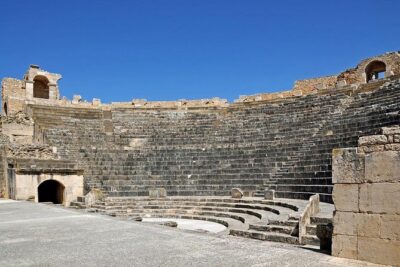
Full Day Dougga & Bulla Regia Via Testour Private tour with Lunch
Read our review →
Private Day Trip to Testour, Dougga and Bulla Regia from Hammamet
Read our review →
Private Guided Tour of Dougga and Testour Mosque
Read our review →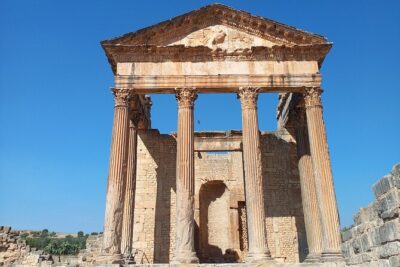
Bulla Regia and Beni Mtir Cascade Daytrip from Tunis
Read our review →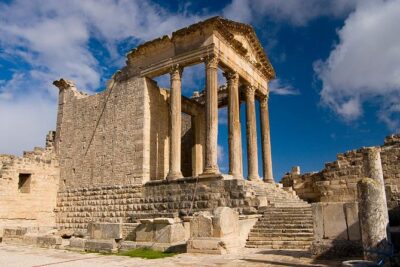
DAY TRIP TO Dougga & Bulla Regia , DEPARTURE FROM Tunis
Read our review →Browse the lists this tour appears in