
Reviewed · GUIDED
Roman Archeology Guided Tour Thuburbo Majus & Uthina
Roman ruins reward curious detours. This private, seven-hour outing links Uthina’s huge amphitheater with the temples and baths of Thuburbo Majus, plus a look at the Roman aqueduct that carried water toward Carthage. I like the uncrowded feel and the chance to visit sites far less familiar than Carthage or El Jem.
I also like the flexible private format, especially with a guide such as Fathi, a retired professor praised for his teaching and command of Tunisia’s Roman past. The main drawback is that the aqueduct may be only a quick roadside look unless you ask for a proper stop, and lunch is not included.
In This Review
- What makes this tour worth your time
- A seven-hour journey beyond the usual Roman stops
- Uthina begins the day with a dramatic amphitheater
- The Zaghouan aqueduct reveals Rome’s practical genius
- Thuburbo Majus rewards careful exploration
- The Laberii villa adds mosaics and domestic detail
- Why the private format matters on this route
- The guide can shape the quality of the day
- Who should book this archaeological day?
- Should you book it?
- FAQ
- How long is the Roman archaeology tour?
- What sites are included?
- Is transportation included?
- Is hotel pickup available?
- Is this a private tour?
- Is lunch included?
- Are entrance fees included?
- Can I ask to stop at the Zaghouan aqueduct?
- What is the cancellation policy?
What makes this tour worth your time
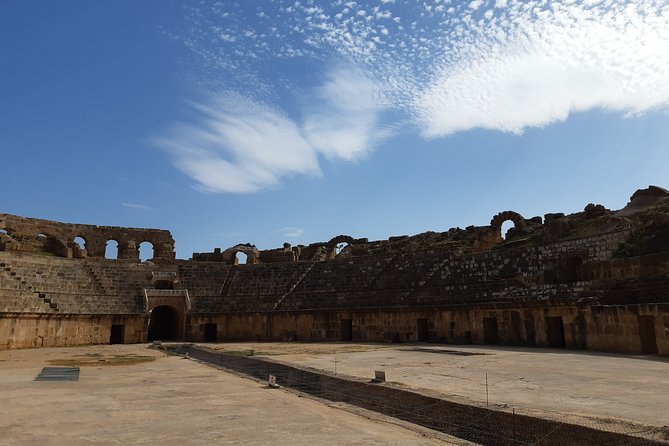
- Uthina’s 20,000-seat amphitheater: A recently excavated Roman arena gives the first stop real impact.
- Fathi’s teaching style: His background as a retired professor makes the ancient sites easier to understand, not just photograph.
- The 132-kilometer aqueduct: The Zaghouan to Carthage water system shows the practical engineering behind Roman city life.
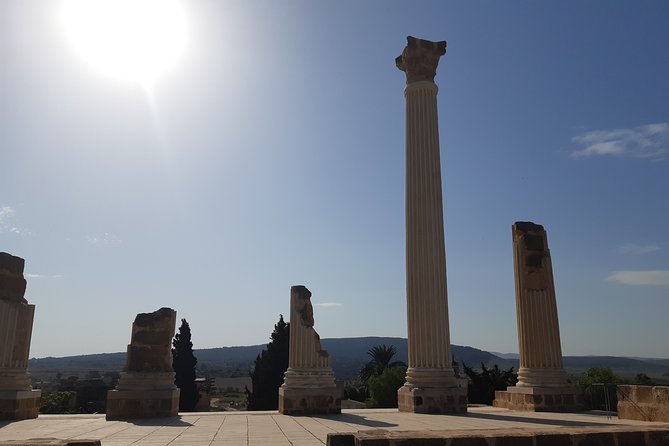
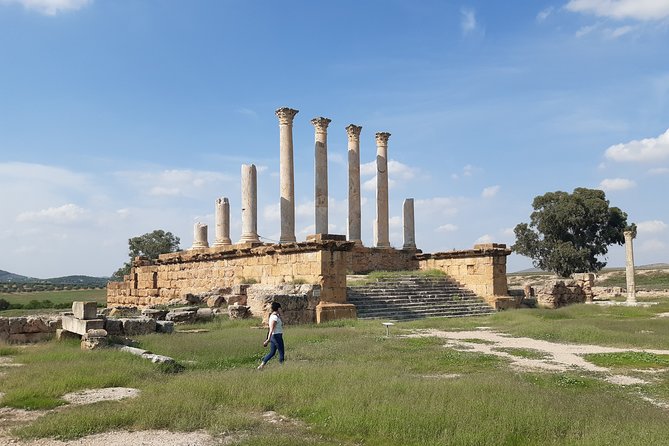
- Thuburbo Majus’s preserved Capitol: Four Corinthian columns still rise above the Forum, creating one of Tunisia’s most memorable Roman views.
- A private vehicle with air conditioning and WiFi: This matters on a long day across central Tunisia.
- A flexible schedule: The private setup lets you discuss start and end times and ask for extra attention at places such as the aqueduct.
A seven-hour journey beyond the usual Roman stops
This is not a quick stop at one famous ruin. It is a full day built around three Roman sites, with Zaghouan adding both engineering and North African town life to the route.
You travel in a private, air-conditioned vehicle, with pickup offered and WiFi on board. Admission fees and taxes are included. At $140.96 per person, the price makes the most sense if you value door-to-door transport, a private guide, and the freedom to keep the day focused on your group.
The price is less attractive if you mainly want a short visit to one ruin. This is a long outing, and the sites are spread across the countryside. You are paying for the route, transport, interpretation, and convenience as much as for entrance tickets.
The tour is commonly booked well ahead, with an average booking point of about 36 days before departure. That is useful planning information if your dates in Tunis are fixed. Group discounts may improve the value for a small party, while solo visitors should compare the private price with what they want from a full day outside the capital.
More things to do in Tunis:
- Private Tour to Kairouan, El Jem & Monastir from Tunis_hammamet
★ 5.0 · 301 reviews - Private tour: Medina,Carthage ,Sidi Bou Said, Bardo Museum+lunch
★ 5.0 · 230 reviews - Carthage, Bardo Museum, Sidi Bou Said and Medina Private Day Tour
★ 4.5 · 153 reviews
Uthina begins the day with a dramatic amphitheater
Uthina, also called Oudhna, lies about 30 kilometers south of Tunis. Its position once mattered greatly. The city sat on high ground above routes leading toward Carthage from the south and west, so you are seeing a site chosen for access and control, not by accident.
The settlement appears to have Berber roots, suggested by its name, and later became a Punic city before Roman rule reshaped it. Its story includes punishment, Romanization, brief periods under Vandal and Byzantine control, and decline after the Arab conquest in the seventh century.
That layered past gives Uthina a different character from a site built entirely as a Roman showcase. You can look for the older North African foundation beneath the later Roman city, even though the most visible remains belong to the Roman period.
The archaeological area covers more than 100 hectares. You should not expect to absorb every corner in a short visit. The scheduled time is about 90 minutes, which gives you a useful introduction to the major remains but requires some focus.
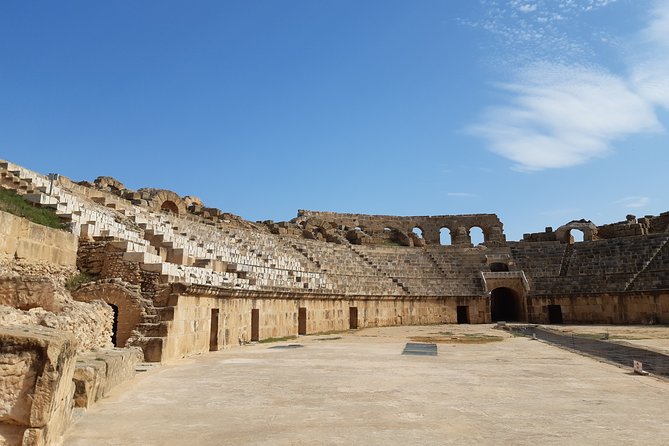
The star attraction is the amphitheater. It could hold about 20,000 spectators, a scale that changes your sense of the city immediately. The arena was only recently fully excavated, so its broad shape and seating areas feel especially important. You can picture the public events that once drew crowds from across the area.
I would give the amphitheater priority if your time is limited. It is the clearest visual proof that Uthina was a major Roman center, not a minor provincial outpost. The wider site also contains imposing Roman structures, but their meaning is easier to grasp with a guide explaining what you are seeing.
This is where Fathi can make a real difference. His work as a retired professor, along with his interest in teaching, suits a place where bare walls and partial foundations need context. A good question to ask is how the earlier Punic and Berber setting shaped the later Roman city.
The Zaghouan aqueduct reveals Rome’s practical genius
The aqueduct stop is brief, listed at about 20 minutes, but the structure itself is enormous in scale. The Zaghouan to Carthage system measured 132 kilometers and supplied the capital of Roman North Africa with water.
Built at the beginning of the second century AD, it crossed rough country by changing its form as needed. Some sections ran at ground level. Others were underground. Two sections used raised arcades, some more than 20 meters high.
The estimated flow was about 30 million liters per day. That number helps explain why this was not simply a decorative Roman project. It supported the daily life of a major city, including the Baths of Antonine at Carthage.
Water was held in large vaulted reservoirs at Maalga, near the entrance to Carthage, before being distributed onward. Seen in that context, the aqueduct connects this rural route to the better-known ruins of Carthage. It is the infrastructure behind the monuments.
There is one practical catch. The aqueduct may be viewed from the vehicle rather than treated as a full walking stop. One person specifically found that the group drove past it but could have stopped by asking. Since this is a private tour, speak up before reaching the site if you want time to get out, take photographs, or examine the masonry more closely.
The tour also includes a visit to Zaghouan’s Andalusian medina. The schedule gives the aqueduct only 20 minutes, so the exact balance between the medina and the aqueduct may depend on the day’s timing. You should confirm your preferred emphasis with the guide at the start.
That flexibility is a real benefit here. A fixed group excursion might simply keep moving. A private day gives you a better chance to turn a passing view into a meaningful stop, provided you ask clearly.
Thuburbo Majus rewards careful exploration
Thuburbo Majus is the largest-feeling stop on the route, even though the listed visit is about one hour. The ancient city grew on the side of a hill beside a fertile valley, long before Roman rule reached North Africa.
The Roman remains are the reason to come. The city contains temples, public spaces, and bathing complexes, with enough surviving structure to suggest a busy urban center rather than an isolated monument.
The Capitol is the visual centerpiece. In Roman cities, the Capitol was the most important temple, and the one here is among the best preserved in Tunisia. Six Corinthian columns once formed its facade. Four remain intact, rising above a broad staircase that looks toward the Forum.
This is the kind of place where you should pause before rushing in for photographs. The columns, steps, and open Forum let you read the city’s layout. You can see how religious life, civic business, and public movement came together in one central space.
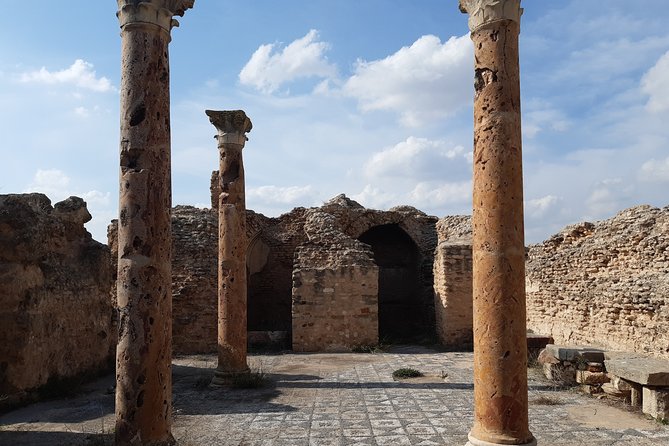
Thuburbo Majus also had two bathing establishments, one for winter and one for summer. That detail says more about Roman urban life than a list of emperors ever could. The residents planned public comfort around the seasons, using different complexes for different conditions.
The city declined in the middle of the third century, then enjoyed a notable revival in the fourth century. During that later period, it adopted the proud title Respublica Felix Thuburbo Majus, or fortunate republic of Thuburbo Majus.
That rise and fall gives the site a useful human scale. You are not looking at a city that simply appeared, reached a peak, and vanished. Its fortunes changed with politics, trade, security, and local investment. A guide can help connect those broad changes to the stones in front of you.
One hour is enough to see the main highlights, but it is not generous for a large archaeological area. If temples and mosaics matter more to you than a relaxed lunch, tell the guide. If you prefer a slower pace, the private format gives you a better chance of adjusting the schedule, though the full route still needs to fit into roughly seven hours.
A few more options to weigh up in Tunis
- Guided Bike Tour of Carthage Archeological Site in Tunisia
★ 5.0 · 88 reviews - Guided tour in the UNESCO world heritage Medina of Tunis
★ 5.0 · 68 reviews - Group Guided Bike Tour of Carthage Archeological Site in Tunisia
★ 5.0 · 57 reviews - 7 Day Guided Tunisia Tour Including Pickup
★ 5.0 · 27 reviews
The Laberii villa adds mosaics and domestic detail
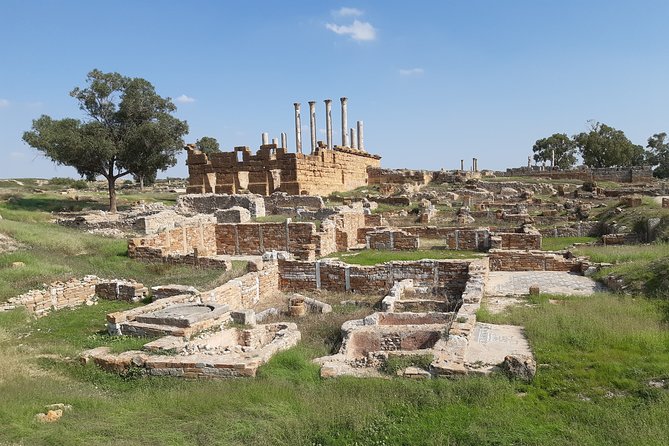
The Laberii villa deserves special attention if it is included in your day’s route. It covers about 2,300 square meters and contains 30 rooms, giving you a glimpse of elite domestic life rather than only public monuments.
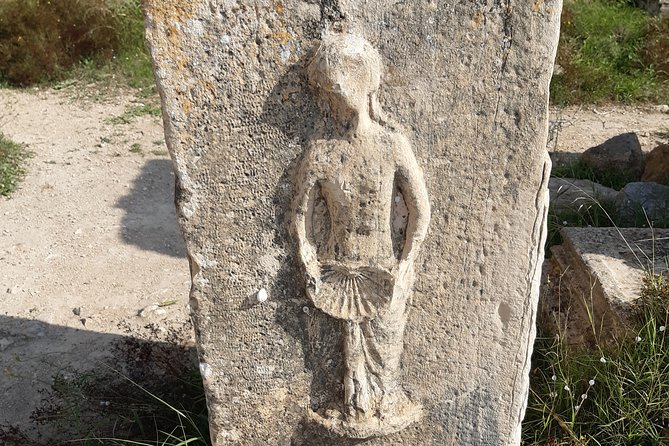
Its mosaics are the main draw. At sites such as Thuburbo Majus and Uthina, mosaics help fill in the details that temples and amphitheaters cannot show. They reveal how private interiors were decorated and how Roman North African homes combined practical rooms with displays of wealth.
A villa this large also changes your sense of scale. Roman urban life was not limited to the Forum or the arena. It included private residences with many rooms, carefully decorated floors, and space for family life, work, and entertaining.
The supplied route description gives the villa particular emphasis, but the timed itinerary provides only a short visit to Thuburbo Majus. I would ask before departure how much time is planned for the Laberii villa, especially if mosaics are your chief interest.
Why the private format matters on this route
The tour is for your group alone. That means you can discuss start and end times, ask for clarification, and request a closer look at a site instead of following an inflexible crowd.
This matters most at the aqueduct, where a short drive-by may not satisfy an archaeology enthusiast. It also matters at Uthina and Thuburbo Majus, where the remains cover large areas and a guide’s explanation helps you choose what deserves your attention.
The private vehicle is air-conditioned, a welcome feature for a seven-hour outing. Tunisia’s archaeological sites are not compressed into one city block, so time on the road is part of the experience. WiFi on board is included, along with private transportation.
Pickup is offered, and confirmation arrives when you book. Service animals are allowed, and the activity is near public transportation. The provided information says most people can participate, but no detailed mobility notes are given for the archaeological ground itself. If you need specific assistance, ask the operator before booking.
Lunch is not included. Plan for that cost and ask how much time is available for a meal before you set out. The route contains several substantial stops, so arriving without a plan for food could make the last part of the day less comfortable.
The guide can shape the quality of the day
The strongest guide detail available is Fathi, a retired professor with a passion for teaching Tunisia’s Roman sites. That background is especially useful here because the route includes three places that are less familiar than Carthage.
You want more than names and dates. At Uthina, ask about the transition from Punic city to Roman center. At the aqueduct, ask how the water system served Carthage and why the route needed underground, ground-level, and raised sections. At Thuburbo Majus, ask about the two bath complexes and the fourth-century revival.
The private structure should make these questions easier. You are not competing with a large group for the guide’s attention, and you can tell Fathi or another guide which subjects interest you most.
The experience has earned an overall rating of 4.7 from seven published ratings, with especially strong praise for the guide’s teaching, flexibility, and the uncrowded Roman sites. That is a small sample, so I would treat it as encouraging rather than final proof. The practical lesson is clear: guide quality is central to this tour, and Fathi is a particularly strong match for history-minded visitors.
Who should book this archaeological day?
I would choose this tour if you have already seen Tunis’s central sights and want a full day focused on Roman North Africa. It suits people who enjoy ruins in broad settings, mosaics, engineering, and the slow work of imagining an ancient city from partial remains.
It is also a good fit if you value a private guide and vehicle more than the lowest possible price. Families, couples, and small groups can benefit from the flexible structure, especially if they have different interests within archaeology.
I would hesitate if you want a relaxed sightseeing day with long stops, included meals, and little driving. The route is ambitious. Uthina covers a large area, the aqueduct stop can be brief, and Thuburbo Majus has more to see than its one-hour allocation allows.
People with a narrow interest should set expectations carefully. If you mainly want aqueduct photography, confirm that you will stop rather than drive past. If mosaics are your priority, ask how the Laberii villa fits into the schedule. If you want every major corner of Thuburbo Majus, a longer or more focused visit may suit you better.
Free cancellation is available if you cancel at least 24 hours before the local start time. Cancellations or changes inside that window are not refunded or accepted, so protect your plans once the final day approaches.
Should you book it?
Book this tour if you want an informed, private look at three substantial Roman sites outside Tunis, and if you appreciate the freedom to shape the day with your guide. Uthina’s amphitheater, the engineering scale of the aqueduct, and Thuburbo Majus’s Capitol give the route plenty of substance.
Before paying, ask two simple questions: how much time will be given to the aqueduct and Laberii villa, and when will lunch fit into the day? If the answers match your priorities, the $140.96 price is reasonable for private transport, air conditioning, WiFi, admissions, and a guide who can turn scattered ruins into a readable story.
FAQ
How long is the Roman archaeology tour?
The tour lasts approximately seven hours.
What sites are included?
The route includes Uthina, the Zaghouan aqueduct, and Thuburbo Majus. It also includes a visit to the Andalusian medina of Zaghouan and highlights the Laberii villa.
Is transportation included?
Yes. Private transportation in an air-conditioned vehicle is included.
Is hotel pickup available?
Pickup is offered, though the supplied information does not specify the exact pickup locations.
Is this a private tour?
Yes. Only your group participates in the activity.
Is lunch included?
No. Lunch is not included in the price.
Are entrance fees included?
Yes. All fees and taxes are included, and admission is included for the listed archaeological stops.
Can I ask to stop at the Zaghouan aqueduct?
Yes. The private format allows flexibility, and you should ask in advance if you want a proper stop rather than viewing the aqueduct while driving past.
What is the cancellation policy?
You can cancel at least 24 hours before the local start time for a full refund. Cancellations or changes made less than 24 hours before the start are not refunded or accepted.
Just added in Tunis
- Private Arrival Transfer: Tunis Airport to Tunis Hotel★ 4.5 · 5 reviews
- Cap Bon Guided Day Tour from Tunis★ 5.0 · 2 reviews
- Unveiling the Beauty of Sidi Bou Said and Carthage Private Tour★ 5.0 · 2 reviews
- Dougga Guided Day Tour from Tunis★ 5.0 · 5 reviews
- Tunis Carthage Private Arrival Airport Transfer to Tunis★ 5.0 · 4 reviews
- Tunis Group Tour: Carthage, Sidi Bou Said, Bardo museum & Medina★ 5.0 · 5 reviews
- Bardo Museum , Oudhna and the roman aqueduct★ 5.0 · 4 reviews
- Bardo Museum- The ruins of Carthage- Village of Sidi Bou Said★ 5.0 · 4 reviews
Guided, compared.
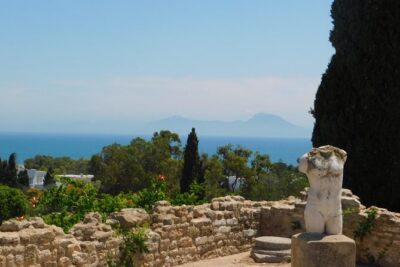
Guided Bike Tour of Carthage Archeological Site in Tunisia
Read our review →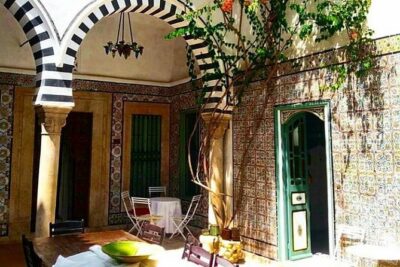
Guided tour in the UNESCO world heritage Medina of Tunis
Read our review →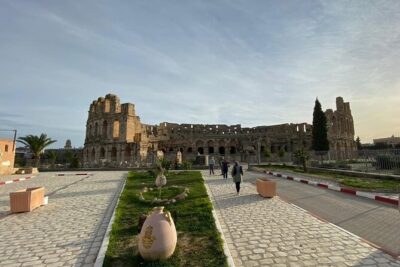
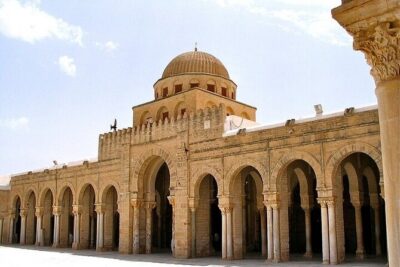
Private and Guided Tour to Kairouan and El Jem and Monastir
Read our review →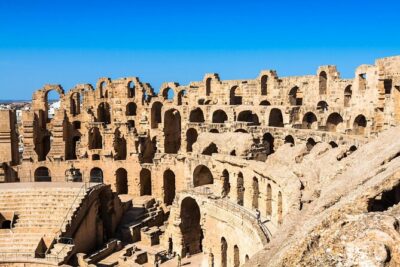
Kairouan & El Djem Guided Day Trip with Lunch from Hammamet
Read our review →
Private Guided Tour of Dougga and Testour Mosque
Read our review →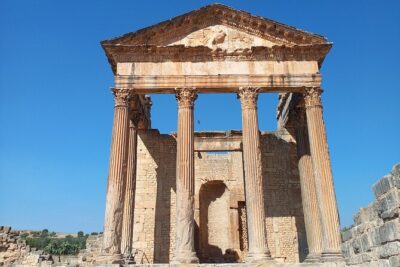
Self guided bike tour of Carthage archeological site
Read our review →Browse the lists this tour appears in