
Reviewed · EL JEM AMPHITHEATRE
Private and Guided Tour to Kairouan and El Jem and Monastir
Tunisia’s finest day trip is inland. This private excursion links Kairouan’s Great Mosque with the vast Roman amphitheater at El Jem, then finishes at Monastir’s seaside Ribat. I like the mix of Islamic, Roman, and coastal history, and I like having a private guide and air-conditioned vehicle rather than piecing together several long journeys yourself. The trade-off is a demanding day on the road, with only about 45 minutes to an hour at some sites.
The advertised price is $98.72 per person, with pickup from Hammamet, entrance fees, and taxes included. Guides such as Ahmed and Fhame have earned praise for clear English, good humor, and allowing free time, while driver Saidi has been singled out for safe, capable service. Still, confirm your exact booking option before paying, since some versions may be offered without a guide or without entrance tickets.
In This Review
- Key points to know before booking
- Why this Kairouan, El Jem, and Monastir route works
- Entering the Great Mosque of Kairouan
- Walking through Kairouan’s medina
- The Aghlabid basins and Kairouan’s water system
- Inside El Jem’s Roman amphitheater
- Monastir’s Ribat and coastal views
- Guides, drivers, and the private format
- Time, lunch, and what to bring
- Is $98.72 good value?
- Who should book this day trip?
- Should you book the Kairouan, El Jem, and Monastir tour?
- FAQ
- Where does the tour begin?
- How long does the tour last?
- Is this a private tour?
- Is a guide included?
- Are entrance fees included?
- Is lunch included?
- Is the El Jem archaeological museum included?
- Is transportation provided?
- Can I cancel for a full refund?
Key points to know before booking
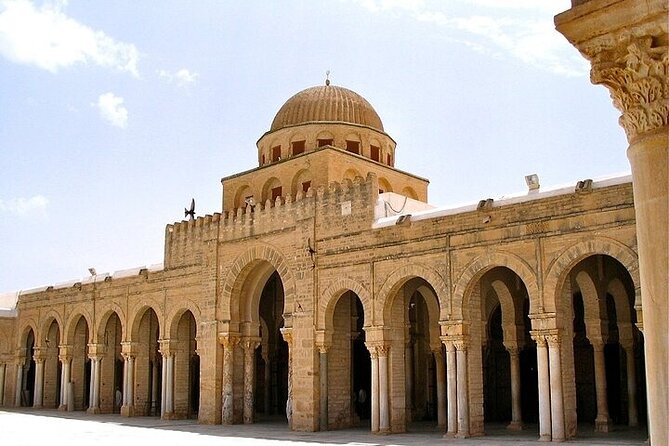
- Kairouan’s Great Mosque anchors the morning: Expect a 45-minute visit to one of the oldest major religious buildings in the Muslim West.
- The private format gives you breathing room: Your group travels alone, and a good guide can adjust explanations and free time to your pace.
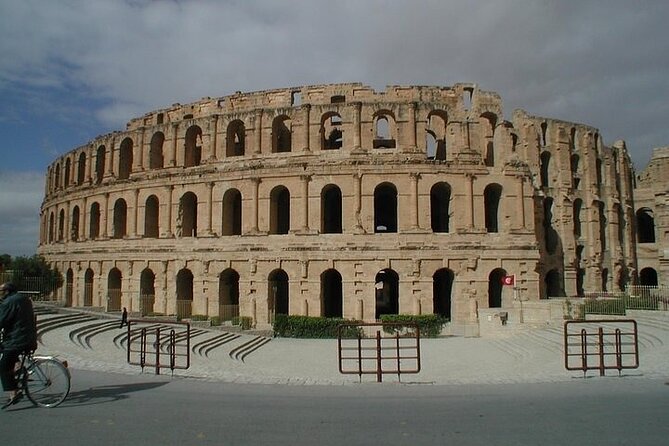
- El Jem is the visual highlight: The third-largest amphitheater in the Roman world could hold about 30,000 spectators.
- The day covers three very different places: Kairouan brings Islamic architecture and crafts, El Jem brings Roman engineering, and Monastir brings coastal fortifications.
- Lunch is not included: You need to budget time and money for food, and the eight-hour schedule leaves little room for a long meal.
- Check the El Jem ticket details: The amphitheater is included, but the nearby archaeological museum may not be covered by every booking option.
Why this Kairouan, El Jem, and Monastir route works
This is a smart route if you want Tunisia beyond the beach resorts. From Hammamet, you leave the resort zone and spend the day moving through three important chapters of the country: the rise of Kairouan as an Islamic center, the wealth of Roman North Africa at Thysdrus, and Monastir’s role as a fortified coastal town.
The route also makes sense geographically, even though the day is long. A private vehicle removes the need to work out intercity transport, local taxis, and entrance arrangements. You can focus on the sites instead of watching the clock for a return connection.
The tour lasts about eight hours and begins at 8:00 a.m. Pickup is offered, and the vehicle is air-conditioned. Since all three destinations require travel between them, that early start matters. You get the best chance of seeing each place before the day feels rushed.
The private setup is especially useful for couples, families, or a small group with mixed interests. You can ask for more explanation at the Great Mosque, more free time in the medina, or a quicker stop at the Aghlabid basins. That flexibility is harder to get on a large coach excursion.
More El Jem trips:
- Fun VIP Tour: El Jem, Kairouan, Monastir/Sousse (PICKUP ALL City)
★ 5.0 · 451 reviews - Private Tour to Kairouan, El Jem & Monastir from Tunis_hammamet
★ 5.0 · 301 reviews - Daytrip to Kairouan and El Jem Colosseum
★ 4.5 · 55 reviews
Entering the Great Mosque of Kairouan
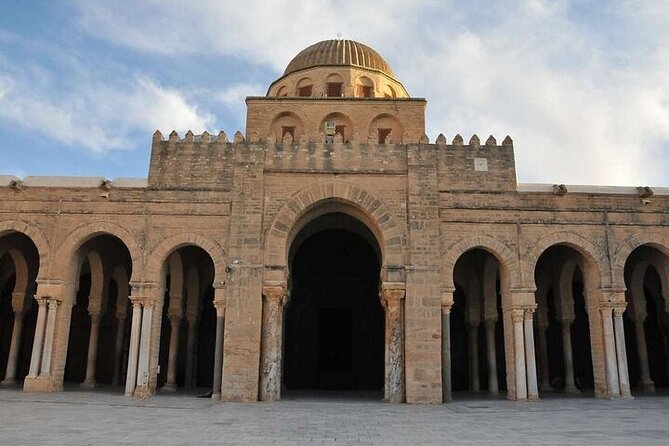
Kairouan is the spiritual center of Tunisia and the fourth holiest city in Islam. Its Great Mosque is the main reason to come, and the 45-minute stop gives you enough time to appreciate its overall design, though not to linger over every detail.
The building dates from 670 and has the severe, fortress-like look common to early Islamic architecture in North Africa. The massive minaret, broad courtyard, and surrounding arcades give the complex a powerful sense of scale. This is not a delicate palace. It feels solid, practical, and built to last.
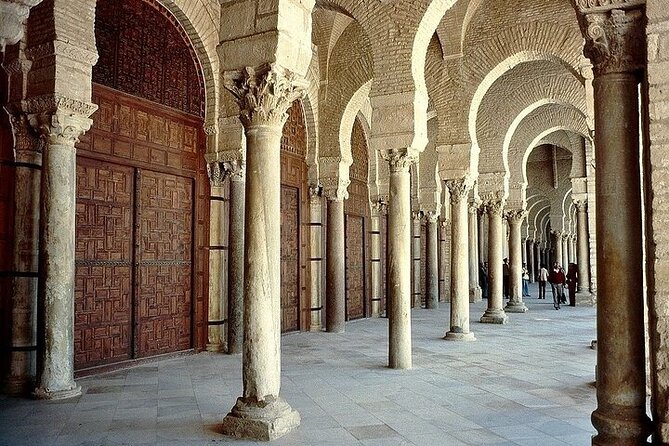
Look closely at the courtyard and you will see a sundial among the details. The tall cedar doors lead toward prayer spaces lined with dozens of marble columns. A guide can help explain how older materials and architectural ideas were reused, and why this mosque influenced later buildings across the Maghreb.
You should dress respectfully for the visit and follow any instructions about where you may enter or view the prayer areas. The schedule lists entrance here, so admission is covered in the guided package described. Your guide’s explanation is valuable at this stop because the building can otherwise seem like a collection of walls, columns, and openings without a clear story.
The main limitation is time. Forty-five minutes is enough for an introduction and photographs, but it is not a slow architectural study. If religious buildings are your main interest, tell your guide early that you would appreciate a careful explanation rather than a quick circuit.
Walking through Kairouan’s medina
After the mosque, you have about an hour in Kairouan’s medina. This is where the day becomes less formal. The old quarter is known for preserved streets, souks, local pastries, and carpet making.
You can try makroudh, the city’s well-known pastry. It is made with semolina and dates, then prepared in a sweet style that makes a good small taste between sightseeing stops. If you enjoy food as a way to understand a place, this brief stop adds something that a monument alone cannot provide.
Carpets are another part of Kairouan’s identity. You may see artisans or shops connected with traditional carpet production. This can be interesting, but keep your attention on the schedule and do not feel obliged to buy anything. One unhappy account described being taken to a carpet showroom, so it is reasonable to ask whether any shopping stop is planned and how long it will last.
The hour passes quickly. You might have time to browse, taste a pastry, and look at the craft shops, but you will not have an entire afternoon to wander every lane. A private tour helps here because you can make your priorities clear. If you want the medina rather than shopping, say so plainly.
The Aghlabid basins and Kairouan’s water system
The Aghlabid basins receive about 20 minutes, making this the shortest stop. They sit outside the medina walls and date from the second half of the ninth century.
At first glance, the basins may look like simple open spaces. Their importance comes from the engineering behind them. They formed one of the major water systems of the medieval Muslim world and helped support Kairouan, a city in a dry region.
This is a stop where a short explanation makes a big difference. Without context, you may spend a few minutes taking photographs and wonder why the site matters. With a guide, you can better understand how storing and managing water allowed the city to grow.
Do not expect a long walk or a full museum visit here. The 20-minute timing is appropriate for a quick look, but if you are fascinated by historic engineering, you may wish the schedule allowed more time.
More Kairouan trips:
- Kairouan & El Djem Guided Day Trip with Lunch from Hammamet
★ 4.0 · 18 reviews - Kairouan, El Djem and Monastir Guided Excursion from Hammamet
★ 5.0 · 5 reviews - Kairouan, El Djem, Monastir Self-Guided Excursion from Hammamet
★ 4.5 · 5 reviews - Kairouan and El Jem Private Day Tour
★ 4.5 · 38 reviews
Inside El Jem’s Roman amphitheater
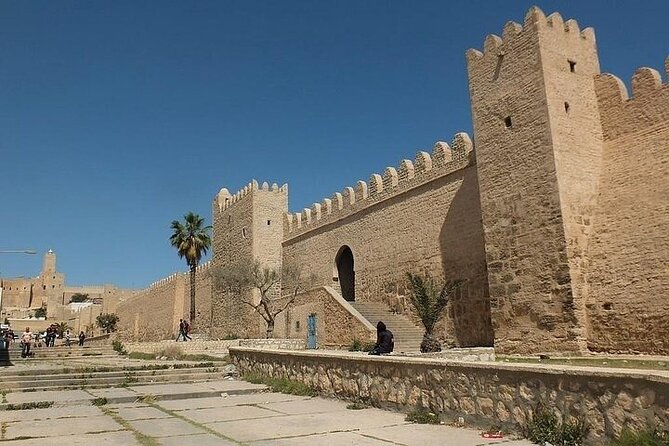
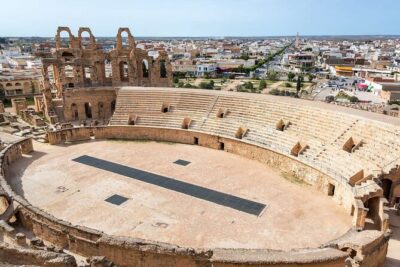
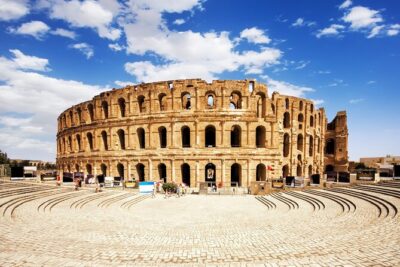
El Jem is the strongest visual moment of the excursion. The town grew around ancient Thysdrus, one of the prosperous cities of Roman Africa, and its amphitheater could hold about 30,000 spectators.
The building dates from the third century AD. It is often compared with the Colosseum in Rome, and its size makes the comparison easy to understand. You can walk through the entrances, look down into the arena, and climb through parts of the structure to see how the seating and passageways were arranged.
The amphitheater is not just a ruin viewed from the outside. Its interior gives you a sense of how crowds moved, how performances were staged, and how Roman public buildings were designed. The scale is striking even if you have already visited Roman sites in Italy.
The planned visit lasts about an hour. That gives you time to explore the main levels and take photographs, but you may want longer if ancient architecture is a major interest. One useful point to confirm before departure is the ticket coverage. The amphitheater entrance is listed as included, but the nearby El Jem archaeological museum is not expressly included in the information provided. Some ticket arrangements may connect the two, while some tour options may not.
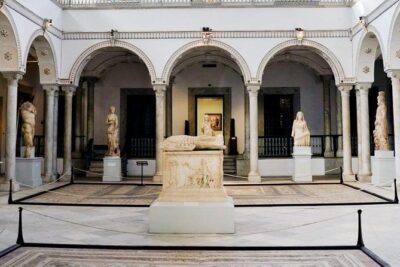
Ask your guide directly: Is the museum included, and do we have time to see it? That simple question can prevent disappointment. The museum may add context through mosaics and archaeological material, but the amphitheater itself remains the central attraction.
Monastir’s Ribat and coastal views
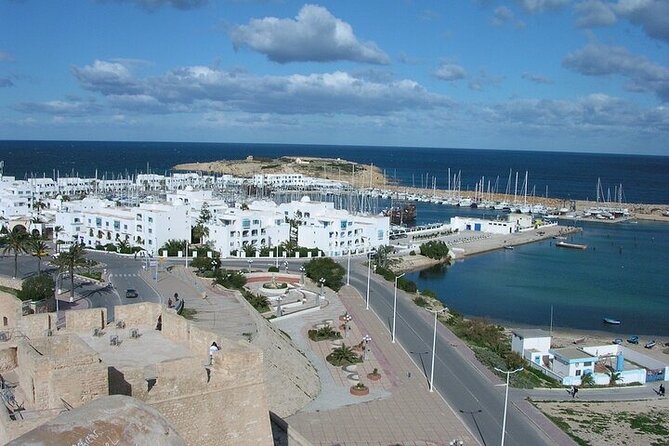
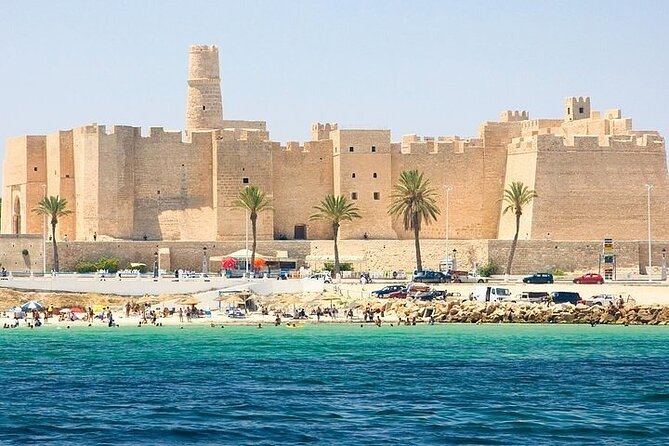
The final stop is the Ribat of Monastir, an early Islamic fortress founded in 796. It was part of the defensive chain along the Maghreb coast and originally housed warrior monks who combined military duties with prayer and contemplation.
The building began as a quadrilateral complex with four sections opening onto two courtyards. Inside, you can see small cells, prayer rooms, and collections connected with religious and medieval craft traditions. The site feels different from Kairouan. The mosque expresses religious authority, while the Ribat combines worship, defense, and watch duty.
If you are comfortable with stairs, climb the roughly 100 spiral steps to the watchtower. From the top, the view reaches across Monastir and its surroundings. The climb is part of the experience, but it can be tiring late in a full sightseeing day.
The planned visit lasts 45 minutes. That is enough for the main courtyard, a look inside, and the tower if you move steadily. It is not enough for a slow examination of every room. One practical point came up repeatedly in the feedback: some people wanted more time in Monastir. If the Ribat is your priority, tell the guide at the start of the day.
Guides, drivers, and the private format
The guide can make or break a historical day like this. Ahmed has been praised for finding a good balance between explanation and personal time. Fhame has also been described as an excellent English-speaking guide who kept the pace moving without turning the day into a lecture.
That balance matters. You need enough context to understand why Kairouan matters, but you also need quiet time to look, photograph, taste, and wander. A private guide is at its best when you can ask questions without holding up a busload of people.
Driver quality has also varied by individual assignment. Saidi received strong praise for knowing the route and reaching every planned stop. Other accounts describe a polite driver who was less confident, or raise concerns about driving style and vehicle condition. The operator states that its vehicles are newer models with air conditioning, while one account described an older, worn vehicle. I would confirm the vehicle type and guide arrangement if comfort is important to you.
The private format means only your group participates. That usually gives you more control than a shared tour, but it does not guarantee unlimited time. The route contains long drives, and the guide must still fit five stops into roughly eight hours.
Time, lunch, and what to bring
Lunch is not included. The schedule does not provide a detailed lunch stop, so ask how food will be handled before you leave. A bakery stop may be practical, but if you want a proper sit-down meal, that could reduce time at one of the sites.
Wear comfortable shoes. Kairouan involves old-quarter streets, El Jem involves uneven stone and steps, and the Ribat includes a spiral staircase to the tower. Carry water, especially in warm weather, and bring sun protection for the open courtyard at the Great Mosque and the exposed amphitheater.
Keep your day bag light. You will want room for a pastry or a small craft purchase, but the tour is too active for bulky luggage. Modest clothing is the sensible choice for Kairouan’s religious setting.
The early start is worth accepting. You gain a full day of sightseeing, but this is not a relaxed outing. The best attitude is to treat the drive as part of the route and accept that each destination offers a focused introduction rather than a complete visit.
Is $98.72 good value?
At $98.72 per person, the price is fair if you are using the guided option and the listed admissions are included. You are paying for a private air-conditioned vehicle, hotel pickup, a driver, a guide, entrance fees, and the convenience of linking three destinations that would be difficult to arrange independently in one day.
The value improves when several people share the private vehicle. Group discounts are offered, so check the total price for your party rather than judging the per-person figure alone.
The value is weaker if you select a cheaper version without a guide or without entrance tickets and assume it includes the full package. The supplied information includes different booking variations, and one response specifically referred to an option without a guide and without entrance fees. Read the inclusions carefully before confirming.
I would not book this solely to save money. I would book it to save planning time and make the long route manageable. If you want slow medina wandering, a long lunch, or a museum-heavy visit, the schedule may feel tight for the price.
Who should book this day trip?
I recommend it to you if you are staying in Hammamet and want a strong introduction to central Tunisia without renting a car. It suits people who value history, architecture, and a private guide more than a leisurely resort day.
It is also a good match for families and small groups. A private vehicle lets you stay together and ask for adjustments. English-speaking guide service has been praised, and the exact guide can make the sites much easier to understand.
I would hesitate if you dislike long drives or prefer to spend half a day in one place. Kairouan, El Jem, and Monastir each deserve more time than this route allows. Monastir in particular may leave you wishing for a longer visit.
Free cancellation is available if you cancel at least 24 hours before the start time. Poor weather or failure to meet the minimum number of participants can lead to a different date or a full refund.
Should you book the Kairouan, El Jem, and Monastir tour?
Book it if you want maximum historical variety in one day. The Great Mosque gives the morning a serious start, El Jem supplies the unforgettable scale, and the Ribat adds a coastal fortress with a worthwhile tower view.
Before booking, confirm three details: your exact pickup location, whether your package includes a guide and all listed entrances, and whether the El Jem museum is included. Also ask about the lunch plan and tell the guide which stop matters most to you.
If you can accept a brisk pace, this is a practical and rewarding way to see three of Tunisia’s most important sites. If you want depth rather than breadth, choose fewer destinations and spend more time in each.
FAQ
Where does the tour begin?
The tour is based in Hammamet and offers pickup. The stated start time is 8:00 a.m.
How long does the tour last?
The excursion lasts approximately eight hours, although some outings have taken eight to nine hours.
Is this a private tour?
Yes. Only your group participates in the private tour or activity.
Is a guide included?
The experience is described as a private guided tour, but different booking options may exist. Confirm that your selected option includes a guide before booking.
Are entrance fees included?
The listed package includes admission to the Great Mosque of Kairouan, Kairouan medina, the Aghlabid basins, El Jem Amphitheater, and Monastir’s Ribat. Confirm the inclusions for your specific booking option.
Is lunch included?
No. Lunch is not included in the price.
Is the El Jem archaeological museum included?
The information provided specifically lists entrance to the amphitheater, but it does not expressly confirm admission to the archaeological museum. Ask the provider before the tour.
Is transportation provided?
Yes. An air-conditioned vehicle and pickup are included in the described package.
Can I cancel for a full refund?
Yes, if you cancel at least 24 hours before the experience start time. Cancellations or changes made less than 24 hours in advance are not refunded.
Just added in Hammamet
- Transfer from Airport Tunis Carthage To Hammamet★ 5.0 · 2 reviews
- From Hammamet: Sahara Desert Overnight Camping★ 4.5 · 2 reviews
- Private Guided Tour of Zaghouan, Thuburbo Majus and Dougga from Hammamet★ 5.0 · 1 review
- Private Transfer from Tunis Carthage Airport to Hammamet★ 5.0 · 2 reviews
- Executive: Transfer Tunis Airport to Hammamet by Mercedes E Class★ 5.0 · 4 reviews
- Private Excursion of Friguia Park and Medina of Hammamet★ 4.5 · 4 reviews
- Day Trip to Cap Bon★ 5.0 · 2 reviews
- Zaghouan, Thuburbo Majus and Dougga Private Self-Guided Excursion from Hammamet★ 5.0 · 2 reviews
El Jem Amphitheatre, compared.
Private Tour to Kairouan, El Jem & Monastir from Tunis_hammamet
Read our review →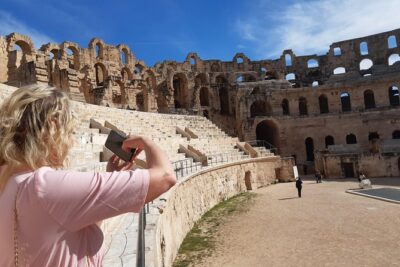
Half-day excursion from Sousse to the amphitheater of El Jem
Read our review →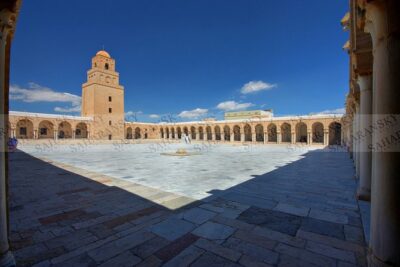
Private Half Day Tour to Roman Coliseum EL JEM from Monastir
Read our review →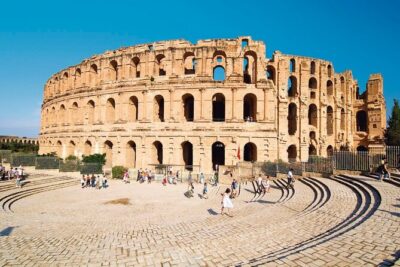
Kairouan Holy City and El Jem Colosseum Tour from Sousse
Read our review →
Daytrip 3 Unesco Sites El Jem Kairouan and Sousse Medina
Read our review →Browse the lists this tour appears in