
Reviewed · GUIDED
7 Day Guided Tunisia Tour Including Pickup
Tunisia packs several worlds into one week. This seven-day private circuit links Roman ruins, Islamic cities, Berber villages, Sahara outposts, salt flats, and Mediterranean towns, so I like its wide geographic reach and its strong mix of history and scenery. I also like the personal service praised for guides such as Salem, Ziad, Yassine, and Daoud. The main tradeoff is clear: long road days and a price of $1,858.33 per person, with some monument fees still extra.
This is not a slow beach holiday. You cover much of Tunisia, with one group and a dedicated guide and driver rather than a large coach. That makes the route easier to adjust, but you should be ready for early starts, several hours on the road, uneven ruins, desert heat, and a packed schedule.
In This Review
- Five things to know before booking
- A seven-day route with very little repetition
- Day 1: Sousse, El Jem, and underground Matmata
- Day 2: Chenini and the fortified ksour of Tataouine
- Day 3: Douz and the salt flats of Chott el Djerid
- Day 4: Chebika, Tamerza, and the desert near Tozeur
- Day 5: Sbeitla and the Islamic center of Kairouan
- Day 6: Dougga and the Medina of Tunis
- Day 7: Sidi Bou Said and ancient Carthage
- What the guides and vehicles add
- Is $1,858.33 good value?
- Who should book this Tunisia circuit?
- Final verdict: a strong choice for a first visit
- FAQ
- How long is the Tunisia tour?
- Where does the tour start?
- Is hotel pickup offered?
- Is this a private tour?
- Are meals included?
- Are entrance fees included?
- What places are included?
- Can most people participate?
- What is the cancellation policy?
Five things to know before booking
- The route covers Tunisia from Sousse to Carthage, passing through El Jem, Matmata, Tataouine, Douz, Tozeur, Kairouan, and Dougga.
- This is a private experience, meaning only your own group participates. That matters when you want to stop for photos, ask questions, or adjust the pace.
- The strongest theme is variety, with Roman amphitheaters and temples, Islamic medinas, Berber ksour, desert oases, salt flats, and film locations.
- Guide service is a major strength, especially the care and flexibility associated with Salem. Past descriptions also praise guides and drivers for friendly service, language skills, and attention to small details.
- Breakfast and dinner are included for six days, but all fees and taxes, along with entrance fees at monuments, are not included.
A seven-day route with very little repetition
The clever part of this itinerary is its changing scenery. You do not spend the whole week looking at ancient stones or crossing empty desert. One day may be built around a Roman ruin, the next around Berber architecture, followed by an oasis, a holy city, or a seaside village.
That variety comes with a cost. This is a touring route, not a stay-put holiday. The listed visits generally last between one and two hours, which gives you time to see the main features but not always enough time for a leisurely, unplanned exploration.
More things to do in Tunis:
- Private Tour to Kairouan, El Jem & Monastir from Tunis_hammamet
★ 5.0 · 301 reviews - Private tour: Medina,Carthage ,Sidi Bou Said, Bardo Museum+lunch
★ 5.0 · 230 reviews - Carthage, Bardo Museum, Sidi Bou Said and Medina Private Day Tour
★ 4.5 · 153 reviews
Day 1: Sousse, El Jem, and underground Matmata
The tour opens in Sousse, where the Medina offers an easy first taste of Tunisian urban life. Its narrow lanes, courtyards, shops, cafés, and traditional houses form a compact historic center inside old walls. The Great Mosque is one of the key sights.
The scheduled visit is only 30 minutes, so treat this as an introduction rather than a full Medina visit. You will have time to get your bearings and notice the feel of the old city, but not to wander every lane or shop at length.
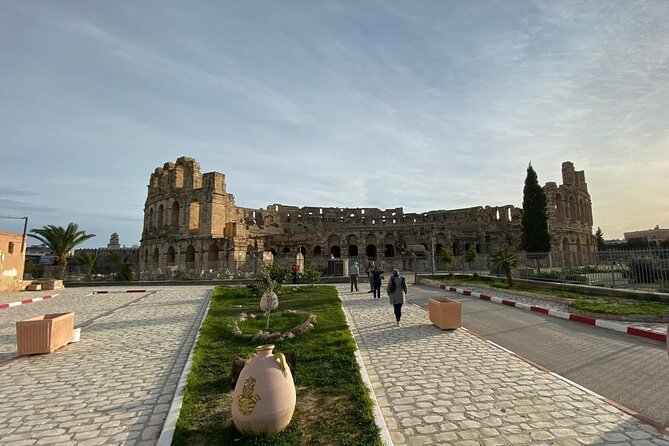
Next comes El Jem, one of the biggest highlights of the entire week. Its Roman amphitheater could hold up to 35,000 spectators and was built in the third century during the reign of Gordian. Unlike a ruin that requires imagination, this one gives you a strong sense of its original size.
Two hours is a useful amount of time here. You can walk through the structure, look into the arena, and study the seating levels and stonework. The visit is especially valuable if you have seen Rome’s Colosseum, since El Jem offers a similar idea on a less crowded and more open scale.
Matmata changes the subject completely. The area is known for troglodyte homes cut into soft limestone hills. Rooms are arranged around central courtyards below ground, a practical design that helps protect residents from severe desert temperatures.
The two-hour stop lets you appreciate more than the unusual appearance. These homes show how local communities adapted their buildings to climate and available materials. Some have been converted into distinctive hotels, though the tour information does not promise an overnight stay in one.
Day 2: Chenini and the fortified ksour of Tataouine
Chenini is one of the route’s most atmospheric places. The Berber village climbs into rocky hills, with stone and mud-brick buildings, flat roofs, narrow lanes, and fortified granaries known as ksour.
Take your time looking at how the buildings fit the hillside. This is not polished architecture designed for display. It reflects a practical way of storing crops and belongings in a dry region where protection from raids and harsh weather mattered.
The next stop, Ksar Ouled Soltane, is one of southern Tunisia’s best-known fortified granaries. Its grouped storage rooms show the ingenuity of Berber communities and make the word fortress feel more useful than decorative.
Ksar Hadada continues the same architectural theme but adds a film connection. The Tataouine area helped inspire the fictional planet Tatooine in Star Wars, and the rocky surroundings make the reason easy to understand.
The itinerary gives Chenini two hours, Ksar Ouled Soltane one hour, and Ksar Hadada two hours. That is a good balance for a day focused on southern Tunisia, though the sites can feel similar if you are not interested in architecture or local history. Your guide’s explanations will make a real difference here.
Day 3: Douz and the salt flats of Chott el Djerid
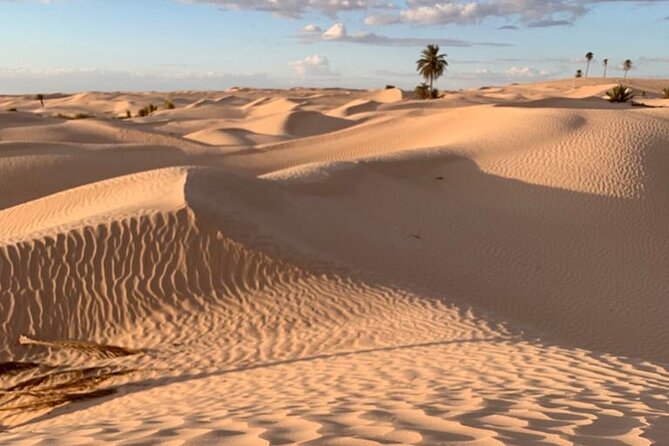
Douz is called the Gateway to the Sahara because it sits at the edge of the desert and serves as a starting point for desert trips and camel treks. The scheduled two-hour stop gives you a look at this important desert town.
Do not expect this itinerary to promise a camel ride or a full desert camp. Those activities are not listed. Instead, Douz functions as a transition point, connecting the settled parts of Tunisia with the open desert beyond.
Chott el Djerid supplies one of the route’s most unusual views. This shallow salt lake becomes a broad spread of salt crust and mud flats when water evaporates. After rain, it may hold temporary water and attract birds, including flamingos and migratory species.
The one-hour visit is short but sensible. Salt flats are about scale, light, and weather, not a long list of monuments. Conditions can change the appearance considerably, so your experience here will depend on the season and recent rain.
A few more options to weigh up in Tunis
- Guided Bike Tour of Carthage Archeological Site in Tunisia
★ 5.0 · 88 reviews - Guided tour in the UNESCO world heritage Medina of Tunis
★ 5.0 · 68 reviews - Group Guided Bike Tour of Carthage Archeological Site in Tunisia
★ 5.0 · 57 reviews - Private Guided Tour of Dougga and Testour Mosque
★ 4.5 · 15 reviews
Day 4: Chebika, Tamerza, and the desert near Tozeur
Chebika brings welcome greenery after the dry country around Douz. Its spring, Ain Chebika, runs down the mountain in cascades and pools, with palms and rocky cliffs around it.
This two-hour stop gives you time to enjoy the contrast between water and desert. Wear practical shoes, since the area includes natural ground and uneven surfaces. The tour description calls it peaceful, and that is the point: Chebika is a place for scenery rather than a major urban sight.
At Tamerza, you see an abandoned old village left empty after flooding in the 1960s. Crumbling houses and narrow streets make this a powerful place, but also one that requires care underfoot. The one-hour stop should be enough to walk among the remains and take in the setting.
Ong Jemel and the Eriguet Dunes offer another change of mood. The dunes and rocky desert are tied to Star Wars filming locations, giving the stop a pop-culture hook without taking away from the setting itself.
Two hours here should suit anyone who wants photographs and open space. If you have no interest in film locations, the natural surroundings remain the main reason to go.
Day 5: Sbeitla and the Islamic center of Kairouan
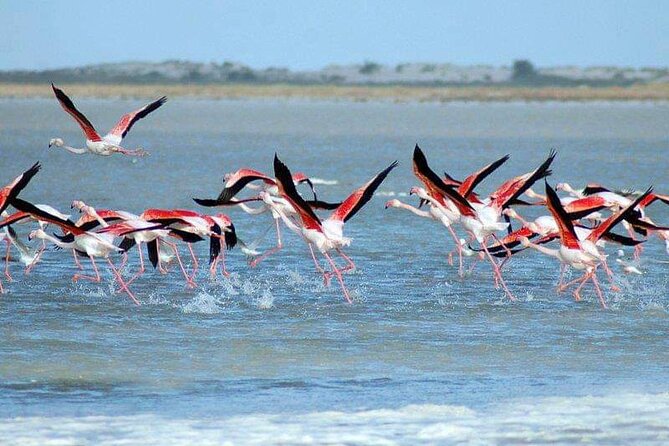
Sbeitla is one of Tunisia’s finest Roman sites, with a forum, temples, basilicas, theater, baths, and houses spread across an archaeological area. The three temples dedicated to Jupiter, Juno, and Minerva are its most striking features.
The two-hour visit gives you a solid introduction to Roman urban planning. Unlike El Jem, which focuses attention on one immense building, Sbeitla rewards you for looking across a whole city and imagining how public, religious, and residential spaces worked together.
Kairouan shifts the focus from Roman North Africa to early Islamic civilization. Founded in 670, it became a center of Islamic learning and served as the capital of Ifriqiya, a region that included much of present-day Tunisia and parts of Algeria and Libya.
The two-hour visit is enough to sample the city’s importance, though it is not a full study of every mosque, market, or religious site. You will get more from the stop if you pay attention to how the city differs from the Roman ruins visited earlier in the week.
Day 6: Dougga and the Medina of Tunis
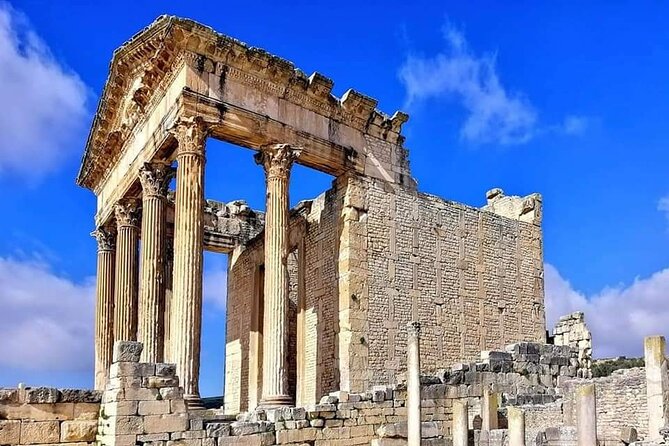
Dougga is another major Roman site, but its setting and preservation give it a different character from Sbeitla. Ancient streets, temples, a theater, public buildings, and mosaics spread across the site, offering a clear picture of a Roman city in North Africa.
Two hours here is useful, especially with a guide who can explain what each building was for. Bring patience for walking across uneven ground. Archaeological sites reward curiosity, but they are rarely comfortable places for hurried sightseeing.
Later, the Medina of Tunis brings you into the capital’s historic heart. The walled quarter dates to the ninth century and contains souks, craft shops, traditional buildings, and winding lanes.
The visit is scheduled for one hour, so consider it a focused orientation. You can see the atmosphere and main architectural details, but you will not have much free time for shopping or getting pleasantly lost. That short visit is one of the itinerary’s limits.
Day 7: Sidi Bou Said and ancient Carthage
Sidi Bou Said is the prettiest finish imaginable for this route. White buildings, blue doors, blue shutters, wrought iron, and views over the Mediterranean give the hilltop village a calm, instantly recognizable style.
The two-hour stop allows time for a proper walk rather than a quick photo break. It is also a useful contrast to the desert and ancient ruins from earlier days. You can simply enjoy the streets and views without needing a long historical explanation.
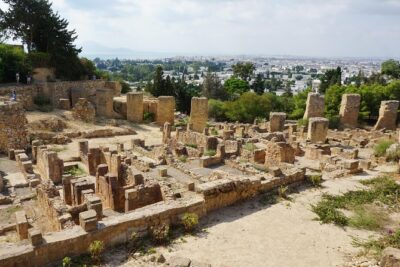
Carthage closes the tour with some of Tunisia’s most important ancient remains. The ruins are spread over a wide area and include the Tophet, an ancient burial ground, and the Antonine Baths, once a large complex for social life and relaxation.
The two-hour visit cannot cover every part of Carthage. Still, it gives you a strong final look at the city’s former power and its position on the coast. The stop works best when your guide connects the remains to the broader story of Carthaginian and Roman North Africa.
What the guides and vehicles add
A long circuit like this depends heavily on the people running it. Names connected with the service include Salem, Ziad, Yassine, Daoud, Kais, Samir, and several drivers, including Hisham, Khaled, Manuel, and Michel.
The most consistent praise is for personal attention, flexibility, historical explanation, and good humor. Salem is repeatedly singled out for handling details, adapting plans, speaking strong Spanish and Portuguese, and staying attentive throughout the week. One particularly memorable description compared his knowledge to having Google along for the ride.
The driving also matters. One account describes covering about 2,100 kilometers with kind and careful drivers, while another praises the condition of the vehicle and the comfort of the bus. The exact vehicle may vary, but the available information points to transport being an important part of the service rather than an afterthought.
Because this is private, you can ask questions without worrying about holding up a large group. You should still confirm the exact pickup details and vehicle before departure, since the meeting point is listed as Carthage Airport in Tunis and the advertised operating hours are 8 a.m. to 6 p.m.
Is $1,858.33 good value?
The price is substantial, but the route covers a great deal of Tunisia over seven days. Breakfast and dinner are included for six days, and the private format gives you a guide and driver focused on your group. Those factors can make the cost reasonable for someone who would otherwise need to arrange hotels, transport, route planning, and site visits separately.
There is an important qualification. All fees and taxes are excluded, and entrance fees at monuments are not included. At the same time, individual stops show admission included at Ksar Ouled Soltane, Chebika, Ong Jemal, Sbeitla, and Dougga. Since the wording is not perfectly consistent, ask for a written breakdown of which entrance tickets you will pay locally.
The value is strongest if you want a broad first visit to Tunisia and prefer local coordination over independent driving. It is weaker if you want long free afternoons, beach time, or the freedom to change the route every day.
Who should book this Tunisia circuit?
I would choose this tour if you want:
- Roman sites and ancient civilizations
- Berber architecture and southern Tunisia
- Desert scenery without planning your own transport
- A private guide rather than a large group
- Meals and accommodation arrangements handled as part of a wider service
- A route that includes both major sights and less familiar towns
I would hesitate if you dislike long drives, need a relaxed pace, or want detailed time inside every Medina and archaeological site. The schedule is ambitious, and some visits are introductions rather than full explorations.
The route should suit couples, families, and small private groups who want one organized week. Most people can participate, and the experience is near public transportation, but the supplied information does not give detailed accessibility notes for ruins, dunes, or old villages.
Final verdict: a strong choice for a first visit
You should book this tour if your goal is to understand Tunisia as a whole rather than sit in one resort. In seven days, you see Roman engineering at El Jem and Dougga, Islamic centers in Kairouan and Tunis, Berber ksour near Tataouine, desert towns, salt flats, mountain springs, and the Mediterranean coast.
The key question is pace. If you can accept long transfers and short visits in a few places, the range is impressive and the private guiding adds real value. If you want a slower holiday, choose a shorter regional tour instead.
Free cancellation is available up to 24 hours before the start time. That gives you some flexibility, but confirm the final cost, entrance fees, pickup arrangements, and the guide language before paying.
FAQ
How long is the Tunisia tour?
The experience lasts approximately seven days, with visits scheduled from Day 1 through Day 7.
Where does the tour start?
The meeting point is listed as Carthage Airport in Tunis, Tunisia.
Is hotel pickup offered?
Pickup is listed as an available feature. The specific pickup arrangements should be confirmed when you book.
Is this a private tour?
Yes. Only your group participates in the activity.
Are meals included?
Breakfast and dinner are included for six days. The information provided does not state that lunch is included.
Are entrance fees included?
Entrance fees at monuments are listed as excluded. Some individual stops show admission included, so you should confirm the exact sites covered before departure.
What places are included?
The route includes Sousse, El Jem, Matmata, Chenini, Ksar Ouled Soltane, Ksar Hadada, Douz, Chott el Djerid, Chebika, Tamerza, Ong Jemal, Sbeitla, Kairouan, Dougga, Tunis, Sidi Bou Said, and Carthage.
Can most people participate?
The tour information says most people can participate. It does not provide detailed access information for every ruin, old village, desert area, or uneven path.
What is the cancellation policy?
You can cancel at least 24 hours before the start time for a full refund. Cancellations or changes made less than 24 hours before the start time are not accepted for a refund.
Just added in Tunis
- Private Arrival Transfer: Tunis Airport to Tunis Hotel★ 4.5 · 5 reviews
- Cap Bon Guided Day Tour from Tunis★ 5.0 · 2 reviews
- Unveiling the Beauty of Sidi Bou Said and Carthage Private Tour★ 5.0 · 2 reviews
- Dougga Guided Day Tour from Tunis★ 5.0 · 5 reviews
- Tunis Carthage Private Arrival Airport Transfer to Tunis★ 5.0 · 4 reviews
- Tunis Group Tour: Carthage, Sidi Bou Said, Bardo museum & Medina★ 5.0 · 5 reviews
- Bardo Museum , Oudhna and the roman aqueduct★ 5.0 · 4 reviews
- Bardo Museum- The ruins of Carthage- Village of Sidi Bou Said★ 5.0 · 4 reviews
Guided, compared.
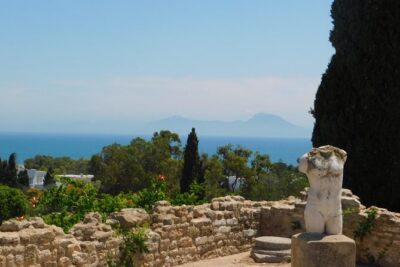
Guided Bike Tour of Carthage Archeological Site in Tunisia
Read our review →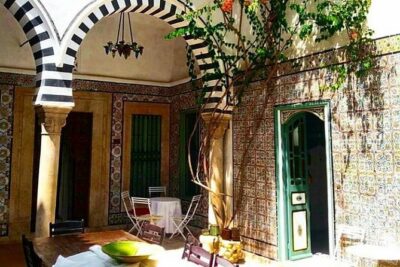
Guided tour in the UNESCO world heritage Medina of Tunis
Read our review →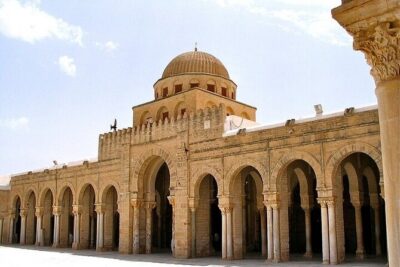
Private and Guided Tour to Kairouan and El Jem and Monastir
Read our review →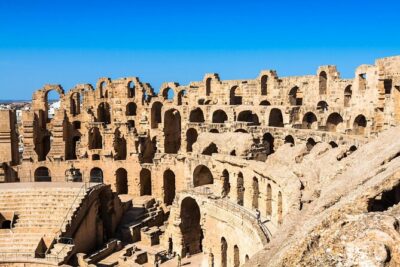
Kairouan & El Djem Guided Day Trip with Lunch from Hammamet
Read our review →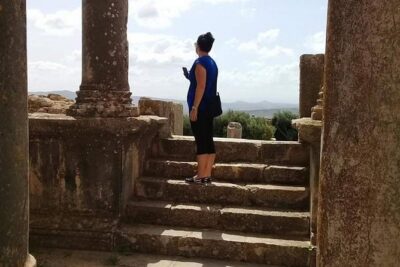
Private Guided Tour of Dougga and Testour Mosque
Read our review →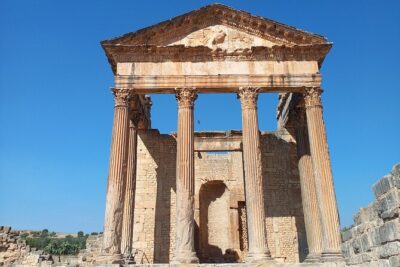
Self guided bike tour of Carthage archeological site
Read our review →
Browse the lists this tour appears in