
Reviewed · CARTHAGE AND SIDI BOU SAID
Self guided bike tour of Carthage archeological site
Carthage rewards a slower visit. This self-guided bicycle tour gives you time to connect scattered ruins that are awkward to cover on foot, while the included bike, helmet, map, and guidebook keep the day simple. I like the freedom to choose a half-day or full-day outing, and I like that the route includes both major archaeological sights and quieter stops such as the Malga Cisterns and American Cemetery.
The main drawback is that admission tickets are not included, and the guidebook is available only in French. You also need to find the meeting point at 9 Rue Hannibal, so I would save the location before setting out and allow extra time to get your bearings.
In This Review
- Key points to know before you ride
- Why a bicycle makes sense at Carthage
- Start at the Tophet, Carthage’s Punic sanctuary
- See the Punic and Roman ports
- Give the main archaeological site three hours
- Pause at the North Africa American Cemetery
- Reach the Malga Cisterns and Carthage aqueducts
- See the Villas Romaines and Roman Theatre
- Include Byrsa Hill for the broadest view
- Spend an hour at the Baths of Antoninus
- Add Sidi Bou Said if you have a full day
- What the $45 price really covers
- Practical advice for a smoother visit
- Who should choose this Carthage bike tour?
- Should you book it?
- FAQ
- Where does the bicycle tour start?
- Where does the tour end?
- How long does the experience last?
- What equipment is included?
- Is the guidebook available in English?
- Are archaeological-site entrance tickets included?
- Can children join the tour?
- Can I cancel for a refund?
Key points to know before you ride
- Carthage is spread out: A bicycle makes it easier to connect the Tophet, Punic ports, Roman Theatre, Villas Romaines, Byrsa Hill, and Baths of Antoninus.
- You control the clock: The outing can last from about one hour to a full eight-hour day, depending on how many sites you visit.
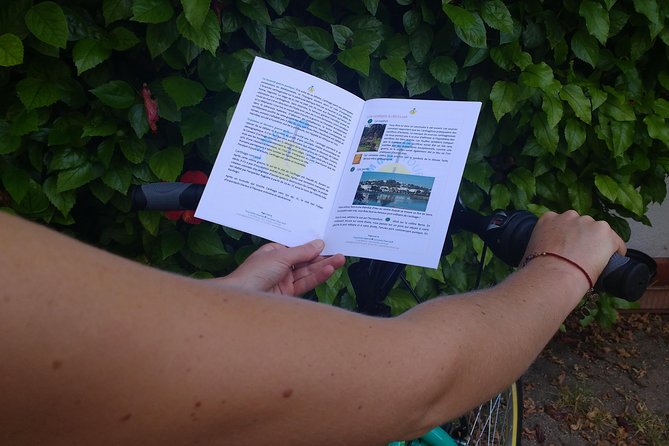
- The guidebook is French-only: The bike, helmet, map, and detailed guidebook are included, but no English written guide is supplied.
- The $45 price covers equipment, not entry: You must pay admission separately at the archaeological sites that charge a fee.
- The route can include Sidi Bou Said: This beautiful nearby town is listed as an optional addition, giving you a change of pace after the ruins.
- The tour is private: Only your own group participates, and children must be accompanied by an adult.
Why a bicycle makes sense at Carthage
Carthage is not one compact ruin with a single grand entrance. The remains are spread across the modern Tunisian suburb, with ancient ports, sanctuaries, villas, theatres, cisterns, and baths occupying separate sites. That layout can make a walking visit tiring and a taxi-based visit expensive or disjointed.
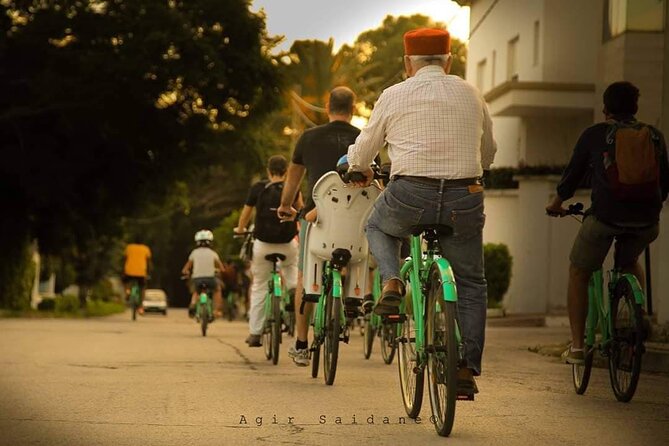
I like the bicycle format because it gives you a clear middle ground. You are not tied to a guide’s timetable, but you also do not have to arrange separate transport between every stop. The route covers distances that are described as manageable by bike, with much of the riding on quieter roads and streets with reduced traffic.
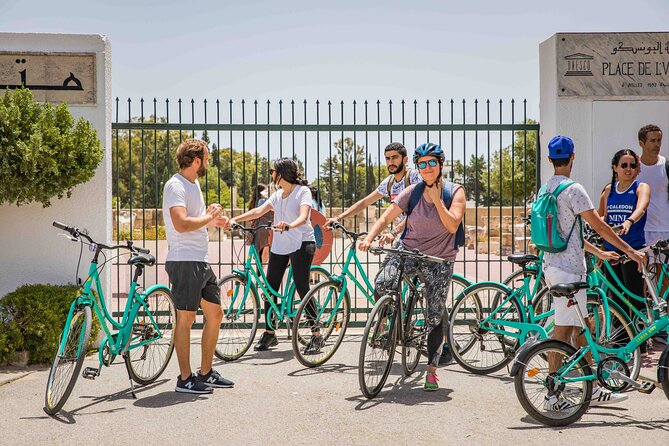
You pick up the bicycle, helmet, map, and guidebook at Le Lemon Tour, located at 9 Rue Hannibal near the Carthage archaeological area. The shop is identified on Google Maps, and a bicycle on the wall helps mark the location. Save the address in advance. One unfortunate booking experience involved a group unable to find the meeting point, even after asking local taxis, so this is not the moment to rely on vague directions or a driver who offers to carry you from ruin to ruin.
The activity is private, which is useful if your group wants to linger at one site or skip another. You can spend a short period seeing the highlights or use the bicycle for a longer circuit of up to roughly eight hours.
More Carthage and Sidi Bou Said trips:
- Private tour: Medina,Carthage ,Sidi Bou Said, Bardo Museum+lunch
★ 5.0 · 230 reviews - Carthage, Bardo Museum, Sidi Bou Said and Medina Private Day Tour
★ 4.5 · 153 reviews - Guided Bike Tour of Carthage Archeological Site in Tunisia
★ 5.0 · 88 reviews
Start at the Tophet, Carthage’s Punic sanctuary
The Tophet is a strong first stop because it introduces the older, Phoenician and Punic side of Carthage before the Roman remains take over the story. Allow about 10 minutes here if you are following the suggested timing.
The site is a sanctuary, and its purpose and meaning are among the more difficult parts of Carthage to understand without background reading. This is where the French guidebook matters. It gives you a framework for the remains instead of leaving you to look at stones without context.
Admission is not included, so budget separately for this and the other paid archaeological stops. The short suggested visit makes the Tophet easy to add even if you are planning only a half-day ride.
See the Punic and Roman ports
The Punic Ports and Museum are allotted only about five minutes in the schedule, but I would treat that as a quick orientation rather than a strict limit. Ports are central to Carthage’s story, since the city’s power was tied to trade, shipping, and its position on the Mediterranean.
You get to consider the area in two layers: the earlier Punic harbor system and the later Roman presence. The museum adds a chance to look at objects and displays rather than only open-air remains.
Again, admission is separate. If you want time for the museum, allow more than the brief suggested stop. The bicycle makes it easy to adjust the day without asking a group to wait for you.
Give the main archaeological site three hours
The central Carthage archaeological area is the heart of the outing, and about three hours is a sensible amount of time if you want more than a quick look. This is where the guidebook can help you organize a large collection of remains into a readable visit.
I would use the first few minutes to study the map and decide what deserves your attention. Carthage includes remains from different periods, so the experience is less about one perfectly preserved building and more about seeing how the city changed over time.
The practical advantage of arriving by bicycle is that you can finish one section, return to the bike, and continue to another part of the site without making the whole day a long walk. The practical disadvantage is that you remain responsible for setting your own pace and deciding what you are seeing. If you want a detailed explanation at every ruin, a live guide would suit you better.
The archaeological area charges separately, and the tour price does not cover that ticket. Factor the entry fees into your budget before you arrive.
More bike tours in Tunis:
- Group Guided Bike Tour of Carthage Archeological Site in Tunisia
★ 5.0 · 57 reviews
Pause at the North Africa American Cemetery
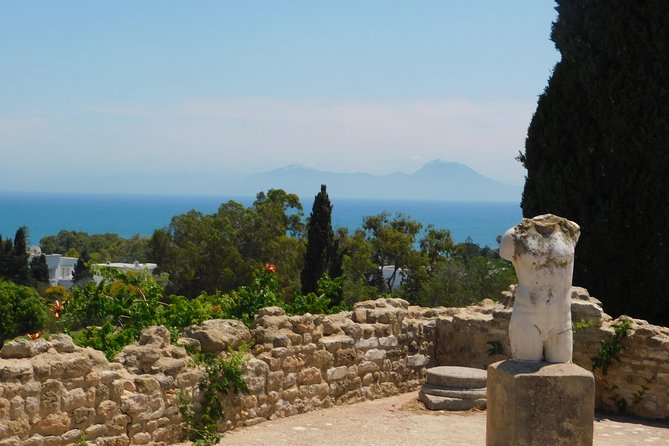
The North Africa American Cemetery is a free stop, with about 15 minutes suggested. It offers a very different experience from the ancient ruins and gives the route a modern historical layer.
The cemetery is a place for quiet reflection rather than a fast sightseeing stop. Since there is no admission charge, it is an easy addition to the ride, especially if you are taking the full-day option.
I appreciate this kind of contrast in a self-guided route. Ancient Carthage can feel abstract when you move from one fragment to another. A more recent memorial site changes the rhythm and reminds you that this area has continued to matter long after the Punic and Roman periods.
Reach the Malga Cisterns and Carthage aqueducts
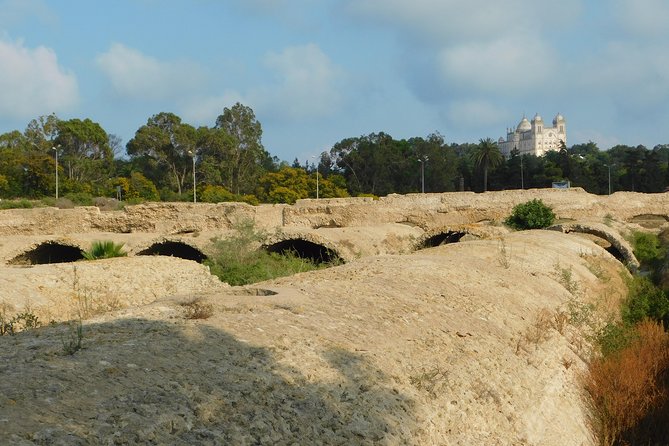
The Carthage Aqueduct stop points you toward the Malga Cisterns, an important piece of the city’s water system. The suggested visit is only about five minutes, but that does not mean the stop lacks interest. It shows the practical side of Roman urban life: large cities need reliable water, storage, and engineering.
The cisterns are a good reason to choose the bicycle over a simple central-site visit. They are part of the wider Carthage circuit, and the bike lets you connect them with the main ruins without arranging another ride.
Admission is not included. The guidebook should help explain what you are looking at, but remember that the written material is in French only. If you do not read French, you may want to have your own translation tool ready, though the supplied information remains the official written support for the activity.
See the Villas Romaines and Roman Theatre
The Villas Romaines are scheduled for about 20 minutes. Roman villas help you imagine Carthage as a lived-in city, not simply a military or trading center. Look for the domestic scale of the site after spending time with ports, aqueducts, and public buildings.
The Roman Theatre is a shorter 15-minute stop. A theatre gives you a sense of public entertainment and civic life, and it adds variety to a day otherwise filled with sanctuaries, baths, and foundations.
These stops are easy to combine with the rest of the route, but I would not rush them simply because the suggested timing is short. The timings are best treated as planning guides. If you enjoy architecture, ancient daily life, or taking photographs, you may want to use a full day rather than force everything into a quick circuit.
Include Byrsa Hill for the broadest view
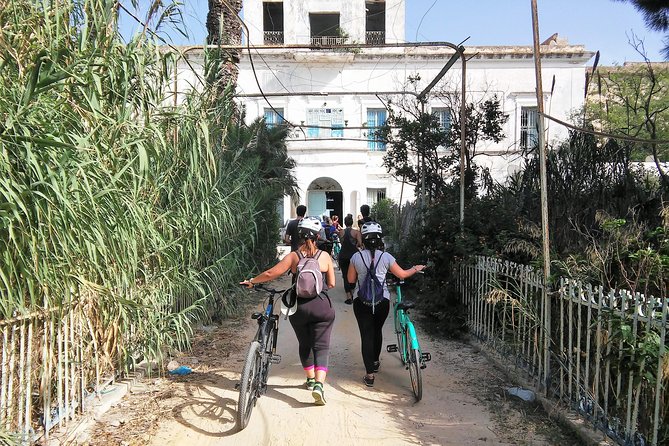
Byrsa Hill is listed as part of the route and is one of the natural points to build into your ride. It helps you understand the position of Carthage and how its separate remains relate to one another.
A hill also changes the physical feel of the tour. Cycling is convenient, but it is not effortless, and you should be prepared for some riding that may require more energy than the flat stretches between sites. The tour information does not give a precise difficulty rating, so I would plan conservatively if your group includes young children or anyone uncomfortable on a bicycle.
The reward is perspective. After visiting individual ruins, a higher viewpoint can make the city’s wider layout easier to grasp. It is one of the places where moving between sites by bike becomes part of the historical experience rather than just a way to save time.
Spend an hour at the Baths of Antoninus
The Baths of Antoninus receive the longest suggested visit after the central archaeological site, about one hour. That timing makes sense. Roman bath complexes were large public spaces with social, practical, and architectural importance, and the remains deserve more than a quick photo stop.
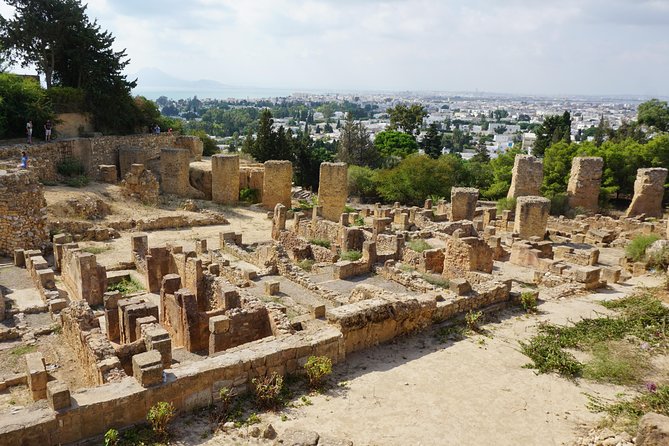
This is likely to be one of the most satisfying places for visitors who want a strong visual sense of Roman Carthage. The scale of the ruins can help you picture how grand the waterfront area once was, even when walls and rooms survive only in fragments.
I would put the baths near the end of a half-day route or give them a central place in a full-day plan. Admission is separate, and you should check how much time you have left before returning the bicycle. The tour ends back at the starting point, so you do not have the convenience of finishing at another site.
Add Sidi Bou Said if you have a full day
Sidi Bou Said is not one of the archaeological stops, but it is listed as an additional place you can visit. That makes it a useful companion to Carthage. After several hours among ancient stones and archaeological remains, the town offers a different setting and a more relaxed change of scene.
The provided details do not specify an exact route, riding time, or extra cost for adding Sidi Bou Said. I would ask about the practical details when collecting the bike, then decide how much time to reserve.
For a full-day outing, this option can keep the experience from feeling like a series of similar ruins. For a short visit, I would prioritize the archaeological sites first.
What the $45 price really covers
At $45, the value comes from the freedom and equipment rather than from personal guiding. You receive the bicycle, helmet, map, and a detailed guidebook about Carthage and the surrounding area. That is a useful package for anyone who wants to set the pace and avoid paying for repeated taxis between scattered sites.
The price does not include entry tickets. Since several stops list admission as separate, your final cost will be higher than $45 if you visit the paid areas. You should also remember that the guidebook is French-only, so the value depends partly on your ability to use that material.
I would consider the price fair for a private, self-guided day if you plan to visit several sites. It becomes less compelling if you want only one or two ruins, do not read French, or expect a guide to explain everything in person.
One positive feature is that a group can choose between a half-day and full-day outing. You are not paying for a fixed schedule that forces you to stay out all day. The experience received an overall rating of 4.4 from 10 ratings, with especially warm praise for the freedom to see Carthage at an individual pace and for the quality of the accompanying booklet.
Practical advice for a smoother visit
I would save the exact meeting address before leaving your accommodation: 9 Rue Hannibal, Site archéologique de Carthage 2025, Tunisia. The location is near public transportation, and Le Lemon Tour can be found on Google Maps, but the reported difficulty finding the address shows why preparation matters.
Ask for the bicycle, helmet, map, and French guidebook together at pickup. Confirm which sites require separate admission and how long you may keep the bicycle, particularly if you intend to include Sidi Bou Said.
Give yourself flexibility. The published stop times add up to a long day if you visit everything, and the official duration ranges from about one to eight hours. You can make the outing short, but a full circuit requires enough time for riding, ticket lines, reading, and pauses.
Children must be accompanied by an adult. Most people can participate, but the activity is still a bicycle tour, so your group should be comfortable riding between separate locations. The tour is private, which lets you set a family-friendly pace.
Free cancellation is available if you cancel at least 24 hours before the local start time. Cancellations or changes made within 24 hours are not refunded or accepted.
Who should choose this Carthage bike tour?
I would choose it if you like independent sightseeing, want to connect several archaeological locations, and are happy to learn from a written guidebook rather than a live guide. It is especially useful for a couple, family, or small private group that wants control over the day.
It also suits anyone who finds Carthage’s spread-out layout inconvenient on foot. The bike turns the distance between sites into a manageable part of the visit, and the quiet roads described for much of the route make the ride more appealing.
I would hesitate if you need English-language written information, prefer a fully guided explanation, or want every admission fee included in one price. I would also take extra care with the meeting point, since a missed pickup would erase much of the value.
Should you book it?
Book this tour if the idea of exploring Carthage independently appeals to you. The bicycle, helmet, map, and French guidebook give you a practical way to cover the Punic sanctuary, ports, cisterns, villas, theatre, Byrsa Hill, and Baths of Antoninus without rushing behind a group.
Choose the full-day option if you want to see most of the route and possibly add Sidi Bou Said. Choose a shorter visit if you mainly want the central ruins and baths. Before booking, confirm that you can use the French guidebook, budget for separate site tickets, and save the meeting address. Those three checks will tell you quickly if this $45 experience fits your style.
FAQ
Where does the bicycle tour start?
The tour starts at 9 Rue Hannibal, Site archéologique de Carthage 2025, Tunisia, at the Le Lemon Tour location.
Where does the tour end?
The activity ends back at the meeting point.
How long does the experience last?
The tour lasts from about one to eight hours, depending on whether you choose a shorter or full-day outing and how many places you visit.
What equipment is included?
The price includes use of a bicycle, a helmet, a map, and a detailed guidebook about Carthage and the surrounding area.
Is the guidebook available in English?
No. The supplied written guidebook is available only in French.
Are archaeological-site entrance tickets included?
No. Admission tickets for the archaeological sites are not included. The North Africa American Cemetery is listed as free.
Can children join the tour?
Yes. Children may participate, but they must be accompanied by an adult.
Can I cancel for a refund?
Yes, if you cancel at least 24 hours before the experience start time. Cancellations made less than 24 hours in advance are not refunded.
More Self-guided Tours in Tunis
- Kairouan, El Djem, Monastir Self-Guided Excursion from Hammamet
★ 4.5 · 5 reviews - Tunis, Carthage and Sidi Bou Said Self-Guided Excursion from Hammamet
★ 4.5 · 4 reviews - Cap-Bon Self-Guided Excursion from Hammamet
★ 4.5 · 3 reviews - Zaghouan, Thuburbo Majus and Dougga Private Self-Guided Excursion from Hammamet
★ 5.0 · 2 reviews
Just added in Tunis
- Private Arrival Transfer: Tunis Airport to Tunis Hotel★ 4.5 · 5 reviews
- Cap Bon Guided Day Tour from Tunis★ 5.0 · 2 reviews
- Unveiling the Beauty of Sidi Bou Said and Carthage Private Tour★ 5.0 · 2 reviews
- Dougga Guided Day Tour from Tunis★ 5.0 · 5 reviews
- Tunis Carthage Private Arrival Airport Transfer to Tunis★ 5.0 · 4 reviews
- Tunis Group Tour: Carthage, Sidi Bou Said, Bardo museum & Medina★ 5.0 · 5 reviews
- Bardo Museum- The ruins of Carthage- Village of Sidi Bou Said★ 5.0 · 4 reviews
- Kairouan-El Jem★ 4.5 · 2 reviews
Carthage and Sidi Bou Said, compared.
VIP Tour: Tunis Medina/Bardo, Sidi Bou Said, Carthage |PICKUP ALL
Read our review →
Private tour: Medina,Carthage ,Sidi Bou Said, Bardo Museum+lunch
Read our review →Private tour: Medina,Carthage ,Sidi Bou Said, Bardo Museum+lunch
Read our review →
Carthage, Bardo Museum, Sidi Bou Said and Medina Private Day Tour
Read our review →
Guided Bike Tour of Carthage Archeological Site in Tunisia
Read our review →
Archaelogical Site Of Carthage + Picturesque Village Of Sidi Bou Said
Read our review →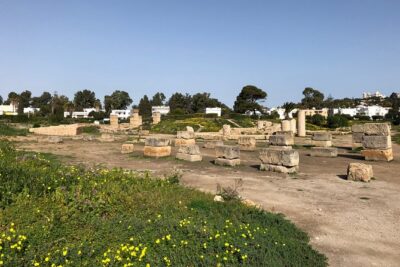
Tunis, Sidi Bousaid and Carthage day trip from Hammamet
Read our review →Browse the lists this tour appears in