
Reviewed · KAIROUAN
Kairouan, El Djem, Monastir Self-Guided Excursion from Hammamet
Three eras, one long day. This private excursion links Tunisia’s Arab-Muslim center at Kairouan, the Roman amphitheater at El Djem, and coastal Monastir in one sweep. I like the strong mix of history and the convenience of private air-conditioned transport for up to three people. The main trade-off is time: with about 10 hours on the road, Monastir may feel rushed after the longer Kairouan and El Djem visits.
I also like that this is self-guided rather than tied to a fixed group schedule. You can move at your own pace, choose which sites deserve your attention, and avoid spending the day with strangers. The catch is that a professional guide is not included, so you will need to read signs, arrange any local guide yourself, or prepare with some background before setting out.
The advertised price is $303.51 per group of up to three, not per person. That can be fair value if you are traveling as a small party and want a private vehicle, bottled water, insurance, and transport from Hammamet. It is less attractive if you are alone, especially since entrance fees, lunch, tips, and personal spending are extra.
In This Review
- Key points to know before you book
- Why this Hammamet day trip works
- Kairouan begins with the Aghlabite Basins
- The Mosque of the Barber and Sidi Sahbi
- Kairouan’s medina and the Mosque of the Three Gates
- Two hours inside El Djem’s Roman amphitheater
- The El Djem Archaeological Museum
- Monastir adds modern Tunisia to the route
- What the private vehicle and price really offer
- Self-guided does not mean support-free
- Who should book this excursion?
- Should you book the Kairouan, El Djem, and Monastir route?
- FAQ
- How long is the excursion from Hammamet?
- How many people can join the private tour?
- Is transportation included?
- Are admission tickets included?
- Is a professional guide included?
- What is included in the Monastir stop?
Key points to know before you book
- Three major periods in one day: Kairouan represents Tunisia’s Arab-Muslim tradition, El Djem preserves one of Roman Africa’s grandest monuments, and Monastir adds Punic, Roman, Islamic, and modern Tunisian connections.
- Private transport for up to three people: Your group travels alone in an air-conditioned vehicle, with pickup offered and bottled water provided.
- El Djem is the clear centerpiece: You have about two hours at the amphitheater, followed by an hour in the archaeological museum.
- Kairouan needs respectful preparation: The route includes the Aghlabite Basins, the Mosque of the Barber, the medina, and the Mosque of the Three Gates.
- Monastir is the most flexible stop: You pass the birthplace of Habib Bourguiba, visit his mausoleum, and have free time around the ribat and marina.
- Confirm guide and timing details: A guide is not included, and one account describes confusion over a suggested local guide’s fee and pressure to shorten Monastir.
Why this Hammamet day trip works
Hammamet is a handy base for Tunisia’s northeast coast, but some of the country’s most important historic places lie farther inland and south. This excursion gives you a way to reach three very different places without changing hotels or arranging several separate transfers.
The route is especially useful if you have limited time in Tunisia. Kairouan gives you a sense of the country’s religious and architectural traditions. El Djem delivers the big visual moment, with its enormous Roman amphitheater. Monastir then shifts the mood toward the sea, modern national history, and a fortified Islamic monument.
I would think of this as a sightseeing circuit rather than a relaxed day in one town. You will see a lot, but you will not have endless time to browse markets, linger over lunch, or explore each historic quarter at leisure.
The private format helps. Your group of up to three does not have to wait for a busload of people or follow a rigid group pace. At the same time, the lack of a professional guide means the quality of your visit depends partly on how much context you bring with you.
More Kairouan trips:
- Private and Guided Tour to Kairouan and El Jem and Monastir
★ 4.5 · 22 reviews - Kairouan & El Djem Guided Day Trip with Lunch from Hammamet
★ 4.0 · 18 reviews - Kairouan, El Djem and Monastir Guided Excursion from Hammamet
★ 5.0 · 5 reviews
Kairouan begins with the Aghlabite Basins
The first stop is the Bassins Aghlabites, or Aghlabite Basins, outside Kairouan’s medina walls. You have about 30 minutes here, and admission is not included.
These ninth-century water reservoirs were built during the second half of the ninth century and are regarded as major hydraulic works in the Muslim world. That detail matters because Kairouan was not simply a religious center. It also needed serious infrastructure to support life in a dry region and to serve a growing city.
Do not expect a fully staged attraction. The basins are an open historical site, and the visit is fairly brief. I like this as an introduction because it gives you a practical way to think about Kairouan: faith, government, engineering, and urban life were all connected.
Since the stop lasts only half an hour, use it to take in the scale and setting rather than trying to search every corner. If you want detailed explanations, prepare a little before the trip or ask whether the driver can recommend a local guide in advance. The listed tour does not include guiding.
The Mosque of the Barber and Sidi Sahbi
Next comes the Mosque of the Barber, also known as the mausoleum of Sidi Sahbi. It sits outside the walls of Kairouan’s medina, and the planned visit lasts about one hour. Admission is listed as free.
The name comes from the tradition that Sidi Sahbi carried hairs associated with the Prophet Muhammad. The site is therefore both a mosque and a mausoleum, with religious meaning that goes beyond its decoration.
You should approach this stop as a place of worship as well as a historic building. Dress and behavior should be respectful, and access inside religious spaces can sometimes depend on local practice. The information provided does not specify every access rule, so it is sensible to follow instructions at the entrance.
An hour gives you enough time to appreciate the complex without turning the stop into a rushed photo break. If you are interested in Islamic architecture, this is one of the most valuable parts of the Kairouan section. If you prefer only major monuments, you may find the visit slower and more contemplative than the Roman amphitheater later in the day.
Kairouan’s medina and the Mosque of the Three Gates
The medina is scheduled for about an hour, with free admission listed. The route includes its narrow streets and markets, along with the Mosque of the Three Gates.
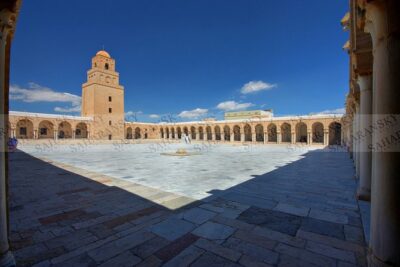
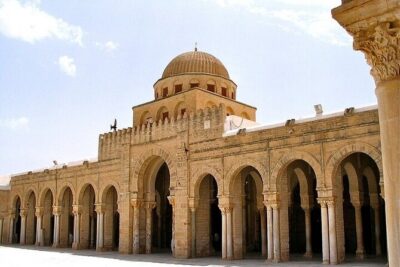
Kairouan’s medina has been on the UNESCO World Heritage List since December 9, 1988. Its lanes and buildings give you a more human-scale experience than the Aghlabite Basins. Here, the point is not one single enormous monument. You are looking at the shape of an old city, with religious buildings, market streets, and layers of daily life.
The Mosque of the Three Gates is known for its distinctive facade. Even a short stop can help you notice how Islamic decoration works through proportions, inscriptions, and repeated forms rather than through the colossal scale of a Roman arena.
One hour is enough for a focused introduction, but not enough for every lane and market. Keep an eye on the time. This is a self-guided excursion, so you may be tempted to wander farther than planned, especially if you enjoy old medinas.
Kairouan is also the point where a local guide could add the most value. A guide can explain religious customs, architecture, and the stories behind the sites. But do not accept an informal offer without confirming the total fee first. One account describes a driver offering a local guide at one price, followed by a demand for three times that amount. The practical lesson is simple: agree on the price and service before the guide begins.
More self-guided tours in Hammamet:
- Tunis, Carthage and Sidi Bou Said Self-Guided Excursion from Hammamet
★ 4.5 · 4 reviews - Cap-Bon Self-Guided Excursion from Hammamet
★ 4.5 · 3 reviews - Zaghouan, Thuburbo Majus and Dougga Private Self-Guided Excursion from Hammamet
★ 5.0 · 2 reviews - Self guided bike tour of Carthage archeological site
★ 4.5 · 10 reviews
Two hours inside El Djem’s Roman amphitheater
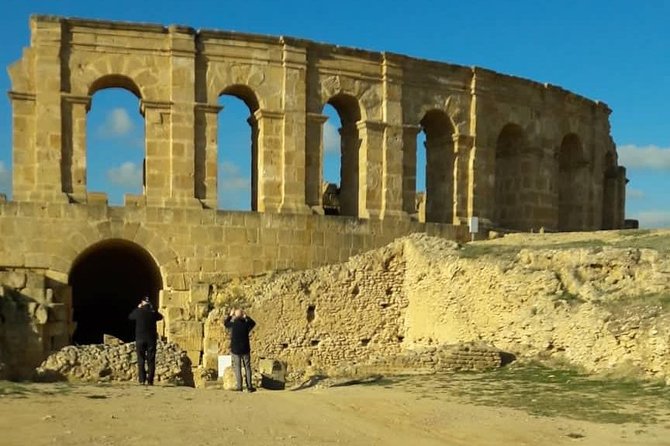
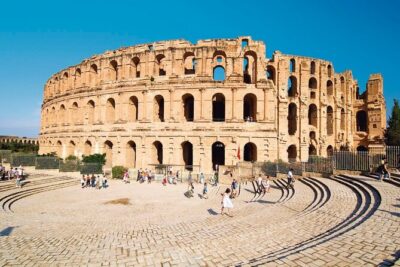
El Djem is the day’s major draw. The Roman city was known as Thysdrus and became one of the most prosperous centers of Roman Africa. Its amphitheater dates from the third century AD and is listed as a UNESCO World Heritage site.
The arena could hold about 30,000 spectators. That makes its scale easy to grasp even if you are not a Roman-history specialist. It is described as the third-largest amphitheater in the Roman world, after those at Rome and Capua.
You have about two hours here, and admission is not included. That is the right amount of time for a serious visit. You can take in the exterior, enter the arena, and explore the internal passages and seating areas. The amphitheater’s power comes from its size and survival. It is not just a ruin viewed from outside. You can move through the spaces that supported the public spectacle and see how the building was organized.
I would save energy for this stop. After the shorter Kairouan visits, El Djem gives you room to slow down. The monument is visually strong, but it is also worth noticing the engineering: the tiers, passageways, and underground areas show how a huge audience was managed.
Bring practical patience here. The full experience requires walking and stairs, and the listing says most people can participate, but it gives no detailed mobility information. If you need specific access arrangements, ask before booking.
The El Djem Archaeological Museum
The museum follows the amphitheater and receives about one hour. Admission is extra.
It occupies a reconstructed Roman villa and holds a collection of Roman mosaics, statues, terracotta figures, perfume containers, and other glass objects. The collection covers a period described as running from the fifth to the eleventh century in the supplied information, although the wording is unusual for a Roman-focused museum. I would treat the museum as a place to see how Roman domestic life and decoration looked, rather than expecting only battlefield or arena objects.
This stop makes the amphitheater easier to understand. The arena shows public architecture on a grand scale. The museum shifts your attention to homes, art, objects, and taste. The mosaics can help you picture the wealth that made Thysdrus prosperous.
An hour is a useful amount of time, especially if you enjoy artifacts more than ruins. If your group wants extra time inside the amphitheater, this is the place where you may need to balance priorities. Both admissions are separate, and neither the museum ticket nor the amphitheater ticket is included in the tour price.
Monastir adds modern Tunisia to the route
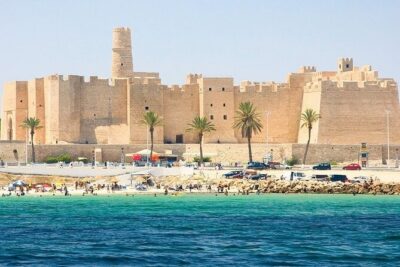
The final stop is Monastir, with about one hour around the marina and nearby landmarks. The city is described as an ancient Punic and Roman settlement known in Roman times as Ruspina.
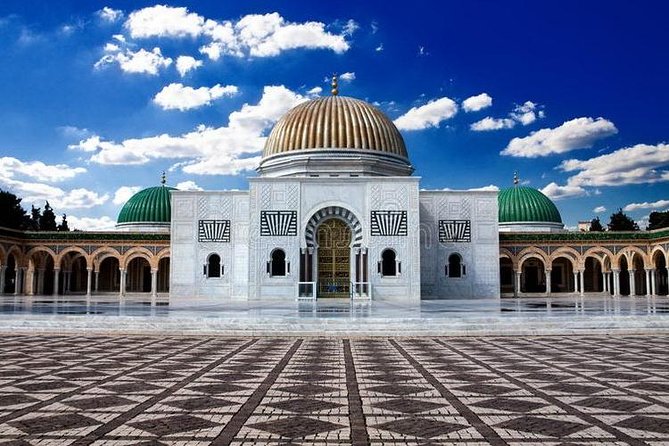
The visit includes passing the birthplace of Habib Bourguiba, Tunisia’s first president, and seeing his mausoleum. You also have free time to visit the ribat and marina. This gives the day a different final chapter. Kairouan focuses on religious tradition, El Djem on Roman public life, and Monastir connects ancient origins with modern Tunisia.
The one-hour allocation is tight. You may be able to see the mausoleum and spend a little time near the marina, but you should not assume you can explore every corner of the ribat in depth. One account describes reaching the mausoleum but not having enough time for the ribat. That is an important warning for anyone who considers Monastir the main reason for booking.
I would tell the driver at the beginning that Monastir is a priority if you want meaningful time there. The route is advertised as including the city, so it is reasonable to clarify how much time will be protected for the stop. Do not let the final hour disappear simply because earlier visits ran long.
What the private vehicle and price really offer
The cost is $303.51 per group of up to three. For three people, that works out to about $101.17 each before admission fees, lunch, and personal costs. For two people, it is roughly $151.76 each. A solo participant pays the full group rate, so the economics are much better for a small party.
The package includes:
- Private transportation
- An air-conditioned vehicle
- Bottled water
- All listed fees and taxes
- Insurance
Pickup is offered, and the start time is 8:30 am. The total duration is approximately 10 hours. That combination makes the trip useful if you value privacy and door-to-door transport more than the lowest possible price.
Lunch is not included. Entrance tickets to the amphitheater, museum, and other paid exhibitions are also extra. Tips and personal expenses are your responsibility. Add those costs before deciding that the quoted price is the full cost of the day.
The private setup also gives you some control. You can ask for a little longer at El Djem, keep Kairouan focused, or protect time in Monastir. But flexibility only helps if you discuss priorities clearly with the driver at the start.
Self-guided does not mean support-free
There is no professional guide included. That keeps the basic price simpler, but it changes the way you should prepare.
I would download or print short notes about the Aghlabite Basins, Sidi Sahbi, the Mosque of the Three Gates, Thysdrus, and Habib Bourguiba. Even a few paragraphs of preparation can make the sites much easier to read.
The driver may help with transport and general orientation, but you should not assume the driver provides formal historical commentary. If a local guide is offered, confirm the exact fee before accepting. The supplied account of an unexpected price increase is enough reason to be cautious.
There is also a safety concern raised by one account, which described driving at about 150 kilometers per hour. I cannot verify the circumstances, but you should feel free to ask for a safe, comfortable pace and raise any concern directly. A long day is not improved by hurried driving.
Who should book this excursion?
I think this trip suits a couple, family, or small group staying in Hammamet who wants to cover several major sites in one day. It is especially useful for people who prefer a private car to a large organized coach.
You will get the most from it if you:
- Want to see El Djem without arranging separate transport
- Enjoy historic sites from several periods
- Are comfortable exploring without a formal guide
- Can accept a full schedule with limited time in Monastir
- Are traveling with two or three people to share the group price
I would think twice if you want a slow market morning, a long Tunisian lunch, or an in-depth guided tour at each monument. The schedule is broad, not leisurely.
The tour is listed as suitable for most people, and service animals are allowed. No further accessibility details are provided, so ask specific questions if stairs, walking distance, or site access are important for your group.
Should you book the Kairouan, El Djem, and Monastir route?
Book it if your priority is coverage. In one demanding day, you can see Kairouan’s religious center, walk through one of Roman Africa’s greatest monuments, study Roman art at the El Djem museum, and finish in Monastir.
The strongest reason to choose it is El Djem. The best value comes when three people share the private rate. The main caution is the final stop: Monastir is included, but one hour may not satisfy you if you want the ribat, mausoleum, and marina in detail.
Before departure, confirm the pickup, the paid entrance fees, your lunch plan, the local guide price if one is suggested, and the time reserved for Monastir. If those points are clear, this is a smart, history-heavy day trip from Hammamet.
Free cancellation is available if you cancel at least 24 hours before the 8:30 am start time. Changes or cancellations within 24 hours are not accepted for a refund.
FAQ
How long is the excursion from Hammamet?
The excursion lasts approximately 10 hours and starts at 8:30 am.
How many people can join the private tour?
The price covers one private group of up to three people. Only your group participates.
Is transportation included?
Yes. Private transportation in an air-conditioned vehicle is included, along with pickup, bottled water, listed fees and taxes, and insurance.
Are admission tickets included?
No. Entrance fees to the amphitheater, museums, and exhibitions are not included. The Aghlabite Basins and El Djem amphitheater specifically list admission as not included.
Is a professional guide included?
No. The excursion is self-guided, and a professional guide is not included. If you arrange a local guide separately, confirm the full price before the visit.
What is included in the Monastir stop?
The Monastir portion includes passing the birthplace of Habib Bourguiba, visiting his mausoleum, and free time to visit the ribat and marina. The planned time there is about one hour.
Just added in Hammamet
- Transfer from Airport Tunis Carthage To Hammamet★ 5.0 · 2 reviews
- From Hammamet: Sahara Desert Overnight Camping★ 4.5 · 2 reviews
- Private Transfer from Tunis Carthage Airport to Hammamet★ 5.0 · 2 reviews
- Private Guided Tour of Zaghouan, Thuburbo Majus and Dougga from Hammamet★ 5.0 · 1 review
- Executive: Transfer Tunis Airport to Hammamet by Mercedes E Class★ 5.0 · 4 reviews
- Private Excursion of Friguia Park and Medina of Hammamet★ 4.5 · 4 reviews
- Day Trip to Cap Bon★ 5.0 · 2 reviews
- Zaghouan, Thuburbo Majus and Dougga Private Self-Guided Excursion from Hammamet★ 5.0 · 2 reviews
Kairouan, compared.
Private Tour to Kairouan, El Jem & Monastir from Tunis_hammamet
Read our review →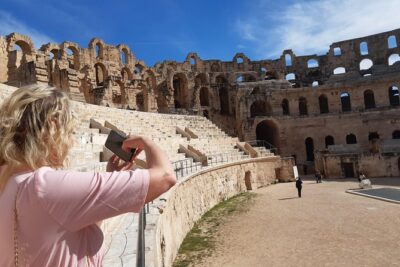
Private and Guided Tour to Kairouan and El Jem and Monastir
Read our review →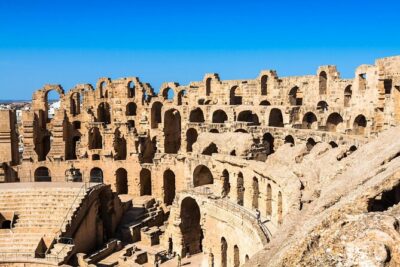
Kairouan & El Djem Guided Day Trip with Lunch from Hammamet
Read our review →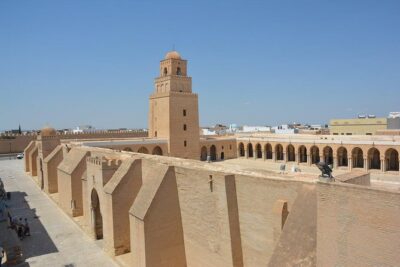
Kairouan Holy City and El Jem Colosseum Tour from Sousse
Read our review →
Daytrip 3 Unesco Sites El Jem Kairouan and Sousse Medina
Read our review →Browse the lists this tour appears in