
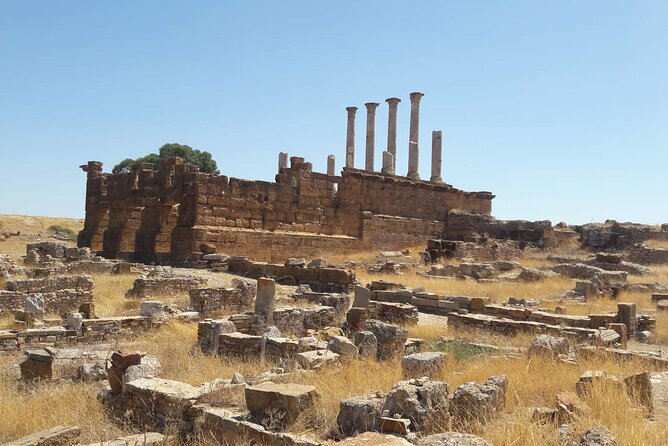
Reviewed · DOUGGA AND BULLA REGIA
Private Guided Tour of Zaghouan, Thuburbo Majus and Dougga from Hammamet
Ancient Tunisia comes alive beyond Hammamet. This private day trip links Zaghouan’s Water Temple, the Roman ruins of Thuburbo Majus, and UNESCO-listed Dougga in one carefully packed outing. I especially like the private vehicle for up to six people and the unusual focus on Roman water engineering, not only temples and broken columns. The main drawback is the long day, with several hours spent walking across exposed archaeological sites.
The tour runs about seven to eight hours and begins at 8:00 a.m. Pickup is offered, but you should confirm the exact meeting point before departure. I also like that bottled water, parking, transport, and a professional guide are included. Site entrance fees and lunch are not, so the final cost will be higher than the advertised group price.
In This Review
- Key points to know before booking
- Why this day trip is worth leaving Hammamet
- Zaghouan’s Water Temple starts the story
- The aqueduct stop adds useful context
- Three hours among the ruins of Thuburbo Majus
- Dougga delivers the biggest historical payoff
- The guide can make or break the ruins
- What the $323.45 group price really includes
- Who will enjoy this ancient-sites circuit
- Practical advice for a smoother day
- Should you book this tour?
- FAQ
- How long does the tour last?
- What time does the tour begin?
- Is pickup available from Hammamet?
- How many people can join the private tour?
- Are archaeological entrance fees included?
- Is lunch included?
- What is included in the tour price?
Key points to know before booking
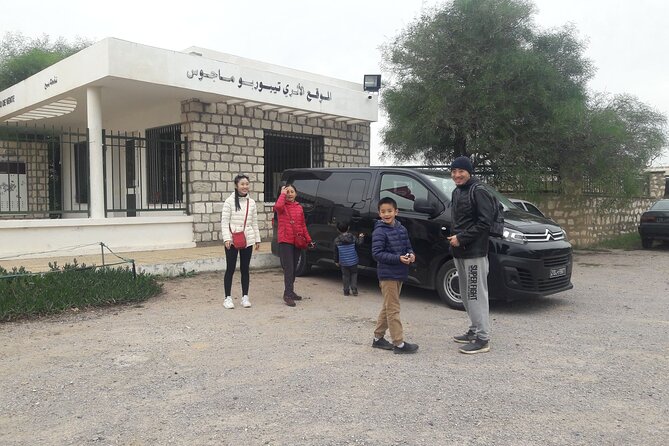
- Three very different ancient sites: You see Zaghouan’s sacred water source, Thuburbo Majus’s urban ruins, and Dougga’s grand monuments.
- A private group of up to six: You avoid sharing the vehicle with strangers and can ask questions throughout the day.
- The Water Temple explains Carthage’s water supply: This is more than a quick photo stop. It introduces the aqueduct system that carried water to Roman cities.
- Thuburbo Majus gets three hours: That gives you time to see the Capitol, forum, baths, temples, and villas without racing through.
- Dougga is the grand finale: The 65-hectare UNESCO site contains some of North Africa’s best-preserved Roman remains.
- Budget for extras: Entrance fees are not included, and lunch must be arranged at your own expense.
Why this day trip is worth leaving Hammamet
Hammamet is a pleasant coastal base, but its beaches and resort streets tell only a small part of Tunisia’s story. This excursion takes you inland to a quieter world of Roman towns, older North African monuments, and wide open views around the ancient sites.
I like the way the route builds its subject. You begin with water at Zaghouan, follow the old aqueduct, then see how Roman cities used that supply. By the time you reach Dougga, temples, markets, baths, and villas make more sense as parts of a functioning town rather than isolated ruins.
The private format is important here. A full day among archaeological remains can feel rushed in a large group, especially when you want to stop and ask why a monument mattered. With only your own party, up to six people, you have a better chance to set the pace within the fixed schedule.
The cost is $323.45 per group, not per person. For six people, that works out to roughly $54 per person before entrance fees and lunch. For two people, the per-person price is much higher, but the private vehicle and guide still offer convenience that a shared tour may not.
More Roman sites at Dougga and Bulla Regia:
- Private Day Trip to Testour, Dougga and Bulla Regia from Hammamet
★ 5.0 · 21 reviews - Zaghouan, Thuburbo Majus and Dougga Private Self-Guided Excursion from Hammamet
★ 5.0 · 2 reviews - Private Excursion to Testour, Dougga and Bulla Regia from Tunis.
★ 5.0 · 100 reviews
Zaghouan’s Water Temple starts the story
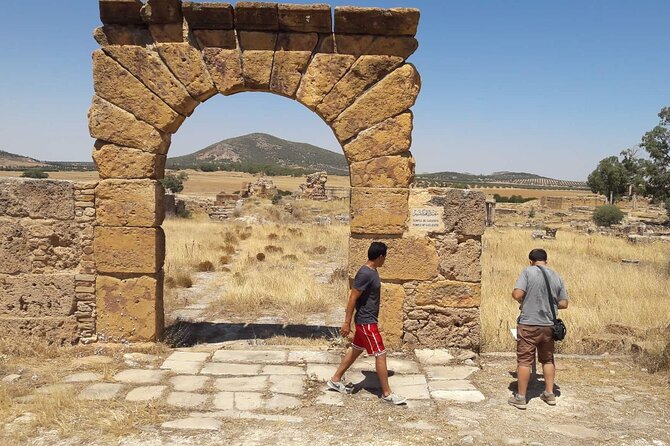
The first major stop is the Water Temple, where you spend about an hour. This is the source of the important aqueduct that carried water toward several Roman cities, including Carthage.
I find this a smart opening stop because water explains Roman settlement better than another isolated monument would. A temple can look decorative at first glance, but here the setting connects religion, engineering, urban life, and political power. The Romans did not simply find water and use it. They built a system to move it over long distances to major cities.
The tour description does not include the entrance ticket, so check the current fee before setting out. The supplied cost information lists archaeological site admission at €3 per person, but it is wise to confirm whether that amount covers all paid stops or is charged separately at each site.
You should also expect some walking and time outdoors. The tour requires a moderate level of physical fitness, and the Water Temple is only the beginning of a day spent on ancient ground. Comfortable shoes and protection from the sun will make the outing easier, though the tour itself specifically includes one bottle of water per passenger.
The aqueduct stop adds useful context
About halfway toward Thuburbo Majus, the vehicle pauses for around 30 minutes at the old Roman aqueduct. Admission is free at this stop.
This is a short visit, but it gives the Water Temple a practical follow-up. You have already seen where the water began. Here, you see part of the structure that distributed it toward Roman cities, including Thuburbo Majus and Carthage.
Do not expect a full museum presentation or a long walk here. It is a brief roadside-style stop, useful for photographs and for seeing the aqueduct in relation to the route. Its value depends heavily on the guide’s explanation, since surviving stonework alone may not show the full scale of the water network.
I would pay close attention during this part of the tour. The aqueduct is easy to treat as a quick picture stop, but it is the link between the first and third stops. Without it, the route might feel like three unrelated ruins. With it, the day has a clear thread.
Three hours among the ruins of Thuburbo Majus
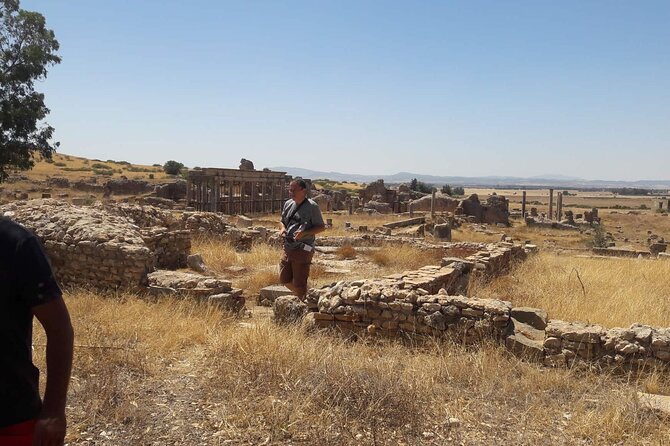
Thuburbo Majus receives the largest block of time before Dougga, about three hours. That is helpful because this is not a single monument. It is an ancient Roman city with a forum, Capitol, villas, temples, baths, a market square, and other public buildings.
You can expect to see the Villa of Neptune, the Palestra of the Petronii, the Temple of Mercury, a Byzantine church, summer baths, and winter baths. The range of remains lets you picture ordinary civic life alongside official Roman religion and public leisure.
The Capitol and forum are likely to be the main anchors of your visit. From there, the temples and market area help you understand how the city was organized. The baths add another layer. Their presence shows the importance of public bathing in Roman urban life, while the distinction between summer and winter baths points to careful seasonal planning.
The site’s size also creates a practical concern. Three hours sounds generous, but it can pass quickly when you stop for explanations and photographs. You may want to decide early whether you care most about temples, domestic buildings, baths, or city planning. A good guide can help you avoid spending all your time at the first group of ruins.
Admission is not included. The total tour price covers transport and the guide, but you need to carry money for the archaeological sites. Lunch is also separate, and the supplied details do not specify a restaurant or meal arrangement. Ask in advance how the day handles lunch, since the schedule leaves limited spare time between the sites.
More things to do in Hammamet:
- Private tour: Medina,Carthage ,Sidi Bou Said, Bardo Museum+lunch
★ 5.0 · 194 reviews - Quad ride on the hills of Hammamet
★ 4.0 · 104 reviews - 2-Day Tunisian Sahara Tour with Food & Stay from Hammamet
★ 4.5 · 80 reviews - Tour to the Medina of Hammamet and the Spice Market of Nabeul
★ 4.0 · 45 reviews
Dougga delivers the biggest historical payoff
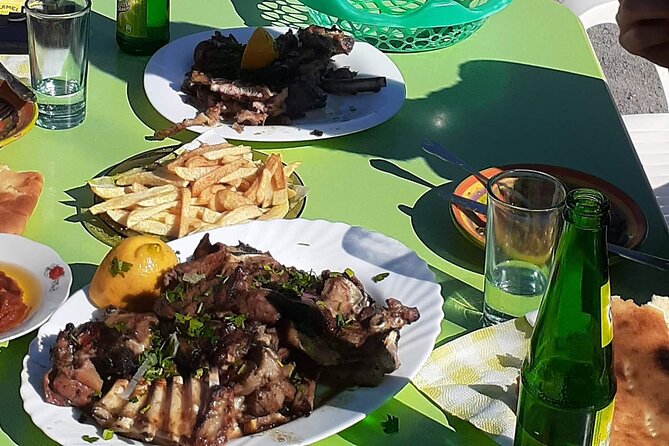
The final stop is Dougga, with about three hours to explore a 65-hectare archaeological site. It is listed as a UNESCO World Heritage site and is described as one of the best-preserved Roman cities in North Africa.
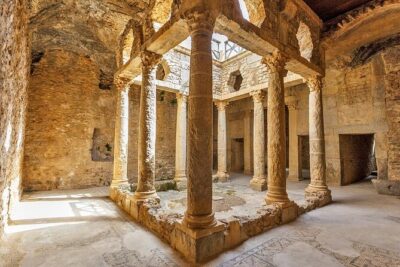
This is where the tour reaches its peak. Dougga contains a remarkable concentration of monuments, including the Capitol, Wind Rose, Libyco-Punic Mausoleum, dolmens, market, Villa of the Trifolium, Temple of Mercury, Temple of Minerva, and Temple of Saturn.
The mix of monuments matters. Dougga is not only a Roman showcase. The Libyco-Punic Mausoleum and dolmens point to earlier cultures and traditions, while the Roman Capitol, temples, market, and villas reveal the later city. You get a more complete sense of Tunisia as a place shaped by several civilizations, rather than a country with only one ancient chapter.
The Capitol is likely to be the visual highlight, but I would not rush past the smaller remains. The Villa of the Trifolium and the market help you picture private life and commerce. The temples show how public religion shaped the town. The Wind Rose adds a different kind of detail, linking the built environment to practical observation and design.
Three hours is a sensible amount of time, but Dougga is large. You will walk across uneven archaeological ground, and the tour’s moderate fitness requirement matters most here. The size is part of the appeal, yet it also means you cannot inspect every corner at leisure during a day trip from Hammamet.
Admission is not included, so add the stated €3 per person site fee to your planning. Bring enough water for the full route, since the tour provides one bottle per passenger but the day includes several hours outside.
The guide can make or break the ruins
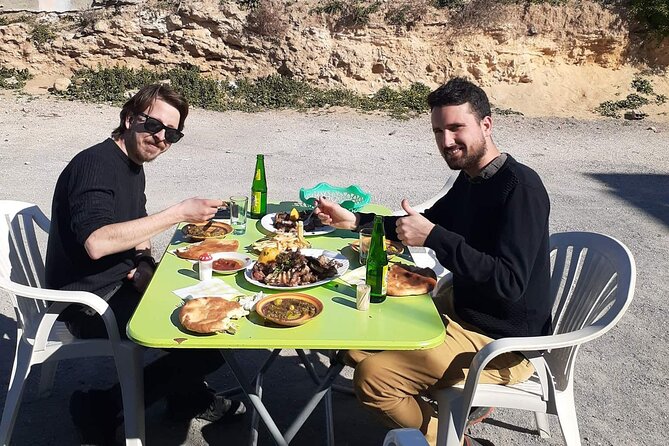
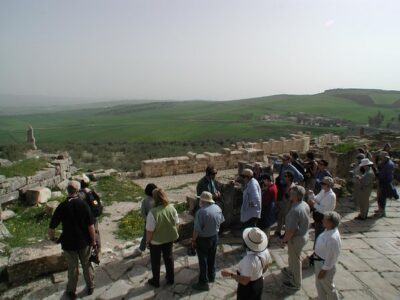
Ancient sites are easier to understand when someone explains what you are seeing. The single published experience praised the guide as competent and experienced, and that quality matters greatly on this route.
At Zaghouan, the guide should connect the Water Temple with the aqueduct. At Thuburbo Majus, you will benefit from help identifying the Capitol, forum, baths, villas, and religious buildings. At Dougga, a guide can give order to a very large site and point out details you might otherwise walk past.
The operator is taximami. No guide name is provided, so you cannot request a particular person based on the available information. You can, however, ask before booking what language the guide speaks and how lunch and the meeting point will be handled.
The private setup gives you a useful advantage. If the explanation of Roman baths interests you more than the market, you can ask follow-up questions. If your group wants more time at the Capitol and less time at a smaller monument, you can discuss that with the guide, although the overall schedule still has to fit the seven to eight-hour day.
What the $323.45 group price really includes
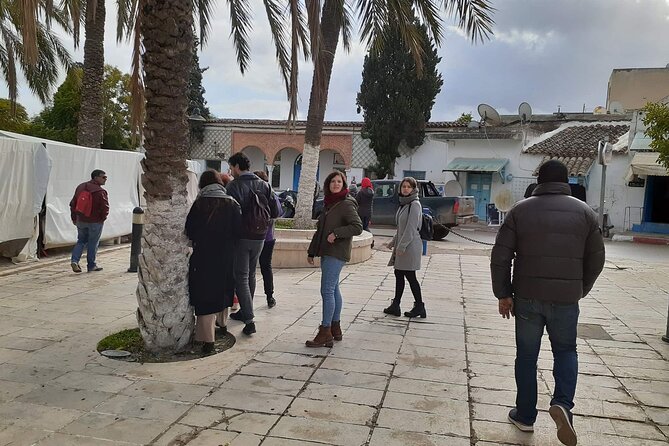
The listed price covers a private group of up to six people. Included are an air-conditioned vehicle, private transport, parking fees, bottled water, and a professional guide.
Air conditioning is not a minor detail on an inland ruins day. You will spend much of the tour outside, so returning to a cooled vehicle between sites can make the long route more comfortable. Parking costs are also handled, which removes one small uncertainty during the day.
The value depends on group size. Six people receive a strong per-person rate. A couple pays much more per person, but gains a private experience rather than a shared excursion. For a family or group of friends interested in archaeology, the arrangement can be practical and good value.
You need to add entrance fees, personal expenses, and lunch. The tour data lists archaeological admission at €3 per person. Since the Water Temple, Thuburbo Majus, and Dougga each identify admission as excluded, confirm the exact total before departure rather than assuming the listed amount covers every site.
The tour normally begins at 8:00 a.m. and lasts roughly seven to eight hours. Pickup is offered, but the information does not specify every pickup location, so confirm that detail if you are staying outside central Hammamet.
Who will enjoy this ancient-sites circuit
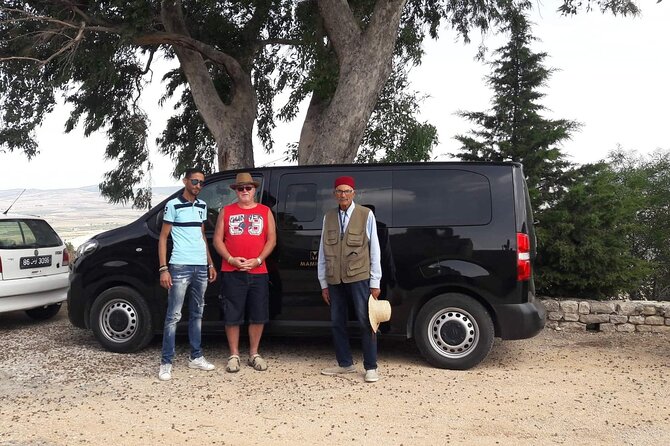
I would choose this excursion if you want a full day focused on archaeology rather than a relaxed coastal outing. It suits anyone interested in Roman cities, Carthaginian connections, aqueducts, temples, baths, markets, and the way ancient towns were laid out.
It is also a good match for a group that values privacy. Families, couples traveling with friends, and small groups of up to six can share the guide and vehicle without adjusting to strangers.
You should think twice if you dislike long drives, exposed ruins, or uneven walking surfaces. The schedule is full, and Dougga alone is broad enough to demand energy. This is not a casual sightseeing loop with short stops and plenty of free time.
The tour may also be less suitable if your main interest is modern Tunisia, food, shopping, or beach time. The route offers a strong historical focus, but lunch and personal activities are not built into the price or described in detail.
Practical advice for a smoother day
Start early and keep the schedule in mind. The 8:00 a.m. departure allows time for four stops, but the day has little room for delays if you want the full three hours at both Thuburbo Majus and Dougga.
Wear shoes suitable for archaeological ground. The tour specifically asks for moderate physical fitness, and the large Dougga site means more walking than the stop durations alone suggest.
Carry money for entrance fees and lunch. One bottle of water per passenger is included, but you may prefer additional drinks for a long day outdoors.
Use the drive as part of the lesson. The route from Zaghouan to the aqueduct and then to Thuburbo Majus is not just transport between attractions. It shows how the water system connected sacred places, cities, and Carthage.
Finally, keep your expectations realistic. The sites are ancient, extensive, and sometimes difficult to read without context. Their appeal comes from scale, surviving structures, and the chance to walk through former cities, not from polished displays or modern visitor facilities.
Should you book this tour?
I would book it if you want to see Tunisia’s major inland Roman remains in one private day from Hammamet. The strongest reasons are the clear water-engineering theme, the generous time at Thuburbo Majus and Dougga, and the private group format.
I would skip it if you want an easygoing day or if your group is unwilling to walk in open archaeological sites. For everyone else, especially a group of four to six people, the $323.45 price can be sensible once shared among the party. Confirm the pickup point, guide language, lunch plan, and exact admission total before paying.
Free cancellation is available up to 24 hours before the start time. Changes or cancellations made within 24 hours are not accepted for a refund.
FAQ
How long does the tour last?
The tour lasts approximately seven to eight hours.
What time does the tour begin?
The listed start time is 8:00 a.m.
Is pickup available from Hammamet?
Pickup is offered, but the exact meeting and pickup details should be confirmed before the tour.
How many people can join the private tour?
The private vehicle and activity are for your group only, with a maximum of six people.
Are archaeological entrance fees included?
No. Entrance fees are not included. The stated cost is €3 per person for archaeological sites.
Is lunch included?
No. Lunch is not included in the tour price.
What is included in the tour price?
The price includes an air-conditioned vehicle, private transportation, parking fees, one bottle of water per passenger, and a professional guide.
Just added in Hammamet
- Transfer from Airport Tunis Carthage To Hammamet★ 5.0 · 2 reviews
- From Hammamet: Sahara Desert Overnight Camping★ 4.5 · 2 reviews
- Private Transfer from Tunis Carthage Airport to Hammamet★ 5.0 · 2 reviews
- Executive: Transfer Tunis Airport to Hammamet by Mercedes E Class★ 5.0 · 4 reviews
- Private Excursion of Friguia Park and Medina of Hammamet★ 4.5 · 4 reviews
- Day Trip to Cap Bon★ 5.0 · 2 reviews
- Zaghouan, Thuburbo Majus and Dougga Private Self-Guided Excursion from Hammamet★ 5.0 · 2 reviews
- Tunis, Carthage and Sidi Bou Said Self-Guided Excursion from Hammamet★ 4.5 · 4 reviews
Dougga and Bulla Regia, compared.
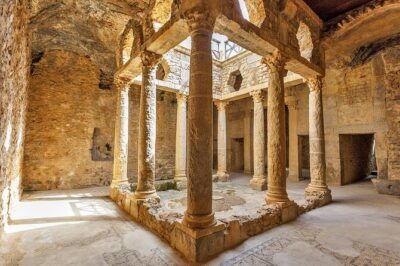
Private Excursion to Testour, Dougga and Bulla Regia from Tunis.
Read our review →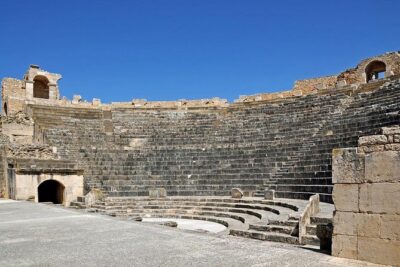
Full Day Dougga & Bulla Regia Via Testour Private tour with Lunch
Read our review →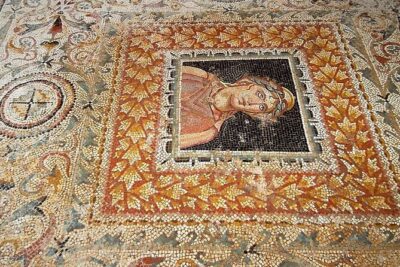
Private Day Trip to Testour, Dougga and Bulla Regia from Hammamet
Read our review →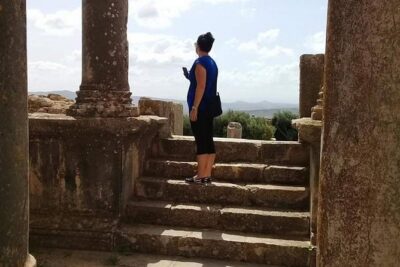
Private Guided Tour of Dougga and Testour Mosque
Read our review →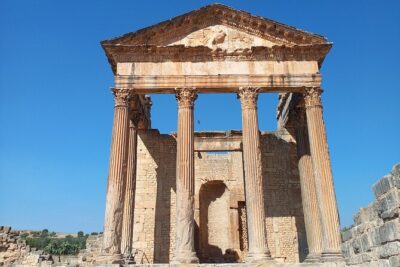
Bulla Regia and Beni Mtir Cascade Daytrip from Tunis
Read our review →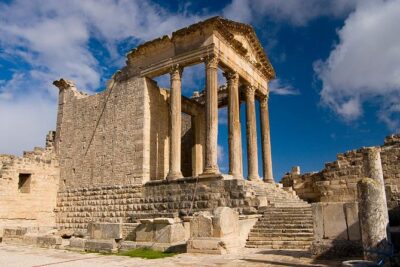
Browse the lists this tour appears in