
Reviewed · KAIROUAN
Kairouan, El Djem and Monastir Guided Excursion from Hammamet
Ancient Tunisia fits into one long day. This private excursion links Kairouan’s Islamic landmarks with El Djem’s vast Roman amphitheater and Monastir’s modern history, giving you three very different views of the country. I like the air-conditioned private transport and the chance to shape the day around your own group, and the guides receive especially strong praise for clear explanations, punctual pickup, and language skills. The main drawback is the schedule: ten hours on the road and six stops can feel full, particularly if you prefer slow meals and long walks.
At $292.47 for up to two people, this is not the cheapest way to see central Tunisia, but the price makes more sense when you split it between two people and value a private vehicle, guide, bottled water, and hotel pickup. Museum and monument entry fees are extra, and lunch is not included, so you will want to plan for those costs before setting off.
In This Review
- Key points at a glance
- Why this makes a useful day from Hammamet
- Aghlabite Basins: Kairouan’s early water system
- Sidi Sahbi Mosque and the Barber’s mausoleum
- Kairouan medina: narrow streets and religious tradition
- El Djem amphitheater: Rome in North Africa
- El Djem Archaeological Museum: mosaics in a Roman villa
- Monastir: Bourguiba, the ribat, and the marina
- Transport, timing, and the private format
- What the guide adds to the day
- What to budget before you leave
- Who should book this excursion?
- Should you book it?
- FAQ
- How long does the excursion last?
- Where does the tour start?
- Is this a private tour?
- What is included in the price?
- Is lunch included?
- Are entrance fees included?
- Which places are visited?
- Can I cancel for a full refund?
Key points at a glance
- Three eras in one day: Explore Islamic Kairouan, Roman El Djem, and Punic, Roman, and modern Monastir.
- A genuinely private outing: Only your group participates, with room for an individualized pace and questions.
- Kairouan’s waterworks are remarkable: The ninth-century Aghlabite Basins reveal how a major medieval city managed water.
- El Djem is the visual high point: Its Roman amphitheater could hold about 30,000 spectators.
- Guide quality matters here: Mtir is praised for precise information and excellent French, while another guide received praise for Spanish and overseas experience.
- Budget for extras: Lunch and all museum or monument admission charges come separately.
Why this makes a useful day from Hammamet
Hammamet is a pleasant base, but its beach setting does not show you much of Tunisia’s inland past. This outing takes you well beyond the resort zone and gives you a broad look at the country without asking you to arrange several separate trips.
The day connects Kairouan, El Djem, and Monastir in a logical historical sweep. Kairouan represents the Arab-Muslim era, El Djem recalls Roman Africa at its most prosperous, and Monastir brings in Punic and Roman roots alongside the modern republic.
That variety is the chief strength. You are not spending ten hours looking at similar ruins. One stop brings tiled religious architecture, another brings a giant stone arena, and the final section turns toward a national leader, a seaside marina, and a fortress-like ribat.
The private format helps. You travel only with your own party, which can make a long day more comfortable than a large coach excursion. You can ask for clarification, spend a little more time at a favorite stop, or keep moving when your energy drops.
Still, do not mistake private transport for a relaxed pace. The listed visits add up to several hours, and the route covers three separate cities. If your ideal holiday day includes an unhurried lunch, a long coffee, and time to wander without a watch, this may feel too ambitious.
More Kairouan trips:
- Private and Guided Tour to Kairouan and El Jem and Monastir
★ 4.5 · 22 reviews - Kairouan & El Djem Guided Day Trip with Lunch from Hammamet
★ 4.0 · 18 reviews - Kairouan, El Djem, Monastir Self-Guided Excursion from Hammamet
★ 4.5 · 5 reviews
Aghlabite Basins: Kairouan’s early water system
The first Kairouan stop is the Aghlabite Basins, located outside the medina walls. These large ninth-century waterworks date from the beginning of the second half of the ninth century and are regarded as some of the most important hydraulic works in the Muslim world.
You have about 30 minutes here. That is enough for an introduction and photographs, but not a long study of every feature. The value comes from seeing practical city planning rather than another ornate monument. Water management helped support Kairouan as a major religious and urban center, and these basins give you a direct sense of the engineering behind that growth.
Admission is listed as free. Since the stop is outdoors and brief, it also gives you a gentle start before the more detailed religious and archaeological visits later in the day.
Sidi Sahbi Mosque and the Barber’s mausoleum
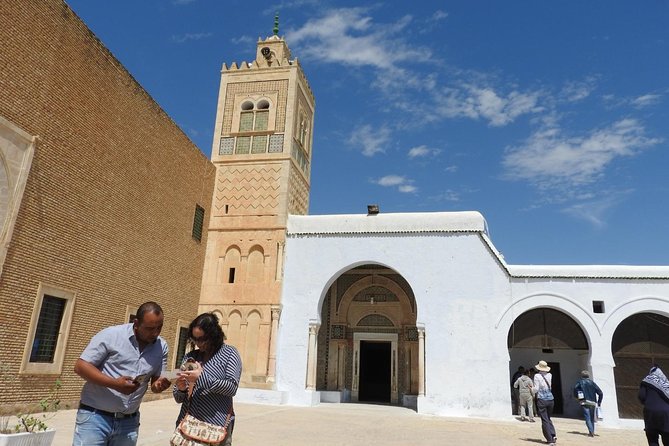
Next comes the Mosque of Sidi Sahbi, also known as the Mosque of the Barber. It lies outside the medina and is linked with the mausoleum of Sidi Sahbi.
The visit lasts about an hour, which allows more time than the basins for the guide to explain the site and for you to take in the decorative details. The name refers to Sidi Sahbi, traditionally associated with the Prophet Muhammad’s barber. The supplied details do not specify every interior access rule, so listen to your guide about which areas you may enter and how to dress respectfully.
This is one of the places where a good guide makes a real difference. The excursion’s feedback repeatedly praises the quality of the guiding, including Mtir, who was described as precise, cultured, open to discussion, and fluent in French. A Spanish-speaking guide was also praised for professional service and long experience abroad.
Admission is listed as free, but free entry does not remove the need for respectful conduct. Kairouan is one of Islam’s holy cities, so modest clothing and a quiet manner are sensible choices.
Kairouan medina: narrow streets and religious tradition
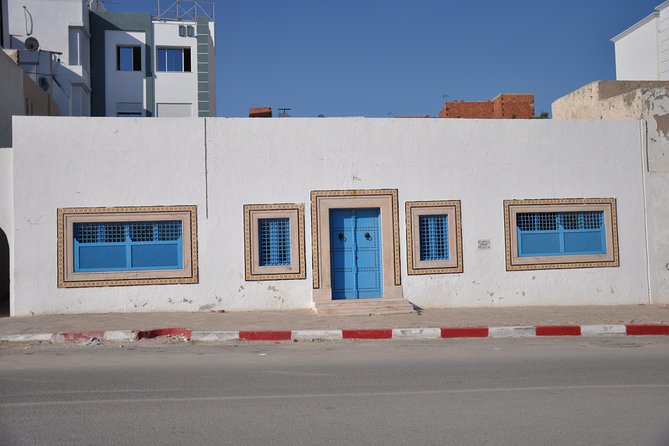
You then spend about an hour in Kairouan’s medina. The old city has been on the UNESCO World Heritage List since December 9, 1988, meeting five of the six stated evaluation criteria.
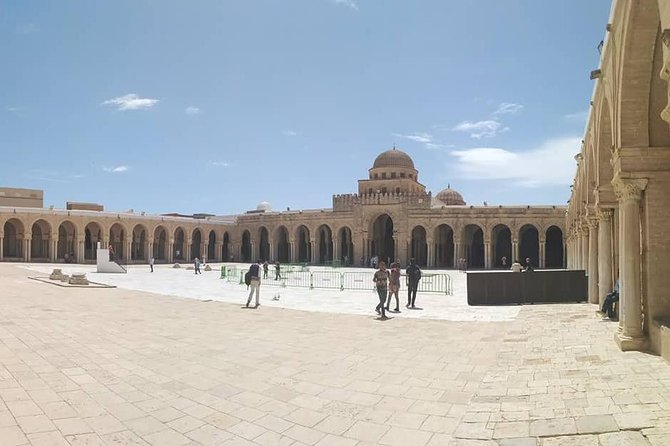
The appeal here is less about checking off a single monument and more about seeing how the city’s religious role, market streets, and built fabric fit together. You visit the Mosque with Three Gates and walk through narrow streets and markets. This is the most human-scale part of the Kairouan section, after the broad water basins and formal religious complex.
An hour is useful but limited. You will get an introduction to the medina rather than a slow exploration of every lane. Keep your attention on the route and follow the guide, since narrow streets and market areas can make it easy to lose sight of your group.
Kairouan is also the stop most likely to reward questions. Ask about the city’s role as Tunisia’s spiritual capital, the meaning of the religious sites, and how the medina differs from the newer parts of town. The guide’s explanations are a major part of the value here, not an optional extra.
More things to do in Hammamet:
- Private tour: Medina,Carthage ,Sidi Bou Said, Bardo Museum+lunch
★ 5.0 · 194 reviews - Quad ride on the hills of Hammamet
★ 4.0 · 104 reviews - 2-Day Tunisian Sahara Tour with Food & Stay from Hammamet
★ 4.5 · 80 reviews - Tour to the Medina of Hammamet and the Spice Market of Nabeul
★ 4.0 · 45 reviews
El Djem amphitheater: Rome in North Africa
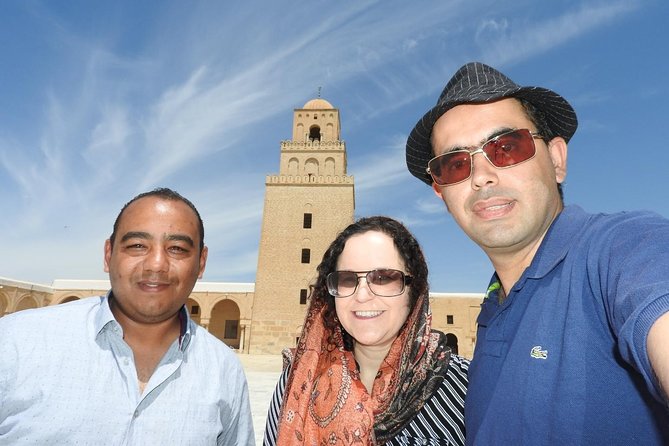
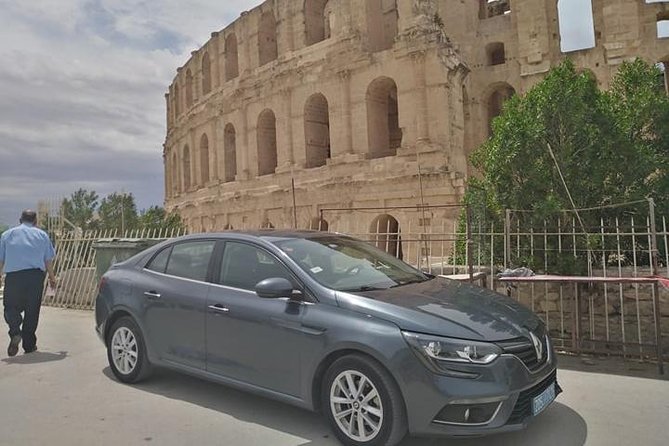
The drive to El Djem changes the mood completely. Here, the star attraction is the Roman amphitheater, built in the third century AD in the ancient city of Thysdrus.
You have about two hours for the amphitheater, the longest single visit of the day. That is sensible. The structure is large enough to need time, and its scale is hard to absorb in a quick half-hour stop.
The arena could hold about 30,000 spectators, making it the third-largest amphitheater in the Roman world after those of Rome and Capua. It was classified as a World Heritage site in 1972 and is described as the most impressive Roman monument in Africa.
Those facts matter because El Djem is not just a smaller copy of Rome’s Colosseum. It reflects the wealth of Thysdrus, one of the most prosperous cities of Roman Africa. Standing inside the arena, you can better understand the reach of Roman public entertainment and the resources needed to build such a monument far from Italy.
The two-hour block gives you room to look at the seating levels, arena, passageways, and massive exterior. The listing does not specify whether every section is open on the day of your visit, so follow local instructions and wear shoes suitable for stone surfaces.
Admission is not included. This is one of the key costs to account for, but it is also the place where the entry fee feels easiest to justify. If you only had time for one major archaeological site on this excursion, El Djem would be the strongest candidate.
El Djem Archaeological Museum: mosaics in a Roman villa
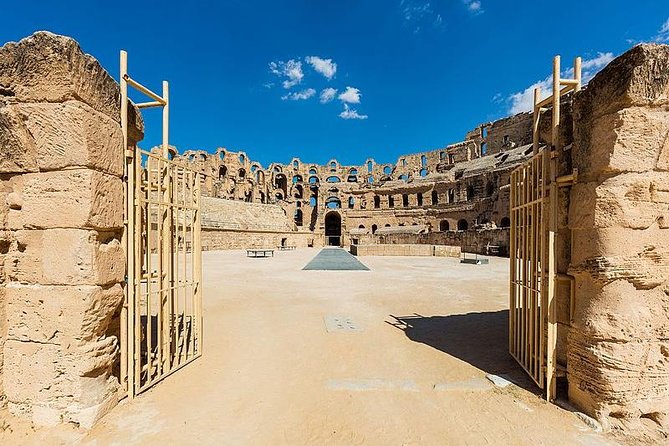
After the amphitheater, you visit the Archaeological Museum of El Djem for about an hour. It is installed in a reconstructed Roman villa, giving you a useful indoor follow-up to the enormous arena.
The museum holds Roman mosaics, statues, terracotta figures, perfume containers, and other glass objects. The collection covers a period from the fifth to the eleventh century according to the supplied details, although that date range is presented in an unusual order. Your guide can provide the clearest explanation of the objects and their dates during the visit.
The museum matters because the amphitheater shows public architecture, while the villa displays details from domestic and artistic life. Mosaics can reveal taste, craft, mythology, daily activity, and status in ways that a giant monument cannot.
You have enough time to see the main displays without turning the visit into an all-day museum session. Admission is extra, as is lunch, so ask the guide about the timing of the meal and keep some flexibility in your budget.
For many people, the museum will be less immediately dramatic than the amphitheater. I would treat it as the stop that adds texture and context. If you enjoy ancient art, you may wish the schedule allowed longer. If you prefer architecture, the two-hour arena visit will probably be your favorite part.
Monastir: Bourguiba, the ribat, and the marina
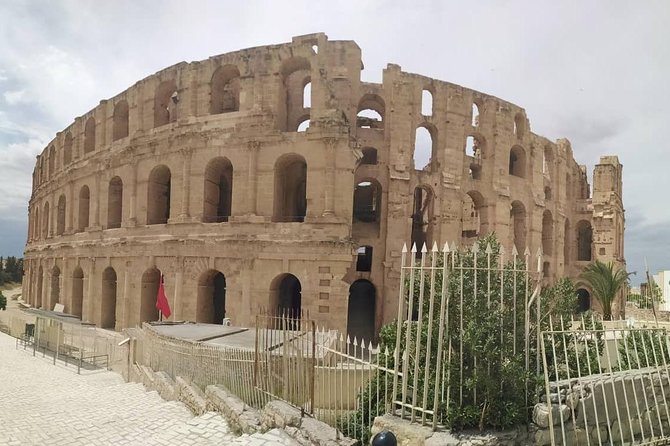
The final city is Monastir, identified in the tour description as the ancient Punic and Roman city of Ruspina. The visit also moves into modern Tunisian history, making it a useful contrast with Kairouan and El Djem.
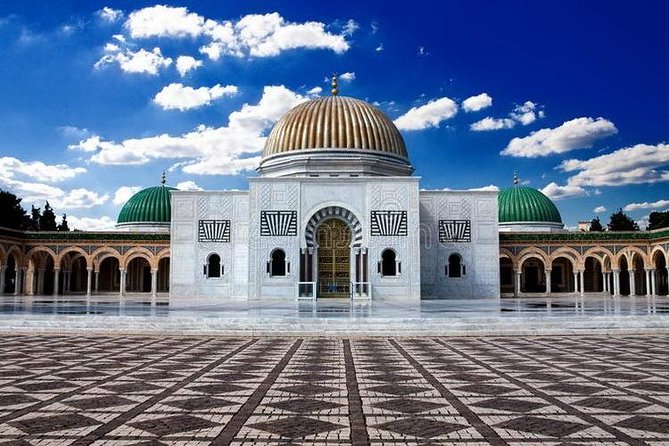
The route passes the birthplace of Habib Bourguiba, the first president of the Tunisian Republic, and includes a visit to his mausoleum. You then have free time to see the ribat and marina.
The one-hour stop is short, so you will need to choose how to use it. The mausoleum gives the visit a modern political focus. The ribat brings you back to fortified religious architecture, while the marina offers an open coastal setting after a day of inland sites and stone monuments.
The description does not provide separate visit times for the mausoleum, ribat, and marina. That means you should ask the guide how the hour will be divided on your date. Admission is not included, and personal expenses are also your responsibility.
Monastir works best as a final change of pace rather than another major archaeological session. You can finish with a look at Tunisia’s twentieth-century identity, then take in the marina before returning to Hammamet.
Transport, timing, and the private format
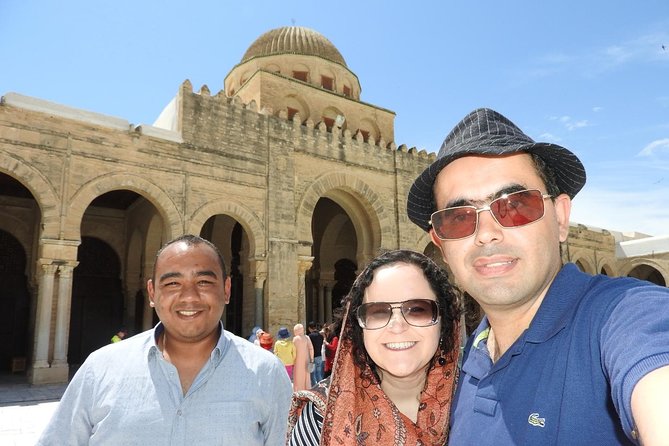
The excursion lasts about ten hours and includes pickup. Transport is private and air-conditioned, with bottled water provided. For a long route through central Tunisia, those details are practical rather than decorative.
A private vehicle is particularly useful when you are traveling as two people. The advertised price is $292.47 per group of up to two, not per person. Split between two, that is about $146.24 each before admissions, food, and personal spending.
That price buys more than a seat in a vehicle. It includes private transportation, a professional guide, all listed taxes and fees, and pickup service. The private arrangement also avoids sharing the day with a large group.
The tradeoff is simple: you pay more for control and personal attention. A solo participant would carry the full group price, making the value weaker. Two people who want a dedicated guide and vehicle get a more reasonable deal.
The timing requires a little stamina. Three cities, several historical sites, and a return journey create a packed day. The positive side is that you see a great deal without changing hotels or organizing separate taxis. The negative side is that each place receives a fixed block of time.
Pickup is offered, and confirmation is received when you book. Service animals are allowed, and most people can participate. The excursion is private, so only your party takes part.
What the guide adds to the day
The sites are strong enough to attract attention on their own, but the guide shapes how much you understand. Kairouan, in particular, benefits from explanation because religious buildings, waterworks, markets, and city walls can otherwise blur into a sequence of attractive sights.
The strongest feedback focuses on service, punctuality, and information. Mtir is praised for precise explanations, excellent French, and a willingness to discuss current issues. Another guide received praise for Spanish-language service and substantial experience abroad.
The driver also matters on a ten-hour day. The service has been praised for hotel pickup at the stated time, professional conduct, and keeping to the planned schedule. That reliability is valuable when you have several admissions and visits to fit into one route.
Language availability is not presented as a fixed menu, so do not assume a specific language unless it is confirmed when you book. French and Spanish have been specifically praised in connection with the guides, but the supplied details do not guarantee one particular guide or language for every departure.
What to budget before you leave
The listed price includes:
- Bottled water
- Air-conditioned vehicle
- Private transportation
- All fees and taxes listed by the operator
- Professional guide
It does not include lunch, museum admission, exhibition charges, or personal expenses. The amphitheater, Archaeological Museum, and Monastir attractions are specifically marked as requiring separate payment.
I would keep extra cash available for entry tickets and food. The exact admission amounts are not provided, so you should ask about current prices before departure if you want a precise total.
The free Kairouan stops help soften the added costs. The paid El Djem visits are also the most substantial archaeological portion of the day, so they are easy to justify for anyone interested in Roman Tunisia.
Who should book this excursion?
I would recommend it to a couple or small private party based in Hammamet who wants a broad first look at Tunisia beyond the coast. It suits people who enjoy history but do not want to spend an entire day in one museum or ruin.
It is also a good fit if you value a guide who can answer questions and adjust the experience to your interests. The individualized format received strong praise, and that matters when one person wants more time at the amphitheater while another prefers the religious sites or marina.
Families may appreciate the private setup and the range of stops. The day offers changing scenery and subjects, although younger children may find the full ten-hour schedule tiring.
I would hesitate if you dislike early starts, long drives, or fixed sightseeing blocks. I would also compare the cost carefully if you are alone, since the price is set for a group of up to two rather than a lower solo fare.
Cancellation is flexible up to 24 hours before the start time for a full refund. Within 24 hours, cancellations and changes are not accepted for a refund.
Should you book it?
Book this if you want maximum historical variety in one private day and you are comfortable paying extra for a guide, vehicle, and convenience. Kairouan gives you Tunisia’s spiritual center, El Djem supplies the day’s biggest visual moment, and Monastir adds modern history and the coast.
Skip it if you want a slow, food-centered day or prefer to explore one city in depth. For two people staying in Hammamet, though, the combination of private transport, strong guide feedback, and three very different destinations makes the price defensible. Ask about language, current admission costs, and the exact Monastir timing before you pay.
FAQ
How long does the excursion last?
The excursion lasts approximately 10 hours.
Where does the tour start?
The excursion is based in Hammamet and offers pickup.
Is this a private tour?
Yes. Only your group participates, and the price covers up to two people.
What is included in the price?
The price includes bottled water, an air-conditioned vehicle, private transportation, all listed fees and taxes, and a professional guide.
Is lunch included?
No. Lunch is not included.
Are entrance fees included?
No. Entrance fees to museums or exhibitions are not included. Admission is also listed separately for the El Djem amphitheater, the Archaeological Museum, and Monastir attractions.
Which places are visited?
The excursion visits the Aghlabite Basins, Mosque of Sidi Sahbi, Kairouan medina, El Djem amphitheater, El Djem Archaeological Museum, and Monastir Marina. It also includes the mausoleum of Habib Bourguiba, with time to visit the ribat and marina.
Can I cancel for a full refund?
Yes, if you cancel at least 24 hours before the experience start time. Cancellations within 24 hours are not refunded, and changes made within that period are not accepted.
Just added in Hammamet
- Transfer from Airport Tunis Carthage To Hammamet★ 5.0 · 2 reviews
- From Hammamet: Sahara Desert Overnight Camping★ 4.5 · 2 reviews
- Private Transfer from Tunis Carthage Airport to Hammamet★ 5.0 · 2 reviews
- Private Guided Tour of Zaghouan, Thuburbo Majus and Dougga from Hammamet★ 5.0 · 1 review
- Executive: Transfer Tunis Airport to Hammamet by Mercedes E Class★ 5.0 · 4 reviews
- Private Excursion of Friguia Park and Medina of Hammamet★ 4.5 · 4 reviews
- Day Trip to Cap Bon★ 5.0 · 2 reviews
- Zaghouan, Thuburbo Majus and Dougga Private Self-Guided Excursion from Hammamet★ 5.0 · 2 reviews
Kairouan, compared.
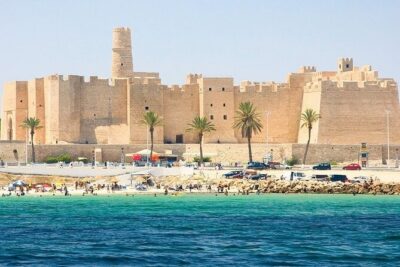
Private Tour to Kairouan, El Jem & Monastir from Tunis_hammamet
Read our review →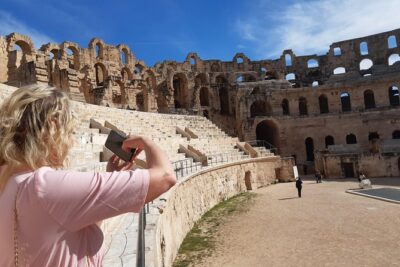
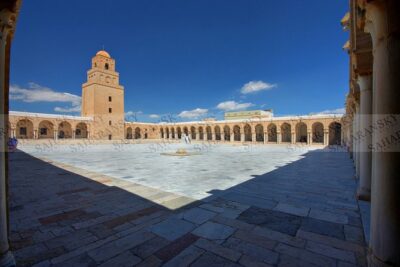
Private and Guided Tour to Kairouan and El Jem and Monastir
Read our review →
Kairouan & El Djem Guided Day Trip with Lunch from Hammamet
Read our review →
Kairouan Holy City and El Jem Colosseum Tour from Sousse
Read our review →
Daytrip 3 Unesco Sites El Jem Kairouan and Sousse Medina
Read our review →Browse the lists this tour appears in