
Reviewed · EL JEM AMPHITHEATRE
Kairouan Holy City and El Jem Colosseum Tour from Sousse
Two great eras meet in one day. This full-day trip links Kairouan, Tunisia’s important Islamic center, with El Jem, home to one of the world’s best-preserved Roman amphitheatres. I like the strong contrast between quiet courtyards, tiled religious buildings, and the huge stone arena at El Jem. I also like that the price includes hotel pickup, entrance fees, a local guide, and buffet lunch. The tradeoff is simple: this is a long, tightly packed day, and you may want more time in Kairouan’s old medina.
The tour costs about $85.96 per person and lasts roughly eight hours, with a 7:00 am start. Guides such as Fares, Faris, and Aida have earned especially warm praise for clear explanations and friendly service. Still, you should know that a carpet shop visit has occurred on at least one outing despite not being part of the planned schedule, so ask your guide about any commercial stop before the day gets moving.
In This Review
- Key points to know before booking
- Why Kairouan and El Jem belong together
- The Great Mosque of Kairouan in two hours
- Sidi Sahbi, the Mosque of the Barber
- The Aghlabid Basins and medieval water planning
- Buffet lunch before El Jem
- Entering El Jem’s Roman amphitheatre
- The El Jem Museum and its mosaics
- How good is the guiding?
- Value at about $85.96
- The main drawbacks to weigh
- Who should book this day trip?
- Should you book it?
- FAQ
- How long does the Kairouan and El Jem tour last?
- Is hotel pickup included?
- What is included in the tour price?
- Are drinks included with lunch?
- Can non-Muslims enter the Great Mosque of Kairouan?
- How large can the tour group be?
- Can I cancel for a full refund?
Key points to know before booking
- Kairouan’s Great Mosque is the day’s spiritual highlight, with a broad courtyard, a powerful minaret, and major importance in North African Islam.
- El Jem gives you real freedom to explore, including time in the amphitheatre and the mosaic museum.
- The itinerary covers a lot of ground, with Kairouan’s main sights followed by lunch and a substantial visit to El Jem.
- Fares, Faris, and Aida have received strong praise for their history talks, warmth, and attention to the group.
- Mosque access may depend on religious status and current rules, so non-Muslim visitors should confirm what areas they can enter.
- Lunch, admission tickets, hotel pickup, and drop-off are included, but drinks cost extra.
Why Kairouan and El Jem belong together
This tour works because the two destinations tell very different stories. Kairouan is tied to the spread and practice of Islam in North Africa. El Jem recalls the Roman period, when a massive amphitheatre drew crowds for public spectacles.
You get sacred architecture in the morning and Roman engineering later in the day. That contrast helps you understand Tunisia as more than a beach destination. The country’s past is layered, and this trip gives you two of its clearest chapters without requiring separate day trips.
The schedule begins at 7:00 am, so you should be ready for an early start. Pickup is offered, and hotel pickup and drop-off are included. The maximum group size is 50 people, which means the experience may feel more like a traditional coach excursion than a private visit. That larger format helps keep the cost reasonable, but it can also make loading, listening, and moving between stops slower.
More El Jem trips:
- Fun VIP Tour: El Jem, Kairouan, Monastir/Sousse (PICKUP ALL City)
★ 5.0 · 451 reviews - Private Tour to Kairouan, El Jem & Monastir from Tunis_hammamet
★ 5.0 · 301 reviews - Daytrip to Kairouan and El Jem Colosseum
★ 4.5 · 55 reviews
The Great Mosque of Kairouan in two hours
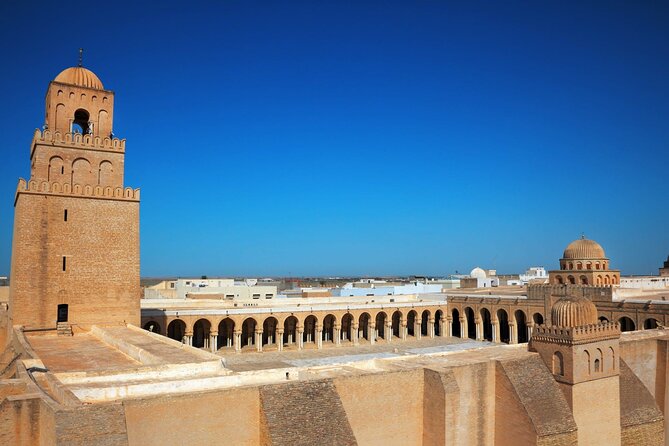
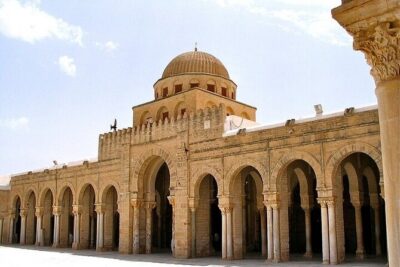
The Great Mosque is the first major stop, with about two hours set aside for the visit. It is one of the oldest and most important Islamic monuments in North Africa, and its design rewards careful attention rather than a quick photograph.
The first thing you notice is the sense of space. The serene courtyard gives the complex a calm, measured feel. The tall minaret adds a strong vertical point, while the surrounding arcades frame the courtyard in repeated stone and shadow.
Your guide should help explain why this mosque matters, not simply point out its largest features. Fares and Faris have been praised for making the history of Kairouan and Tunisia easy to follow, and for inviting questions. That matters here because the Great Mosque can seem austere at first glance. With context, its proportions, age, and role become much easier to appreciate.
There is one important practical point about entry. Access inside the mosque may not be the same for everyone. A Muslim participant was able to enter and make a short prayer, while a non-Muslim visitor reported being kept from entering the mosque. Rules can also depend on the area being visited and the conditions on the day, so you should not assume full interior access. Even if you remain in permitted viewing areas, the exterior and courtyard still offer a strong sense of the building’s scale.
Plan to dress and behave respectfully at this religious site. The tour is about cultural understanding as much as sightseeing, and the guide’s explanation can help you read the place properly.
Sidi Sahbi, the Mosque of the Barber
The next stop lasts about one hour and takes you to Mosque Sidi Sahbi, often called the Mosque of the Barber. It is a decorated Tunisian zaouia dedicated to a companion of the Prophet Muhammad and is located just outside Kairouan’s ancient medina.
This site gives you a different architectural experience from the Great Mosque. Instead of relying mainly on open space and monumental scale, Sidi Sahbi is known for ornament, tilework, and carefully finished surfaces. The decoration makes this a good stop for anyone interested in Tunisian design, religious art, or the role of shrines in local culture.
The hour should be enough for a guided explanation and a look at the main areas available to you. It may feel short if you want to study every tile or linger with your camera. That is a recurring feature of this trip: the schedule is generous enough to see the major sights, but not loose enough for long, unplanned wandering.
I would listen closely to the guide here. The building’s significance is not always obvious from its appearance alone, and the story behind the site adds meaning to the decorative details. Aida has received particular praise for making the day feel enjoyable and well organized, while Fares has been credited with explaining both local sites and wider Tunisian customs.
The Aghlabid Basins and medieval water planning
The Aghlabid Basins receive about an hour. These large stone reservoirs were built as part of an Islamic water system that supplied Kairouan. They are a practical reminder that historic cities depend on engineering as much as palaces and mosques.
At first, the basins may appear less dramatic than the Great Mosque or El Jem. Their importance becomes clearer when you consider the problem they solved. Kairouan needed a dependable water supply, and these reservoirs formed part of a large medieval system designed to collect and store water.
This is a good place to ask questions about daily life, city planning, and the Aghlabid period. A strong guide can turn what looks like a simple open space into a lesson about how an inland city functioned.
The one-hour stop should suit most people, though the experience is more about understanding the site than finding a long list of objects to inspect. If you prefer grand interiors and ornate decoration, Sidi Sahbi may appeal more. If you enjoy practical history, the basins can be surprisingly memorable.
More Kairouan trips:
- Kairouan and El Jem Private Day Tour
★ 4.5 · 38 reviews - Private and Guided Tour to Kairouan and El Jem and Monastir
★ 4.5 · 22 reviews - Kairouan & El Djem Guided Day Trip with Lunch from Hammamet
★ 4.0 · 18 reviews - Kairouan day trip from Sousse.
★ 4.5 · 16 reviews
Buffet lunch before El Jem
A buffet lunch is included, and the meal is served at a hotel outside El Jem. One particularly positive account described the food as varied and the setting as pleasant. This is useful because lunch is not an afterthought you must arrange yourself during an already busy day.
Drinks are not included, so bring money for anything you want with the meal. The buffet format also helps a large group eat within a reasonable time, although it does mean the lunch is designed for efficiency rather than a long, leisurely Tunisian meal.
After the morning’s religious and architectural visits, lunch gives you a needed pause before the main Roman site. You should still expect a full day. The early pickup, road time, guided visits, and large amphitheatre stop can leave you tired by the return journey.
Entering El Jem’s Roman amphitheatre
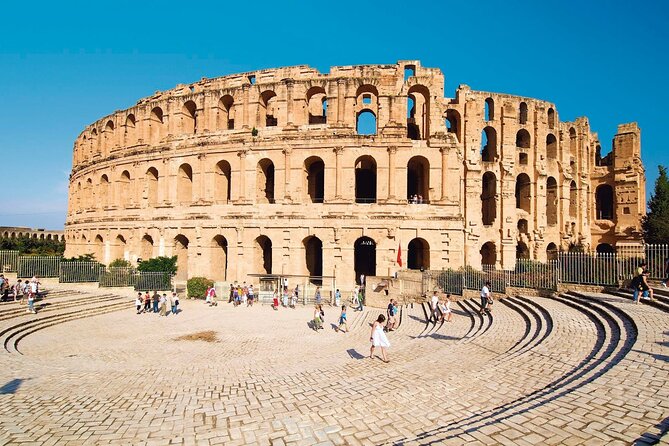
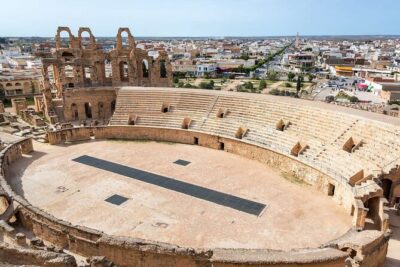
The El Jem Amphitheatre is allocated about four hours, making it the longest stop of the day. That is good planning. This is not a site you should rush through.
The arena once held as many as 35,000 spectators. Its size is the first shock. From the seating areas, you can look down toward the arena floor and picture the scale of the public events that once took place there. The stone corridors and passageways help you see how the building operated, not just how it looked from outside.
You can walk through parts of the structure and inspect the surviving arches, passageways, and seating levels. The open areas give you room to take in the building at your own pace. Several accounts praised the spare time here, especially the chance to explore the amphitheatre without being guided every minute.
That free time is valuable. Listen to the guide first, then use the remaining period to revisit the sections that interest you. If you enjoy archaeology, photography, ancient construction, or simply imposing spaces, El Jem is likely to be the day’s high point.
The site is also a reminder that Roman Tunisia was not a minor outpost. A building capable of holding such a large audience required money, labor, planning, and a strong public culture. Your guide can connect the arena to the wider story of Roman North Africa, which makes the visit more meaningful than a walk around old stones.
The El Jem Museum and its mosaics
Admission includes the El Jem Museum as well as the amphitheatre. This is an important part of the visit, not a spare extra.
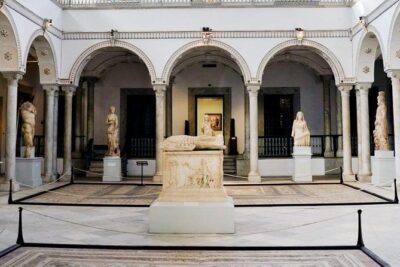
The museum is known for its mosaics, and the collection adds detail to the grand scale of the arena. At the amphitheatre, you see public architecture. In the museum, you get closer to the art and domestic life of the Roman period.
You receive some time to explore the museum independently. Use it to look closely at the patterns, colors, and scenes rather than rushing through to the arena. The combination works well: the amphitheatre shows how people gathered, while the museum gives a better sense of the objects and artistic tastes connected with Roman Tunisia.
Four hours for El Jem allows you to visit both places properly. It also gives you some breathing room after the more guided morning in Kairouan. If you are the sort of person who likes to read every display, you may still need to manage your time carefully.
How good is the guiding?
The guide can make or break a history-heavy day, and this tour has received strong praise in that area. Fares and Faris are described as friendly, well informed, and willing to answer questions. Aida has also been credited with making the itinerary enjoyable and giving the group useful free time.
The best guides on this route do more than recite dates. They explain how Kairouan fits into Tunisian religious life, why water mattered to the city, and how El Jem’s arena functioned. They also add background about Tunisia as a whole, which helps link the separate stops.
Your experience may depend on the guide assigned that day. The positive pattern is clear, but you should still speak up if you want more detail or need a point repeated. In a group of up to 50 people, a guide cannot build the entire day around individual interests.
A bus driver named Naser was also praised for taking good care of the group, though the name was not stated with complete certainty. Pickup was reported as on time on one outing, but you should still be ready at the stated 7:00 am start.
Value at about $85.96
At roughly $85.96 per person, this is not the cheapest possible way to see Kairouan and El Jem. It is a fair package if you value convenience and explanation.
The price covers hotel pickup and drop-off, transport for the full day, a local guide, admission to the Great Mosque area and other Kairouan sights, entry to El Jem Amphitheatre, entry to the museum, and buffet lunch. Paying separately for each part would take more planning, and you would lose the benefit of having one guide connect the sites.
The value is strongest for first-time visitors to Tunisia who want a broad introduction in one day. It is less appealing if you dislike group transport, prefer slow museum visits, or want to spend hours walking Kairouan’s medina.
A large group can keep the cost down, but it may also mean waiting for others. One useful way to judge the price is to ask what you want from the day: if you want a smooth overview with the main costs handled, it works well. If you want a private archaeological study tour, you should consider a smaller arrangement instead.
The main drawbacks to weigh
The biggest issue is the pace. One eight-hour day includes multiple Kairouan stops, lunch, and an extended visit to El Jem. You will see a lot, but you will not have unlimited time at any one place.
Kairouan’s medina receives less walking time than some people may want. The schedule focuses on the Great Mosque, Sidi Sahbi, and the Aghlabid Basins, so those who enjoy wandering narrow streets and browsing local shops may feel slightly rushed.
A carpet shop visit has also been reported during the day, even though it is not part of the stated plan. If that happens, ask how long it will take and remember that you are not required to buy anything.
Finally, mosque access needs clear expectations. Non-Muslim access may be limited, and the rules should be treated with respect. Ask your guide at the beginning so you understand exactly what you can see.
Who should book this day trip?
I would recommend this tour to you if you want Tunisia’s major historical sights explained in plain language, without arranging several transfers yourself. It suits people interested in religion, archaeology, architecture, ancient engineering, and Roman history.
It also works for families and mixed-interest groups. The Great Mosque and Sidi Sahbi offer visual detail, the basins provide a practical history lesson, lunch breaks up the day, and El Jem delivers the big dramatic finish.
You may want another option if your priority is shopping or a slow medina walk. The trip is also less suitable if you need a relaxed schedule with few stops. Eight hours is an approximate duration, and the day can feel longer because of the early start and amount of ground covered.
Free cancellation is available until 24 hours before the start time. If the minimum number is not reached and the operator cancels, you are offered another date or experience, or a full refund.
Should you book it?
Book it if you want maximum historical coverage in one organized day. The pairing of Kairouan and El Jem is excellent, the guide feedback is unusually strong, and the included lunch and admission fees add real value to the $85.96 price.
Go in with realistic expectations. You may have limited time in Kairouan’s medina, access inside the mosque may vary, and a commercial stop may appear. If those points do not bother you, this is one of the more efficient ways to connect Tunisia’s Islamic and Roman past in a single outing.
FAQ
How long does the Kairouan and El Jem tour last?
The tour lasts approximately eight hours, although the exact return time is not specified. It begins at 7:00 am.
Is hotel pickup included?
Yes. Hotel pickup and drop-off are included, and pickup is offered for the experience.
What is included in the tour price?
The price includes a local guide, hotel pickup and drop-off, entrance fees for the Kairouan sites, admission to El Jem Amphitheatre and Museum, and buffet lunch.
Are drinks included with lunch?
No. Drinks are not included, so you should budget separately for them.
Can non-Muslims enter the Great Mosque of Kairouan?
Access may be restricted. A reported experience indicates that non-Muslims were not allowed into the mosque, while a Muslim participant was able to enter and pray. Ask the guide about the current access rules on the day.
How large can the tour group be?
The maximum group size is 50 people.
Can I cancel for a full refund?
Yes, you can cancel for a full refund if you do so at least 24 hours before the experience start time. Cancellations or changes made less than 24 hours before the start are not accepted for a refund.
Just added in Tunisia
- Night excursion to the desert and Berber village from Djerba★ 5.0 · 4 reviews
- Tour of the island of Djerba the island of Lotophages★ 4.0 · 3 reviews
- Horseback Riding in Djerba Lagoon★ 5.0 · 2 reviews
- Private Arrival Transfer: Tunis Airport to Tunis Hotel★ 4.5 · 5 reviews
- From Djerba : 1 day in the footsteps of Star Wars “Mos Eisley”★ 5.0 · 3 reviews
- Great ride forest and blue lagoon in quad★ 5.0 · 4 reviews
- Cap Bon Guided Day Tour from Tunis★ 5.0 · 2 reviews
- PRIVATE 2 day SAFARI (Ksar Ghilane and Atlas Mountains) from Jerba★ 4.5 · 3 reviews
El Jem Amphitheatre, compared.
Private Tour to Kairouan, El Jem & Monastir from Tunis_hammamet
Read our review →
Half-day excursion from Sousse to the amphitheater of El Jem
Read our review →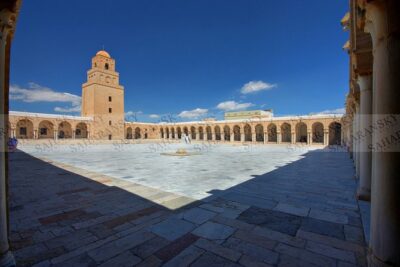
Private and Guided Tour to Kairouan and El Jem and Monastir
Read our review →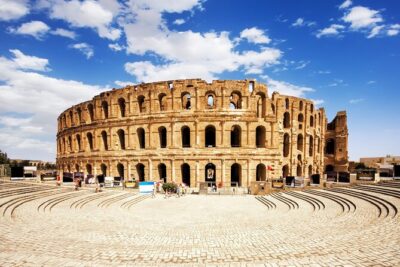
Private Half Day Tour to Roman Coliseum EL JEM from Monastir
Read our review →
Daytrip 3 Unesco Sites El Jem Kairouan and Sousse Medina
Read our review →Browse the lists this tour appears in