
Reviewed · KAIROUAN
Kairouan day trip from Sousse.
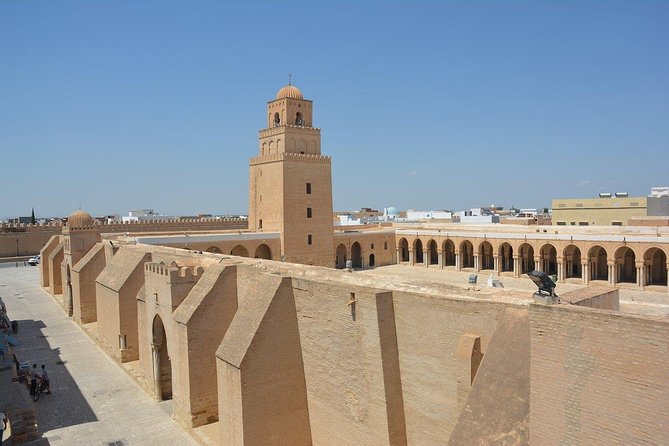
Step into Tunisia’s spiritual past. This half-day trip from Sousse gives you a useful introduction to Kairouan’s major landmarks, from the Great Mosque to the old medina. I like the small group size, limited to four people, and I like that the route includes both famous sights and easy-to-miss places such as Bir Barouta and the former governor’s house.
The main drawback is the short schedule. Four to five hours is enough for an overview, but some stops receive only 30 minutes. Entrance fees are also not included, and the tour depends on decent weather. If your guide is having an off day, the quality of the history and explanations may not be as strong as you expect.
In This Review
- Key points before you book
- Why Kairouan makes a good break from Sousse
- A small group ride from Sousse
- The Great Mosque of Kairouan in 30 minutes
- The Barber’s Mosque and Sidi Sahbi Mausoleum
- The Aghlabid pools and Kairouan’s water problem
- Entering the authentic Medina
- Bir Barouta, an old well with a sacred story
- The former governor’s house and carpet tradition
- What the $75.49 price includes
- The guide can make or break the day
- Who should book this Kairouan trip?
- Should you book it?
- FAQ
- Where does the Kairouan trip begin?
- How long does the experience last?
- How many people can join the tour?
- Is transportation included?
- Is lunch included?
- Are monument entrance fees included?
- Which major sites are visited?
- Is Bir Barouta included?
- Can service animals join the tour?
- Can I cancel for a full refund?
Key points before you book
- Kairouan’s Great Mosque is the centerpiece: You get time to see one of the oldest Islamic religious buildings in the Muslim West.
- The group has a maximum of four people: This allows for a more personal trip than a large coach excursion.
- Nadmi receives strong praise for guiding: He is described as careful, flexible, clear, and especially helpful with guests who have limited mobility.
- The medina includes more than shops: You can see Bir Barouta, the small Mosque of the Three Doors, local pastries, and the former governor’s house.
- The listed price is $75.49 per person: Air-conditioned transport and taxes are included, but monument access and lunch cost extra.
- The schedule begins at 9:00 a.m.: Pickup from your accommodation in Sousse is offered, with the full outing lasting about four to five hours.
Why Kairouan makes a good break from Sousse
Sousse is easy to enjoy, but Kairouan offers a different side of Tunisia. The pace is quieter, and the focus is on religious buildings, old waterworks, narrow streets, and local customs. You are not simply being driven to one famous monument, photographed, and returned to the coast.
Kairouan is ranked as the fourth most sacred city in the Islamic world. That status gives the visit a special weight, even if you are not traveling for religious reasons. The city was founded in 670 during the first campaign to annex Ifriqiya to the expanding Muslim Empire.
The name Kairouan comes from the Arabic al qayrawân, meaning a military encampment or cantonment. General Okba Ibn Nafaa chose the site for his troops and quickly established a government center and a simple mud-brick place of prayer. Over time, that early settlement grew into a major religious and cultural center.
You will not absorb all of that in half a day, of course. The value of a guide is that the stones, domes, wells, and courtyards begin to make sense as parts of one story.
More Kairouan trips:
- Fun VIP Tour: El Jem, Kairouan, Monastir/Sousse (PICKUP ALL City)
★ 5.0 · 451 reviews - Authentic half-day in Kairouan
★ 5.0 · 4 reviews - Kairouan and Roman Colosseum El Jem Day Trip from Sousse
★ 4.5 · 4 reviews
A small group ride from Sousse
The tour begins at 9:00 a.m. with pickup from your accommodation in Sousse. Transport is provided in an air-conditioned vehicle, and the group can include no more than four people. That limit matters. You avoid the long waits and fixed rhythm that come with a large bus.
A small vehicle also makes it easier to adjust the pace. Nadmi is praised for being attentive and flexible, including when one guest’s mother had a knee injury and could not walk far. That does not turn the tour into a fully accessible excursion, but it suggests that you should explain any mobility concerns before setting off.
The trip is sold as lasting four to five hours. That is best understood as a compact introduction rather than an all-day historical study. You will see the main sights, but you should not expect long visits at every monument.
The drive itself can add useful context. Nadmi has been praised for explaining aspects of Tunisia’s economy and agriculture on the way to Kairouan. That is a good use of travel time because it connects the city to the wider country instead of treating it as an isolated old town.
The Great Mosque of Kairouan in 30 minutes
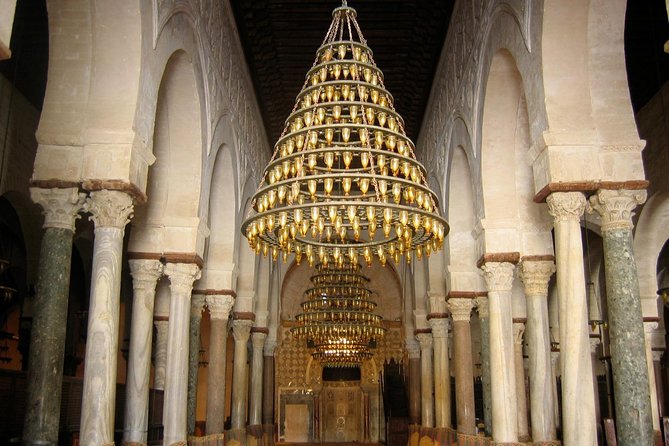
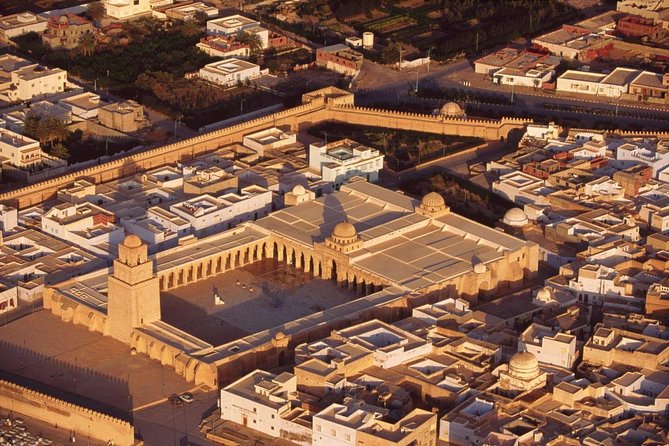
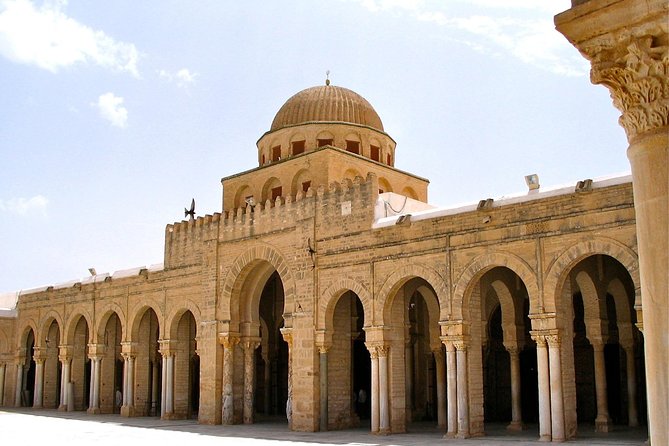
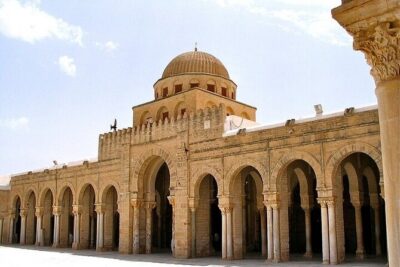
The Great Mosque is the central reason many people make the trip. It is described as the oldest Islamic religious building erected in the Muslim West, with its beginnings linked to Kairouan’s foundation in 670.
The first structure was a basic oratory built from mud bricks. Several rebuilding campaigns followed, and by the ninth century the mosque had taken on much of the form associated with it today. Even a short visit lets you appreciate its long development from military settlement to major religious center.
Your guide can help you look beyond the general impression of walls and arches. The important question is not only how old the building is, but why it was built here and how it helped make Kairouan a center of faith and government.
The allotted 30 minutes is brief. Admission is not included, so you should have the additional monument fee ready. The total access cost for the monuments is listed as 12 Tunisian dinars, about 3 euros.
If the Great Mosque is your main reason for booking, confirm how much time you will spend inside. The itinerary gives you a useful visit, but not a slow architectural study.
The Barber’s Mosque and Sidi Sahbi Mausoleum
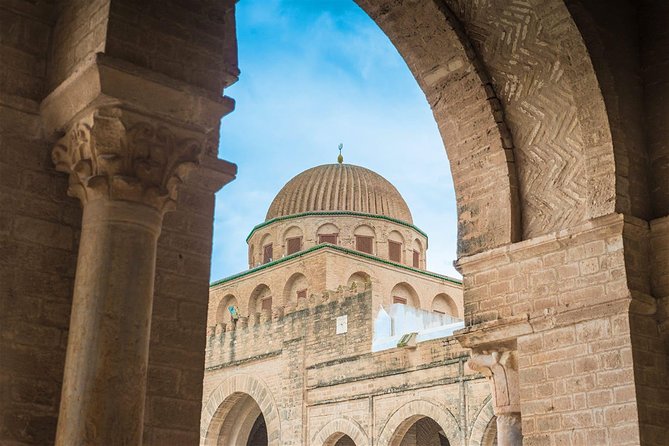
The Sidi Sahbi mausoleum is commonly called the Mosque of the Barber. It is technically a zaouia, a religious complex built around the tomb of Abu Zammat al-Belaoui, who is said to have kept several hairs from the beard of the Prophet Muhammad.
The complex was developed under the Mouradite beys. Hammouda Pasha built the mausoleum, dome, and courtyard, while Mohamed Mourad added the minaret and religious school. That layered construction gives the site more to discuss than its nickname suggests.
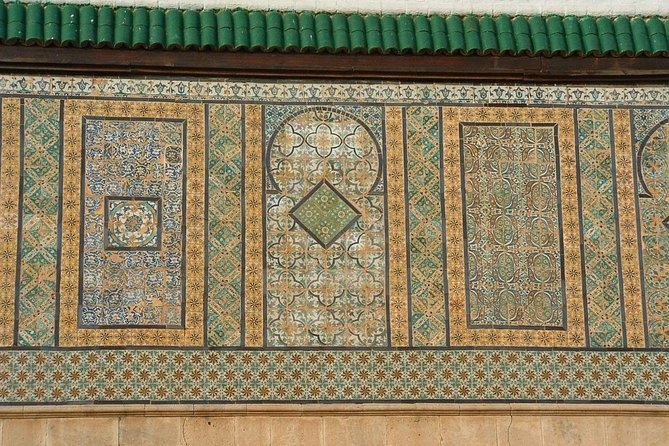
Inside, decorated ceramic tiles and stucco panels provide some of the most detailed ornament on the route. You will find a more intimate setting here than at the Great Mosque, with courtyards and decoration carrying much of the visual interest.
Again, the planned stop is 30 minutes and admission is extra. That is enough for an introduction, especially with a guide who points out the religious and artistic details. It may feel rushed if you want to examine every tile or pause quietly in the courtyard.
This is one place where having a guide can make a real difference. Without context, it is easy to notice only the nickname and the surface decoration. With a clear explanation, the mausoleum becomes a window into Kairouan’s religious traditions and the role of local rulers in shaping the city.
More things to do in Sousse:
- VIP Tour: Tunis Medina/Bardo, Sidi Bou Said, Carthage |PICKUP ALL
★ 5.0 · 512 reviews - Cook and Connect: Tunisian Culinary Adventure with a Local Family
★ 5.0 · 109 reviews - 1 day excursion Tunis Sidi Bousaid Carthage departure from Sousse
★ 5.0 · 87 reviews - Fun VIP Tour: Sousse &/OR Monastir (Walking Tour or Car Option)
★ 5.0 · 69 reviews
The Aghlabid pools and Kairouan’s water problem
The Aghlabid pools are practical monuments rather than grand religious ones. Kairouan was founded in a semi-arid steppe zone with very limited drinking water. From the beginning, supplying the population was a major concern.
A record from 734 to 741 describes an order from the Caliph of Damascus to the governor in Kairouan. Around fifteen reservoirs were to be built near the city to provide drinking water.
The surviving pools show how engineering supported the growth of the settlement. They also help you understand why Kairouan’s location was challenging. A city with military and religious importance still needed a reliable way to store water.
The visit is scheduled for 30 minutes. There may be less visual detail here than at the mosques, but the stop adds practical context. I like that the itinerary does not treat history as only palaces and prayer halls. Water management explains how ordinary life worked.
Entering the authentic Medina
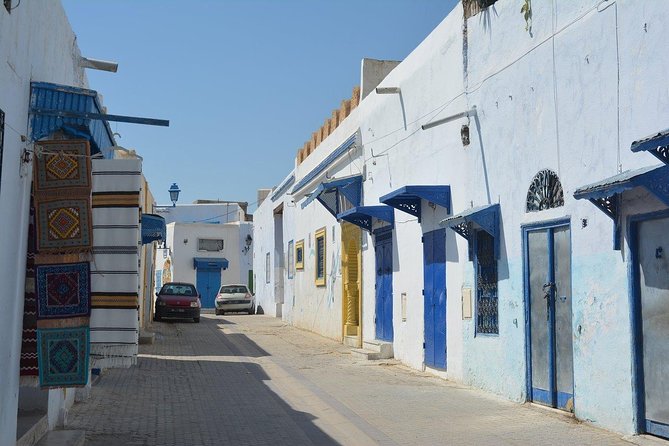
The medina is where the tour becomes less formal. Its lanes are described as among the best preserved and most authentic in Tunisia. You can wander through narrow streets, browse the souk, and look for small buildings that are easy to miss if you rush from one major sight to another.
The medina stop is allotted 30 minutes, although the overall order and pace may vary. That is not much time for getting lost, shopping, sampling pastries, and studying the architecture. You should think of it as a guided taste of the old city, not a long free afternoon.
Kairouan is known for makroudh segni, a local pastry and city specialty. If you enjoy food souvenirs, this is a good place to ask your guide where to find it. The trip information does not include a food tasting, so any purchase comes at your own cost.
The medina also contains the small Mosque of the Three Doors. Its name makes it easy to remember, but the real pleasure is finding details like this along the route. You may also encounter old wells, modest courtyards, and working shops that do not announce themselves as major attractions.
A guide is particularly useful here. The city’s less obvious sights are easy to pass without noticing. One of the strongest compliments given to this tour is that the guide helped identify places that would otherwise remain invisible to someone walking alone.
Bir Barouta, an old well with a sacred story
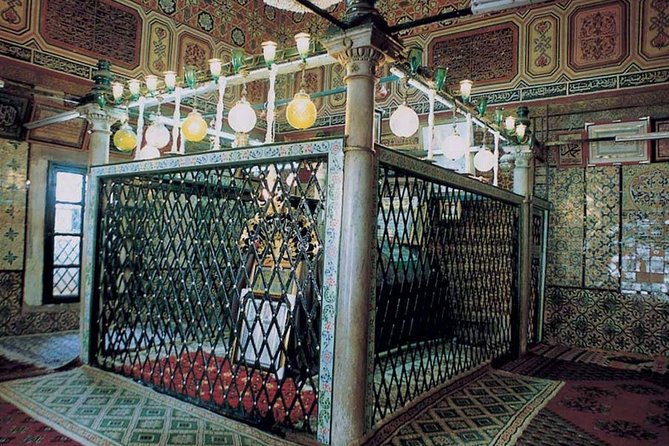
Bir Barouta is one of Kairouan’s oldest wells. The word bir means well, and the name Barouta is linked to a linguistic alteration of Routa, said to have been the name of a companion of the Prophet’s dog.
The well was built around 796 and restored in 1690. It is described as 20 meters deep, 18.5 meters long, and 13.5 meters wide. It sits on the main artery of the medina.
The local belief is that its water is connected underground to Bir Zemzem, the sacred well in Mecca. People come to drink the water because of that association. Whether you approach the story as faith, tradition, or local folklore, it gives the well a place in Kairouan’s spiritual life.
The stop lasts about 15 minutes and admission is free. It is a quick visit, but it adds an unusual detail to the day. Not every memorable site is a towering mosque. Sometimes it is an old well with a story that has lasted for centuries.
The former governor’s house and carpet tradition
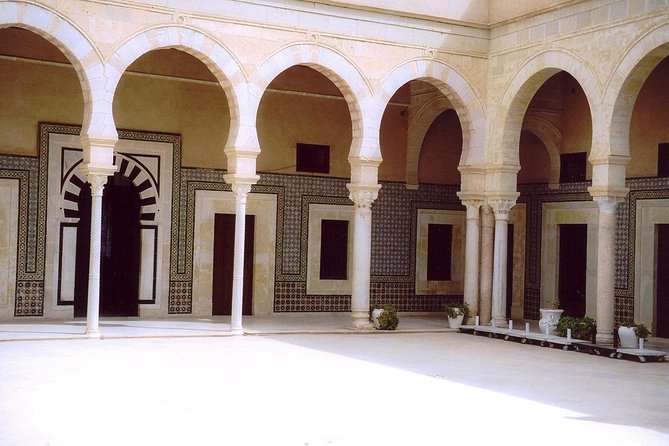
The former governor’s house, associated with the Bey, is one of the most interesting stops for many people who want more than religious architecture. The house has been repurposed as a carpet shop, allowing you to see an old residence while learning about a major local craft.
The building’s changing use is part of its appeal. You are not looking at a frozen ruin. You are seeing how an older house can continue to function in modern Kairouan.
The visit may also involve browsing carpets. That can be enjoyable if you are interested in Tunisian textiles, but you should be comfortable saying no if you do not plan to buy. The information provided does not state that a purchase is required, and the focus should remain on seeing the house and understanding its history.
This is one of the stops where a good guide matters most. Nadmi has been praised for showing the best parts of Kairouan and explaining buildings that require local knowledge to appreciate.
What the $75.49 price includes
The listed price is $75.49 per person. That includes pickup, an air-conditioned vehicle, and all taxes. Lunch is not included, and access to the monuments costs an additional 12 Tunisian dinars, approximately 3 euros.
For a group of up to four, the price can offer fair value if you want private-feeling transport and a guide-led visit rather than arranging several taxis or trying to connect the sights on your own. The value is also stronger if you care about explanations. Kairouan’s important details are spread across several locations, and the guide helps connect them.
The price is less attractive if you only want a quick look at the Great Mosque. You would be paying for a wider route, transport, and guiding, so make use of all the stops. Bring a little extra money for lunch, pastries, carpets, or other personal purchases.
The tour is booked, on average, about 25 days ahead. That is useful planning information. If you are visiting Sousse during a busy period, reserve early rather than assuming a last-minute place will be available.
The guide can make or break the day
The strongest praise is directed at Nadmi, also written as Nadhmi. He is described as reliable, clear in his communication, careful behind the wheel, and willing to shape the outing around the group.
He has contacted guests through WhatsApp to confirm the meeting point and explained arrangements clearly. His driving has also been praised, which matters when you are spending part of a short trip on the road.
One person described the tour as unhurried and full of useful information. Another praised his help with a guest who had a knee injury. Those details suggest a guide who pays attention to people, not just the clock.
Still, the experience is not guaranteed to feel identical every day. One dissatisfied guest found the guide disengaged after a promising start during the drive. I would treat this as a reason to set clear expectations at pickup. Tell the guide which sights matter most to you, ask questions, and mention mobility needs before reaching the medina.
Who should book this Kairouan trip?
I would recommend it to you if you are staying in Sousse and want a compact introduction to Tunisia’s religious and architectural past. It suits people who prefer a small group, air-conditioned transport, and a guide who can explain why lesser-known buildings matter.
It is also a good choice for families or mixed-age groups because the small vehicle allows more flexibility than a large tour bus. The vehicle and guide may be especially helpful if someone in your group cannot walk long distances, though you should not assume every part of the medina will be easy.
You may want a different arrangement if you prefer to explore slowly, spend hours shopping, or devote most of the day to photography. The 30-minute stops keep the route moving, and the 15-minute Bir Barouta visit is very short.
Free cancellation is available if you cancel at least 24 hours before the 9:00 a.m. start time. Changes made within 24 hours are not accepted, and poor weather can lead to a new date or a full refund.
Should you book it?
Book this trip if you want to see Kairouan’s key sights without handling transport and historical research yourself. The Great Mosque, Sidi Sahbi, Aghlabid pools, medina, Bir Barouta, and Bey’s former house create a varied half-day route.
The best reason to choose it is the small group and the chance of having Nadmi as your guide. The main caution is the compressed timing. If you accept that this is an overview, carry a few extra dinars for admission and food, and tell the guide what you most want to see, the $75.49 price is reasonable for a focused outing from Sousse.
FAQ
Where does the Kairouan trip begin?
Pickup is offered from your accommodation in Sousse. The listed start time is 9:00 a.m.
How long does the experience last?
The trip lasts approximately four to five hours.
How many people can join the tour?
The tour has a maximum of four travelers.
Is transportation included?
Yes. The tour includes an air-conditioned vehicle.
Is lunch included?
No. Lunch is not included in the tour price.
Are monument entrance fees included?
No. Access to the monuments is extra. The total access cost is listed as 12 Tunisian dinars, about 3 euros.
Which major sites are visited?
The route includes the Great Mosque of Kairouan, Sidi Sahbi Mosque and Mausoleum, the Aghlabid pools, the medina, Bir Barouta, and the former governor’s house.
Is Bir Barouta included?
Yes. Bir Barouta is included as a stop in the medina, and admission there is free.
Can service animals join the tour?
Yes. Service animals are allowed.
Can I cancel for a full refund?
Yes, if you cancel at least 24 hours before the experience starts. Cancellations made less than 24 hours before the start time are not refunded.
Just added in Sousse
- Authentic Private Tunisian Cooking Experience in Sousse★ 5.0 · 2 reviews
- Transfer from Monastir airport to Hotel in Sousse and Monastir 24/24 7/7.★ 5.0 · 2 reviews
- Zaghouan, Thuburbo Majus and Dougga Private Self-Guided Tour from Sousse★ 5.0 · 1 review
- Private Day Tour to Sousse and Monastir★ 4.5 · 2 reviews
- Authentic half-day in Kairouan★ 5.0 · 4 reviews
- Kairouan and Roman Colosseum El Jem Day Trip from Sousse★ 4.5 · 4 reviews
- 3DAYS 4×4 safari from Sousse/Hammamet/Tunis 100km deep in desert camp★ 4.5 · 3 reviews
- Half Day Excursion to Monastir from Sousse★ 5.0 · 2 reviews
Kairouan, compared.
Private Tour to Kairouan, El Jem & Monastir from Tunis_hammamet
Read our review →
Private and Guided Tour to Kairouan and El Jem and Monastir
Read our review →
Kairouan & El Djem Guided Day Trip with Lunch from Hammamet
Read our review →
Kairouan Holy City and El Jem Colosseum Tour from Sousse
Read our review →
Daytrip 3 Unesco Sites El Jem Kairouan and Sousse Medina
Read our review →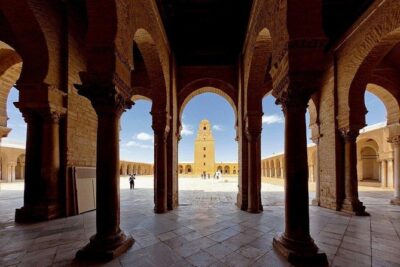
Browse the lists this tour appears in