
Reviewed · DOUGGA AND BULLA REGIA
Full Day Uthina and Dougga Tour with Licensed Guide
Ancient Tunisia rewards curious detours. This private tour pairs Uthina’s giant amphitheater with Dougga’s temples, theater, villas, and Licinian Baths, giving you two very different views of Roman life within one six-hour outing. Pickup is offered, admission is included, and your group travels with a licensed guide rather than following a fixed public schedule.
I like the way the day balances famous Dougga with the less familiar site of Uthina. I also like the private format, since the guide can adapt the pace to your interests. The main drawback is time: three hours at each site is useful, but Dougga is extensive, and you may wish for longer if you enjoy ruins, photography, or detailed explanations.
A past booking praised Carla from the agency and Otman, a guide described as an archaeological encyclopedia. The day was adapted to suit the family, and even an 11-year-old found the well-preserved ruins fascinating. That is a good clue about the tour’s strength: it can work for serious history fans without becoming too heavy for younger visitors.
In This Review
- Key points to know before booking
- Why this pairing works so well from Tunis
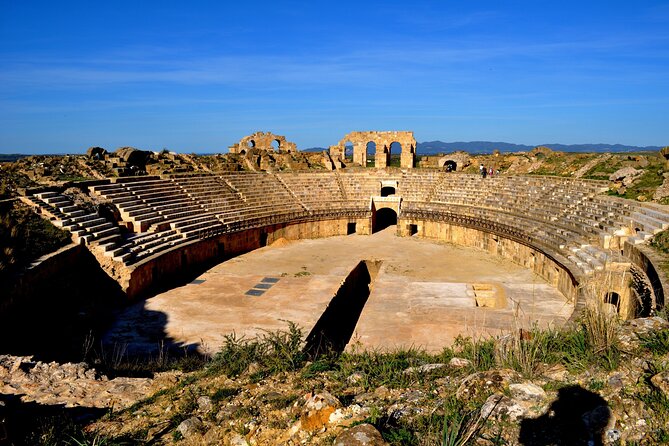
- Uthina’s 16,000-seat amphitheater
- Dougga’s theater and Roman town
- Temples, homes, and the Licinian Baths
- The guide can make or break the ruins
- Six hours is useful, but not truly a full day
- What the private price includes
- Who will enjoy this tour most
- Practical details before you go
- Should you book Uthina and Dougga?
- FAQ
- How much does the Uthina and Dougga tour cost?
- How long does the tour last?
- What time does the tour start?
- Are admission tickets included?
- Is hotel pickup offered?
- Is this a private tour?
- Can I cancel for a full refund?
- What happens if bad weather cancels the tour?
Key points to know before booking
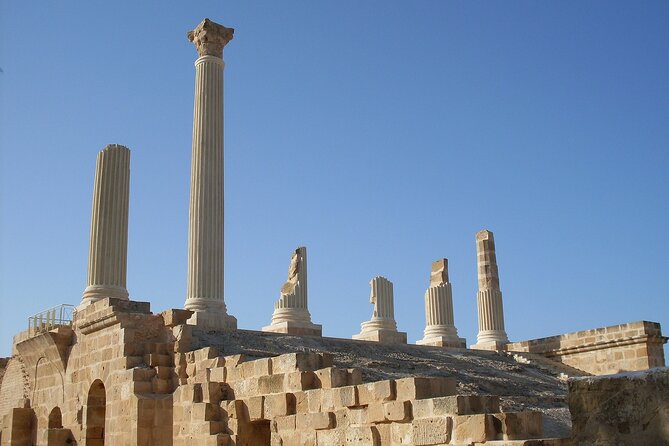
- Uthina’s amphitheater held up to 16,000 spectators, giving you a striking sense of the scale of Roman public entertainment.
- Dougga begins at a 3,500-seat theater, built in 168 AD by Marcus Quadratus, before leading into temples, homes, and baths.
- The private format keeps the day flexible, with only your own group participating.
- Admission tickets are included, so the $150 price covers more than transport alone.
- The tour starts at 8:00 am and lasts about six hours, with roughly three hours at each archaeological site.
- Free cancellation is available up to 24 hours before departure, while poor weather may lead to a new date or a full refund.
Why this pairing works so well from Tunis
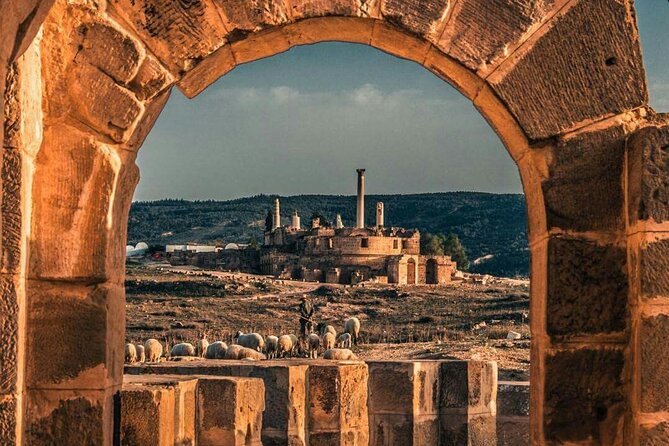
Uthina and Dougga are not interchangeable ruins. Uthina gives you a strong look at Roman entertainment and domestic decoration, while Dougga spreads out as a large town with public buildings, sacred spaces, homes, and baths. Visiting both helps you picture how Roman life worked beyond the capital.
The route also avoids the feeling of spending an entire day at one type of monument. At Uthina, you can focus on the amphitheater and villa mosaics. At Dougga, the focus shifts to urban planning, theaters, temples, and the remains of daily life.
The tour is listed at $150 per person. That is not a low-cost sightseeing trip, but the price has to be weighed against the private vehicle transfer, licensed guide, included admission, and the convenience of visiting two sites outside Tunis in one morning and afternoon. If you would otherwise need to arrange transport, entrance tickets, and a guide separately, the package may be reasonable.
The private setup matters most if your group has mixed interests. A family can ask for shorter explanations and more visual stops. A history-focused group can spend more time on architecture and inscriptions. You are not tied to the questions or pace of strangers.
More Roman sites at Dougga and Bulla Regia:
- Private Excursion to Testour, Dougga and Bulla Regia from Tunis.
★ 5.0 · 100 reviews - Full Day Dougga & Bulla Regia Via Testour Private tour with Lunch
★ 5.0 · 29 reviews - Private Guided Tour of Dougga and Testour Mosque
★ 4.5 · 15 reviews
Uthina’s 16,000-seat amphitheater
The first stop is Uthina, also called Oudhna, about 30 kilometers southwest of Tunis in the valley of Oued Miliane. The area was known in antiquity for fertile soil, and people lived here before the Roman period. The town itself was founded near the end of the first century BC.
The headline sight is the amphitheater. It could hold as many as 16,000 spectators for gladiatorial contests, a scale that makes the site more than a quick photo stop. You can use the structure to imagine how Roman public events were organized, with large crowds gathering far from modern city centers.
A guide is especially useful here because an amphitheater can look like a simple bowl of stone if you do not understand its function. With context, the seating, central arena, and overall size become a picture of Roman social life, entertainment, and power.
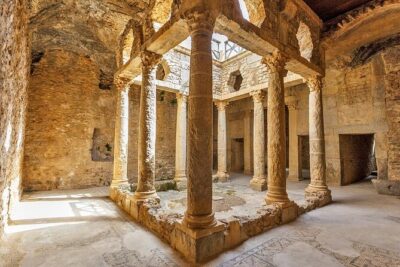
Uthina also includes mosaics uncovered in villas. These details change the mood of the visit. The amphitheater represents mass spectacle, while the villa floors point to private wealth and taste. Together, they show two sides of the settlement: public life on a huge scale and domestic life inside prosperous homes.
You have about three hours at Uthina. That is generous for seeing the principal remains, hearing the site explained, and taking photographs without racing through every stop. Still, the exact amount of time you need will depend on how closely you study the mosaics and ruins.
Dougga’s theater and Roman town
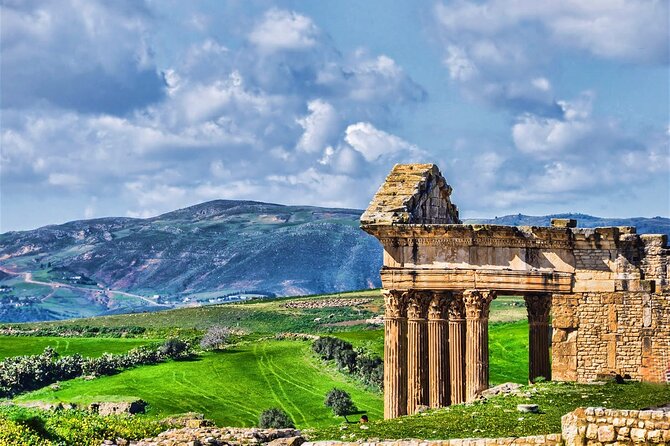
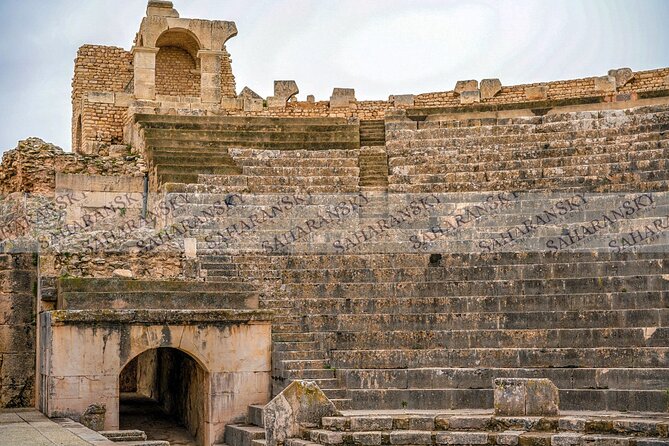
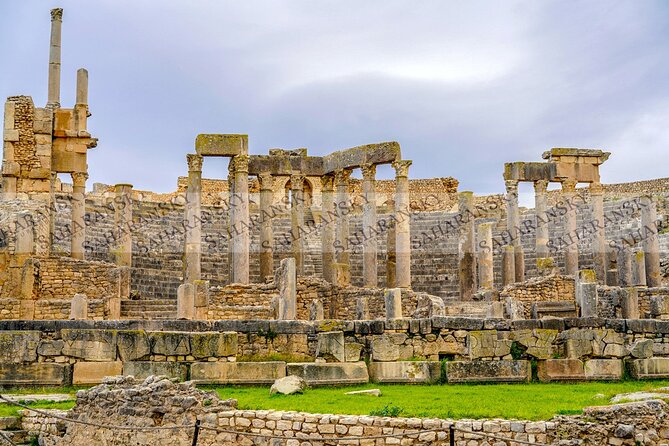
After Uthina, the tour continues to Dougga, often regarded as the finest expression of Roman presence in Tunisia. The visit begins at the ancient theater, which is close to the car park but not diminished by that easy access.
The theater was built in 168 AD by Marcus Quadratus, one of the town’s wealthier residents. It could seat up to 3,500 people, much smaller than Uthina’s amphitheater but still large enough to shape the social life of the town.
This is a fine place to get your bearings. From the theater, the site opens toward the residential quarter, temples, and the extensive Licinian Baths. The route gives you a sense of Dougga as a working town rather than a pile of disconnected monuments.
The difference between the two performance buildings is worth noting. Uthina’s amphitheater was designed for arena spectacles and could hold a vast crowd. Dougga’s theater was more closely tied to staged performances and civic life. Seeing both on the same day makes the contrast easy to grasp.
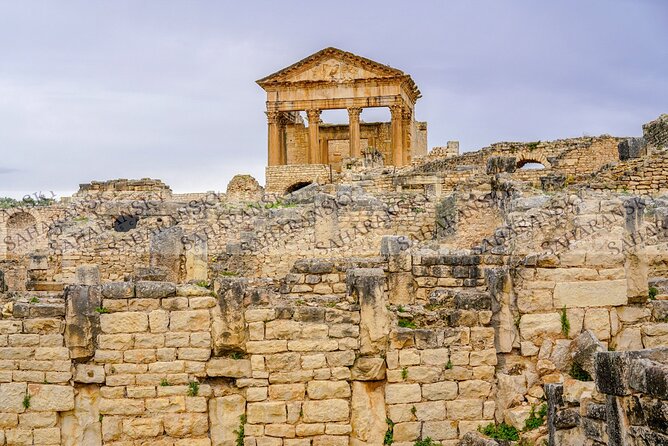
Dougga also rewards patience. There are several good spots for photographing the Capitol from below, and the view helps explain how the monuments relate to each other. You may want to pause before moving on instead of treating the Capitol as a single isolated building.
Temples, homes, and the Licinian Baths
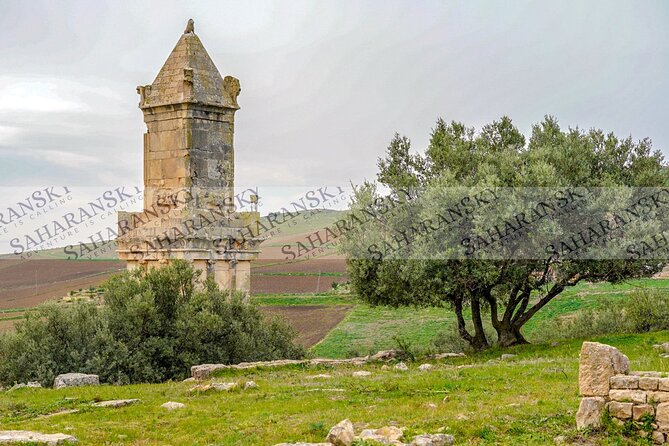
The residential quarter gives Dougga a human scale. Temples are impressive, but villas and homes help you think about the people who lived in the town, used its streets, and paid for its public buildings.
The Licinian Baths form one of the major parts of the site. Bath complexes were not simply places to wash. They were public spaces tied to exercise, conversation, routine, and civic identity. The remains let you consider how much engineering and public investment went into ordinary Roman habits.
You should expect a lot of walking around uneven archaeological ground. The supplied information does not give a detailed accessibility assessment, so anyone with mobility concerns should ask the provider for current conditions before booking. Most people can participate, and service animals are allowed.
The three-hour schedule at Dougga is long enough to see the major areas with a guide. It may feel short if you want to inspect every stone, photograph every angle, or linger over architectural details. If you are choosing between a fast overview and a scholarly visit, this tour sits in the middle.
More things to do in Tunis:
- Private Tour to Kairouan, El Jem & Monastir from Tunis_hammamet
★ 5.0 · 301 reviews - Private tour: Medina,Carthage ,Sidi Bou Said, Bardo Museum+lunch
★ 5.0 · 230 reviews - Carthage, Bardo Museum, Sidi Bou Said and Medina Private Day Tour
★ 4.5 · 153 reviews - Guided Bike Tour of Carthage Archeological Site in Tunisia
★ 5.0 · 88 reviews
The guide can make or break the ruins
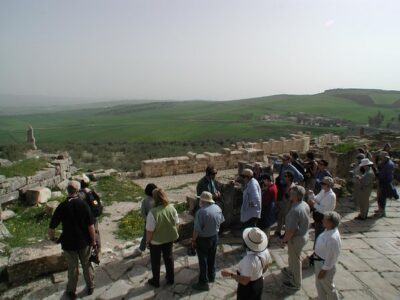
Ancient sites are far easier to enjoy when someone explains what you are seeing. The strongest praise connected with this experience centers on the guide, especially Otman, whose archaeological knowledge made the day informative while still holding a child’s attention.
That combination is important. A guide who only lists dates can lose a family. A guide who gives no context leaves you staring at attractive stones. The ideal visit links the amphitheater to Roman entertainment, the villas to private wealth, the theater to civic life, and the baths to daily routines.
The agency contact Carla was also praised for helping shape the day around the group’s wishes. Since this is a private activity, you have a better chance of asking for that kind of adjustment than you would on a large coach excursion.
Still, you should confirm the guide and pickup details when booking. The available information names Otman in connection with one successful outing, but it does not promise that he will lead every departure.
Six hours is useful, but not truly a full day
The experience is described as a full-day tour, yet the stated duration is approximately six hours. The schedule gives three hours to Uthina and three hours to Dougga, with an 8:00 am start.
That timing is practical if you want to return to Tunis with part of the day left. It is less suitable if you want a slow archaeological study. Dougga alone can absorb a great deal of time, especially for photographers and visitors who enjoy reading architectural details.
The early start also gives the outing a clear shape. You begin with pickup in the morning, visit Uthina, then continue to Dougga. Because the tour is private, your group may have more control over pauses, but the total duration still limits how long you can stay at each site.
I would treat the six-hour figure as the core sightseeing time rather than assume an all-day outing with a leisurely lunch and many extra stops. No meal stop or additional attraction is specified, so plan around the two archaeological sites.
What the private price includes
At $150 per person, this is aimed at people who value ease and personal attention more than the lowest possible fare. Pickup is offered, mobile tickets are available, and admission to both archaeological sites is included.
Group discounts may improve the value for a larger party. Since only your group participates, the cost can make more sense when shared among family or friends who would otherwise need separate transport and entrance arrangements.
The price is harder to justify if you are traveling alone on a tight budget and mainly want a quick look at the ruins. In that case, compare the total cost with other transport options before deciding. The real benefit here is not just getting from Tunis to Uthina and Dougga. It is having a planned route and a guide who can interpret what you see.
The private format also reduces a common problem on archaeological excursions: waiting for people with different interests. You can ask questions, keep the focus on architecture, or make the day more family-friendly.
Who will enjoy this tour most
I would recommend this experience to:
- Families who want Roman sites explained in an approachable way
- Couples or friends who prefer a private outing
- History fans who want two major sites in one trip
- First-time visitors to Tunisia who need transport from Tunis
- Photographers interested in theaters, amphitheaters, temples, and the Capitol
- Anyone who values a licensed guide over an unstructured visit
It may be less appealing if you want a slow, highly specialized archaeological study. Six hours is a sensible overview, not an exhaustive examination of every part of Dougga.
Children can enjoy the day, especially with a guide who explains the ruins through stories and clear comparisons. The positive family feedback connected with an 11-year-old suggests that the experience can hold younger attention, but your own child’s interest in ancient sites will still matter.
Practical details before you go
The tour begins at 8:00 am. Pickup is offered, and the meeting information also notes access near public transportation, though the exact pickup arrangement should be confirmed at booking.
Confirmation is provided when you book. Mobile tickets make the admission process simpler, and tickets for both sites are included in the price.
Most people can participate, and service animals are allowed. The information does not specify the condition of paths, the number of steps, or vehicle details, so ask ahead if you need particular assistance.
Weather can affect the outing. If poor weather causes cancellation, you are offered another date or a full refund. You can cancel for a full refund up to 24 hours before the start time. Cancellations or changes made less than 24 hours before departure are not accepted for a refund.
Should you book Uthina and Dougga?
Book it if you want two important Roman sites without arranging the transport yourself. The strongest reasons are the private format, included admission, licensed guide, and the contrast between Uthina’s huge amphitheater and Dougga’s broader town remains.
The tour is also a good pick for families. The experience can be adapted to your interests, and the guide’s role helps turn broken walls and stone seating into understandable stories.
Think twice if your main goal is a relaxed full-day excursion with long meal breaks or extensive time at Dougga. At around six hours, this is a focused archaeological outing. For most people, that balance is a fair trade: you see two memorable sites, learn how they fit into Roman Tunisia, and still return to Tunis without giving up the entire day.
FAQ
How much does the Uthina and Dougga tour cost?
The tour costs $150 per person. Group discounts are offered.
How long does the tour last?
The experience lasts approximately six hours, with about three hours at Uthina and three hours at Dougga.
What time does the tour start?
The stated start time is 8:00 am.
Are admission tickets included?
Yes. Admission tickets for Uthina and Dougga are included.
Is hotel pickup offered?
Yes. Pickup is offered from Tunis, though you should confirm the exact pickup details when booking.
Is this a private tour?
Yes. Only your group participates in the activity.
Can I cancel for a full refund?
Yes. You can cancel at least 24 hours before the experience start time for a full refund. Changes or cancellations made less than 24 hours before departure are not accepted for a refund.
What happens if bad weather cancels the tour?
If poor weather causes cancellation, you will be offered a different date or a full refund.
Just added in Tunis
- Private Arrival Transfer: Tunis Airport to Tunis Hotel★ 4.5 · 5 reviews
- Cap Bon Guided Day Tour from Tunis★ 5.0 · 2 reviews
- Dougga Guided Day Tour from Tunis★ 5.0 · 5 reviews
- Unveiling the Beauty of Sidi Bou Said and Carthage Private Tour★ 5.0 · 2 reviews
- Tunis Carthage Private Arrival Airport Transfer to Tunis★ 5.0 · 4 reviews
- Tunis Group Tour: Carthage, Sidi Bou Said, Bardo museum & Medina★ 5.0 · 5 reviews
- Bardo Museum , Oudhna and the roman aqueduct★ 5.0 · 4 reviews
- Bardo Museum- The ruins of Carthage- Village of Sidi Bou Said★ 5.0 · 4 reviews
Dougga and Bulla Regia, compared.
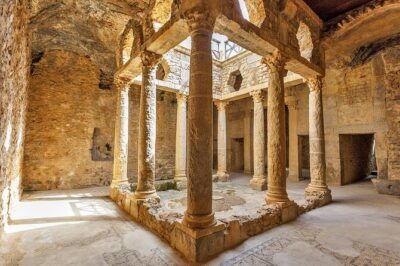
Private Excursion to Testour, Dougga and Bulla Regia from Tunis.
Read our review →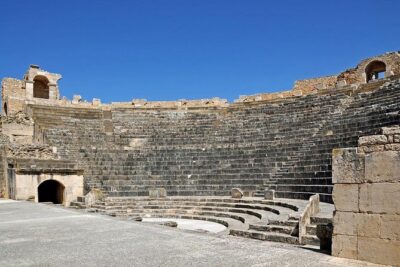
Full Day Dougga & Bulla Regia Via Testour Private tour with Lunch
Read our review →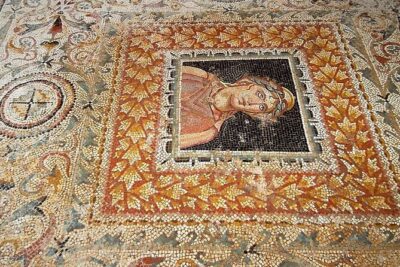
Private Day Trip to Testour, Dougga and Bulla Regia from Hammamet
Read our review →
Private Guided Tour of Dougga and Testour Mosque
Read our review →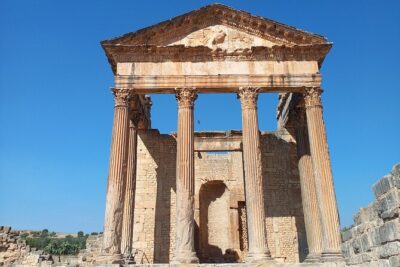
Bulla Regia and Beni Mtir Cascade Daytrip from Tunis
Read our review →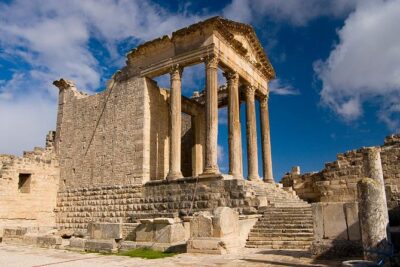
Browse the lists this tour appears in