
Reviewed · CARTHAGE AND SIDI BOU SAID
Daytrip Carthage Sidi Bousaid Bardo and Tunis Medina
Ancient Carthage still has stories to tell. This private day tour links Carthage’s Punic and Roman ruins with Sidi Bou Said, the Tunis Medina, and the Bardo Museum, giving you a broad look at northern Tunisia without the trouble of arranging several separate visits. I especially like the air-conditioned vehicle and the freedom of a private group, plus the chance to shape the day around your interests.
The main consideration is pace. Seven major stops in roughly seven to eight hours leaves little room for a long lunch or unhurried museum visits. The Bardo Museum is also closed on Mondays, and admission to the Baths of Antoninus is not included, so check the day and extra costs before booking.
In This Review
- Key points at a glance
- Why this private route works so well
- Tophet: Carthage’s most debated ground
- The Punic Ports and Carthage’s sea power
- The Baths of Antoninus and the Roman chapter
- Carthage Museum on Byrsa Hill
- Sidi Bou Said’s blue-and-white streets
- The Medina of Tunis, from souqs to grand doors
- The Bardo Museum’s mosaics and the day’s final layer
- What $162.60 actually buys you
- Timing, comfort, and who should book
- Should you book this Tunis day tour?
- FAQ
- How long does the tour last?
- Where does pickup take place?
- Is this a private tour?
- Is lunch included?
- Is admission to every site included?
- Can I take the tour on a Monday?
Key points at a glance
- Four major Tunisian sights in one day: You cover Carthage, Sidi Bou Said, the Medina of Tunis, and the Bardo Museum in a single outing.
- Private transport from your hotel: An air-conditioned vehicle picks you up and returns you to your hotel in Tunis or Hammamet.
- A strong choice for history fans: The route moves from Punic Carthage to Roman Africa, medieval Tunis, and the Mediterranean art collections at Bardo.
- Guides can tailor the day: Ghassen has focused on Carthaginian archaeology for some groups, while Sana has been praised for her timing, friendliness, and careful driving.
- Allow for a full, active day: Expect walking through ruins, cobbled streets, souqs, and museum galleries.
- Best value for small private groups: At $162.60 per person, the cost buys private service and a wide route, but lunch and at least one site admission are extra.
Why this private route works so well
Tunis is surrounded by important sights, but they do not all tell the same story. Carthage recalls a Punic power that challenged Rome. The Roman baths show how the rebuilt city became part of the empire. Sidi Bou Said offers a slower architectural interlude, while the Medina and Bardo Museum bring you into Tunisia’s medieval and artistic worlds.
I like the way this tour joins those pieces instead of treating Carthage as an isolated ruin. You can see how the country’s past shifted from Punic rule to Roman rule, then toward Islamic Tunis and later Mediterranean cultural exchange.
The private format matters here. You are not tied to the pace of a large group, and the guide can spend more time on archaeology, photography, architecture, or general orientation. Ghassen has been especially praised for asking what a group wanted from the day and then adjusting his explanations around those interests.
Sana has also received warm praise for being punctual, attentive, friendly, and comfortable behind the wheel. That last point is useful in Sidi Bou Said and the Medina, where narrow roads and tight parking can make a full day more tiring for the person driving.
The route is still ambitious. The listed visits add up to about five hours of sightseeing before driving, transitions, food, and possible queues. You will see a lot, but this is a sampler rather than a slow archaeological study.
More Medina Tours in Tunis
- Private tour: Medina,Carthage ,Sidi Bou Said, Bardo Museum+lunch
★ 5.0 · 230 reviews - Carthage, Bardo Museum, Sidi Bou Said and Medina Private Day Tour
★ 4.5 · 153 reviews - Guided tour in the UNESCO world heritage Medina of Tunis
★ 5.0 · 68 reviews
Tophet: Carthage’s most debated ground
The first Carthage stop is Tophet, also called the Sanctuary of Tanit and Baal Hammon. This site has long been linked to a difficult question: was it a children’s cemetery, a place of ritual offerings, or a sacred burial ground whose meaning remains uncertain?
The strongest value here comes from a good explanation. The site itself is not a grand ruin with towering walls. It is a place of stone markers and archaeological remains, and without context it can be easy to pass through quickly.
The old image of Carthaginian sacrifice was strengthened by Gustave Flaubert’s dramatic descriptions, including cruel priests, flames, and the god Moloch. Modern archaeological discussion is more careful. Some historians interpret the remains as belonging mainly to infants who died young, while others have argued for ritual sacrifice in at least some cases.
That uncertainty makes Tophet worth visiting. You are not simply looking at stones. You are seeing a site where archaeology, ancient religious practice, and later storytelling have all shaped public memory.
The stop lasts about 20 minutes, with admission included. I would listen closely to the guide here, since the brief visit depends more on interpretation than on the size of the ruins.
The Punic Ports and Carthage’s sea power
The Punic Ports explain why Carthage became such a major force in the Mediterranean. A narrow channel connected a long commercial harbor with a circular military harbor, allowing naval vessels to remain protected while still having access to the sea.
The military harbor reportedly held dry docks and moorings for as many as 220 ships. The commercial port covered about seven hectares and was lined with quays and warehouses. That gives you a useful picture of Carthage as a working port, not just a battlefield remembered through the Punic Wars.
Scipio’s forces filled in the ports after Carthage was destroyed in 146 BC. Later, the Romans reshaped the area and used the island again. Today, the site requires some imagination, since much of the original harbor system is gone.
This is another short stop, around 20 minutes, and admission is free. A guided visit makes a real difference because the shape of the ports is easier to understand when someone explains what was commercial, what was military, and how the Roman reuse changed the site.
The Baths of Antoninus and the Roman chapter
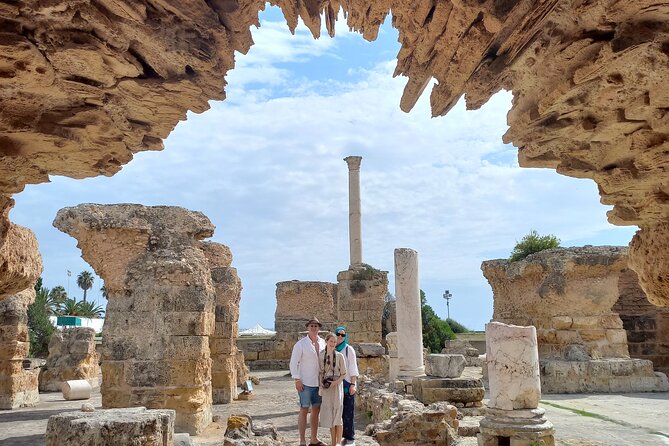
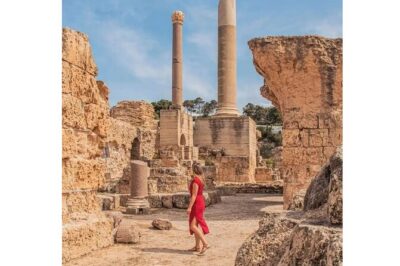
The Baths of Antoninus are the largest Roman remains on this route. Built in the second century, the complex is now part of an archaeological park along the coast.
The scale is the main attraction. You can begin to picture the public life of Roman Carthage through the surviving columns, walls, and foundations. The setting also helps connect the ruins to the city’s coastal position.
You get about 45 minutes here, longer than at Tophet or the ports. That is welcome, since the site needs time for walking and photographs. The admission fee is not included, so budget for that separately.
I would not expect a complete Roman bathhouse preserved in perfect form. This is an open archaeological site, and many structures survive only as partial remains. Still, it is one of the best places on the day to sense the size and importance of Roman Carthage.
More Carthage and Sidi Bou Said trips:
- Guided Bike Tour of Carthage Archeological Site in Tunisia
★ 5.0 · 88 reviews - Group Guided Bike Tour of Carthage Archeological Site in Tunisia
★ 5.0 · 57 reviews - Archaelogical Site Of Carthage + Picturesque Village Of Sidi Bou Said
★ 5.0 · 56 reviews - Historical Tour of Ancient Carthage
★ 5.0 · 51 reviews
Carthage Museum on Byrsa Hill
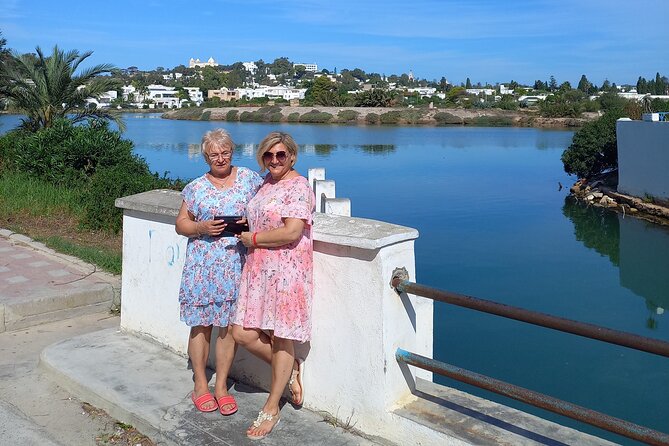
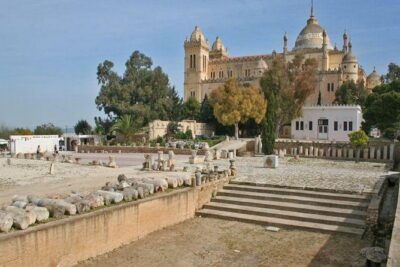
The Carthage Museum sits on Byrsa Hill, the symbolic center of the ancient Punic city. The hill also provides a view over the surrounding remains, which makes this stop useful before moving on to the modern village of Sidi Bou Said.
The museum was created in 1875 and records the many discoveries made at Carthage. Its collections help fill in what the outdoor sites cannot show clearly, including objects connected with Punic and Roman life.
You have about 30 minutes here, and admission is included. That is enough for an introduction, but not for a careful reading of every display. If archaeology is your main reason for booking, tell the guide early. One group found that Ghassen was particularly effective when the focus was Carthage and the Punic Wars.
The museum visit also gives the day a useful pause from open-air ruins. On a hot day, that change matters.
Sidi Bou Said’s blue-and-white streets
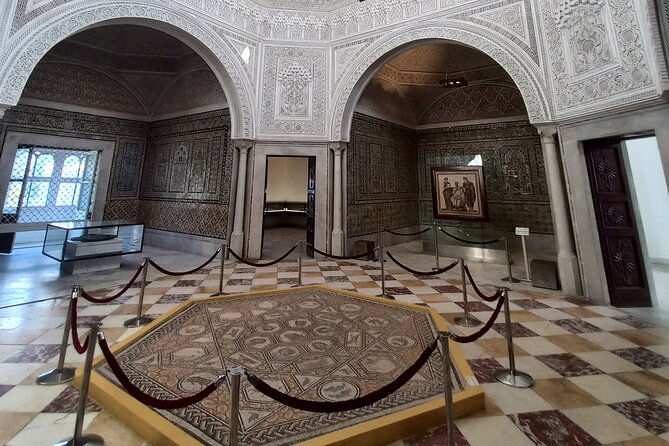
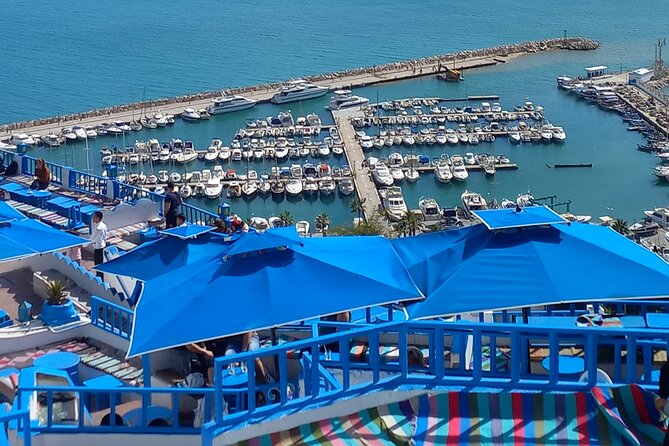
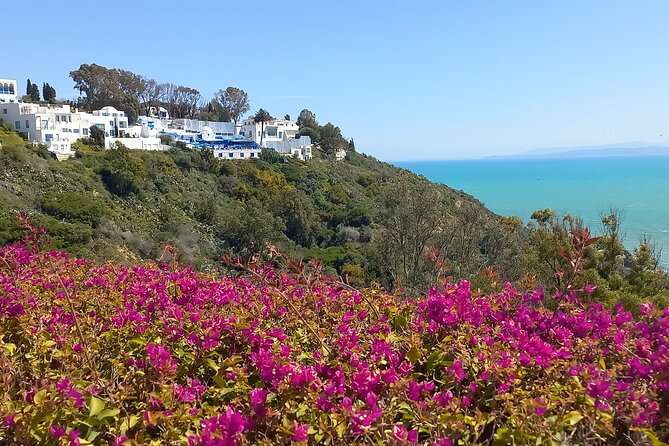
Sidi Bou Said changes the mood completely. The cliff-top village is known for white buildings, blue doors and shutters, cobbled lanes, and broad views toward the sea.
Its appearance is not accidental. The village’s style reflects Ottoman and Andalusian influence, including the arrival of Spanish Muslims in the 16th century. It was later protected in 1915, helping preserve the look that makes the town so recognizable today.
The village takes its name from a 13th-century Sufi saint. French artists and writers also helped turn Sidi Bou Said into an Orientalist image in the 19th century. Paul Klee is among the artists associated with the place.
You have about an hour to walk around. This is the time to slow down, enjoy the views, and look closely at the doors and facades rather than rush from one sight to another. The guides have also been praised for knowing good photo locations, which is useful in a place where the visual details are the main attraction.
Keep your expectations sensible. Sidi Bou Said is picturesque, but it is also a real village with narrow streets and limited time on this tour. You will get an appealing introduction, not a full afternoon for cafés and wandering.
The Medina of Tunis, from souqs to grand doors
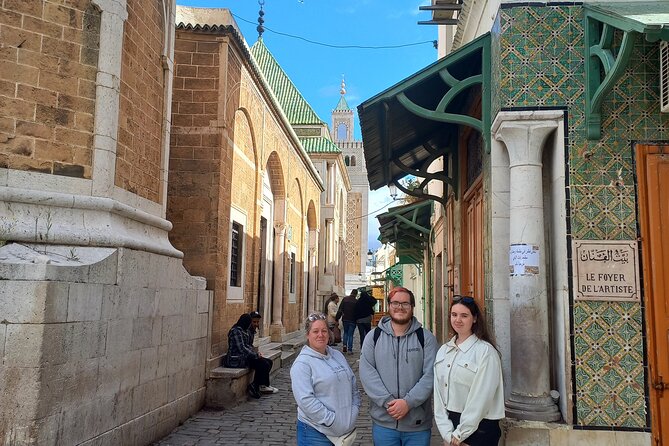
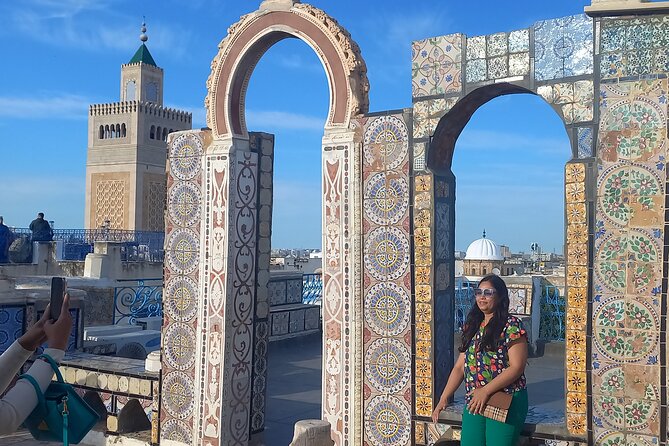
The Medina is the most atmospheric walking section of the day. Its old streets and covered souqs form a maze of shops, workshops, cafés, mosques, hammams, palaces, and Quranic schools.
The best way to experience it is to accept that you will not understand every turn. Let the guide show you how the old city fits together, then pay attention to the small details: brightly painted doors, carved stucco, tilework, marble columns, and artisans working along the lanes.
The souqs sell everything from shoes to shisha pipes. Residential streets appear beside commercial passages, so the Medina feels like a living district rather than an open-air museum.
The visit lasts about 90 minutes. That is enough to see a meaningful section, but the Medina is large, and you will not cover it all. Wear comfortable shoes and expect uneven paving. A moderate level of fitness is required for the day, with walking at several archaeological sites and through the old city.
Some guides also include the mosque and the government quarter during the Tunis portion. Sana has been praised for explaining the places clearly while knowing when to let the group simply look around.
The Bardo Museum’s mosaics and the day’s final layer
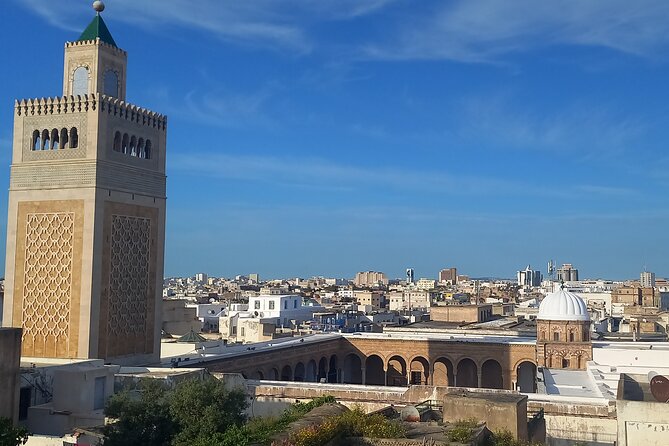
The National Bardo Museum is one of the most important museums in Africa, particularly for its mosaic collections. Its displays cover civilizations that developed around the Mediterranean, making it a strong final stop after Carthage and the Medina.
The museum gives you a chance to see the artistic side of Tunisia’s past. Outdoor ruins show foundations, harbor shapes, and broken columns. At Bardo, mosaics and other objects offer a more detailed view of the people, beliefs, and daily life connected with those cultures.
The guided visit lasts about an hour, and admission is included. That hour will introduce the major collections, but it will not allow you to inspect every gallery at length. One useful caution comes from the tour’s mixed guide experience: explanations at Bardo may not always be as detailed as those at Carthage.
The museum is closed on Mondays, so do not book this exact schedule for that day if Bardo is important to you. The tour information specifically says there is no museum visit on Mondays, so confirm how the route will be handled before paying.
What $162.60 actually buys you
The price is $162.60 per person. That is not a bargain-basement outing, but the comparison should be with arranging private transport, a driver, and several guided visits separately.
You get hotel pickup and return in an air-conditioned private vehicle, a private guide, and a route that combines two UNESCO World Heritage sites with Sidi Bou Said and Bardo. For a small group that values comfort and efficiency, the cost can make sense.
The price also includes admission at Tophet, the Carthage Museum, and Bardo. The Punic Ports are listed as free. Admission to the Baths of Antoninus is not included, and lunch is also extra, so leave room in the day’s budget for both.
The value is strongest if you have only one full day in Tunis or are staying in Hammamet and want to cover the capital region without changing hotels. It is less compelling if you prefer spending half a day at one archaeological site or want plenty of unplanned time.
Timing, comfort, and who should book
The tour lasts approximately seven to eight hours. Pickup is offered from Tunis or Hammamet, but the exact departure time and transfer details should be confirmed when booking.
This is a private activity, so only your group takes part. That gives you more control than a standard coach excursion, especially if you want extra attention on the Punic Wars, museum collections, architecture, or photography.
I would recommend it most for:
- First-time visitors with one free day in the Tunis area
- Couples, families, or friends who prefer private transport
- People who want both major ruins and modern Tunisian streets
- History fans who can manage several hours of walking
- Groups that appreciate a guide who can adjust the emphasis
I would be more cautious if you dislike busy schedules, need long meal breaks, or want a slow museum visit. The route is packed, and some stops are short by design.
Service animals are allowed, and the tour is near public transportation, though the main arrangement is private pickup. Confirmation is provided at booking. Free cancellation is available up to 24 hours before the start time, while cancellations or changes made inside that window are not refunded or accepted.
Should you book this Tunis day tour?
Book it if you want a broad, well-organized introduction to the Tunis area and value private transport over a slow, self-guided day. The combination of Carthage, Sidi Bou Said, the Medina, and Bardo covers a remarkable range of Tunisian culture in one outing.
The strongest reason to choose it is the guide. Ghassen appears well suited to groups focused on Carthage and archaeology, while Sana brings a friendly, attentive style and confident driving. Moncef and Mohammed are also associated with informative days, so the exact guide may shape the experience.
Skip it if your priority is depth at one site. For most first visits, though, this is a sensible way to connect Punic ruins, Roman remains, Islamic Tunis, and Mediterranean art without wrestling with transport on your own.
FAQ
How long does the tour last?
The experience lasts approximately seven to eight hours.
Where does pickup take place?
Pickup and return are offered from your hotel in Tunis or Hammamet.
Is this a private tour?
Yes. Only your group participates in the activity.
Is lunch included?
No. Lunch is not included in the tour price.
Is admission to every site included?
No. Admission to Tophet, the Carthage Museum, and the Bardo Museum is included, while the Punic Ports are free. Admission to the Baths of Antoninus is not included.
Can I take the tour on a Monday?
The Bardo Museum is closed on Mondays, and the tour information specifies that there is no Bardo visit that day. Check the revised plan before booking for a Monday.
More Bardo Museum Tours
- Tunis: Carthage, Bardo Museum, Sidi Bou Said & Medina Group Tour
★ 4.5 · 33 reviews - Private Day Tour Tunis Medina Carthage Sidi Bou Said Bardo Museum
★ 5.0 · 30 reviews - Private Tour Sidi bou Said Medina Carthage & bardo Museum
★ 4.5 · 13 reviews - Tunis Group Tour: Carthage, Sidi Bou Said, Bardo museum & Medina
★ 5.0 · 5 reviews
Just added in Tunis
- Private Arrival Transfer: Tunis Airport to Tunis Hotel★ 4.5 · 5 reviews
- Cap Bon Guided Day Tour from Tunis★ 5.0 · 2 reviews
- Unveiling the Beauty of Sidi Bou Said and Carthage Private Tour★ 5.0 · 2 reviews
- Dougga Guided Day Tour from Tunis★ 5.0 · 5 reviews
- Tunis Carthage Private Arrival Airport Transfer to Tunis★ 5.0 · 4 reviews
- Tunis Group Tour: Carthage, Sidi Bou Said, Bardo museum & Medina★ 5.0 · 5 reviews
- Bardo Museum , Oudhna and the roman aqueduct★ 5.0 · 4 reviews
- Bardo Museum- The ruins of Carthage- Village of Sidi Bou Said★ 5.0 · 4 reviews
Carthage and Sidi Bou Said, compared.
VIP Tour: Tunis Medina/Bardo, Sidi Bou Said, Carthage |PICKUP ALL
Read our review →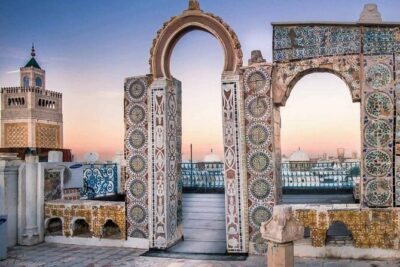
Private tour: Medina,Carthage ,Sidi Bou Said, Bardo Museum+lunch
Read our review →Private tour: Medina,Carthage ,Sidi Bou Said, Bardo Museum+lunch
Read our review →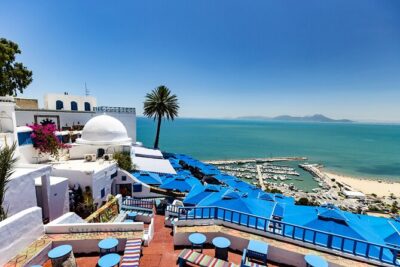
Carthage, Bardo Museum, Sidi Bou Said and Medina Private Day Tour
Read our review →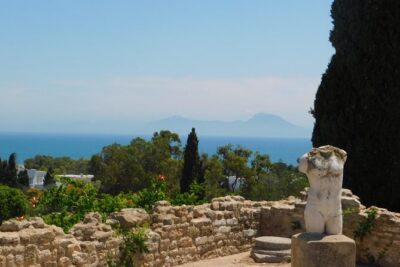
Guided Bike Tour of Carthage Archeological Site in Tunisia
Read our review →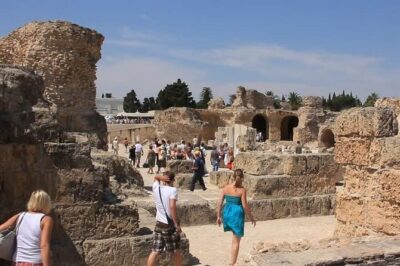
Archaelogical Site Of Carthage + Picturesque Village Of Sidi Bou Said
Read our review →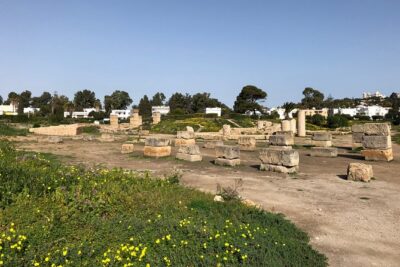
Tunis, Sidi Bousaid and Carthage day trip from Hammamet
Read our review →Browse the lists this tour appears in