
Reviewed · CARTHAGE AND SIDI BOU SAID
Carthage Discovery Half-Day Tour with Licensed Guide
History meets the sea here. This four-hour private tour makes ancient Carthage easy to reach from Tunis or Hammamet, then brings its Phoenician, Punic, Roman-African, and later Islamic past into focus. I especially like the private guide and the included admission fees, since you can ask questions and spend more time on the sites that interest you most. The main consideration is the walking: heat, uneven ground, and several outdoor ruins may be tiring for some people.
I also like the comfortable, air-conditioned private vehicle and hotel pickup, which remove much of the guesswork from visiting a spread-out archaeological area. Guide Nouraddean, also called Nour, has earned praise for explaining both Tunisian culture and the ancient sites, while adapting the visit to the group’s interests. The tour covers a lot in half a day, but that also means some stops receive only a short visit.
In This Review
- Key points at a glance
- Why Carthage deserves a half-day
- Arriving from Tunis or Hammamet
- Byrsa Hill and the main archaeological site
- The Tophet and its difficult questions
- Carthage Museum beside Saint-Louis Basilica
- Reading the Punic ports
- The guide and the private format
- Is four hours enough?
- Who should book this Carthage tour?
- Should you book it?
- FAQ
- How long does the Carthage tour last?
- Where is hotel pickup available?
- Is the tour private?
- Are entrance fees included?
- Is transportation included?
- What happens if the weather is poor?
Key points at a glance
- Private access to Carthage: Your group travels with its own licensed guide rather than following a large shared party.
- Four major stops: The visit includes the archaeological site, Tophet, Carthage Museum, and Punic ports.
- Hotel transfers included: Pickup and drop-off are provided from hotels in Tunis or Hammamet.
- A useful history sequence: You move from the city’s ruins to its cemeteries, museum collections, and ports.
- Good for a short Tunis stay: The tour fits a half-day and includes transport by private vehicle.
- Plan for outdoor walking: The heat and uneven surfaces are worth taking seriously, especially at the larger archaeological areas.
Why Carthage deserves a half-day
Carthage is not one compact ruin with a single dramatic entrance. Its remains are spread across a broad area near the coast, and the most meaningful pieces often sit apart from one another. That makes private transport and a guide especially useful.
The city began as a Phoenician settlement and grew into the center of the Carthaginian Empire. Rome destroyed Carthage in 146 BC, but the site did not vanish from history. Roman rebuilding, later occupation, and centuries of excavation have left a layered set of remains.
You will not see a perfectly preserved ancient city. Instead, you will piece it together from foundations, streets, walls, port shapes, mosaics, baths, and museum objects. A guide helps turn scattered stones into a story about trade, military power, religion, urban planning, and the fierce rivalry between Carthage and Rome.
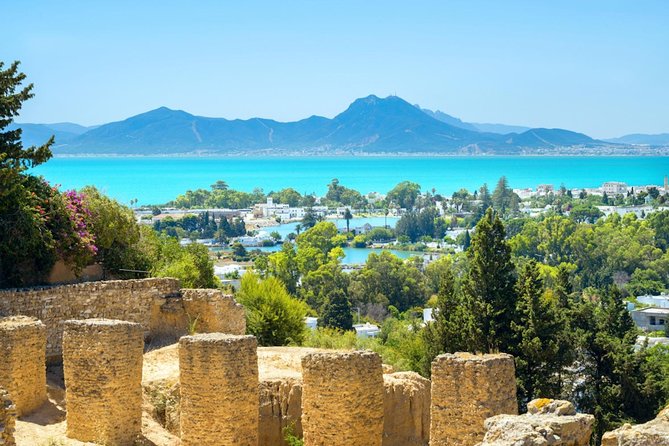
The tour also gives you sweeping views toward the coastline. That setting matters. Carthage was a maritime power, and the sea is not just a pretty backdrop here. It helps you understand why the city became wealthy and why its ports mattered so much.
More Carthage and Sidi Bou Said trips:
- Private tour: Medina,Carthage ,Sidi Bou Said, Bardo Museum+lunch
★ 5.0 · 230 reviews - Carthage, Bardo Museum, Sidi Bou Said and Medina Private Day Tour
★ 4.5 · 153 reviews - Guided Bike Tour of Carthage Archeological Site in Tunisia
★ 5.0 · 88 reviews
Arriving from Tunis or Hammamet
Pickup and drop-off are included from your hotel in Tunis or Hammamet. From Tunis, the drive to Carthage takes about 25 minutes, with an air-conditioned car providing a comfortable start to the morning or afternoon. Along the way, you may spot some of the area’s exclusive villas, a modern contrast to the ancient remains ahead.
The private vehicle is a real advantage. Carthage’s sites are spread out, so reaching each stop on foot would take more time and energy than this four-hour visit allows. You can also leave bags in the vehicle between stops, though you should keep anything valuable with you.
The tour is private, meaning only your own group participates. That makes it easier to ask about the Punic Wars, Roman building methods, Tunisian customs, or any detail that catches your attention. It also gives the guide room to adjust the pace. Nour has been praised for changing the visit around group requests and helping with practical needs during a stay in Tunis.
If you are staying outside Tunis or Hammamet, hotel transfer is not included. You would need to arrange your own way to the meeting point, so check the pickup area before booking.
Byrsa Hill and the main archaeological site
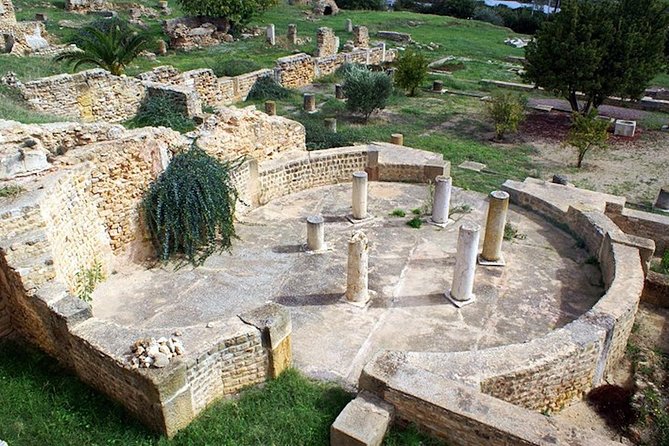
The largest portion of the visit takes place at the Site Archeologique de Carthage, with about two hours set aside and admission included. This is where the scale of Carthage begins to make sense.
The ruins reveal more than isolated monuments. Excavations have uncovered evidence of five-story homes, sewage systems, city walls, and carefully organized urban areas. The walls once stretched about 21 miles, or 34 kilometers, across Byrsa Hill. That figure gives you a useful sense of the city’s size and defensive strength.
Your guide can help separate the Punic remains from the later Roman layers. Without that context, the site can feel like a collection of broken foundations. With explanation, a low wall may become part of a home, a drainage system may show how advanced the city’s infrastructure was, and the hilltop position may explain the city’s strategic value.
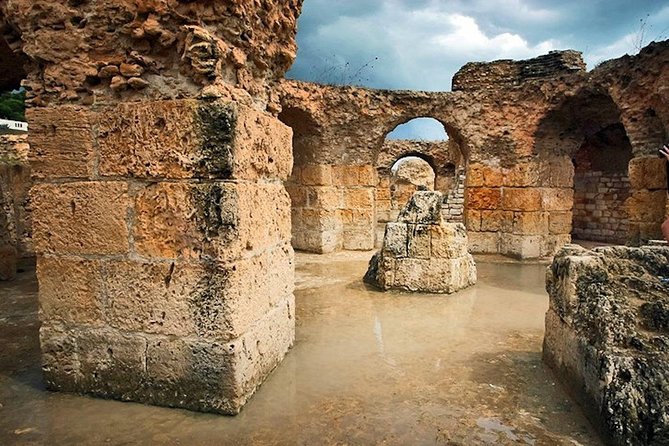
The stop also includes ancient baths, theaters, villas, and other remains. The Baths of Antoninus Pius are among the best-known sights in the Carthage area, and the route can include Birsa Hill and many of the city’s major archaeological features.
There is a practical trade-off. Two hours sounds generous, but Carthage covers a lot of ground. You will get a broad introduction rather than a slow study of every ruin. If one site matters most to you, tell the guide early. A private tour is most valuable when you use that flexibility.
Expect outdoor walking, sun, and uneven surfaces. One previous visitor specifically noted the walking and accessibility concerns, even while praising the guide and driver. Wear sensible shoes, carry water, and avoid treating this as a quick step-out-of-the-car sightseeing stop.
The Tophet and its difficult questions
The Tophet receives about one hour, including admission. This ancient cemetery is one of the most serious and disputed places in Carthage.
The site is linked to the worship of Punic deities and is believed to have been used for ritual sacrifice involving children and animals. The evidence and interpretation remain contentious, so this is not a stop that should be treated as a simple, settled story. A good guide can explain the debate and show why archaeologists and historians have reached different conclusions.
The Tophet may feel quieter and less visually grand than the baths or hilltop ruins, but it offers an important look at Carthaginian religious life. It also challenges the easy habit of viewing ancient history only through its buildings and military victories.
Give this stop your full attention. The details are somber, and the subject may not suit very young children or anyone looking for a light sightseeing outing. Children must be accompanied by an adult, and parents should decide how much of the subject they want explained.
More things to do in Tunis:
- Private Tour to Kairouan, El Jem & Monastir from Tunis_hammamet
★ 5.0 · 301 reviews - Private Excursion to Testour, Dougga and Bulla Regia from Tunis.
★ 5.0 · 100 reviews - Guided tour in the UNESCO world heritage Medina of Tunis
★ 5.0 · 68 reviews - Group Guided Bike Tour of Carthage Archeological Site in Tunisia
★ 5.0 · 57 reviews
Carthage Museum beside Saint-Louis Basilica
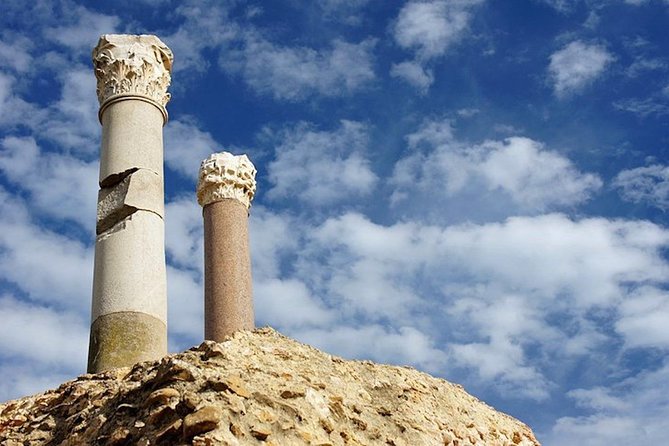
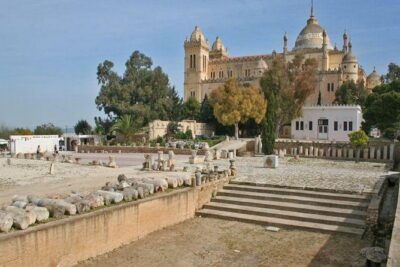
The Carthage Museum receives about 30 minutes, with admission included. It occupies the ground floor of a former Catholic religious school near the Saint-Louis Basilica, built at the end of the 19th century on the site of the ancient Carthage acropolis.
The collection covers the Phoenician-Punic, Roman-African, and Arab-Muslim periods. That range is important because Carthage was not a city with only one historical identity. The museum lets you see objects from different periods together, giving you a clearer timeline than the outdoor ruins alone can provide.
Half an hour is enough for an introduction, especially with a guide pointing out the most useful objects. It is not enough for a slow museum study. If you are passionate about archaeology, you may wish the visit were longer. For most people, the brief stop works well because it balances the outdoor portions and gives you a break from the sun.
The museum also helps you understand what has been removed from the site and preserved for study. Outdoor foundations show the shape of the ancient city. Museum objects provide the smaller details of daily life, belief, art, and trade.
Reading the Punic ports
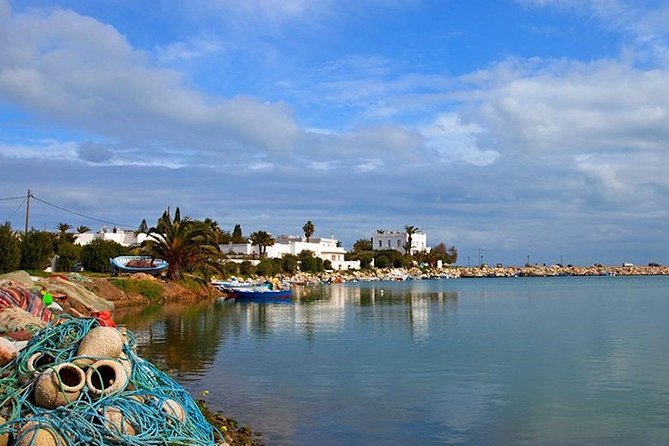
The final stop lasts about 30 minutes and has no separate admission charge. The Punic Ports were the foundation of Carthage’s commercial and military power, although only their general shape remains today.
A narrow channel once linked two distinct harbors. The southern port was an oblong commercial harbor, bordered by quays and warehouses. The northern port was circular and served the navy. Its position helped keep the military harbor hidden from outsiders while allowing the Carthaginian fleet to see out toward the sea.
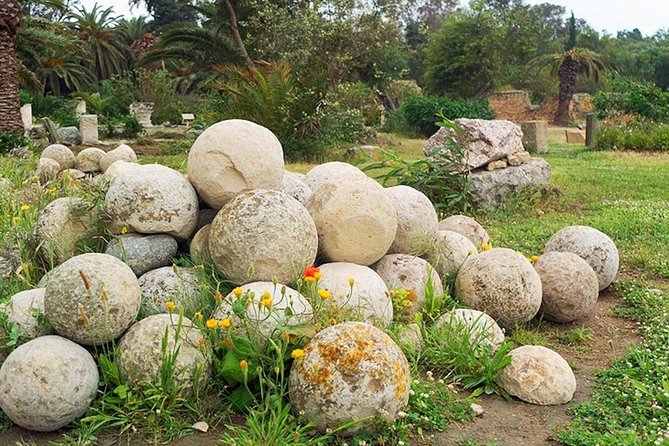
The naval base reportedly had dry docks for about 220 vessels, an astonishing figure that gives this stop real impact. The commercial harbor covered about seven hectares. Those measurements help you picture an organized port complex rather than a simple beach landing.
This is one of the places where a guide adds the most value. The port remains are less complete than the baths, and their original function is not always obvious from ground level. Your guide can point out the surviving outline and explain how the two harbors worked together.
The stop is short, so do not expect a long walk around every section. Instead, use the time to understand the engineering and the role of shipping in Carthage’s rise. The coastline views also bring the city’s position into focus.
The guide and the private format
The strongest part of this experience is the guide-led approach. Nouraddean, often referred to as Nour, has been praised for his broad command of Tunisian history and culture, his friendly manner, and his willingness to shape the tour around the group.
That flexibility matters more here than it would on a compact city walking tour. Carthage has several sites, and different people want different things. You may care most about Roman baths, military history, religious practices, or the practical details of ancient city life. A private guide can spend more time on your interests.
The driver also plays an important role. The vehicle connects the separate stops, and the driver has been praised for being courteous and attentive. Since the tour involves both driving and walking, a dependable driver helps the day feel less rushed.
A private format usually costs more than joining a large group. At $94.90 per person, the value depends partly on your group size and what you want from the visit. The price includes hotel transfers from Tunis or Hammamet, a private vehicle, a licensed guide, and entrance fees. For a small group that wants personal attention and a simple half-day plan, that bundle is reasonable.
If you are a solo visitor comparing prices, the cost may feel high for four hours. If you are traveling with family or friends, the private arrangement becomes easier to justify because the guide’s time is reserved for your group.
Is four hours enough?
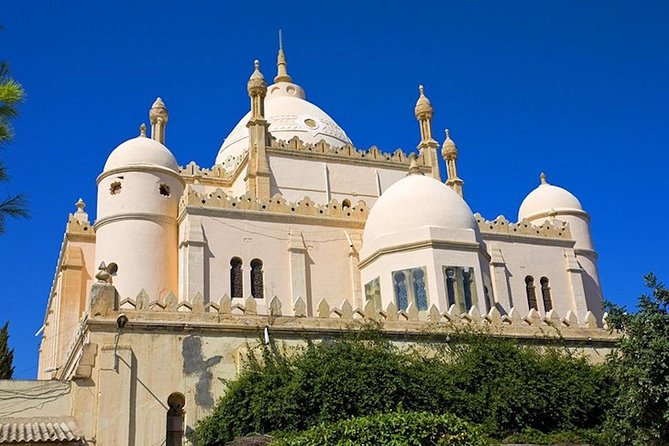
Four hours is enough to see the major Carthage areas and get a useful first understanding of the site. It is not enough to inspect every ruin, read every museum label, or linger at every viewpoint.
The schedule gives approximately two hours to the main archaeological area, one hour to the Tophet, 30 minutes at the museum, and 30 minutes at the ports. Travel between locations is handled by private vehicle, which protects the sightseeing time.
I see this as a strong choice for a first visit, a stop during a short Tunis stay, or a day when you want history without committing to a full-day excursion. It is less suitable if you want detailed archaeological study or long periods of quiet exploration.
The best way to improve the experience is to decide what matters most before you go. Tell the guide if you prefer Roman architecture, Punic history, religion, military planning, or local culture. The private format gives you a chance to make those preferences count.
Who should book this Carthage tour?
I would recommend it to first-time visitors who want the major sites explained rather than simply photographed. It also suits families, couples, and small groups who value hotel pickup, a private vehicle, and the ability to ask questions freely.
It works well for people staying in Tunis or Hammamet who do not want to sort out transport between the separate Carthage sites. The four-hour length also leaves room for other plans later in the day.
You should think twice if you dislike outdoor walking, hot weather, or archaeological sites where many structures survive only as foundations. The tour covers serious subjects at the Tophet as well, so it is worth considering whether that stop fits your interests.
Free cancellation is available up to 24 hours before the start time. Changes or cancellations inside that window are not accepted for a refund. The experience requires good weather, and if poor weather causes cancellation, you are offered another date or a full refund.
Should you book it?
Book this tour if you want a well-organized introduction to Carthage with a private guide, included entry fees, and transport from Tunis or Hammamet. The combination of Byrsa Hill, the Tophet, museum, and Punic ports gives you a broad view of the ancient city in only four hours.
I would skip it only if you want a very slow archaeological visit or prefer exploring independently. For most people with limited time, the private format and strong guide-led history make the $94.90 price a fair exchange for comfort, structure, and useful context.
FAQ
How long does the Carthage tour last?
The tour lasts approximately four hours.
Where is hotel pickup available?
Pickup and drop-off are offered from hotels in Tunis or Hammamet. Hotels in other cities are not included.
Is the tour private?
Yes. Only your own group participates in the activity.
Are entrance fees included?
Yes. Entrance fees for the archaeological site, Tophet, and Carthage Museum are included. The Punic Ports stop has no separate admission charge.
Is transportation included?
Yes. The tour includes round-trip hotel transfers from Tunis or Hammamet and transport by private vehicle.
What happens if the weather is poor?
The experience requires good weather. If it is canceled because of poor weather, you are offered a different date or a full refund. You can also cancel up to 24 hours before the start time for a full refund.
Just added in Tunis
- Private Arrival Transfer: Tunis Airport to Tunis Hotel★ 4.5 · 5 reviews
- Cap Bon Guided Day Tour from Tunis★ 5.0 · 2 reviews
- Unveiling the Beauty of Sidi Bou Said and Carthage Private Tour★ 5.0 · 2 reviews
- Dougga Guided Day Tour from Tunis★ 5.0 · 5 reviews
- Tunis Carthage Private Arrival Airport Transfer to Tunis★ 5.0 · 4 reviews
- Tunis Group Tour: Carthage, Sidi Bou Said, Bardo museum & Medina★ 5.0 · 5 reviews
- Bardo Museum- The ruins of Carthage- Village of Sidi Bou Said★ 5.0 · 4 reviews
- Kairouan-El Jem★ 4.5 · 2 reviews
Carthage and Sidi Bou Said, compared.
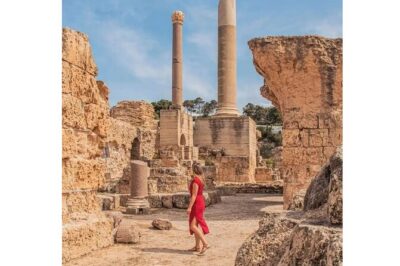
VIP Tour: Tunis Medina/Bardo, Sidi Bou Said, Carthage |PICKUP ALL
Read our review →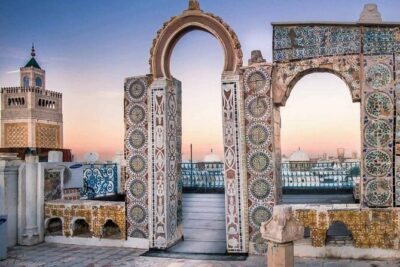
Private tour: Medina,Carthage ,Sidi Bou Said, Bardo Museum+lunch
Read our review →Private tour: Medina,Carthage ,Sidi Bou Said, Bardo Museum+lunch
Read our review →
Carthage, Bardo Museum, Sidi Bou Said and Medina Private Day Tour
Read our review →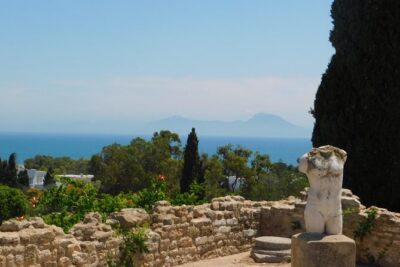
Guided Bike Tour of Carthage Archeological Site in Tunisia
Read our review →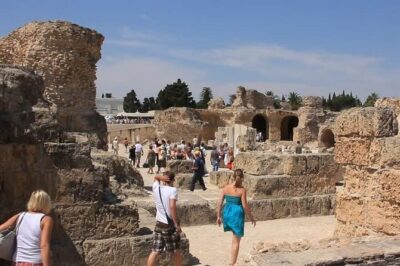
Archaelogical Site Of Carthage + Picturesque Village Of Sidi Bou Said
Read our review →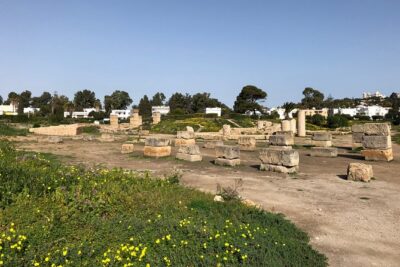
Tunis, Sidi Bousaid and Carthage day trip from Hammamet
Read our review →Browse the lists this tour appears in