
Reviewed · EL JEM AMPHITHEATRE
El Jem and Monastir Full-Day Tour with Lunch from Tunis or Hammamet
Roman stone, seaside history, one full day. This private tour links El Jem’s vast amphitheater with Monastir’s old Ribat and Bourguiba Mausoleum, giving you a sharp look at Tunisia’s Roman and modern past. The included lunch and hotel pickup make a complicated day easier to manage.
I especially like the chance to spend two full hours at El Jem, followed by the exceptional mosaic museum. I also like the private format, since your group can move at its own pace rather than follow a large coach party. The main drawback is the distance: you will spend a good part of the day in the car, and one guest found the guide’s English less polished than expected.
In This Review
- Key points to know before booking
- Why El Jem deserves the long drive
- The El Jem Museum turns stone into a story
- Monastir’s Ribat shows Tunisia’s early Islamic side
- The Bourguiba Mausoleum adds modern Tunisia
- Eight hours is efficient, but not easygoing
- How the guides shape the day
- Is the $105 price fair?
- Who will enjoy this tour most?
- Booking, timing, and cancellation advice
- FAQ
- Where does the tour start?
- How long does the tour last?
- Is this a private tour?
- What is included at El Jem?
- Is lunch included?
- Are entrance fees included at the Ribat of Monastir?
- Can I cancel for a full refund?
- Should you book this El Jem and Monastir tour?
Key points to know before booking
- El Jem is the main event: You get two hours at one of the best-preserved Roman amphitheaters in the world, with admission included.
- The mosaic museum adds real depth: Its collection helps you understand the art and daily life behind the Roman ruins.
- Monastir brings a different era: The Ribat introduces early Islamic defense and architecture, while the Bourguiba Mausoleum connects the day to modern Tunisia.
- This is a private tour: Only your group participates, with pickup offered from Tunis or Hammamet.
- The day begins early: The stated start time is 8:00 am, and the full experience lasts about eight hours.
- Guides and drivers are a major part of the experience: Bouhdid, Ridha, Boubou, and driver Hashem have received especially warm praise, though English ability may vary.
Why El Jem deserves the long drive
El Jem is not a minor ruin added to a busy sightseeing list. Its amphitheater is the reason to make this trip.
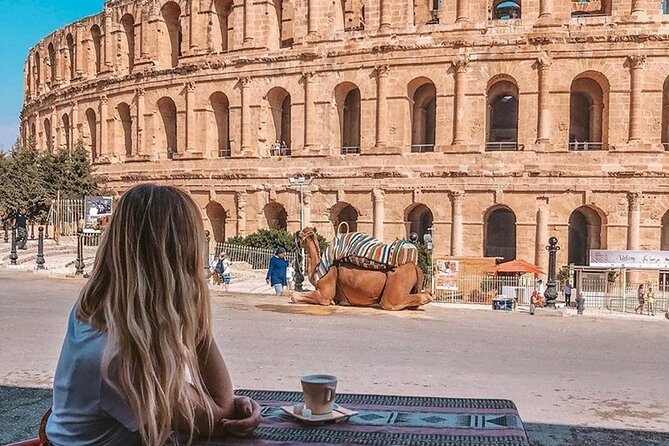
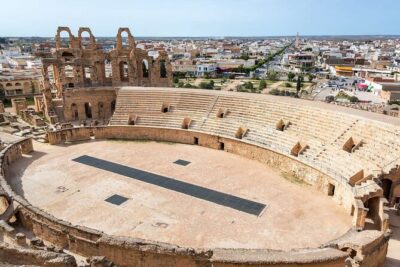
The monument was built around 230 to 240 AD, during the middle of the third century. It was constructed at Thysdrus, a prosperous Roman-era city in what is now Tunisia. The amphitheater is the largest Roman monument left in Africa and ranks third in the Roman Empire after the Colosseum in Rome and the arena in Verona.
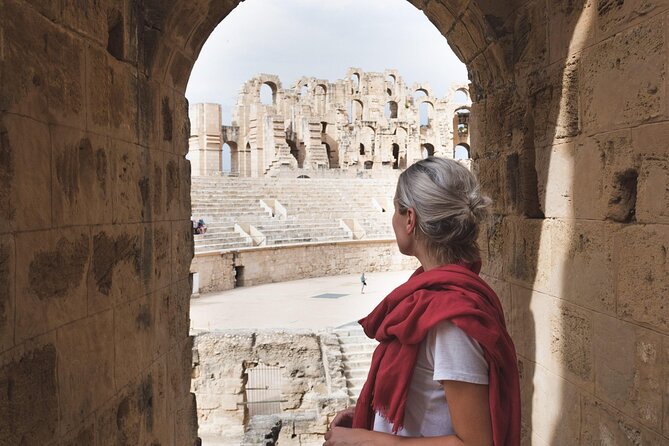
That scale is easy to appreciate once you are inside. The stone structure rises dramatically from the modern town, and the surviving arches give you a strong sense of its original size. You can walk through the interior, look across the arena, and enter parts of the lower levels. The open spaces make the building feel less like a ruin and more like a huge piece of engineering that has simply lost its crowds.
Your visit allows about two hours, which is a useful amount of time. You will not need to rush through the main structure, and you should have time to pause for photographs and listen to the guide’s explanation. The admission ticket is included, so there is no extra entrance charge to sort out at the site.
The amphitheater was one of the last large arenas built during the Roman period. Its design improved on earlier models, including Rome’s Colosseum. That does not mean every part is intact, of course, but it does make El Jem especially valuable for anyone interested in Roman construction.
I would give this stop your best attention. If you are tempted to treat it as a quick photo stop, you will miss much of its appeal. The size, the surviving arches, and the view from inside all reward a slower visit.
More El Jem trips:
- Private Tour to Kairouan, El Jem & Monastir from Tunis_hammamet
★ 5.0 · 301 reviews - Daytrip to Kairouan and El Jem Colosseum
★ 4.5 · 55 reviews - Kairouan and El Jem Private Day Tour
★ 4.5 · 38 reviews
The El Jem Museum turns stone into a story
After the amphitheater, the Museum of El Jem gives the day a welcome change of pace. Instead of looking at enormous walls and empty corridors, you can focus on smaller objects and detailed decoration.
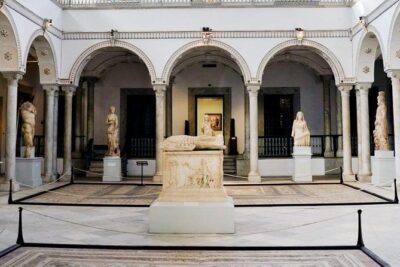
The museum is known for its mosaics, and this is one of the strongest parts of the outing. The colorful floor designs show the skill and wealth of Roman North Africa. They also help explain why El Jem was more than an arena town. The area supported an advanced urban culture with fine homes, public buildings, and artistic traditions.
A guide can make a real difference here. Boubou was praised for clear explanations and strong knowledge of the site, while Bouhdid was described as friendly, funny, and highly informed. Ridha was also singled out for his professional manner and excellent English. If your guide is one of these team members, you can expect the museum visit to have useful context rather than being a silent walk past mosaics.
The museum is also a practical counterpoint to the amphitheater. Two hours among exposed stone can be tiring, especially in strong sun. Moving indoors or into a more sheltered museum setting gives you a chance to slow down before continuing to Monastir.
The exact lunch location and menu are not specified, but lunch is included in the tour. That matters on a full-day route because you do not need to stop and arrange a separate meal while trying to stay on schedule. I would still confirm the pickup and meal details when booking, especially if you have dietary needs, since no special menu information is provided.
Monastir’s Ribat shows Tunisia’s early Islamic side
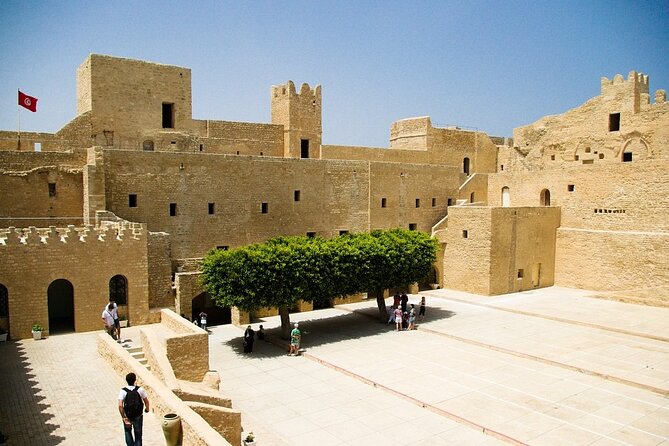
The Ribat of Monastir gives the day a clear change in period and purpose. El Jem is about Roman power, public entertainment, and engineering. The Ribat is a defensive Islamic structure built by the Arab conquerors during the eighth-century Muslim conquest of the Maghreb.
It is described as the oldest ribat built by those conquerors and is the best-known monument in Monastir. That makes it more than another old building. It helps you see how Tunisia’s story moved from Roman rule to the early Islamic period.
You have about one hour here, with admission included. That is enough to visit the principal areas and hear the main explanation, though it is not a long, detailed archaeological study. The fortification has a different mood from El Jem. Its walls and defensive design make you think about watchfulness, religious life, and control of the coast rather than arena crowds.
This stop works well because it prevents the day from becoming a single-theme Roman excursion. You see two major periods of Tunisian history in one route, with the guide helping connect them.
The practical limit is time. Monastir’s Ribat is important, but the visit is shorter than El Jem. If you want a very slow architectural study, you may find the one-hour stop brief. For a first visit to Monastir, though, it gives you a useful introduction without turning the whole day into a fortification tour.
The Bourguiba Mausoleum adds modern Tunisia
The final stop is the Bourguiba Mausoleum, the resting place of Habib Bourguiba, the first president of the Tunisian Republic.
This visit brings the day into the modern era. After Roman imperial rule and early Islamic defense, you finish with a monument tied to Tunisia’s national identity and twentieth-century political history. The building is significant because of its connection to Bourguiba, not simply because it is another historic site.
You have about one hour here, and admission is free. The description allows you to browse at your own pace until it is time to return to your hotel. That flexible finish can be welcome after a long day of guided visits.
Do not expect this stop to offer the same ancient drama as El Jem. Its value is different. It gives you a chance to understand the public memory surrounding Tunisia’s first president and to see a major national monument in Monastir.
The stop also rounds out the route neatly. In one day, you move from the Roman Empire to the early Islamic period and then to the Tunisian Republic. That broad time span is one of the tour’s strongest features.
More things to do in Tunis:
- Private tour: Medina,Carthage ,Sidi Bou Said, Bardo Museum+lunch
★ 5.0 · 230 reviews - Carthage, Bardo Museum, Sidi Bou Said and Medina Private Day Tour
★ 4.5 · 153 reviews - Private Excursion to Testour, Dougga and Bulla Regia from Tunis.
★ 5.0 · 100 reviews - Guided Bike Tour of Carthage Archeological Site in Tunisia
★ 5.0 · 88 reviews
Eight hours is efficient, but not easygoing
The tour lasts about eight hours and begins at 8:00 am. Pickup is offered from Tunis or Hammamet, and the route involves a substantial drive to the inland sites and back through the Sahel region.
You should think of this as a full sightseeing day, not a relaxed local outing. One guest specifically noted that it is a long day with plenty of driving, while still finding the trip worthwhile. That is the right way to approach it. You are paying for access to sites that are difficult to combine on your own, but you give up some time to the road.
The private format improves the experience. Only your group participates, so you do not have to wait for a large busload at every stop. The guide can explain points that interest you, and the timing may be more flexible. A guest specifically praised the operator for being flexible with pickup time and location, as well as arriving on time.
Drivers also matter on this route. Hashem received praise for safe driving, and another guest highlighted the courtesy and care of the driver. That is important when you are spending hours on the road. A smooth, safe transfer lets you save your energy for the monuments.
The tour is near public transportation, but pickup is offered, so you may not need to organize complicated connections. Confirmation is provided at booking, and most people can participate. Since the tour information does not describe vehicle type, exact pickup zones, or rest stops, ask for those details if they matter to you.
How the guides shape the day
The guide is not a minor extra on this experience. El Jem and the Ribat are easier to appreciate when someone explains what you are seeing and why it matters.
Bouhdid has been praised for being friendly, funny, and well informed. Ridha was described as an extremely capable professional who offered informative explanations in excellent English. Boubou also received warm praise for clear knowledge of El Jem, with the added note that her name was correctly remembered as Boubou.
There is one useful caution. One person enjoyed the trip but felt the guide’s English was not especially strong. Another guest found the guide’s English very good. This suggests that communication may depend on the individual assigned to your group. If detailed English commentary is important to you, mention that at booking and ask who will guide the tour.
The feedback about the drivers is consistently positive. Safe driving, courtesy, and a good car were all highlighted. On an eight-hour trip, that can shape your comfort as much as the monuments do.
Is the $105 price fair?
At $105 per person, this is not the cheapest way to visit El Jem. But price alone does not tell the whole story.
The fee includes a private tour, pickup, admission to the amphitheater, admission to the Ribat, lunch, and a professional guide and driver. You are also buying the convenience of combining three major stops in one day without arranging transport between Tunis or Hammamet and Monastir and El Jem yourself.
The value is strongest for couples, families, or small groups who want a private day and prefer not to handle the driving. Group discounts may also be available, which can improve the price for larger parties.
The value is weaker if you already have a rental car, prefer to travel very slowly, or want to spend most of a day at El Jem alone. In that case, a shorter or self-planned visit may suit you better. This tour makes sense because it bundles transport, guiding, entry, and lunch into one efficient route.
Who will enjoy this tour most?
I would recommend it to anyone based in Tunis or Hammamet who wants to see El Jem but does not want to arrange a long independent trip. It is especially suitable for first-time visitors who want a guide to put the monuments into context.
History fans will get the most from the route, but you do not need a specialist background. The amphitheater is visually powerful even if Roman history is not your main interest. The museum, Ribat, and mausoleum keep the day varied.
The tour also suits people who value private transport and a fixed plan. Families and small groups may appreciate not having to match the pace of strangers. Most people can participate, according to the tour information, though the full day and long drives are worth considering if you tire easily.
I would be less enthusiastic for someone seeking a slow beach day, a food-focused outing, or extensive time in Monastir. You will see important places, but each stop has a set window and the road takes a large share of the day.
Booking, timing, and cancellation advice
The start time is 8:00 am, so prepare for an early morning. The tour is often reserved well ahead, with an average booking lead time of about 80 days. That does not guarantee limited availability on every date, but it is a good reason to reserve early if your Tunisia schedule is fixed.
Free cancellation is available up to 24 hours before the start time for a full refund. Changes or cancellations made less than 24 hours before departure are not accepted for a refund. The experience requires good weather, and if poor weather causes cancellation, you will be offered another date or a full refund.
The tour is offered by SAHARANSKY. Pickup details should be confirmed carefully, especially because the experience is available from both Tunis and Hammamet and the exact meeting points are not spelled out.
FAQ
Where does the tour start?
Pickup is offered from Tunis or Hammamet. The stated start time is 8:00 am.
How long does the tour last?
The experience lasts approximately eight hours.
Is this a private tour?
Yes. Only your group participates in the activity.
What is included at El Jem?
The visit includes the El Jem Roman amphitheater and the Museum of El Jem. Admission to the amphitheater is included.
Is lunch included?
Yes. Lunch is provided during the tour, though the available information does not specify the restaurant or menu.
Are entrance fees included at the Ribat of Monastir?
Yes. Admission to the Ribat is included.
Can I cancel for a full refund?
Yes, if you cancel at least 24 hours before the experience start time. Cancellations made less than 24 hours before the start time are not refunded. Poor-weather cancellations offer another date or a full refund.
Should you book this El Jem and Monastir tour?
Book it if you want to see El Jem without managing a long drive, and if you like the idea of combining Roman, early Islamic, and modern Tunisian history in one day. The private setup, included lunch, included admissions, and strong praise for guides such as Bouhdid, Ridha, and Boubou make the $105 price reasonable for many small groups.
Skip it if you dislike long road days or want hours of unhurried time at a single site. The route is demanding, but El Jem is a major sight, and this is a practical way to reach it from Tunis or Hammamet while adding two worthwhile Monastir stops.
Just added in Tunis
- Private Arrival Transfer: Tunis Airport to Tunis Hotel★ 4.5 · 5 reviews
- Cap Bon Guided Day Tour from Tunis★ 5.0 · 2 reviews
- Dougga Guided Day Tour from Tunis★ 5.0 · 5 reviews
- Unveiling the Beauty of Sidi Bou Said and Carthage Private Tour★ 5.0 · 2 reviews
- Tunis Carthage Private Arrival Airport Transfer to Tunis★ 5.0 · 4 reviews
- Tunis Group Tour: Carthage, Sidi Bou Said, Bardo museum & Medina★ 5.0 · 5 reviews
- Bardo Museum , Oudhna and the roman aqueduct★ 5.0 · 4 reviews
- Bardo Museum- The ruins of Carthage- Village of Sidi Bou Said★ 5.0 · 4 reviews
El Jem Amphitheatre, compared.
Private Tour to Kairouan, El Jem & Monastir from Tunis_hammamet
Read our review →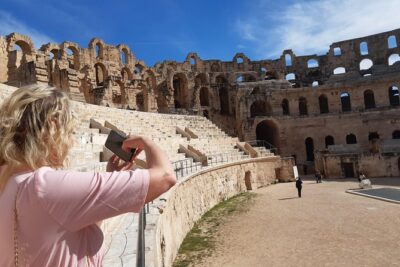
Half-day excursion from Sousse to the amphitheater of El Jem
Read our review →
Private and Guided Tour to Kairouan and El Jem and Monastir
Read our review →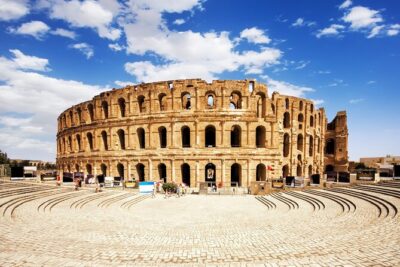
Private Half Day Tour to Roman Coliseum EL JEM from Monastir
Read our review →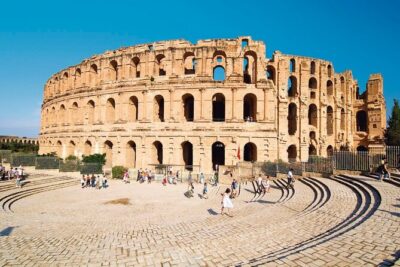
Kairouan Holy City and El Jem Colosseum Tour from Sousse
Read our review →Browse the lists this tour appears in