
Reviewed · TUNIS TOURS
Daytrip to Kerkouen Unesco Site Kelibia and Houaria Caves
Cape Bon rewards the extra miles. This private day trip from Tunis combines the Punic ruins of Kerkouane, the hilltop Fort de Kelibia, Echraf’s remarkable 2,500-year-old olive tree, and the caves of El Haouaria. I especially like the chance to see a genuine Punic city rather than only Roman remains, and the private air-conditioned vehicle makes the long drive more comfortable.
The friendly guide is praised for being patient, flexible, and careful behind the wheel, which matters on a full day of driving. The main drawback is the distance: with roughly seven to nine hours on the road and at the sites, this is a big day, and lunch is not included.
In This Review
- Key points at a glance
- Why this Cape Bon day trip is worth the drive
- Fort de Kelibia and its 150-meter sea view
- Kerkouane, a rare look at Punic urban life
- Echraf’s ancient olive tree
- Ghar el Kebir and the caves of El Haouaria
- Food, comfort, and the long day
- Is $141.36 per person good value?
- Who should book this experience?
- Should you book the Cape Bon excursion?
- FAQ
- How long does the day trip last?
- Where does the tour begin?
- Is this a private tour?
- What transportation is provided?
- Is a guide included?
- Is lunch included?
- Is admission to Fort de Kelibia included?
- Is admission to Kerkouane included?
- Is admission to Ghar el Kebir included?
- Can I cancel for a full refund?
Key points at a glance
- Kerkouane preserves a rare Punic city plan: The Romans did not rebuild it, leaving an unusually clear view of a pre-Roman settlement.
- Fort de Kelibia brings the best high view: The 16th-century citadel sits on a 150-meter rocky promontory above the Mediterranean and the city.
- Echraf has an olive tree more than 2,500 years old: Its trunk has a circumference of about six meters, and it still produces olives.
- Ghar el Kebir takes the longest stop: Allow about three hours for the caves and the El Haouaria area.
- The trip is private: Only your group participates, with private transport, onboard WiFi, and a certified professional guide.
- The price rewards a full day: At $141.36 per person, the value is strongest for a small group that wants several Cape Bon sights in one outing.
Why this Cape Bon day trip is worth the drive
Cape Bon extends more than 80 kilometers from Nabeul into the Mediterranean. The route passes through a part of Tunisia known for plains, rocky plateaus, villages, beaches, coves, vineyards, fruit trees, and grain fields.
That variety is the point of the trip. You are not simply checking off one archaeological site. You get a broad look at northeastern Tunisia, moving from ancient stonework to sea views, olive culture, and coastal caves.
The drive from Tunis is not short. One review called the route a little long, but still worthwhile for the food, views, history, and Punic archaeology. I would make the same calculation: this excursion makes sense if you want to use one substantial day to reach places that are awkward to combine on your own.
The private format helps. You do not have to fit into the pace of a large coach group, and the guide can respond to what interests you. The guide has been praised for explaining the sites clearly, checking that the group is comfortable, and adjusting the experience to personal interests.
You also get an air-conditioned vehicle and WiFi onboard. Those features will matter most during the longer stretches between Tunis, Kerkouane, Kelibia, and El Haouaria. The tour is offered with pickup, and confirmation is provided when you book.
More things to do in Tunis:
- Private Tour to Kairouan, El Jem & Monastir from Tunis_hammamet
★ 5.0 · 301 reviews - Private tour: Medina,Carthage ,Sidi Bou Said, Bardo Museum+lunch
★ 5.0 · 230 reviews - Carthage, Bardo Museum, Sidi Bou Said and Medina Private Day Tour
★ 4.5 · 153 reviews
Fort de Kelibia and its 150-meter sea view
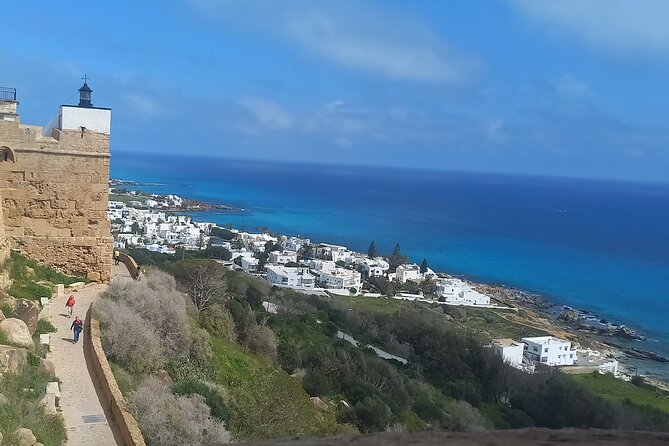
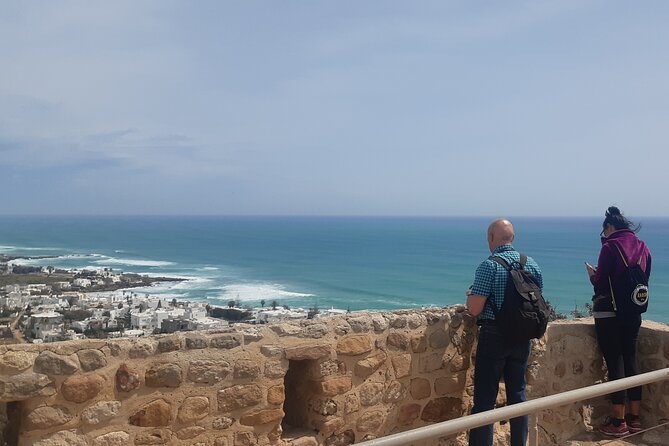
Fort de Kelibia is an excellent opening point because it gives you both a historic structure and a wide view of the coast. The citadel sits on a rocky promontory about 150 meters high, overlooking the Mediterranean and the city of Kelibia.
The fort you see today is mainly associated with the 16th century, but the site has much older layers. A fortification occupied this position during the Punic period, around the 3rd century BC. Roman components appear in the oldest parts, and the Byzantines later built another defense here. The structure was enlarged and altered by successive occupants, with major work carried out during the Ottoman period.
You have about 45 minutes at the fort, and admission is included. That is enough time to walk through the main area, study the stonework, and take in the view without turning the stop into a long architectural study.
The best reason to pay attention here is the position. From high above Kelibia, you can understand why this point mattered to different powers over many centuries. The fort was not placed on a hill by chance. It controlled a useful view across the sea and the surrounding coast.
The limitation is simple: 45 minutes is a compact visit. If you enjoy military architecture or want to examine every corner, you may wish you had longer. For most people, though, the stop gives a clear sense of the fort’s setting and purpose.
Kerkouane, a rare look at Punic urban life
Kerkouane is the historical heart of this excursion. The site dates to the Punic era, possibly the 6th century BC, and is considered one of Tunisia’s most important archaeological places.
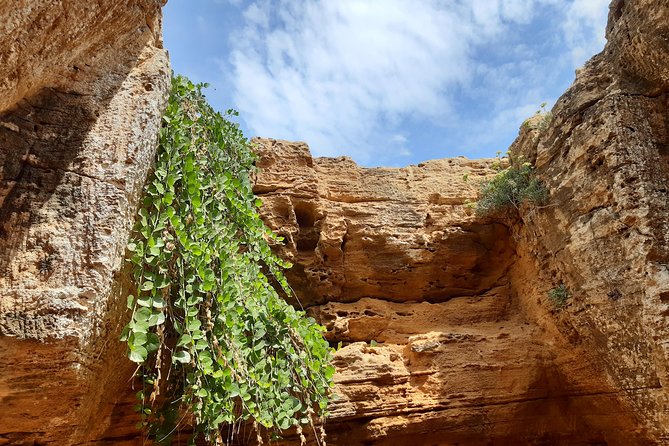
Its value comes from what did not happen. After Roman control of North Africa, the Romans did not rebuild Kerkouane. The city was apparently abandoned after destruction by the Roman consul Marcus Atilius Regulus in 256 BC. As a result, the remains preserve the layout of a small Punic settlement instead of showing later Roman construction over the top.
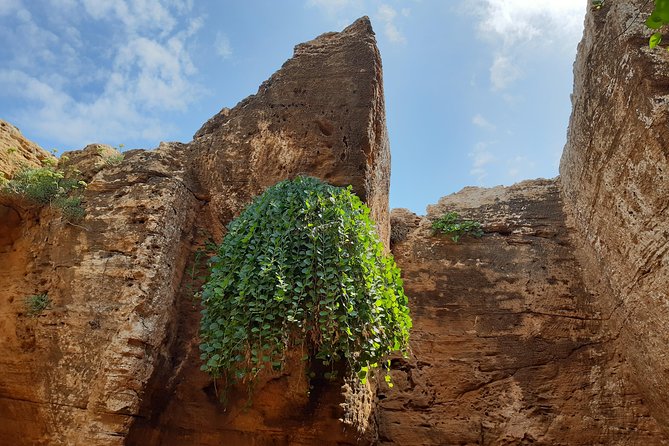
That makes the site different from many famous ruins around the Mediterranean. At Kerkouane, you can focus on a city formed by Carthaginian-era culture and planning. The remains reveal the arrangement of houses and streets, along with domestic details that help you picture ordinary urban life before Roman rebuilding changed the area.
You have about one hour here, with admission included. A guide adds real value because the ruins can otherwise look low and scattered. The stones do not rise into dramatic monuments, so a clear explanation helps you understand the plan beneath your feet.
This is also where the tour’s historic focus becomes more specific. You are not simply seeing old walls. You are seeing evidence of a Punic city in a form that survived because later builders left it alone.
The site may not suit you if you want tall columns, grand temples, or a large museum-style presentation. Its appeal is quieter and more archaeological. I would choose it precisely for that reason. The experience rewards curiosity and attention rather than quick photographs.
An important practical point concerns admission. The tour price includes entry to Kerkouane. There was a reported misunderstanding in which a participant paid separately, and the operator offered to arrange a refund. To avoid confusion, confirm at the start of the day that the entrance fee is covered.
Echraf’s ancient olive tree
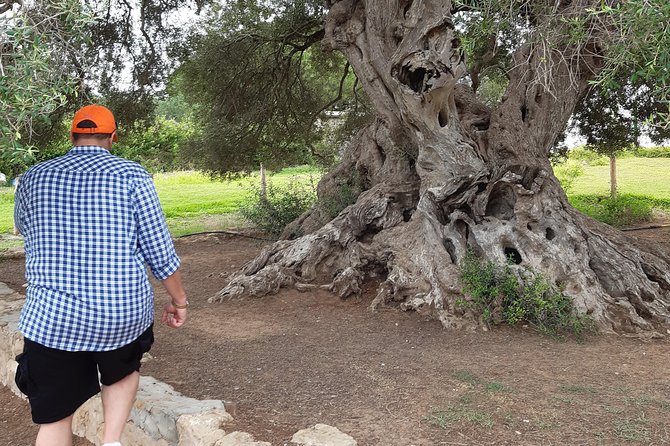
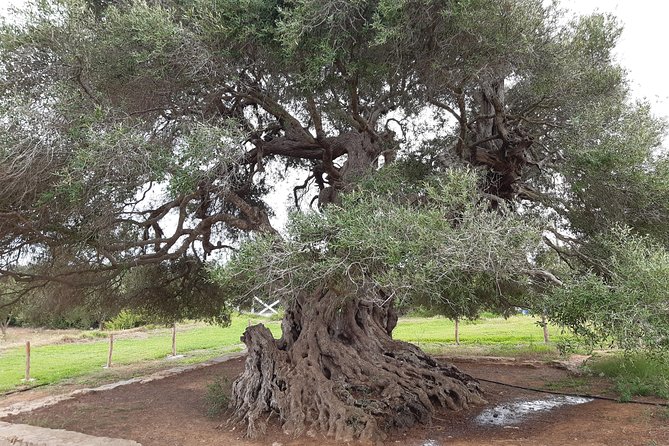
The stop at Echraf lasts about 30 minutes and is free. Its subject is unusually specific: an olive tree said to be more than 2,500 years old.
The tree’s roots cover an area of about 16 meters, while the trunk measures roughly six meters around. It is still maintained and continues to produce olives. A small amount of oil made from its olives is distributed in tiny vials, treated locally as something almost sacred.
This is not a grand monument in the usual sightseeing sense. It is a short cultural stop that connects the present-day countryside with a very long agricultural tradition. Tunisia’s olive culture is not just a backdrop to the trip. At Echraf, it becomes the main attraction.
You should keep your expectations realistic. The stop is free, and the tour description does not promise a tasting, a vial of oil, or a formal presentation. Think of it as a chance to see an ancient living tree and hear about its place in local tradition.
The timing works well between the larger historical and coastal stops. Thirty minutes gives you enough time to look closely, take photographs, and listen to the guide without adding a major delay to an already full schedule.
A completely different kind of day:
- Private Excursion to Testour, Dougga and Bulla Regia from Tunis.
★ 5.0 · 100 reviews - Guided Bike Tour of Carthage Archeological Site in Tunisia
★ 5.0 · 88 reviews - Guided tour in the UNESCO world heritage Medina of Tunis
★ 5.0 · 68 reviews - Group Guided Bike Tour of Carthage Archeological Site in Tunisia
★ 5.0 · 57 reviews
Ghar el Kebir and the caves of El Haouaria
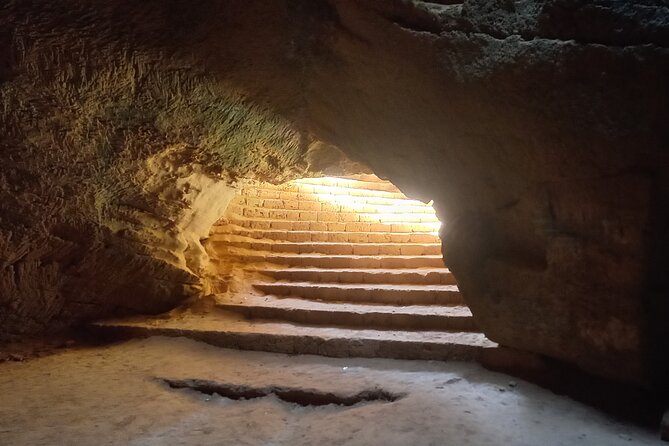
The longest stop is Ghar el Kebir in El Haouaria, with about three hours allotted. This area sits at the northeastern end of Cape Bon, at the entrance to the Gulf of Tunis.
El Haouaria is known for clear water, coves, caves, and coastal scenery. The caves are the main natural attraction, and admission is included. The area also has a strong connection to birdlife. Its position at the tip of the peninsula makes it an important stopping point for migrating birds crossing the Mediterranean.
In spring, about 40,000 raptors from 24 species are said to pass through the area, along with storks and smaller birds. The Romans called the place Aquilaria, meaning land of the eagle. That name makes sense when you consider the cape’s position and the number of birds that pass through.
The three-hour allocation gives this part of the trip more breathing room than the fort or olive tree stop. You can spend time around the caves and the coastal area rather than making a quick photo stop. Dolphins are also associated with the waters here, although no sighting is guaranteed.
There is one environmental concern to keep in mind. The area has suffered from summer crowds and careless behavior, which threaten its former wild character. I would treat the caves and shore with care, take rubbish with you, and avoid assuming that a popular site can absorb unlimited use.
The coast is also seasonal in character. Spring may be especially interesting for birdwatching, while summer can bring more people. The information provided does not specify swimming time, boat rides, or a particular cave route, so you should not book this trip expecting those extras unless the operator confirms them.
Food, comfort, and the long day
Lunch is not included, so plan for that cost. One positive account specifically praised the food along the Cape Bon route, but the tour details do not name a restaurant or promise a meal. Ask the operator how lunch is handled, or budget for buying it during the day.
The private vehicle is more than a minor convenience. The route covers several parts of the peninsula, and the total experience lasts about seven to nine hours. Air conditioning is useful in Tunisia’s warmer months, while onboard WiFi can help during the longer drives.
The guide’s driving also matters. A careful driver reduces stress on a day when you may already be tired from the early start and the return journey. The guide is described as friendly, patient, and attentive to comfort, with the flexibility to focus more on the subjects you care about.
This is not a physically intense excursion according to the information provided. Most people can participate, and service animals are allowed. Still, the fort is on a high rocky promontory, and the archaeological and cave areas may involve walking over uneven ground. The tour details do not specify the exact surface or step count, so ask ahead if you have mobility concerns.
Is $141.36 per person good value?
The listed price is $141.36 per person. That is not a budget day trip, especially if only one or two people are paying, but the private arrangement changes the calculation.
You receive private transportation, an air-conditioned vehicle, WiFi, a certified professional guide, pickup, and admission to the listed paid sites. You also avoid arranging separate transport to four widely spaced stops. For a small group that values comfort and a personal pace, the package can make sense.
The value improves with more people sharing the private vehicle, although the published price remains per person. One participant felt the individual cost was fair but found the total for two people harder to justify. That is a useful warning: compare the full group price with the cost of hiring transport and arranging the same route independently.
The included admissions also matter. Fort de Kelibia, Kerkouane, and Ghar el Kebir are listed with admission included, while Echraf is free. Since there was confusion over payment at Kerkouane, confirm this detail before setting off.
I would not choose this trip mainly to save money. I would choose it to save planning time and to reach several Cape Bon sights in one day with a guide and private vehicle.
Who should book this experience?
I would recommend it to you if you want a broad day outside Tunis and have a particular interest in pre-Roman North African history. Kerkouane is the strongest reason to go, especially if you want to see Punic remains instead of another Roman site.
It also suits you if you prefer a private day rather than a fixed large-group excursion. The guide can respond to your interests, and the pace is less rigid than a coach tour.
The trip is a good fit for:
- Couples, families, or friends who can share a private vehicle
- History fans interested in Punic and ancient Mediterranean sites
- People who want coastal views along with archaeology
- Visitors who prefer a guide and arranged transport
- Anyone with a full day available for Cape Bon
I would think twice if you dislike long drives, want a slow beach day, or prefer to spend several hours at one major monument. The itinerary covers a lot of ground, so each stop has a fixed amount of time.
Free cancellation is available up to 24 hours before the start time for a full refund. Changes or cancellations made less than 24 hours ahead are not accepted under the stated policy.
Should you book the Cape Bon excursion?
Book this trip if Kerkouane is high on your list and you want to add a fortress, an ancient olive tree, and El Haouaria’s caves without organizing the route yourself. The combination is unusual, and the private vehicle plus adaptable guide gives the day a personal feel.
Skip it if your priority is low cost, a relaxed schedule, or a guaranteed long lunch and beach visit. The drive is substantial, lunch is extra, and the archaeological sites reward interest more than spectacle.
For the right person, this is a memorable look at a quieter side of Tunisia. The best moments are likely to come from the contrast: Punic streets at Kerkouane, the high sea view from Kelibia, a living olive tree with millennia behind it, and the caves at the far end of the cape.
FAQ
How long does the day trip last?
The experience lasts approximately seven to nine hours.
Where does the tour begin?
The tour is based in Tunis and offers pickup.
Is this a private tour?
Yes. Only your group participates in the activity.
What transportation is provided?
Private transportation is provided in an air-conditioned vehicle with WiFi onboard.
Is a guide included?
Yes. A certified professional tourist guide is included.
Is lunch included?
No. Lunch is not included in the tour price.
Is admission to Fort de Kelibia included?
Yes. The Fort de Kelibia stop lists admission as included.
Is admission to Kerkouane included?
Yes. Admission to the Kerkouane ruins is included. If a separate payment is requested, confirm the issue with the operator because the stated tour inclusions cover the entry.
Is admission to Ghar el Kebir included?
Yes. Admission to Ghar el Kebir is included.
Can I cancel for a full refund?
Yes, if you cancel at least 24 hours before the experience begins. Cancellations made less than 24 hours before the start time are not refunded.
Just added in Tunis
- Private Arrival Transfer: Tunis Airport to Tunis Hotel★ 4.5 · 5 reviews
- Cap Bon Guided Day Tour from Tunis★ 5.0 · 2 reviews
- Dougga Guided Day Tour from Tunis★ 5.0 · 5 reviews
- Unveiling the Beauty of Sidi Bou Said and Carthage Private Tour★ 5.0 · 2 reviews
- Tunis Carthage Private Arrival Airport Transfer to Tunis★ 5.0 · 4 reviews
- Tunis Group Tour: Carthage, Sidi Bou Said, Bardo museum & Medina★ 5.0 · 5 reviews
- Bardo Museum , Oudhna and the roman aqueduct★ 5.0 · 4 reviews
- Bardo Museum- The ruins of Carthage- Village of Sidi Bou Said★ 5.0 · 4 reviews
Tunis Tours, compared.
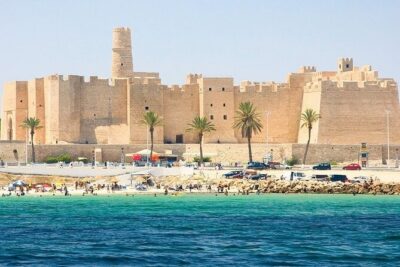
Private Tour to Kairouan, El Jem & Monastir from Tunis_hammamet
Read our review →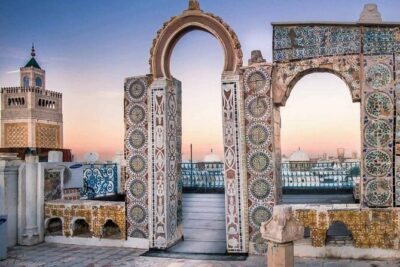
Private tour: Medina,Carthage ,Sidi Bou Said, Bardo Museum+lunch
Read our review →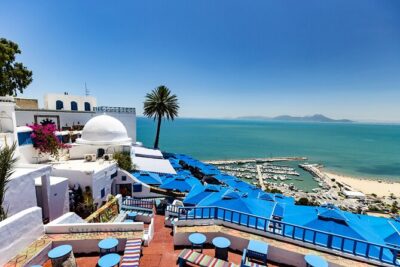
Carthage, Bardo Museum, Sidi Bou Said and Medina Private Day Tour
Read our review →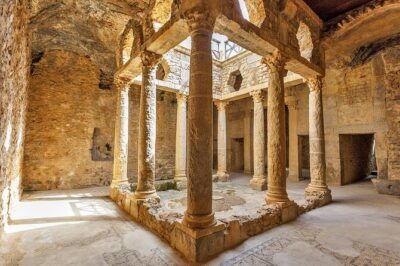
Private Excursion to Testour, Dougga and Bulla Regia from Tunis.
Read our review →
Guided Bike Tour of Carthage Archeological Site in Tunisia
Read our review →
Guided tour in the UNESCO world heritage Medina of Tunis
Read our review →
Archaelogical Site Of Carthage + Picturesque Village Of Sidi Bou Said
Read our review →
Browse the lists this tour appears in