
Reviewed · EL JEM AMPHITHEATRE
Private Tour to Kairouan, El Jem and Sousse
Three major sights, one long Tunisian day. This private trip links Kairouan’s Islamic monuments, El Jem’s Roman amphitheater, and Sousse’s coastal medina in roughly eight to nine hours. I like the comfort of a private car with a guide, and I like the strong mix of religion, history, architecture, and seaside life.
The main tradeoff is the road time, about four hours in total. Lunch costs extra, and the schedule can run late. One guest described a planned 4 p.m. finish that became 7 p.m., though the longer day was not treated as a problem.
In This Review
- Key points to know before booking
- Why this route works in one full day
- Entering Kairouan’s Great Mosque
- The Aghlabid Basins and Kairouan’s water system
- Sidi Sahbi, the Mosque of the Barber
- Walking through the Medina of Kairouan
- El Jem and its Roman amphitheater
- Sousse’s medina and Ribat
- A short finish at Port El Kantaoui
- What the $150 price really covers
- The long drive and private-car advantage
- Which guide style may suit you
- Who should book this private day tour
- Should you book it?
- FAQ
- Where does the tour start?
- How long does the tour last?
- Is this a private tour?
- Is lunch included?
- Are entrance fees included?
- Which places are visited?
- Is bottled water provided?
- Can I cancel for a full refund?
Key points to know before booking
- Three very different Tunisian settings: Visit the sacred city of Kairouan, the Roman amphitheater at El Jem, and the coastal towns of Sousse and Port El Kantaoui in one day.
- A genuinely private outing: Only your group takes part, with private transportation, a professional guide, and a private driver.
- The strongest guide reports name Anis, Aymen, and Imed: Anis was praised for humor and clear answers, Aymen for passion and entertaining commentary, and Imed for memorable explanations of history.
- About four hours are spent on the road: This is an efficient way to cover a lot of central Tunisia, but it is not a relaxed, slow-moving day.
- Lunch is not included: You will need to pay for your own meal at a local restaurant.
- The $150 price buys convenience as well as entry: Site admissions, transport, water, guide service, fees, and taxes are included.
Why this route works in one full day
This outing succeeds because the stops do not all tell the same story. Kairouan brings Islamic art and religious tradition. El Jem shifts the focus to Roman public life and engineering. Sousse adds a living old town, while Port El Kantaoui finishes the day beside the water.
That range gives you a useful introduction to Tunisia beyond Tunis. You are not spending the whole day looking at similar ruins or repeating the same type of monument.
The catch is the clock. The visit includes seven stops, a meal, and the drive back to Tunis. You should expect a brisk pace, not long hours in each place. If you want detailed museum visits, extended shopping, or quiet photography time, this tour may feel compressed.
The 8 a.m. departure helps. An early start gives you the best chance of seeing all the listed sites before the return journey. Since the day can last eight or nine hours, keep your evening flexible.
More El Jem trips:
- Private Tour to Kairouan, El Jem & Monastir from Tunis_hammamet
★ 5.0 · 301 reviews - Daytrip to Kairouan and El Jem Colosseum
★ 4.5 · 55 reviews - Kairouan and El Jem Private Day Tour
★ 4.5 · 38 reviews
Entering Kairouan’s Great Mosque
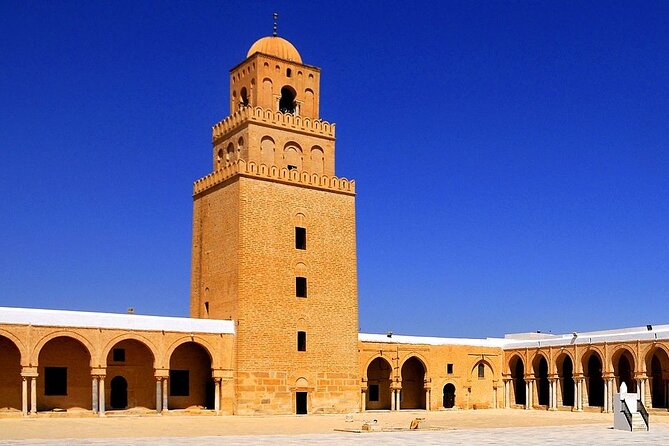
The Great Mosque of Kairouan is the day’s first major stop and receives about an hour. It is one of the earliest mosques built in North Africa, with origins reaching back to the eighth century, and it has served as a place of worship and study for centuries.
This is more than a quick photo stop. The building gives your guide a chance to explain how Islamic design developed in Tunisia and why Kairouan matters as a religious center. The mosque’s scale and age make it a powerful opening to the day.
Admission is included, so you do not need to budget a separate entrance fee here. The hour is long enough for an introduction and a careful look, though the schedule does not promise a slow architectural study.
Pay attention to your guide’s explanation rather than trying to absorb every detail alone. Anis was praised for his humor and for answering questions, while Aymen was described as passionate and clear when explaining the places around Kairouan and El Jem. A good guide matters especially at a site like this, where the meaning behind the structure is as important as its appearance.
The Aghlabid Basins and Kairouan’s water system
The Aghlabid Basins receive only 15 minutes, but they add an important practical piece to the story of Kairouan. Built in the ninth century by the Aghlabid dynasty, the basins stored water for the city and helped protect it during dry periods.
The site shows that grand Islamic architecture was not only about decoration or prayer. Water storage was essential, and the scale of the basin reflects the engineering effort needed to support a major settlement.
You will see the basin, arcades, and surrounding gardens during a short visit. Admission is included. Fifteen minutes is enough to understand the purpose of the site and take in its broad shape, but do not expect an extended walk or a detailed technical tour.
I consider this a useful stop because it breaks up the religious monuments with a piece of civic engineering. It also reminds you that Tunisia’s historic cities depended on clever systems, not just impressive facades.
Sidi Sahbi, the Mosque of the Barber
The visit to Sidi Sahbi Mosque lasts around 30 minutes. The site is also called the Mosque of the Barber, a name linked to Sidi Sahbi, a companion of the Prophet Muhammad who is said to be buried there.
The mosque is known for traditional Islamic design, including arches, columns, and decorative work. It is both a religious site and a place tied to an important figure in Islamic tradition, so the visit can feel more personal and devotional than the grand scale of the Great Mosque.
Your guide can help you understand the customs and stories connected with the site. That context is valuable, since the meaning of a religious monument is not always obvious from its walls alone.
The stop is short, so expect an overview rather than a long period for contemplation. Dress and behavior should be respectful at any religious site. The provided information does not specify a formal dress code, so your guide is the best person to ask about local expectations on the day.
More Kairouan trips:
- Full-Day Kairouan and El Jem Tour from Tunis
★ 4.0 · 7 reviews - Daytrip 3 Unesco Sites El Jem Kairouan and Sousse Medina
★ 5.0 · 7 reviews - Kairouan & El Jem Small Group Tour from Tunis, Hammamet or Sousse
★ 5.0 · 6 reviews - El Jem, Monastir, and Kairouan Medina Private Tour
★ 5.0 · 5 reviews
Walking through the Medina of Kairouan
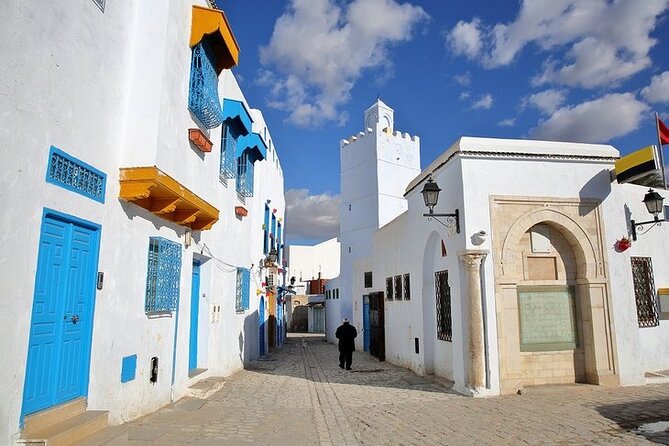
The Kairouan medina receives about 30 minutes, with no separate admission charge. This is the least structured part of the Kairouan visit, giving you a chance to see the city beyond its major monuments.
A half hour is enough for a short walk through the old quarter and a first look at its streets and traditional setting. It is not enough for a long shopping session or a full exploration of every alley.
If you want something from the medina, keep the time limit in mind. Ask your guide where to focus before wandering too far. The private format should make it easier to ask for a short pause or clarification, though the wider schedule still has to be respected.
Kairouan is at its best when you connect the parts: the mosque as a religious center, the basins as public infrastructure, Sidi Sahbi as a place of devotion, and the medina as a working historic quarter. Together, these stops provide more meaning than any one monument alone.
El Jem and its Roman amphitheater
After lunch at a local restaurant, the route continues to El Jem. Lunch is not included in the $150 price, so plan to pay separately for your meal.
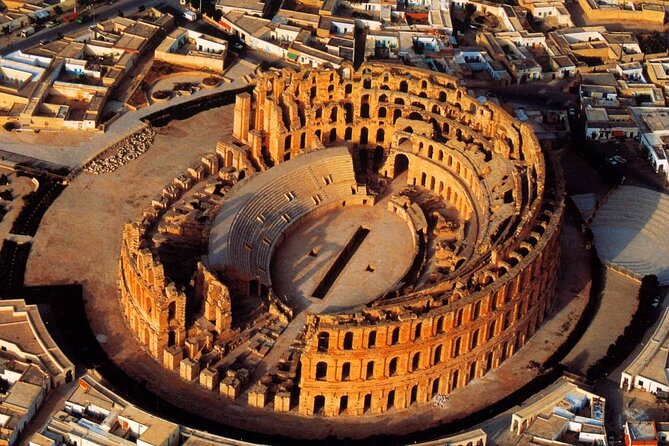
The amphitheater receives about an hour, and this is one of the day’s clearest highlights. Built during the Roman period, it hosted gladiator contests and large public shows. Its size and preservation make it easy to picture the crowds, performers, and harsh spectacles that once filled the arena.
You can explore the seating areas, corridors, and interior spaces. Unlike a ruin that survives only as scattered stones, El Jem gives you a strong sense of the original building’s shape and purpose.
This is the stop where the guide’s storytelling can make a major difference. Aymen was praised for explaining Kairouan and El Jem well, while Imed was described as witty and especially strong on history. You will get more from the amphitheater if you ask how it functioned, who used it, and what its construction says about Roman North Africa.
The one-hour visit is practical. It gives you time to walk through the monument without letting one site consume the entire day. If Roman history is your main interest, you may wish for longer, but the schedule allows you to see El Jem while still reaching Sousse.
Sousse’s medina and Ribat
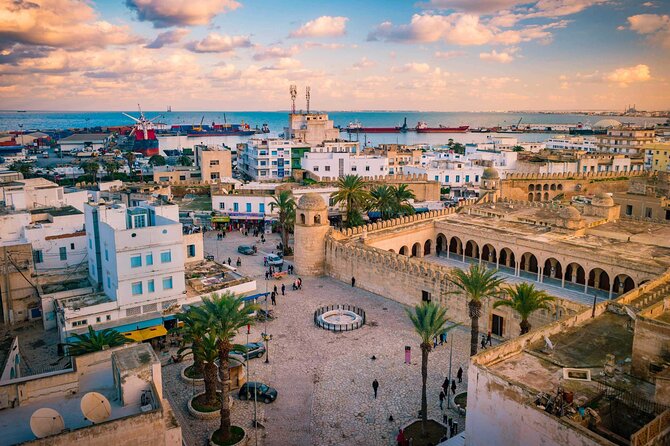
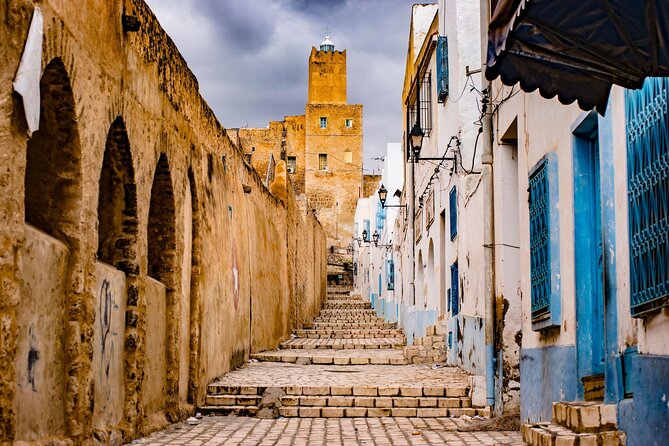
Sousse changes the mood again. Its medina is a historic quarter of narrow streets, whitewashed buildings, markets, mosques, and old defensive walls. The visit lasts about an hour and has no separate admission charge listed.
Here, I like the contrast with Kairouan. Kairouan feels centered on religious tradition and major monuments, while Sousse gives you a more everyday old-town experience. You can walk through the lanes, see local shops, study the walls, and watch ordinary city life unfold around historic buildings.
The Ribat adds a military and religious dimension. Its strong form and strategic role help explain why Sousse was such an important coastal settlement. Your guide can connect the Ribat with the medina’s walls and show how defense shaped the town.
An hour is a reasonable introduction, but it is not much time for serious shopping. If you stop often, the visit will pass quickly. I would focus first on the architectural details and the main streets, then shop only if time allows.
The medina may also be the place where the day feels least controlled. Stay aware of the meeting time, since the group still has Port El Kantaoui and the return drive ahead.
A short finish at Port El Kantaoui
Port El Kantaoui is the final stop, with about 30 minutes and no separate admission charge. Its marina is lined with restaurants, cafes, and boutiques, and the quays offer a change from mosques, ruins, and old defensive streets.
This is a pleasant way to close the route. You can stroll beside the boats, take photographs, or pause at the waterfront before heading back to Tunis. It is not presented as a major historical visit, so keep your expectations in line: this is a brief coastal stop, not a full afternoon by the sea.
The contrast is useful. In one day, you see inland religious centers, a Roman monument, a fortified medina, and a modern leisure harbor. That variety is a major reason to choose this route.
Thirty minutes will feel short if you want a meal, shopping, or a long walk. Since lunch is already a separate part of the day, treat Port El Kantaoui as a final look and stretch rather than a full activity.
What the $150 price really covers
At $150 per person, this is not the cheapest way to see Tunisia’s central sights. It is also not a simple transfer. The price includes private transportation, a professional guide, entrance fees for the listed monuments, bottled water, taxes, and other fees.
That package matters because the route covers several destinations that are difficult to combine casually in one day. You are paying for a driver, a guide, and a planned circuit rather than trying to organize every leg yourself.
The value improves for a small private group. You have the vehicle to yourselves, and only your party participates. That gives you more privacy than a large coach tour and should make questions easier, especially at Kairouan and El Jem.
Lunch is extra, so include that in your budget. The information also lists trash cans as not included, which is an unusual note, though it should not affect your decision in any serious way.
Group discounts are offered. If you are booking with family or friends, ask how the discount changes the per-person cost before you commit.
The long drive and private-car advantage
The route involves about four hours of driving. That is a large part of an eight to nine-hour day, but it is also what makes the three-city plan possible.
The private vehicle is a strong feature here. You are picked up from your place of residence in Tunis at 8 a.m., ride with your own driver and guide, and return to the same general starting point at the end of the day.
The drive is not dead time if the guide keeps talking. Aymen was praised for making the ride entertaining with good music, and other guide feedback highlights humor and clear explanations. Those details can make a long road section much easier.
Still, you should not book this expecting a restful day. The route asks you to get in and out of the car repeatedly, walk through historic areas, and keep an eye on the clock. Comfortable shoes, water, and a flexible attitude will help.
Most people can participate, according to the tour information, but the long driving period and walking at monuments are worth considering if you have mobility concerns.
Which guide style may suit you
The experience depends partly on the person assigned to your group. The named guides connected with especially positive comments are Anis, Aymen, and Imed.
Anis was praised for humor and for handling questions. That is useful at Kairouan, where a good conversation can make the religious and architectural details easier to follow.
Aymen was described as passionate, clear, and entertaining during the explanations of Kairouan and El Jem. Good music during the drive was also singled out, a small detail that matters on a route with several hours in the car.
Imed received praise for his history explanations, wit, and understandable delivery. One account also describes him extending a day that was expected to finish at 4 p.m. until 7 p.m. without causing a problem. That suggests flexibility can be part of the experience, but you should not assume every tour will run late or that a longer day is always convenient.
Who should book this private day tour
I would choose this trip if you want a broad, efficient introduction to central Tunisia from a base in Tunis. It suits first-time visitors who want major monuments without arranging several separate trips.
It is also a good match for families or friends who value a private car and the ability to ask questions along the way. History fans get the strongest payoff from the Great Mosque, Sidi Sahbi, and El Jem, while architecture fans will have plenty to study.
The tour is less suitable if you prefer slow travel. The medina visits are brief, Port El Kantaoui is only a short stop, and the road time is substantial. You may also prefer a different plan if shopping or long meals are a main priority.
The free cancellation rule gives you a little protection: you can cancel at least 24 hours before the 8 a.m. start for a full refund. Changes made inside that 24-hour window are not accepted, and poor weather may lead to a new date or full refund. Keep the local cut-off time in mind.
Should you book it?
Book this tour if you want maximum historical variety in one day, private transport, and a guide who can connect the monuments into a clear story. The strongest parts are Kairouan and El Jem, while Sousse and Port El Kantaoui provide a useful coastal finish.
Skip it if four hours in a vehicle sounds exhausting or if you want to linger in each medina. For everyone else, the $150 price is reasonable when you value included admissions, private service, bottled water, and the convenience of returning to Tunis after seeing three very different parts of the country.
FAQ
Where does the tour start?
Pickup is offered from your place of residence in Tunis. The listed start time is 8:00 a.m.
How long does the tour last?
The tour lasts approximately eight to nine hours. The route involves about four hours of driving.
Is this a private tour?
Yes. Only your group participates in the activity, and private transportation is provided.
Is lunch included?
No. Lunch at a local restaurant is not included in the tour price.
Are entrance fees included?
Yes. Entrance fees for the listed sites and monuments are included, along with taxes and other fees.
Which places are visited?
The route includes the Great Mosque of Kairouan, the Aghlabid Basins, Sidi Sahbi Mosque, the Medina of Kairouan, El Jem Amphitheater, the Medina of Sousse, the Ribat of Sousse, and Port El Kantaoui.
Is bottled water provided?
Yes. Bottled water is included.
Can I cancel for a full refund?
You can cancel at least 24 hours before the experience starts for a full refund. Cancellations or changes made less than 24 hours before the start time are not accepted for a refund.
Just added in Tunis
- Private Arrival Transfer: Tunis Airport to Tunis Hotel★ 4.5 · 5 reviews
- Cap Bon Guided Day Tour from Tunis★ 5.0 · 2 reviews
- Unveiling the Beauty of Sidi Bou Said and Carthage Private Tour★ 5.0 · 2 reviews
- Dougga Guided Day Tour from Tunis★ 5.0 · 5 reviews
- Tunis Carthage Private Arrival Airport Transfer to Tunis★ 5.0 · 4 reviews
- Tunis Group Tour: Carthage, Sidi Bou Said, Bardo museum & Medina★ 5.0 · 5 reviews
- Kairouan-El Jem★ 4.5 · 2 reviews
- Bardo Museum , Oudhna and the roman aqueduct★ 5.0 · 4 reviews
El Jem Amphitheatre, compared.
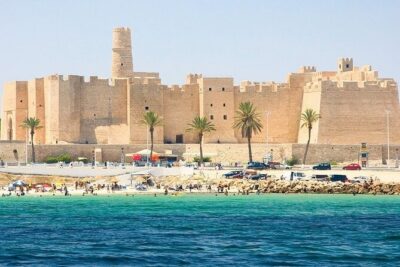
Private Tour to Kairouan, El Jem & Monastir from Tunis_hammamet
Read our review →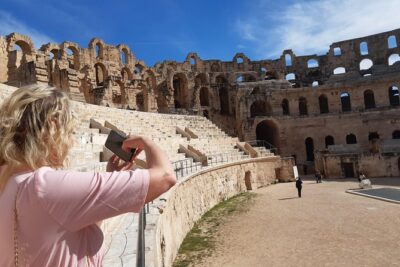
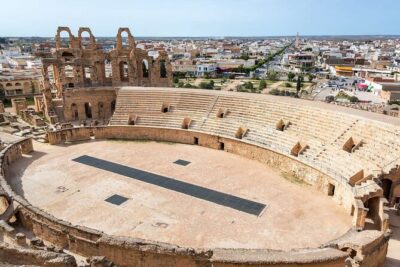
Half-day excursion from Sousse to the amphitheater of El Jem
Read our review →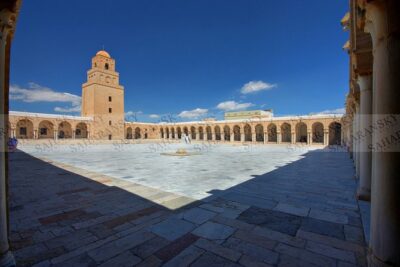
Private and Guided Tour to Kairouan and El Jem and Monastir
Read our review →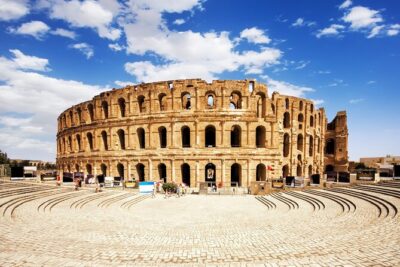
Private Half Day Tour to Roman Coliseum EL JEM from Monastir
Read our review →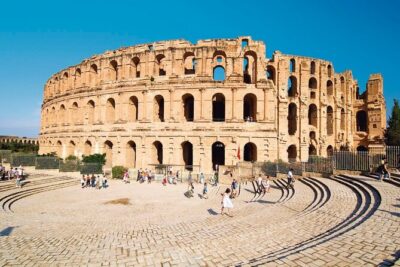
Kairouan Holy City and El Jem Colosseum Tour from Sousse
Read our review →Browse the lists this tour appears in